
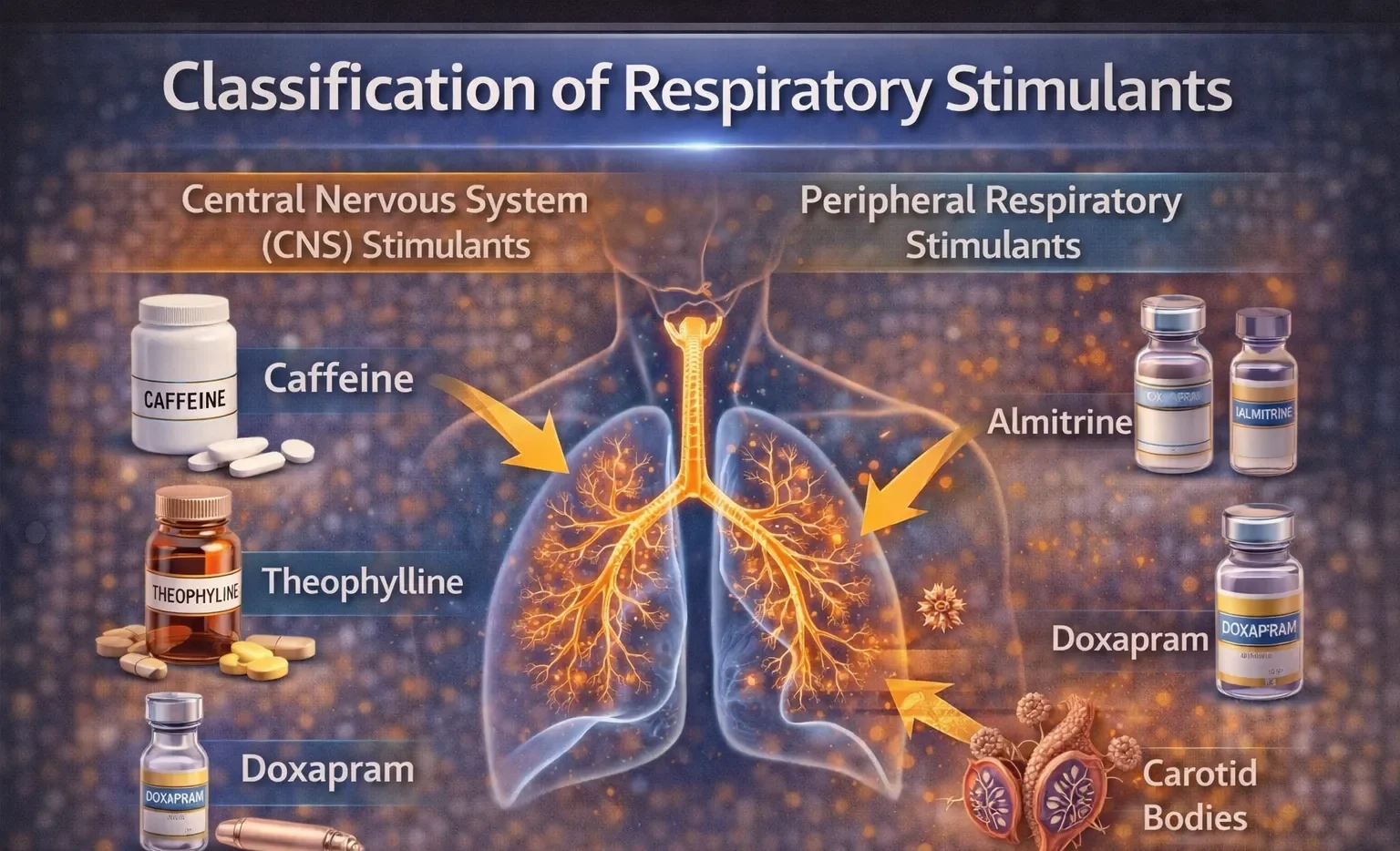
Classification of Respiratory Stimulants explains grouping of drugs based on mechanism and site of action on respiration.
Classification of Respiratory Stimulants
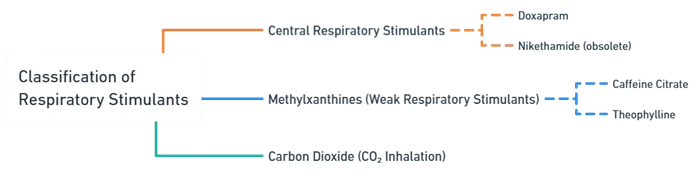
-
Central Respiratory Stimulants
- These act directly on the brainstem respiratory centers or carotid body chemoreceptors.
-
Doxapram
- Mechanism: Stimulates peripheral chemoreceptors (carotid bodies) and medullary respiratory center → ↑ respiratory rate and tidal volume
- Use:
- Respiratory depression due to anesthetics or drug overdose
- COPD (acute exacerbations, as adjunct)
- Route: IV
- Side Effects: Hypertension, tachycardia, seizures (at high doses)
-
Nikethamide (obsolete)
- Mechanism: Stimulates CNS, including respiratory center
- Use: Previously used in mild respiratory depression (no longer recommended)
-
- These act directly on the brainstem respiratory centers or carotid body chemoreceptors.
-
Methylxanthines (Weak respiratory stimulants)
- These act as CNS stimulants and have mild respiratory stimulant effects.
-
Caffeine Citrate
- Mechanism: Inhibits phosphodiesterase → ↑ cAMP → CNS stimulation; also sensitizes respiratory center to CO₂
- Use: Drug of choice in neonatal apnea
- Route: Oral or IV
- Side Effects: Irritability, feeding intolerance, tachycardia
-
Theophylline
- Mechanism: Similar to caffeine; CNS stimulation + bronchodilation
- Use: Neonatal apnea (alternative), COPD (as a bronchodilator)
- Side Effects: Narrow therapeutic window → arrhythmias, seizures, GI upset
-
- These act as CNS stimulants and have mild respiratory stimulant effects.
-
Carbon Dioxide (CO₂ Inhalation)
- Mechanism: Increases arterial CO₂ → stimulates medullary respiratory center
- Use: Historically used to trigger breathing in apnea or anesthesia recovery
- Note: Rarely used now due to risk of respiratory acidosis and availability of better options
Advertisements