
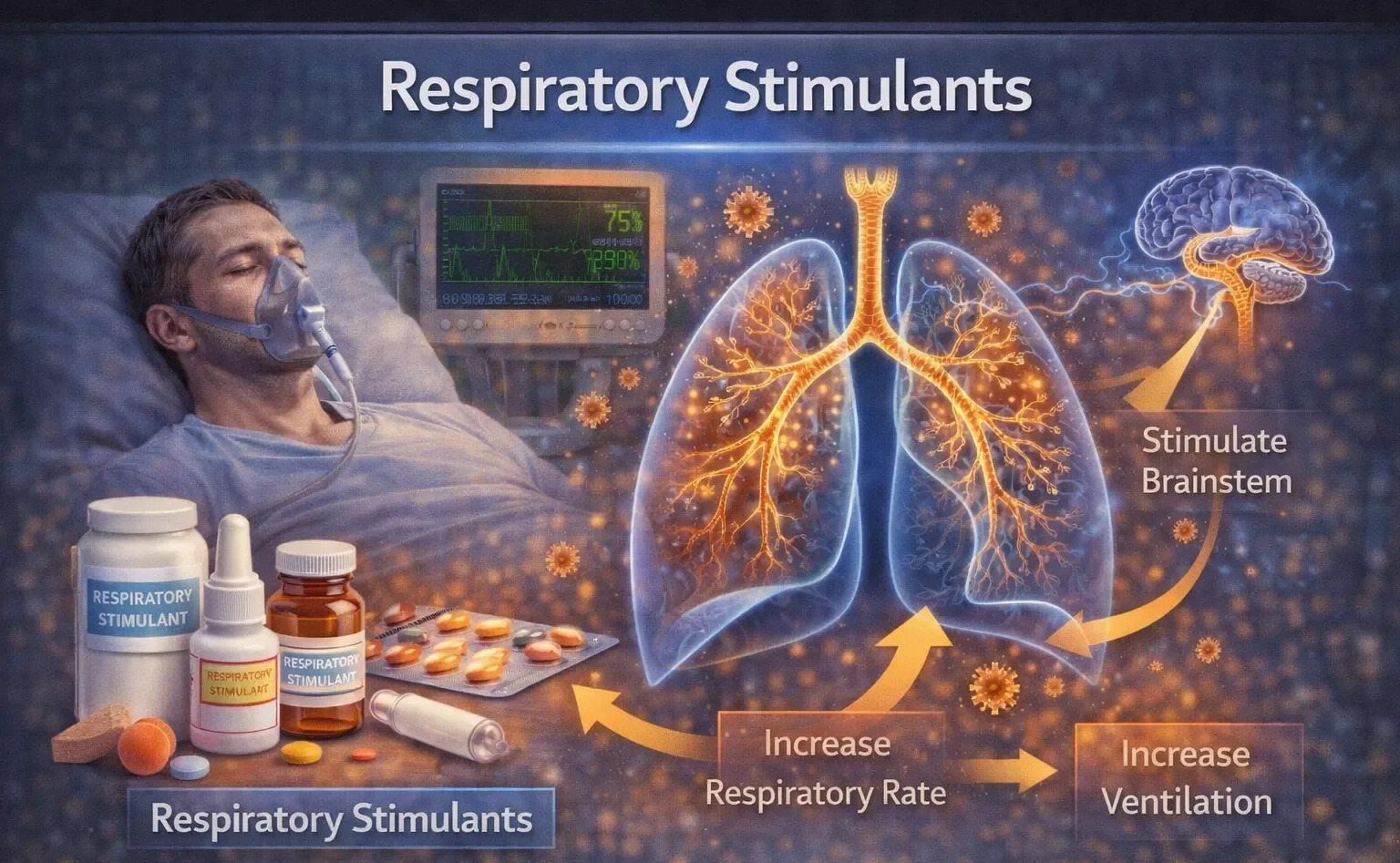
Definition of Respiratory Stimulants
- These are drugs that increase the rate and depth of breathing, used to manage respiratory depression or hypoventilation in conditions such as:

-
- COPD
- Sleep apnea
- Respiratory failure
- Post-anesthesia recovery
Mechanism of Action
The exact mechanism depends on the drug class, but generally, respiratory stimulants:
Advertisements
- Enhance respiratory drive
- Stimulate respiratory centers in the brainstem
- Influence neurotransmitter activity (e.g., serotonin, dopamine)
- Alter blood pH or CO₂ levels, prompting increased ventilation
Uses of Respiratory Stimulants
Used in the treatment or management of:
- Anesthesia-induced respiratory depression
- Chronic Obstructive Pulmonary Disease (COPD)
- Sleep apnea
- Neuromuscular disorders (e.g., ALS, myasthenia gravis)
Drawbacks and Limitations
- Tolerance – Reduced effectiveness with long-term use
- Side Effects – Nervousness, nausea, tremors, insomnia
- Drug Interactions – May interfere with other medications
- Contraindications – Not suitable for all patients (e.g., those with cardiac issues)
- Limited Efficacy – May not significantly improve outcomes in severe cases