
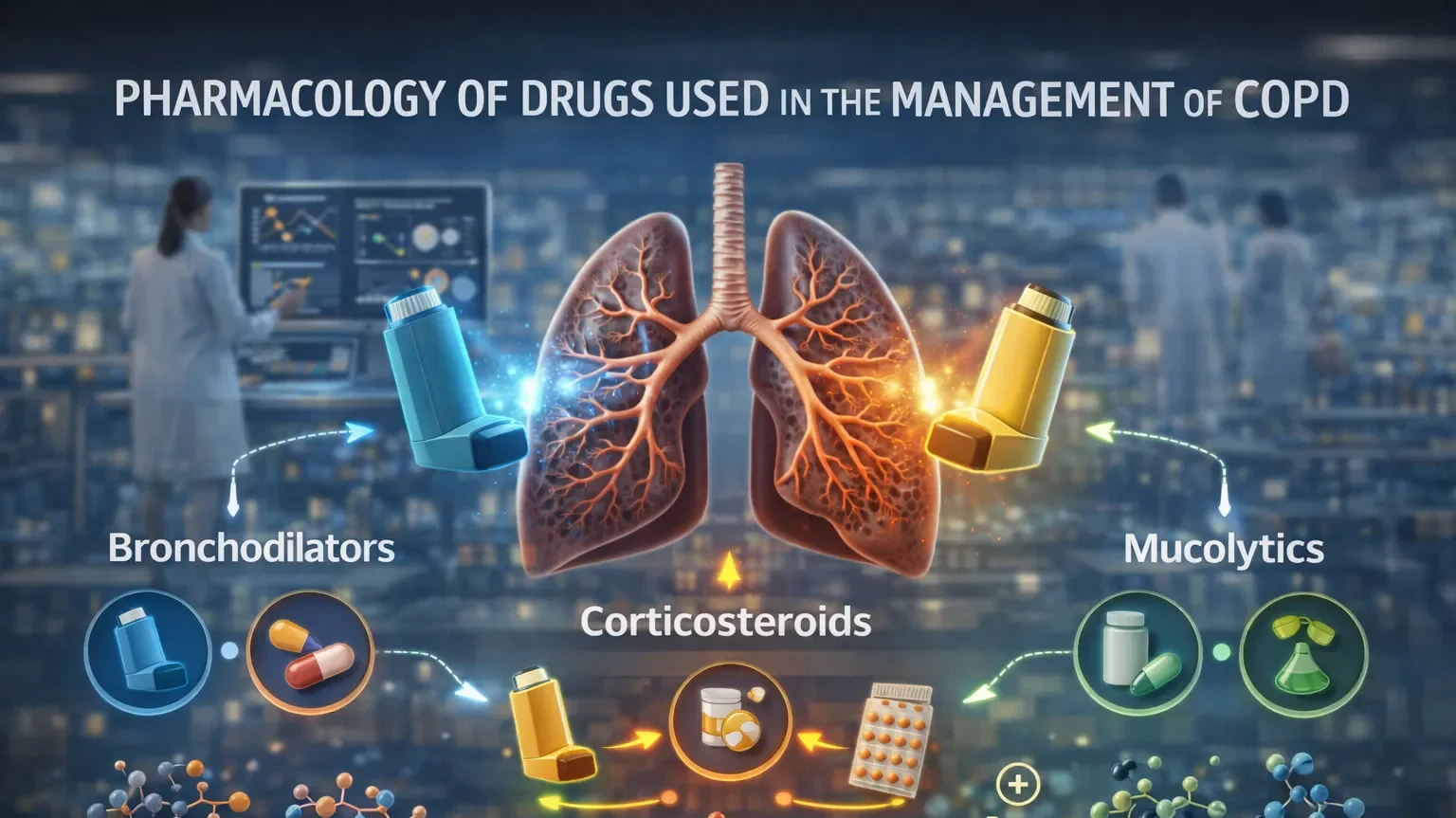
Pharmacology of Drugs Used in the Management of COPD
Pharmacology of Drugs Used in the Management of COPD explains mechanisms of bronchodilators, steroids, and other agents to improve airflow.
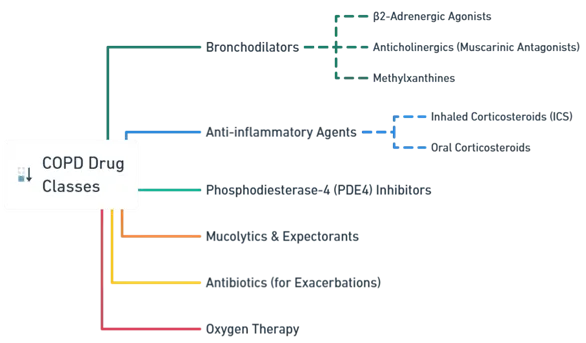
Main Classes of Drugs in COPD
-
Bronchodilators
- These are the cornerstone of COPD treatment.
-
β2-Adrenergic Agonists
- Examples:
- Short-acting: Salbutamol
- Long-acting: Salmeterol, Indacaterol
- Mechanism: Stimulate β2 receptors → ↑ cAMP → relaxation of bronchial smooth muscle
- Use:
- Short-acting (SABA): Acute symptom relief
- Long-acting (LABA): Maintenance therapy, reduce exacerbations
- Examples:
-
Anticholinergics (Muscarinic Antagonists)
- Examples:
- Short-acting: Ipratropium
- Long-acting: Tiotropium, Aclidinium
- Mechanism: Block M3 receptors → inhibit acetylcholine-mediated bronchoconstriction
- Use:
- Very effective in COPD, especially long-acting ones
- Reduce mucus secretion and improve airflow
- Examples:
-
Methylxanthines
- Example: Theophylline
- Mechanism: Inhibit phosphodiesterase → ↑ cAMP → bronchodilation; also anti-inflammatory
- Use:
- Limited role due to side effects
- Considered in refractory cases or where inhaled therapy is not feasible
-
- These are the cornerstone of COPD treatment.
-
Anti-inflammatory Agents
-
Inhaled Corticosteroids (ICS)
- Examples: Budesonide, Fluticasone
- Mechanism: Suppress airway inflammation, reduce cytokine production
- Use:
- Often combined with LABAs
- Reserved for patients with frequent exacerbations or eosinophilic phenotype
- Less effective alone in COPD than in asthma
-
Oral Corticosteroids
- Example: Prednisolone
- Use:
- Short courses for acute exacerbations
- Long-term use discouraged due to systemic side effects
-
-
Phosphodiesterase-4 (PDE4) Inhibitors
- Example: Roflumilast
- Mechanism: Inhibits PDE4 → ↑ cAMP → anti-inflammatory effect
- Use:
- Add-on therapy in severe COPD with chronic bronchitis and frequent exacerbations
-
Mucolytics & Expectorants
- Examples: N-acetylcysteine, Carbocisteine
- Mechanism: Break disulfide bonds in mucus → ↓ viscosity → easier clearance
- Use: Patients with chronic productive cough
-
Antibiotics (for Exacerbations)
- Examples: Azithromycin, Doxycycline
- Use:
- For acute exacerbations due to suspected bacterial infection
- Azithromycin also used chronically in selected patients to reduce exacerbations
-
Oxygen Therapy
- Mechanism: Improves oxygen saturation in hypoxic patients
- Use: Long-term oxygen therapy (LTOT) in patients with chronic hypoxemia (PaO₂ < 55 mmHg)
Advertisements
Combination Inhalers in COPD
- LAMA + LABA: Tiotropium + Indacaterol
- ICS + LABA: Fluticasone + Salmeterol
- Triple Therapy (ICS + LABA + LAMA): For severe COPD with frequent exacerbations