
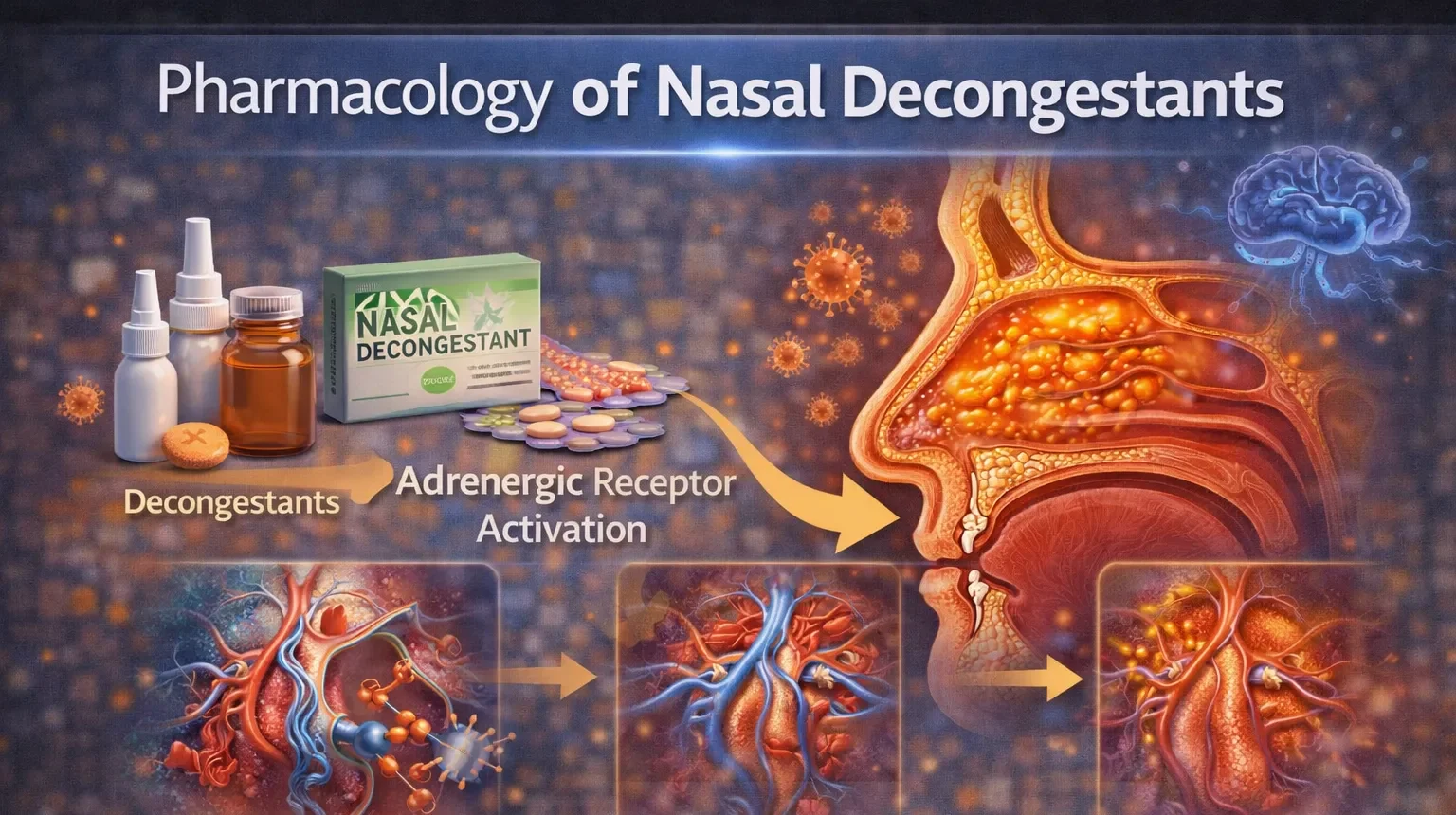
- Pharmacology of Nasal Decongestants explains drugs that relieve nasal congestion by causing vasoconstriction in nasal mucosa.
Pharmacology of Nasal Decongestants
- Nasal congestion is caused by:
- Dilation of nasal blood vessels
- Swelling of nasal mucosa
- Increased nasal secretions
- It commonly occurs in:
- Common cold
- Allergic rhinitis
- Sinusitis
- Nasal decongestants (also called sympathomimetics) relieve congestion by vasoconstriction of nasal blood vessels, thus reducing swelling and improving airflow.
Main Goals of Nasal Decongestants
- Relieve nasal stuffiness
- Improve breathing
- Facilitate drainage of secretions
- Enhance delivery of intranasal drugs (e.g., corticosteroids in allergic rhinitis)
Advertisements
Classification of Nasal Decongestants

-
Sympathomimetic (Adrenergic) Decongestants
-
Topical (Intranasal) Agents
- Examples: Xylometazoline, Oxymetazoline, Phenylephrine
- Mechanism:
- Stimulate α1-adrenergic receptors in nasal mucosa → vasoconstriction → reduced edema and nasal congestion
- Use: Quick relief in acute nasal congestion
- Onset: Rapid
- Duration: Short (Phenylephrine) to long-acting (Oxymetazoline)
- Caution:
- Rhinitis medicamentosa (rebound congestion) with prolonged use (>5–7 days)
- Local irritation, dryness
-
Oral Agents
- Examples: Pseudoephedrine, Phenylephrine (oral form)
- Mechanism: Systemic α-adrenergic agonist effect → vasoconstriction of nasal blood vessels
- Use: For more generalized symptoms or when topical agents are not preferred
- Side Effects:
- CNS stimulation (insomnia, nervousness)
- Hypertension, tachycardia (especially in hypertensive patients)
-
-
Other Decongestant Options (Adjuncts)
- Though not primary decongestants, some agents assist in decongestion.
-
Antihistamines
- Example: Chlorpheniramine
- Mechanism: Reduce allergic inflammation, histamine-mediated nasal congestion
- Use: Allergic rhinitis (used in combination with decongestants)
-
Nasal corticosteroids
- Example: Fluticasone
- Mechanism: Anti-inflammatory, reduce mucosal swelling
- Use: Long-term management of allergic rhinitis (not for immediate relief)
-
- Though not primary decongestants, some agents assist in decongestion.
Click Here to Watch the Best Pharma Videos
Advertisements