
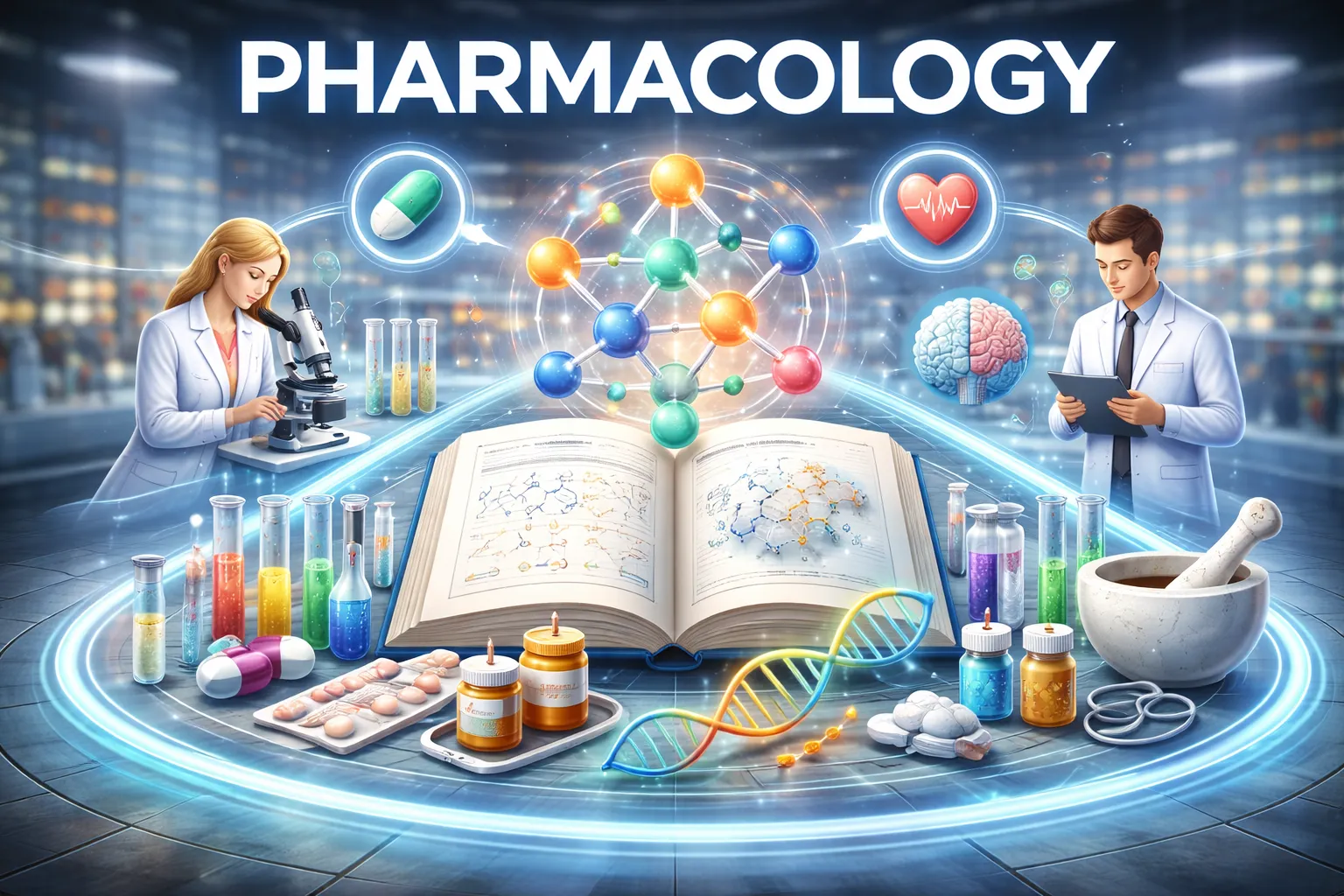
Introduction to Pharmacology
- Pharmacology is the study of how drugs interact with biological systems.
- It encompasses understanding the mechanisms of drug action, therapeutic effects, and side effects.
Key Areas:

-
Pharmacodynamics (PD)
- Mechanism of Action: How drugs exert effects at molecular and cellular levels.
- Dose-Response Relationships: Link between drug concentration and effect.
- Therapeutic Window: Range between effective and toxic doses.
-
Receptor Pharmacology
- Agonists and Antagonists: Drugs that activate or block receptors.
- Receptor Types: Different classes like G-protein-coupled receptors and ion channels.
-
Signal Transduction Pathways
- Intracellular Signaling: How drug-receptor interactions lead to cellular responses.
- Second Messengers: Molecules like cAMP that mediate signals within cells.
-
Pharmacogenomics
- Genetic Variability: Genetic factors affecting drug response.
- Personalized Medicine: Tailoring treatments based on genetics.
-
Systems Pharmacology
- Organ System Effects: Drug impacts on various body systems (e.g., cardiovascular, nervous).
- Integrated Responses: Considering whole-body effects.
Advertisements
Role in Drug Development
- Target Identification and Validation: Confirming the therapeutic potential of specific targets.
- Lead Optimization: Enhancing efficacy and minimizing side effects.
- Biomarker Development: Identifying indicators of drug activity.
Regulatory Considerations
- Safety Pharmacology Studies: Assess potential adverse effects.
- Pharmacology Summaries: Required in regulatory submissions to summarize pharmacological data.
It plays a vital role in understanding drug effects and guiding drug development toward safe and effective therapies.
Advertisements