
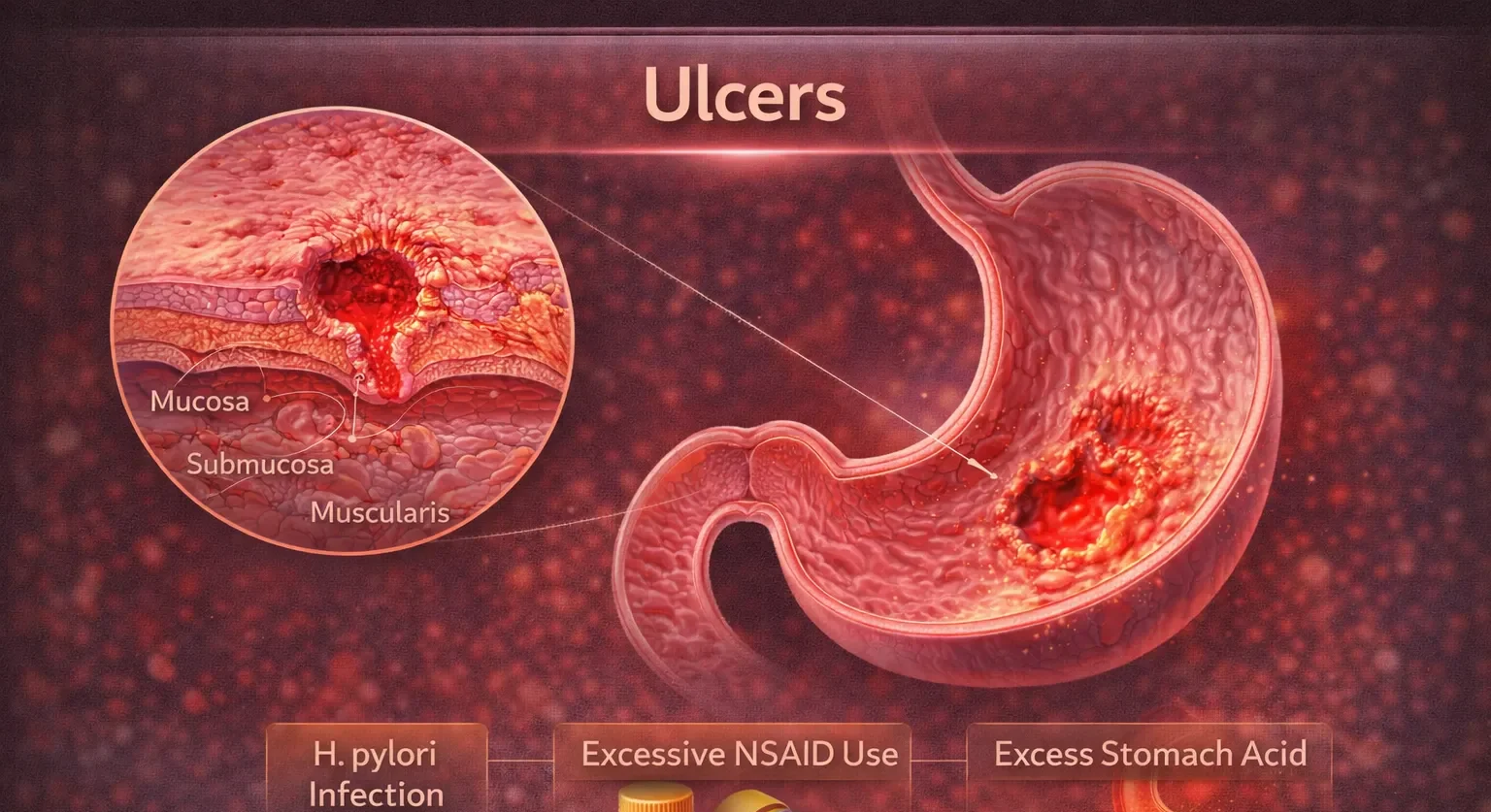
What Are Ulcers?
- These are open sores that develop in the lining of the stomach, duodenum, or esophagus.
- The most common type is the peptic ulcer, which includes:
- Gastric ulcers (stomach)
- Duodenal ulcers (small intestine)
Causes of Ulcers
-
Helicobacter pylori (H. pylori) infection
- Weakens the protective stomach lining
- Found in ~50 percent of people worldwide
-
NSAIDs (e.g., ibuprofen, aspirin)
- Irritate the stomach lining
- Risk increases with regular/high-dose use
-
Other Contributing Factors
- Smoking
- Alcohol consumption
- Stress (worsens symptoms)
- Zollinger-Ellison syndrome (rare condition with excessive acid production)
- Genetic predisposition
Symptoms of Peptic Ulcers
- Burning abdominal pain
- Nausea and vomiting
- Indigestion
- Loss of appetite
- Weight loss
- Dark or tarry stools (GI bleeding)
- Fatigue (due to blood loss)
Advertisements
Regulation of Gastric Secretion
Gastric secretion is regulated in three phases:
Advertisements
-
Cephalic Phase
- Triggered by sight, smell, or thought of food
- Vagus nerve stimulates secretion of HCl, pepsinogen, and gastrin
-
Gastric Phase
- Begins when food enters the stomach
- Stretching and presence of proteins stimulate gastrin release, increasing acid secretion
-
Intestinal Phase
- Initiated when food enters the small intestine
- Hormones (secretin, CCK, GIP) reduce gastric acid secretion and slow gastric emptying
Click Here to Watch the Best Pharma Videos
Advertisements