
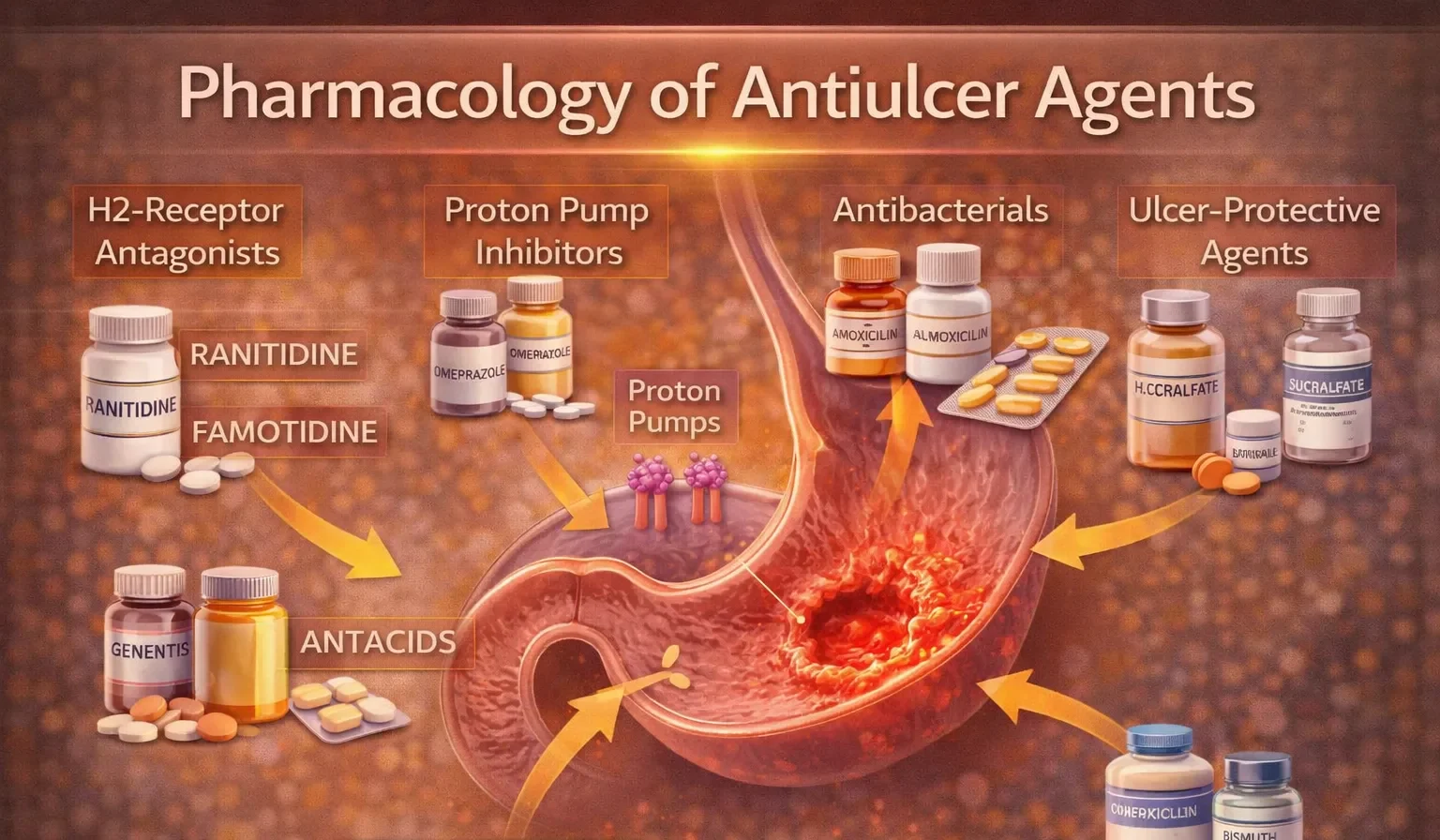
Pharmacology of Antiulcer Agents explains drugs that reduce gastric acid, protect mucosa, and promote healing of ulcers.
Pharmacology of Antiulcer Agents
- Antiulcer agents are drugs used to treat and prevent ulcers in the stomach and duodenum.
- These medications work by reducing stomach acid, protecting the stomach lining, or eliminating H. pylori
Classes of Antiulcer Drugs

Advertisements
-
Proton Pump Inhibitors (PPIs)
- Examples: Omeprazole, Pantoprazole, Esomeprazole
- Mechanism: Irreversibly inhibit H⁺/K⁺-ATPase (proton pump) in gastric parietal cells → ↓ acid secretion
- Use: Peptic ulcer, GERD, pylori eradication (part of triple therapy)
- Note: Most potent acid-suppressing agents
-
H₂-Receptor Antagonists
- Examples: Ranitidine (withdrawn in many countries), Famotidine
- Mechanism: Block H₂ receptors on parietal cells → ↓ acid secretion
- Use: Mild ulcers, GERD
- Note: Less potent than PPIs
-
Antacids
- Examples: Aluminum hydroxide, Magnesium hydroxide, Calcium carbonate
- Mechanism: Neutralize gastric acid → raise pH
- Use: Symptomatic relief of heartburn, indigestion
- Caution:
- Magnesium salts → diarrhea
- Aluminum salts → constipation
-
Mucosal Protective Agents
- Sucralfate: Forms protective gel over ulcer
- Bismuth compounds: Coats ulcer, has antimicrobial action
- Misoprostol: Prostaglandin analog → ↑ mucus and bicarbonate, ↓ acid
- Use: NSAID-induced ulcers
- Contraindicated in pregnancy
-
Antibiotics for pylori
- Examples: Clarithromycin, Amoxicillin, Metronidazole
- Use: Used in triple therapy or quadruple therapy
- Triple Therapy: PPI + Clarithromycin + Amoxicillin/Metronidazole