

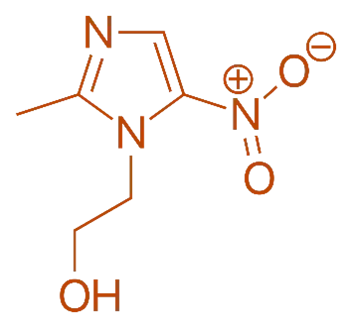
Chemical Structure / Formula of Metronidazole
- Formula: C₆H₉N₃O₃
- Structure: A nitroimidazole with a nitro (-NO₂) group at the 5th position of the imidazole ring.
Mechanism of Action
- Prodrug, activated by anaerobic protozoa and bacteria via pyruvate-ferredoxin oxidoreductase (PFOR) enzyme.
- The nitro group is reduced, generating reactive oxygen species (ROS), leading to DNA damage and cell death.
Uses of Metronidazole
- Amoebiasis (Entamoeba histolytica)
- Giardiasis (Giardia lamblia)
- Trichomoniasis (Trichomonas vaginalis)
- Bacterial infections (anaerobes like Bacteroides, Clostridium difficile, H. pylori eradication regimens)
Advertisements
Side Effects
- Metallic taste, nausea, vomiting
- Disulfiram-like reaction with alcohol (severe flushing, vomiting, tachycardia)
- Neurotoxicity (seizures, peripheral neuropathy with long-term use)
- GI upset, dizziness, headache
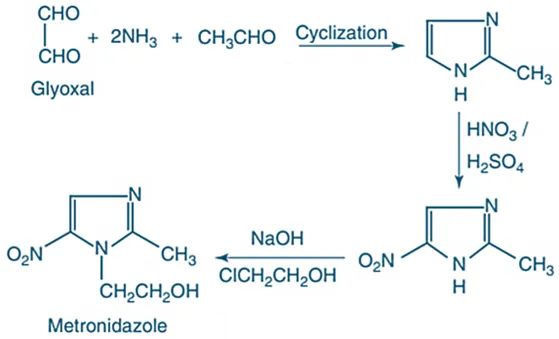
Synthesis of Metronidazole
Structure-Activity Relationship (SAR) of Metronidazole
| Structural Feature | SAR Insight |
| 5-nitroimidazole ring | Critical for activity; nitro group undergoes reduction in anaerobic organisms, forming radicals that damage DNA. |
| Hydrophilic side chain (ethyl alcohol) | Influences solubility and spectrum. |
| Unsubstituted imidazole N | Required for proper redox potential and activation. |
| Bulky substitutions | Usually reduce or eliminate activity. |