
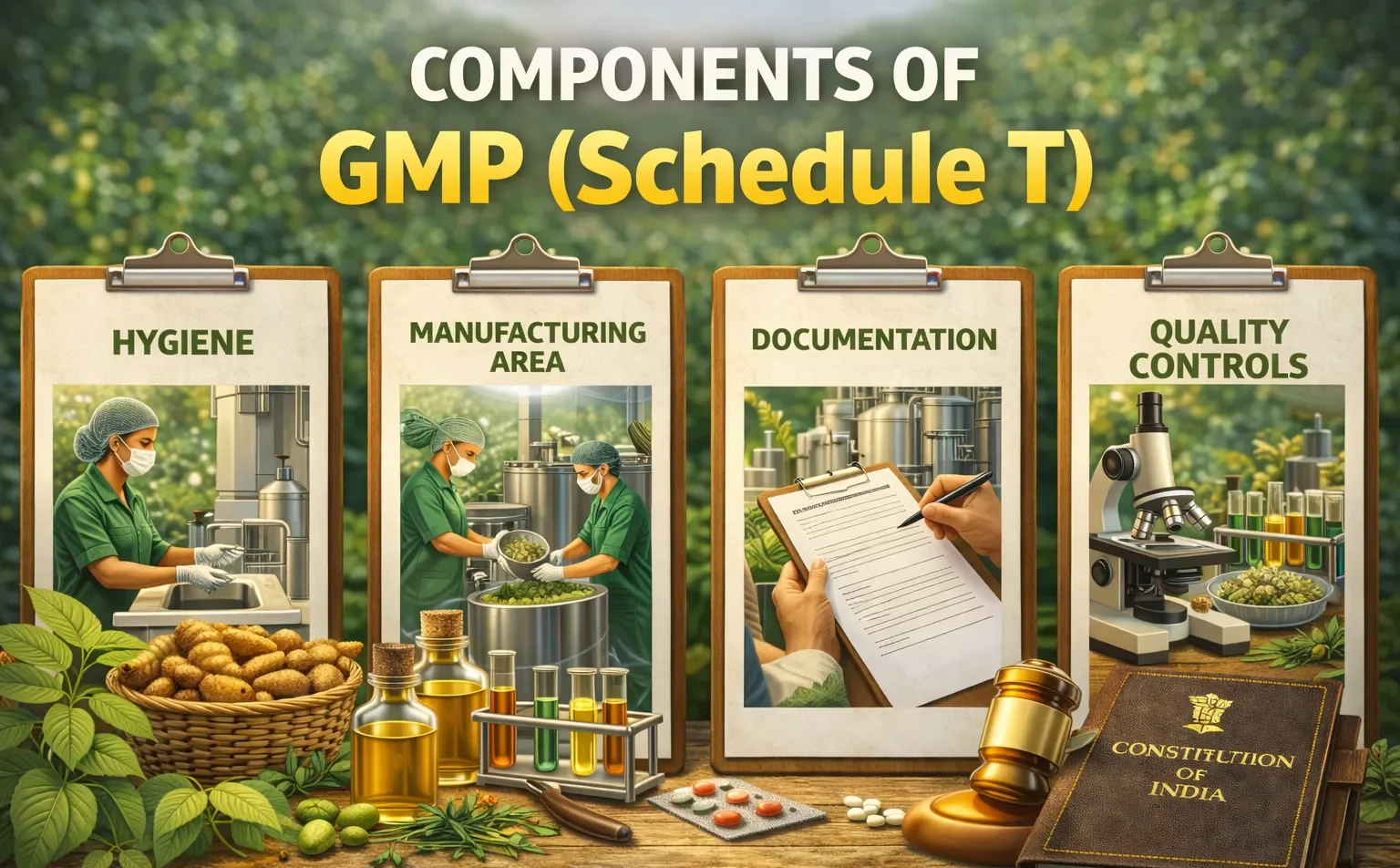
Schedule T includes detailed guidelines and mandatory requirements covering the following core components:

Components of GMP (Schedule T)
-
Infrastructural Requirements
Advertisements
- GMP mandates that the manufacturing facility should be properly designed to facilitate smooth workflow and prevent contamination.
- Building Design: Must have a well-planned layout to separate different manufacturing sections.
- Ventilation & Lighting: Adequate ventilation, air filtration systems, and lighting to maintain a hygienic environment.
-
Working Area
- The manufacturing area should be spacious enough to avoid overcrowding.
- Different sections should be clearly demarcated, such as:
- Raw material processing
- Formulation preparation
- Quality control
- Packaging and labeling
Advertisements
-
Storage Area
- Raw Materials Storage: Kept in labeled and segregated areas.
- Finished Products Storage: Proper environmental conditions should be maintained (temperature, humidity).
- Quarantine Area: Materials under testing should be stored separately.
-
Machinery and Equipment
- All machinery and equipment should be:
- Suitable for the intended manufacturing process.
- Regularly cleaned, maintained, and validated.
- Made of non-corrosive, easy-to-clean materials.
-
Standard Operating Procedures (SOPs)
- SOPs should be documented for every process, including:
- Raw material handling
- Manufacturing procedures
- Equipment cleaning and maintenance
- Quality control testing
- Packaging and labeling
- SOPs should be documented for every process, including:
Advertisements
-
Health and Hygiene
- Personnel Hygiene:
- Workers should wear protective gear (gloves, masks, aprons).
- Regular medical check-ups should be conducted to ensure employee health.
- Sanitation Practices:
- Regular cleaning and disinfection of work areas.
- Waste disposal as per standard protocols.
- Personnel Hygiene:
-
Personnel Hygiene:
- Workers should wear protective gear (gloves, masks, aprons).
- Regular medical check-ups should be conducted to ensure employee health.
-
Sanitation Practices:
- Regular cleaning and disinfection of work areas.
- Waste disposal as per standard protocols.
-
Documentation and Records
- Master Formula Records (MFR) – Details of raw materials, procedures, and final product specifications.
- Batch Manufacturing Records (BMR) – Step-by-step records of each batch.
- Quality Control Records – Testing data for raw materials, intermediates, and final products.
- Equipment Maintenance Records – Ensuring machines are serviced periodically.
Importance of Compliance:
- Enhances product credibility and consumer trust.
- Increases global acceptance of Indian traditional medicines.
- Minimizes contamination risks, ensuring safe and effective products.
- Ensures compliance with regulatory and legal standards.
Advertisements