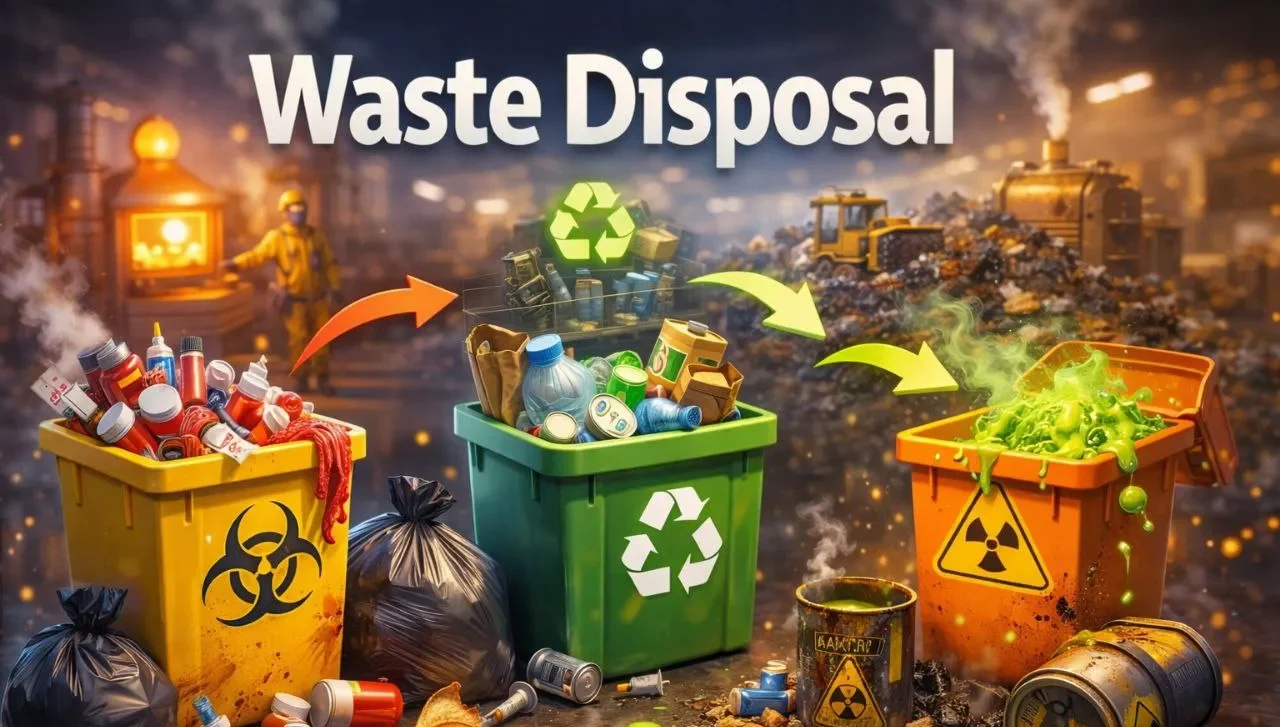
Waste Disposal explains safe handling treatment and disposal of pharmaceutical waste to protect health and environment.
Definition and Relevance
Pharmaceutical waste includes:
- Expired, damaged, or contaminated products
- Laboratory reagents and chemicals
- Manufacturing by-products
- Recalled and non-recoverable items
Advertisements
Proper disposal prevents misuse, environmental pollution, and regulatory violations.
Types of Pharmaceutical Waste
- Expired or Unused Medicines – Drugs that have surpassed their shelf life.
- Contaminated Products – Products exposed to biological or chemical contamination.
- Damaged or Recalled Products – Defective, spilled, or returned pharmaceuticals.
- Chemical and Solvent Waste – By-products from drug manufacturing.
Methods of Waste Disposal
- Incineration: High-temperature burning in specialized facilities to completely destroy pharmaceutical waste.
- Chemical Degradation: Breaking down drugs into non-toxic components.
- Encapsulation: Mixing waste with a solid material (e.g., cement) to prevent leaching.
- Landfill Disposal: Only used for non-hazardous waste under strict guidelines.
- Biodegradation: Some pharmaceutical waste can be treated through microbial degradation.
Advertisements
Regulatory Compliance in Waste Disposal
- Compliance with Good Manufacturing Practices (GMP) and Good Laboratory Practices (GLP).
- Following World Health Organization (WHO) and Environmental Protection Agency (EPA) guidelines.
- Safe disposal protocols to prevent contamination of water sources and soil.
Waste Disposal Process
-
Segregation
- Separate waste at the point of generation according to hazard class.
-
Labeling and Storage
- Temporary storage in appropriate, labeled containers under controlled conditions.
-
Documentation
- Maintain records (waste logs, manifests) indicating type, quantity, and disposal route.
-
Transportation
- Use certified and approved carriers or disposal vendors, if required, under government guidelines.
-
Final Disposal
- Ensure disposal is performed in a certified facility or via approved methods (e.g., licensed incineration).
-
Verification and Record Keeping
- Obtain certificates of destruction and maintain compliance records for audits.
Click Here to Watch the Best Pharma Videos
Advertisements