
- A recall is an action taken to remove a defective or potentially harmful pharmaceutical product from the market.
- Recalls can be voluntary (initiated by the manufacturer) or mandatory (ordered by regulatory authorities).
Classification of Recalls
Recalls are classified based on the severity of the risk:
-
Class I Recall (Most Critical)
- Involves products that can cause serious health issues or death.
- Example: Contaminated vaccines.
-
Class II Recall
- May cause temporary health effects but is not life-threatening.
- Example: Incorrect dosage strength on the label.
-
Class III Recall
- Unlikely to cause adverse health effects but violates quality standards.
- Example: Printing errors on packaging.
Advertisements
Recall Triggers
- Serious quality or safety-related complaints
- GMP deviations identified internally or by regulatory inspections
- Adverse drug reactions or pharmacovigilance signals
- Labeling mix-ups or misbranding
- Contamination (microbial, particulate, chemical)
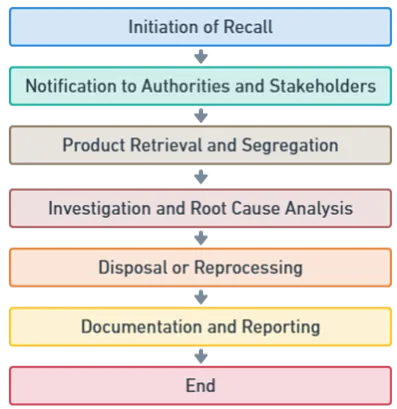
Recall Process
-
Initiation of Recall
- The recall is initiated after identifying a defect through quality complaints, internal testing, or regulatory findings.
-
Notification to Authorities and Stakeholders
- Regulatory agencies, distributors, pharmacies, and healthcare professionals are informed.
-
Product Retrieval and Segregation
- Affected products are withdrawn from the market and segregated in a quarantine area.
-
Investigation and Root Cause Analysis
- The defect’s cause is identified, and corrective actions are implemented.
-
Disposal or Reprocessing
- Depending on the defect, recalled products may be reprocessed or destroyed.
-
Documentation and Reporting
- A recall report is submitted to regulatory agencies, detailing the cause, actions taken, and preventive measures.
Advertisements