
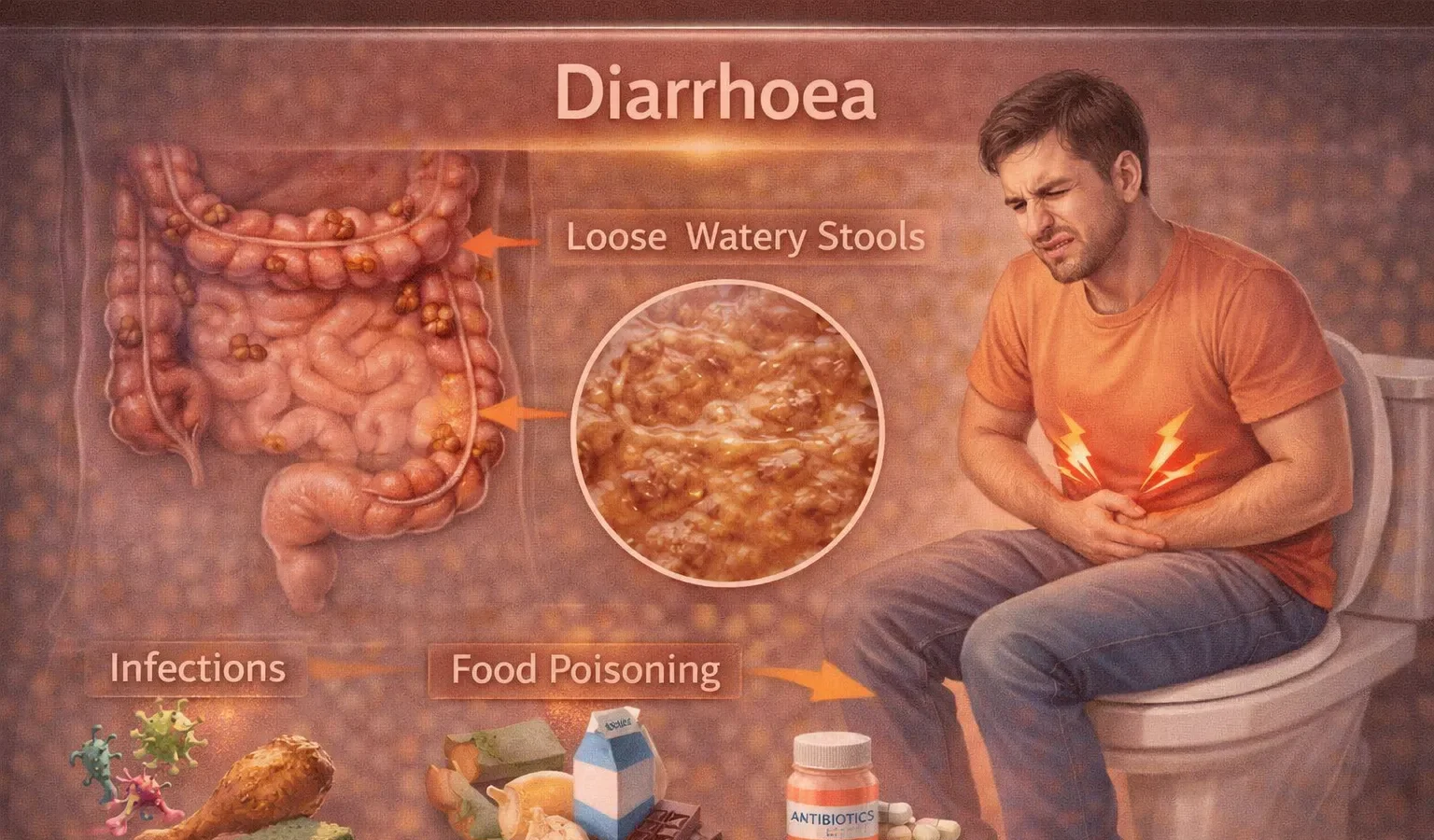
Definition of Diarrhoea
- Diarrhoea is the passage of loose or watery stools three or more times a day.
- It may be acute or chronic, depending on its duration and cause.
Types of Diarrhoea
-
Acute
- Lasts a few days
- Usually caused by infections (viral, bacterial, or parasitic)
-
Chronic
- Lasts more than two weeks
- Often related to medical conditions (e.g., IBS, IBD, celiac disease)
Causes of Diarrhoea
-
Infections:
- Viral: Norovirus, Rotavirus
- Bacterial: E. coli, Salmonella
- Parasitic: Giardia, Entamoeba histolytica
-
Medications:
- Antibiotics (disrupt gut flora)
-
Food Intolerances:
- Lactose, gluten, artificial sweeteners
-
Medical Conditions:
- Inflammatory Bowel Disease (IBD)
- Irritable Bowel Syndrome (IBS)
- Celiac disease
-
Stress & Anxiety
-
Other Factors:
- Radiation therapy, surgeries, excessive alcohol
Advertisements
Symptoms
- Frequent loose/watery stools
- Abdominal cramps
- Nausea & vomiting
- Fever
- Dehydration (dry mouth, dizziness, low urine output)
Advertisements
Treatment
-
Rehydration (Most Important)
- Oral rehydration solution (ORS), clear fluids
- IV fluids in severe dehydration
-
Medications
-
Dietary Adjustments
- Avoid spicy, greasy, or high-fiber foods
- Eat bland foods (BRAT diet: bananas, rice, applesauce, toast)
- Avoid caffeine and alcohol
-
Treat Underlying Conditions
- For chronic diarrhoea, manage IBS, IBD, or celiac disease appropriately
-
Probiotics
- Help restore gut flora balance
- Found in supplements and fermented foods like yogurt, kefir
Click Here to Watch the Best Pharma Videos
Advertisements