
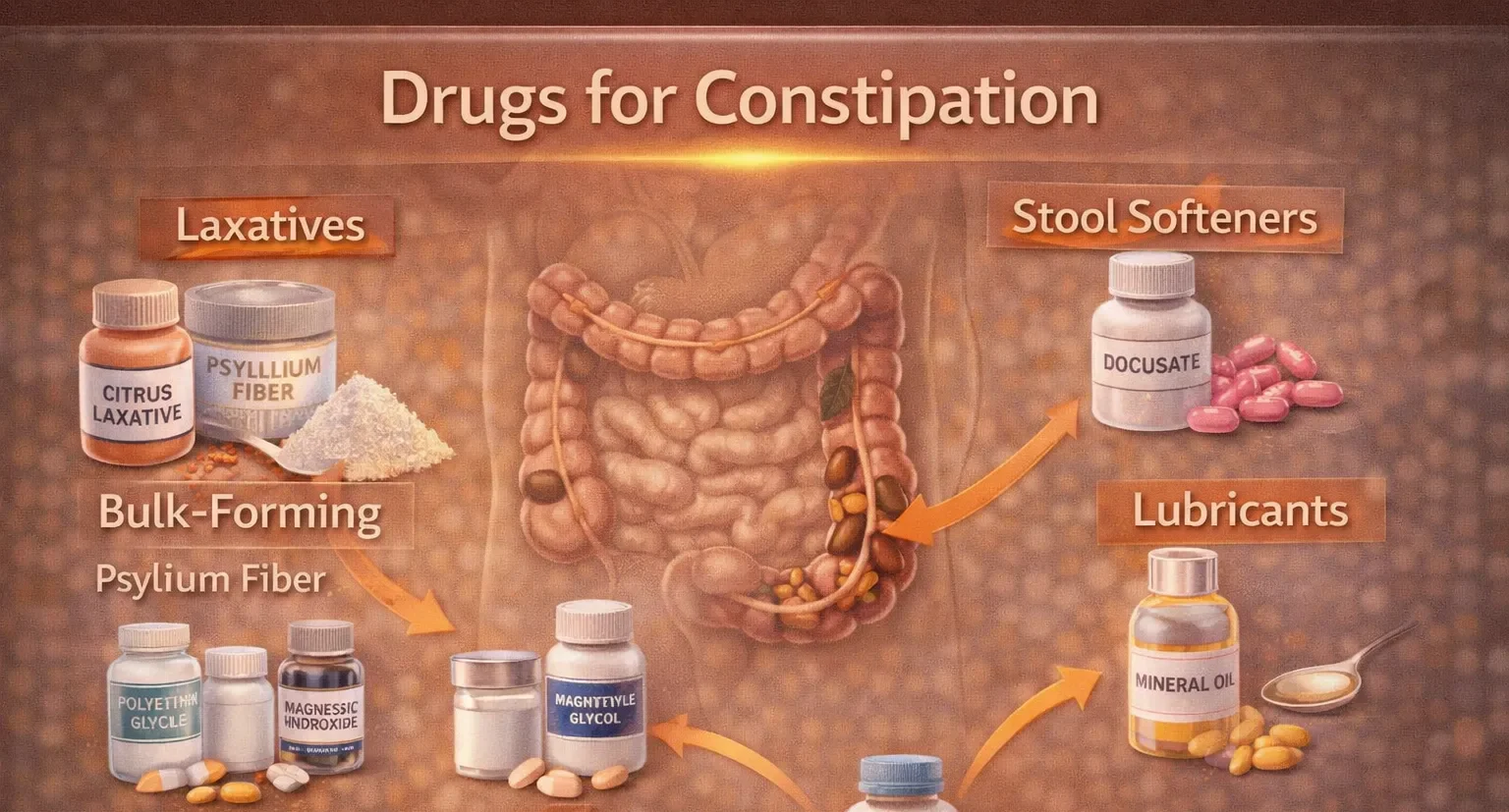
Drugs for Constipation include laxatives that increase bowel movement by softening stool or stimulating intestinal motility.
Drugs for Constipation
- Constipation = infrequent or difficult passage of stool, often due to reduced bowel motility or dehydration.
Types of Laxatives

-
Bulk-forming Laxatives
- Examples: Psyllium husk (Isabgol), Methylcellulose
- Mechanism: Absorb water → increase bulk → stimulate peristalsis
- Use: Chronic constipation
- Note: Must be taken with plenty of water
-
Stool Softeners (Emollients)
- Examples: Docusate sodium
- Mechanism: Soften stool by increasing water and fat penetration
- Use: Post-surgery, hemorrhoids, pregnancy
-
Osmotic Laxatives
- Examples: Lactulose, Magnesium hydroxide, Polyethylene glycol (PEG)
- Mechanism: Retain water in intestine → soften stool & promote peristalsis
- Use: Rapid bowel clearance (e.g., before colonoscopy), hepatic encephalopathy (lactulose)
-
Stimulant (Irritant) Laxatives
- Examples: Bisacodyl, Senna
- Mechanism: Stimulate enteric nerves → ↑ motility and secretion
- Use: Short-term use only
- Caution: Long-term use may cause dependence
-
Lubricants
- Examples: Liquid paraffin
- Mechanism: Lubricates stool and intestinal wall
- Use: Occasional constipation
- Caution: Aspiration risk (lipid pneumonia)
Advertisements