
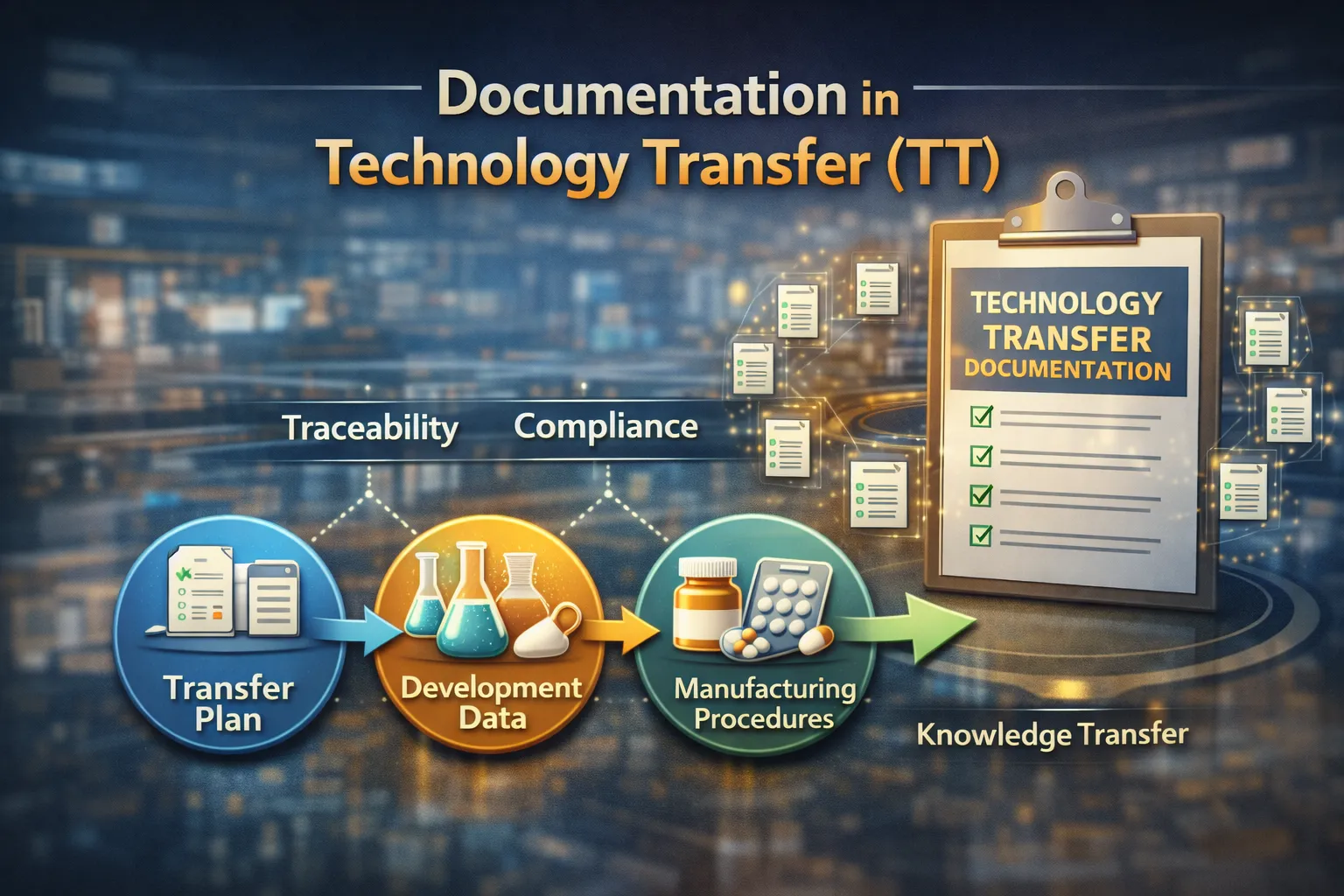
Importance of Documentation in Technology Transfer
- Documentation ensures transparency, traceability, and regulatory compliance, serving as evidence that processes meet quality standards.
Types of Required Documentation in Technology Transfer

- Standard Operating Procedures (SOPs): Detailed instructions for routine tasks, ensuring consistency in production and quality control.
- Batch Manufacturing Records (BMRs): Records of each batch, including any deviations, to maintain traceability.
- Validation Protocols and Reports: Structured plans and results that demonstrate process consistency and reliability.
- Analytical Methods and Specifications: Detailed procedures for testing quality, potency, and safety to ensure product standards are met.
- Change Control Documents: Records of any modifications to processes or methods, ensuring controlled adaptation.
Advertisements
Regulatory Expectations
- Good Documentation Practices (GDP): Ensures documentation is accurate, complete, and well-maintained.
- Audit Readiness: Documentation must be accessible for regulatory inspections.
- Data Integrity: Data must meet ALCOA standards (Attributable, Legible, Contemporaneous, Original, and Accurate).
Key Documentation in TT
- Master Batch Records: Step-by-step instructions ensuring consistent batch production.
- Stability Protocols & Reports: Data on product quality over time to determine shelf life and storage conditions.
- Equipment and Facility Manuals: Guides for operation, maintenance, and calibration to ensure correct equipment use.
- Risk Assessments: Identification of potential risks and mitigation strategies.
- Training Materials: Used to train staff at the receiving site on processes and equipment.
- Technology Transfer Protocols & Reports: Formal plans and reports documenting the transfer process and outcomes.
This comprehensive documentation supports a smooth technology transfer, maintaining product quality and regulatory compliance across sites.
Advertisements