
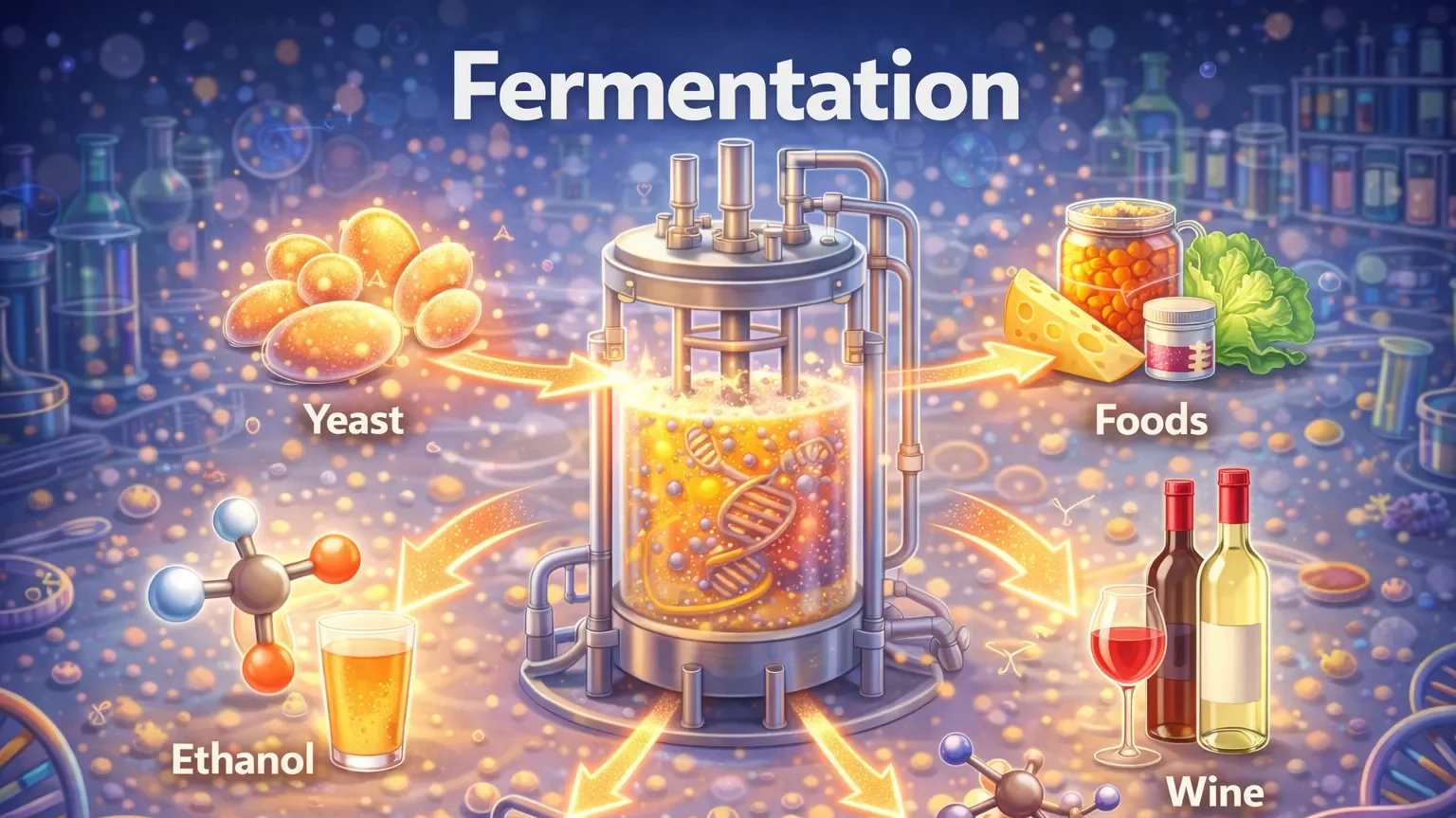
- Fermentation is a biological process where microorganisms (such as bacteria, yeast, or fungi) convert organic substances (like sugars) into different products, such as alcohol, acids, gases, or biomass.
- It is widely used in food, pharmaceuticals, biotechnology, and biofuel production.
- Fermentation can be categorized based on different criteria such as oxygen requirement, operational mode, and scale.
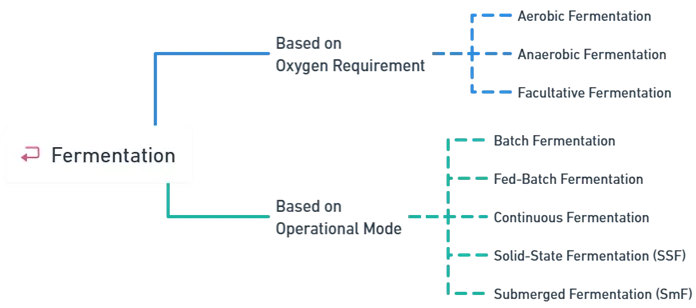
Based on Oxygen Requirement
-
Aerobic Fermentation
- Requires oxygen.
- Microorganisms use oxygen as an electron acceptor for metabolic processes.
- Used in processes like antibiotic production (e.g., Penicillin), citric acid production, and vinegar production.
- Requires proper aeration and stirring to supply oxygen efficiently.
-
Anaerobic Fermentation
- Occurs in the absence of oxygen.
- Microorganisms use alternative electron acceptors (like sulfate or nitrate).
- Used in processes like ethanol production, lactic acid fermentation, and methane generation.
-
Facultative Fermentation
- Microorganisms can grow in both aerobic and anaerobic conditions.
- Example: Yeast (Saccharomyces cerevisiae) in ethanol production.
Advertisements
Based on Operational Mode
-
Batch
- All nutrients are added at the start, and no further addition occurs.
- The culture grows, produces the desired product, and is then harvested.
- Advantages: Simple, easy to control.
- Disadvantages: Low productivity due to downtime for cleaning and setup.
- Examples: Beer brewing, yogurt production.
-
Fed-Batch
- Fresh nutrients are added during the process without removing culture fluid.
- Extends the growth phase and improves productivity.
- Examples: Insulin production, antibiotic production.
-
Continuous
- Fresh media is continuously supplied, and the product is continuously harvested.
- Advantages: High efficiency and productivity.
- Disadvantages: Complex control and risk of contamination.
- Examples: Biomass production (e.g., algae for biofuels).
-
Solid-State Fermentation (SSF)
- Microorganisms grow on solid substrates without free-flowing liquid.
- Examples: Mushroom cultivation, tempeh production.
-
Submerged Fermentation (SmF)
- Microorganisms grow in a liquid medium.
- Examples: Enzyme production (amylase, protease).