
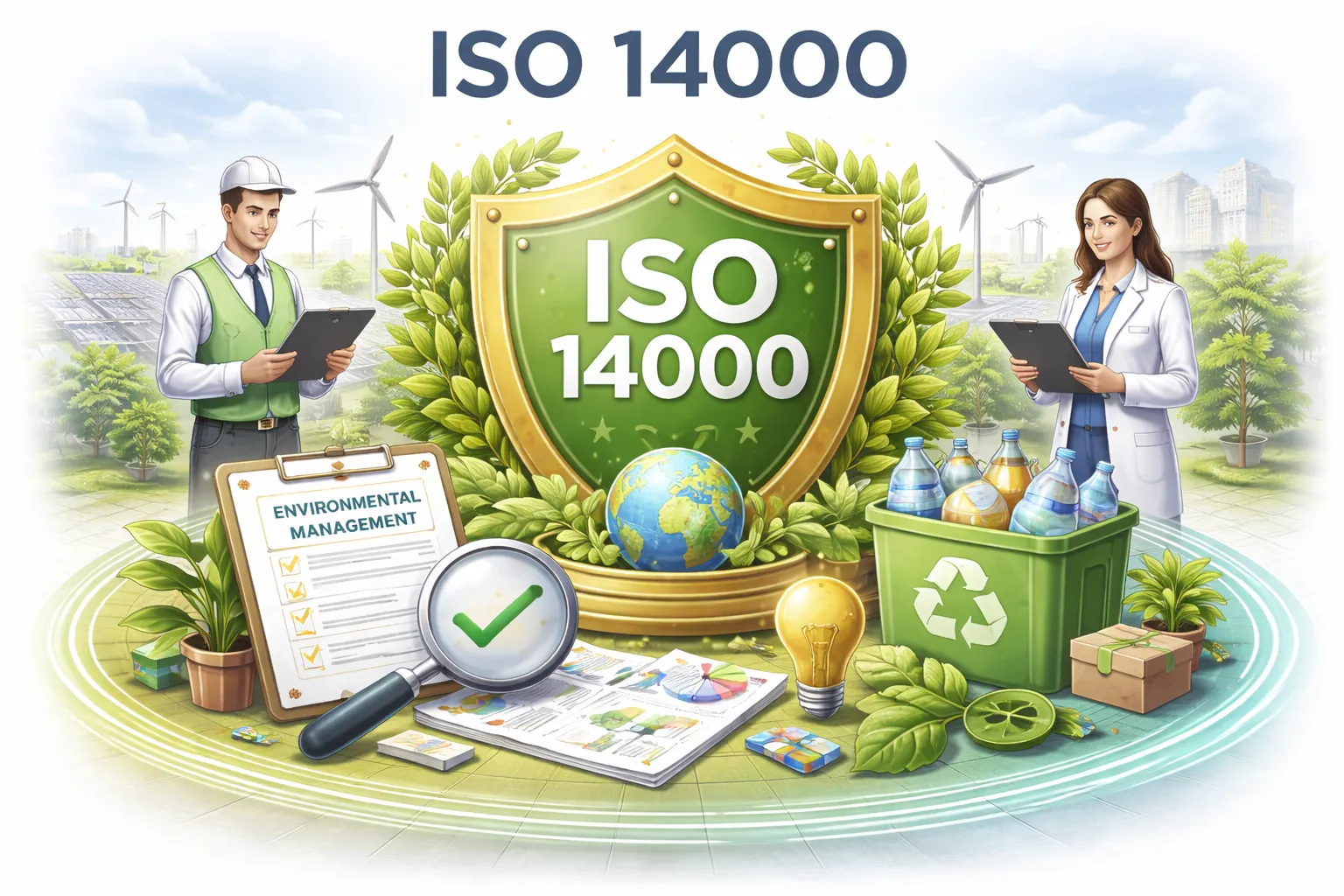
ISO 14000 Overview
- The ISO 14000 family of standards focuses on environmental management, helping organizations minimize their environmental impact, comply with laws, and improve their practices.
- The cornerstone of this series is ISO 14001, which provides a framework for an Environmental Management System (EMS).
Key Components of ISO 14001 EMS
- Policy and Commitment: Define environmental policy and ensure management commitment.
- Planning: Identify environmental impacts, set goals, and develop programs.
- Implementation and Operation: Involve training, communication, EMS documentation, and operational control.
- Checking and Corrective Action: Monitor key activities, address non-compliance, and maintain records.
- Management Review: Conduct regular reviews to ensure EMS effectiveness.
Benefits of ISO 14001 Certification
- Cost Savings: Reduced waste and efficient resource management.
- Lower Environmental Liability: Compliance with regulations reduces risk.
- Improved Image: Enhances corporate reputation and public perception.
- Competitive Advantage: Many clients prefer certified companies.
Advertisements
Steps for ISO 14001 Certification
- Gap Analysis: Assess current processes against ISO 14001.
- Planning and Design: Develop EMS with objectives and targets.
- Implementation: Integrate EMS practices across the organization.
- Internal Audits: Conduct internal audits to ensure alignment.
- Management Review: Senior management reviews EMS performance.
- Certification Audit: External audit for certification.
- Certification and Continual Improvement: Certification awarded, with ongoing improvement and periodic surveillance audits.
Other ISO 14000 Standards
- ISO 14004: Guidance on EMS development.
- ISO 14031: Environmental performance evaluation.
- ISO 14040 & ISO 14044: Life cycle assessment of products.
ISO 14000 standards foster sustainable practices, enhancing environmental responsibility and organizational efficiency.
Advertisements