
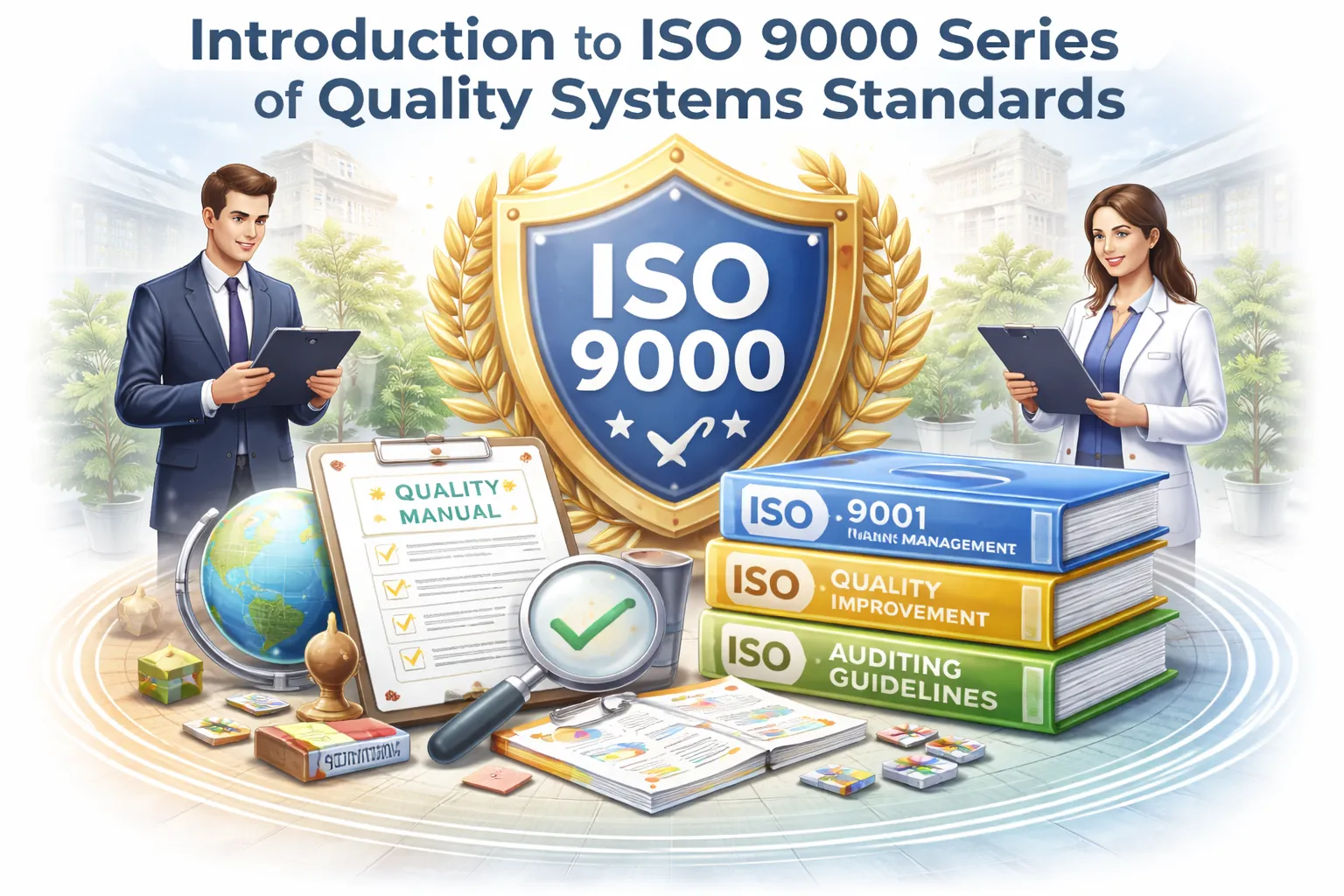
Overview of ISO 9000 Series of Quality Systems Standards
- The ISO 9000 series comprises internationally recognized standards for quality management systems.
- Developed by the International Organization for Standardization (ISO).
Key Standards

-
ISO 9000:2015
- Provides the fundamentals and vocabulary for quality management systems.
-
ISO 9001:2015
- Specifies requirements for a quality management system.
- Focuses on meeting customer requirements and enhancing satisfaction.
-
ISO 9004:2018
- Offers guidance for sustained success through quality management.
Advertisements
Principles of ISO 9001:2015
-
Customer Focus
- Understanding and meeting customer needs.
-
Leadership
- Establishing unity of purpose and direction.
-
Engagement of People
- Competent, empowered, and engaged employees.
-
Process Approach
- Managing activities as interrelated processes.
-
Improvement
- Ongoing focus on enhancing performance.
-
Evidence-Based Decision Making
- Making decisions based on data analysis.
-
Relationship Management
- Managing relationships with interested parties.
Implementation Steps
-
Gap Analysis
- Assess current practices against ISO 9001 requirements.
-
Develop Quality Policy and Objectives
- Establish commitments and goals.
-
Documentation
- Create procedures, manuals, and records.
-
Training
- Educate employees on the QMS.
-
Implementation
- Put the QMS into practice.
-
Internal Audits
- Evaluate the effectiveness of the QMS.
-
Management Review
- Top management reviews system performance.
-
Certification
- Undergo external audit for ISO 9001 certification.
Benefits:
- Increased efficiency and effectiveness.
- Enhanced customer satisfaction.
- Improved risk management.
- Greater market opportunities.
Advertisements
Advantages of ISO 9001 Certification
- Increased Efficiency: Optimized processes enhance quality and efficiency.
- Increased Revenue: ISO-certified companies show higher returns on assets.
- Improved Employee Morale: Defined roles, accountability, and training improve satisfaction.
- Greater Customer Satisfaction: Meeting customer requirements improves satisfaction.
- Better Decision-Making: Regular reviews support informed decisions.
- International Recognition: ISO 9001 is globally recognized, boosting credibility.
Elements of ISO 9001
- Context of the Organization: Defines organizational needs, scope, and QMS framework.
- Leadership: Emphasizes commitment, policy, and clear roles.
- Planning: Addresses risk management and quality objectives.
- Support: Covers resources, competence, communication, and documentation.
- Operation: Encompasses production, service, design, and nonconformities.
- Performance Evaluation: Includes monitoring, audits, and management reviews.
- Improvement: Focuses on corrective actions and continual improvement.
ISO 9001 certification provides a structured framework for quality, efficiency, and global credibility.
Advertisements