

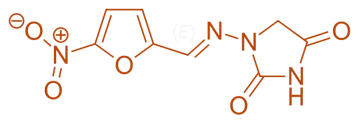
Chemical Structure / Formula of Nitrofurantoin
- Formula: C₈H₆N₄O₅
- Structure: A nitrofuran derivative with a hydantoin ring.
Mechanism of Action
- Prodrug that is reduced by bacterial nitroreductases to reactive metabolites.
- These metabolites damage bacterial DNA, ribosomes, and proteins, leading to cell death.
Uses of Nitrofurantoin
- Uncomplicated UTIs (first-line therapy for cystitis).
- Effective against E. coli, Enterococcus, Staphylococcus saprophyticus.
- Not effective for pyelonephritis or systemic infections (low tissue penetration).
Advertisements
Side Effects
- GI upset (nausea, vomiting, diarrhea).
- Pulmonary toxicity (acute and chronic pneumonitis, fibrosis).
- Hepatotoxicity (rare but serious).
- Hemolysis in G6PD-deficient patients.
Structure-Activity Relationship (SAR) of Nitrofurantoin
| Structural Feature | SAR Insight |
| Nitrofuran ring | Essential for antimicrobial activity; nitro group is reduced by bacterial enzymes to reactive intermediates. |
| Side chain with hydantoin (imidazolidinedione) | Important for solubility, absorption, and activity. |
| Electron-withdrawing nitro group | Critical for redox cycling and formation of reactive species. |
| Modifications on furan ring | Usually reduce activity or bioavailability. |
| Increased lipophilicity | May enhance bacterial uptake but can increase toxicity. |
Synthesis of Nitrofurantoin