
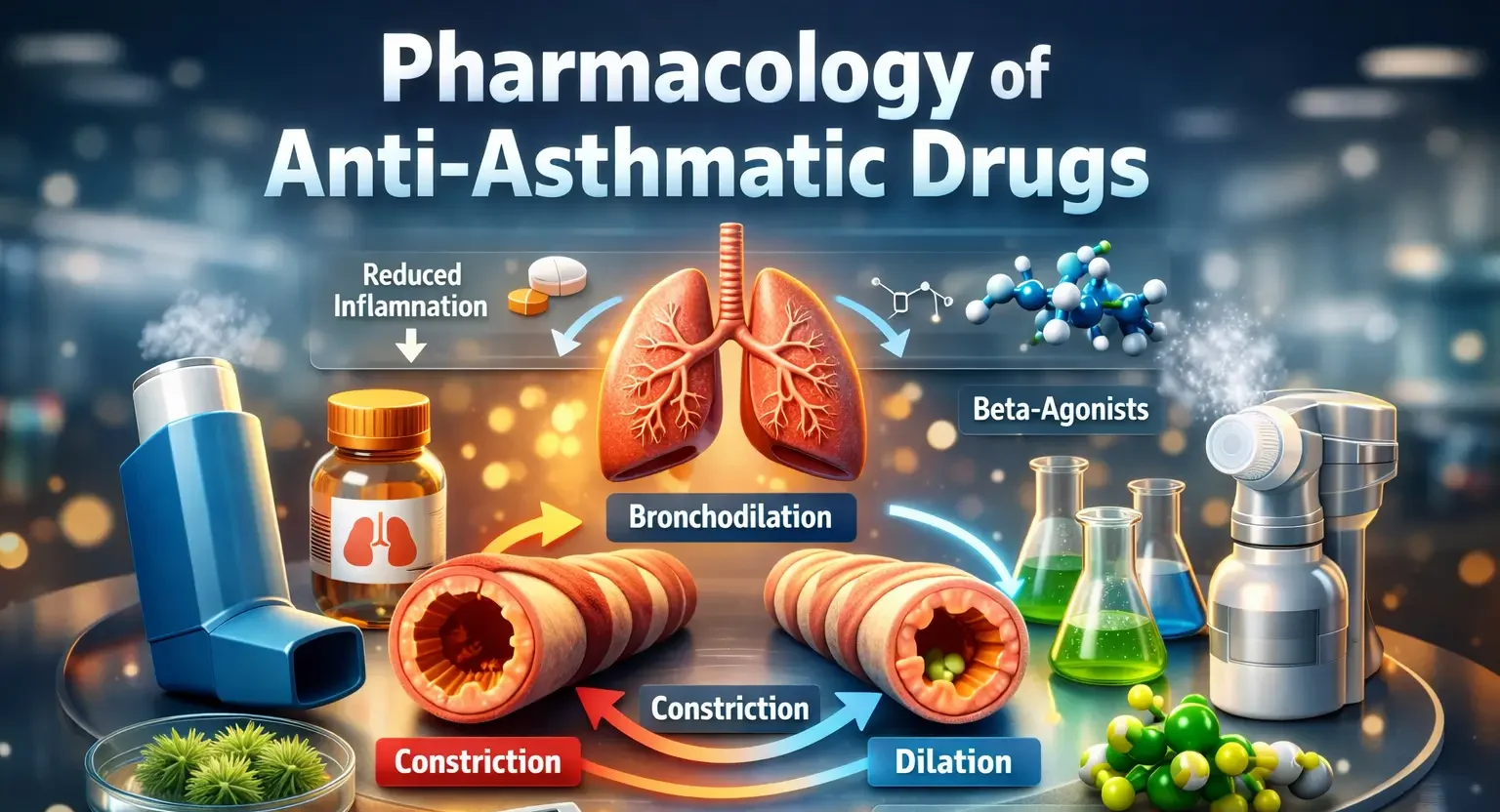
Pharmacology of anti-asthmatic drugs
Pharmacology of Anti-Asthmatic Drugs explains mechanisms and actions of drugs used to relieve bronchoconstriction and airway inflammation.
Main Classes of Anti-Asthmatic Drugs
-
Bronchodilators
- These drugs relieve bronchoconstriction and are primarily used in acute asthma attacks.
-
β2-Adrenergic Agonists
- Examples: Salbutamol (short-acting), Salmeterol (long-acting)
- Mechanism: Stimulate β2-receptors in bronchial smooth muscle → ↑ cAMP → bronchodilation
- Use:
- Short-acting (SABA): Rescue inhaler in acute attack
- Long-acting (LABA): Maintenance therapy (usually with corticosteroids)
-
Anticholinergics (Muscarinic antagonists)
- Examples: Ipratropium (short-acting), Tiotropium (long-acting)
- Mechanism: Block M3 receptors → inhibit vagal-mediated bronchoconstriction
- Use: More commonly used in COPD, but can be adjunct in asthma
-
Methylxanthines
- Example: Theophylline
- Mechanism: Inhibits phosphodiesterase → ↑ cAMP → bronchodilation; also has anti-inflammatory effect
- Use: Less commonly used due to narrow therapeutic index and side effects
-
- These drugs relieve bronchoconstriction and are primarily used in acute asthma attacks.
-
Anti-inflammatory Agents
- These control the underlying inflammation in chronic asthma.
-
Corticosteroids
- Examples: Beclomethasone (inhaled), Prednisolone (oral)
- Mechanism: Inhibit inflammatory gene expression, reduce cytokine production
- Use:
- Inhaled: Maintenance therapy
- Oral: For severe or uncontrolled asthma
-
Leukotriene Receptor Antagonists (LTRAs)
- Examples: Montelukast, Zafirlukast
- Mechanism: Block leukotriene receptors → reduce bronchoconstriction, mucus secretion, and inflammation
- Use: Add-on therapy, especially useful in aspirin-sensitive or exercise-induced asthma
-
Mast Cell Stabilizers
- Examples: Cromolyn sodium
- Mechanism: Prevent mast cell degranulation → reduce histamine and leukotriene release
- Use: Prophylaxis; rarely used now
-
- These control the underlying inflammation in chronic asthma.
-
Biologics (Monoclonal Antibodies)
- Target specific mediators of inflammation in severe asthma.
-
Anti-IgE
- Example: Omalizumab
- Mechanism: Binds to IgE → prevents activation of mast cells
- Use: Severe allergic asthma not controlled by other drugs
-
Anti-IL-5 / Anti-IL-4 Receptor
- Examples: Mepolizumab, Dupilumab
- Mechanism: Inhibit IL-5 or IL-4/IL-13 pathways → reduce eosinophilic inflammation
- Use: Severe eosinophilic asthma
-
- Target specific mediators of inflammation in severe asthma.
Click Here to Watch the Best Pharma Videos
Advertisements