
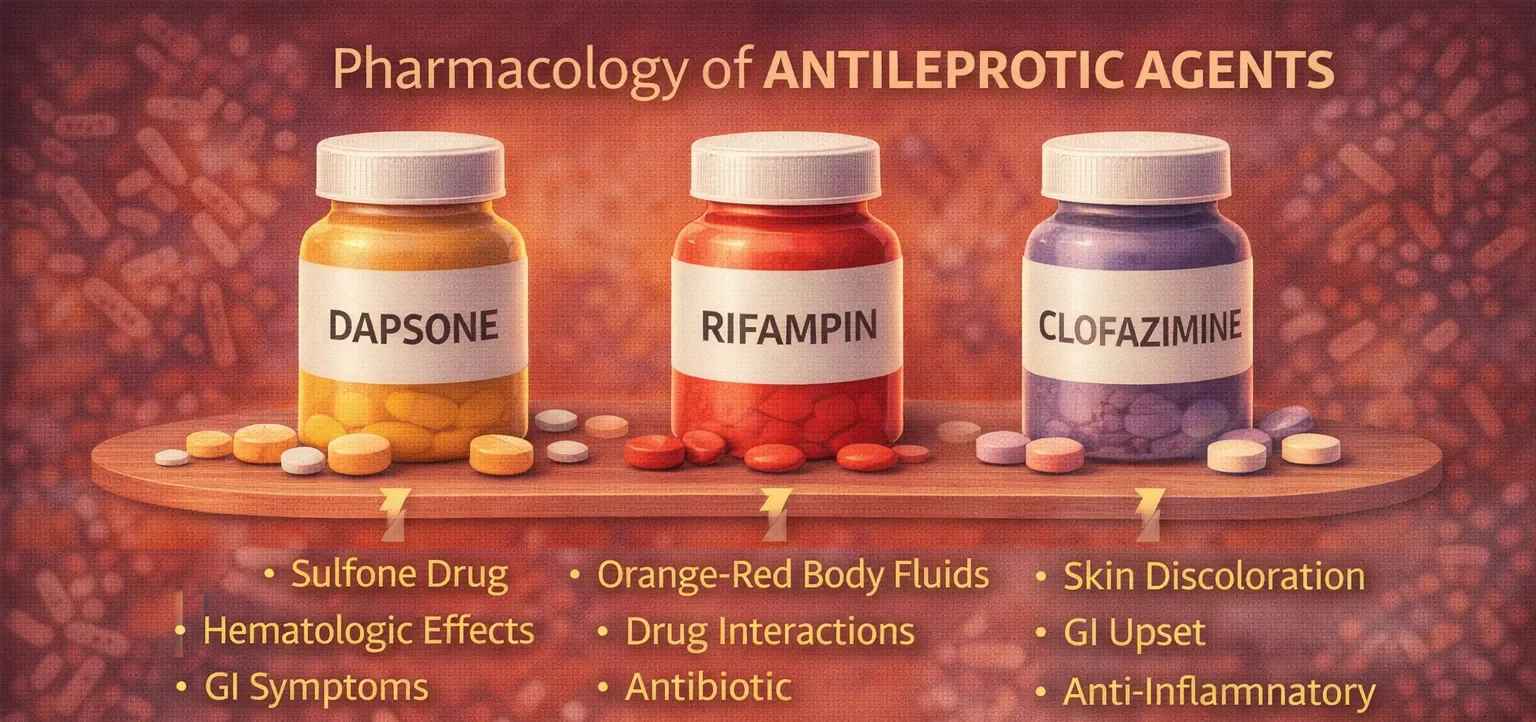
Pharmacology of Antileprotic Agents explains drugs used to treat leprosy by inhibiting or killing Mycobacterium leprae.
Overview of Pharmacology of Antileprotic Agents
- Leprosy (Hansen’s Disease) is caused by Mycobacterium leprae – a slow-growing acid-fast bacillus affecting skin, peripheral nerves, and mucous membranes.
- Treatment uses multi-drug therapy (MDT) to:
- Prevent resistance
- Shorten duration
- Ensure cure
Main Antileprotic Drugs

Advertisements
-
Dapsone
- Mechanism: Inhibits dihydropteroate synthase → blocks folate synthesis (similar to sulfonamides)
- Use: First-line for leprosy
- Adverse Effects: Hemolysis (especially in G6PD deficiency), methemoglobinemia, skin rash
-
Rifampicin
- Mechanism: Inhibits RNA polymerase
- Use: Most bactericidal drug against leprae
- Note: Also used in TB
-
Clofazimine
- Mechanism: Binds to DNA, interferes with replication; anti-inflammatory
- Use: Lepromatous leprosy, Type 2 lepra reaction (ENL – Erythema Nodosum Leprosum)
- Adverse Effects: Skin discoloration (reddish-brown to black), GI upset
WHO Multi-Drug Therapy (MDT)
| Type of Leprosy | Drugs (Duration) |
| Paucibacillary (PB) (1–5 lesions) | Rifampicin + Dapsone (6 months) |
| Multibacillary (MB) (>5 lesions) | Rifampicin + Dapsone + Clofazimine (12 months) |
Other Supportive Drugs
- Thalidomide: Used for Type 2 lepra reaction (ENL)
- Prednisolone: For nerve inflammation in lepra reactions
Pharmacokinetics (In Brief)
- Absorption: Mostly well-absorbed orally
- Distribution: Widely distributed in body tissues
- Metabolism: Mainly in the liver
- Excretion: Primarily via the kidneys
- Influenced by: Age, organ function, drug interactions
Advertisements
Side Effects of Antileprotic Drugs
- GI disturbances – Nausea, diarrhea
- Skin reactions – Rash, rare severe reactions (e.g. SJS)
- Neurotoxicity – Peripheral neuropathy
- Hepatotoxicity – Jaundice, liver dysfunction
- Allergic reactions – Rare but severe (anaphylaxis)
- Ocular effects – Blurred vision, visual loss