
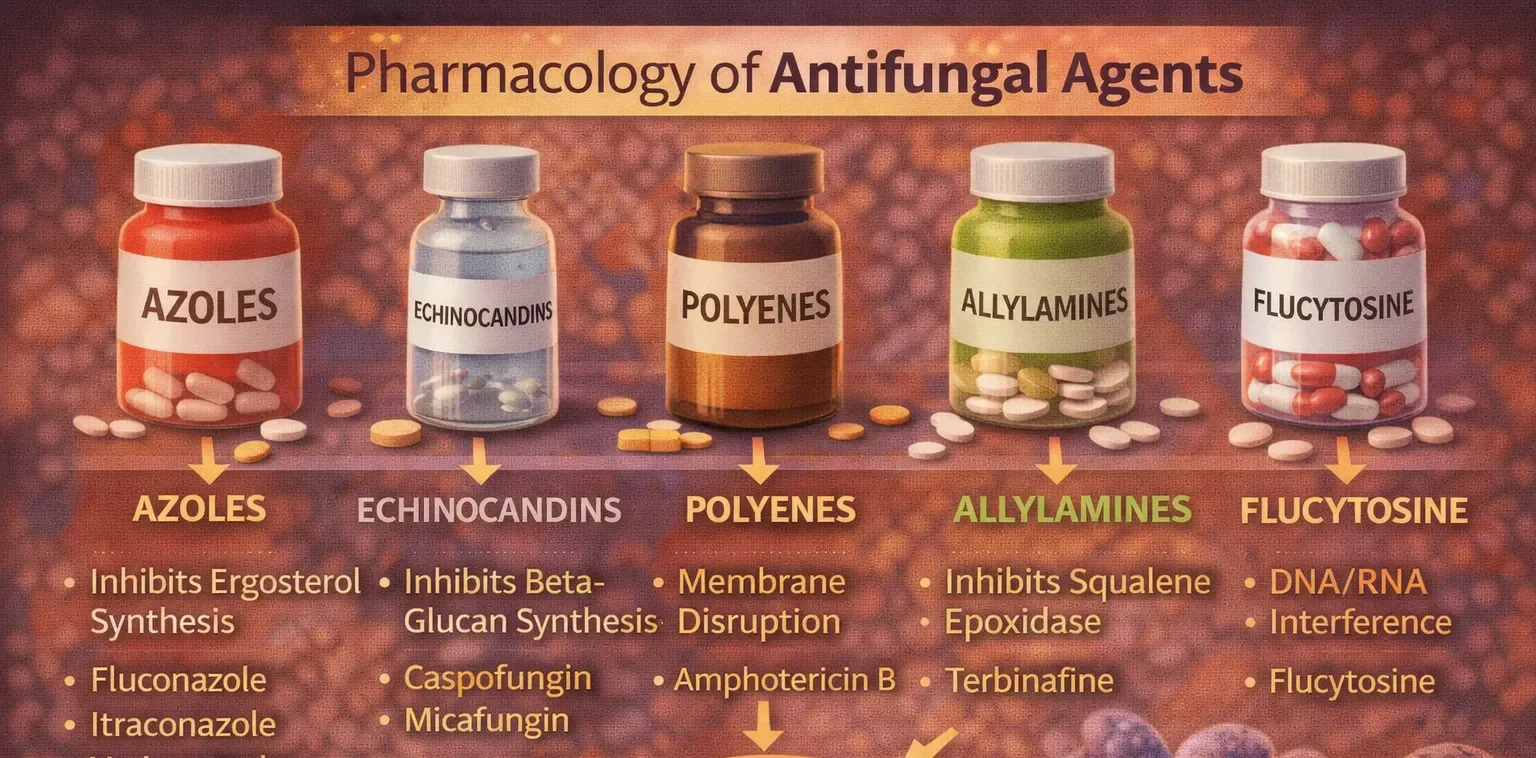
Pharmacology of Antifungal Agents explains mechanisms and actions of drugs that inhibit fungal growth or kill fungi.
Pharmacology of Antifungal Agents
- Fungal infections (mycoses) may be:
- Superficial: Skin, nails, mucous membranes
- Systemic: In immunocompromised patients (e.g., candidiasis, aspergillosis)
- Fungi are eukaryotic organisms, so antifungal drugs must be selective to avoid host toxicity.
Classes of Antifungal Drugs
-
Polyenes
- Examples: Amphotericin B (systemic), Nystatin (topical)
- Mechanism: Bind to ergosterol in fungal cell membrane → pores → cell lysis
- Use:
- Amphotericin B: Severe systemic mycoses
- Nystatin: Oral thrush, vaginal candidiasis
- Adverse Effects:
- Amphotericin B: Nephrotoxicity, fever, chills, electrolyte imbalance
-
Azoles
- Examples:
- Imidazoles: Clotrimazole, Miconazole (topical)
- Triazoles: Fluconazole, Itraconazole, Voriconazole (systemic)
- Mechanism: Inhibit lanosterol 14-α-demethylase → ↓ ergosterol synthesis
- Use:
- Fluconazole: Candidiasis
- Itraconazole: Histoplasmosis, onychomycosis
- Side Effects: Hepatotoxicity, drug interactions (CYP inhibition)
- Examples:
-
Echinocandins
- Examples: Caspofungin, Micafungin
- Mechanism: Inhibit β-glucan synthesis → disrupt fungal cell wall
- Use: Invasive candidiasis, aspergillosis
- Adverse Effects: Minimal; generally well-tolerated
-
Allylamines
- Example: Terbinafine
- Mechanism: Inhibits squalene epoxidase → ↓ ergosterol
- Use: Dermatophytosis (e.g., tinea infections), onychomycosis
-
Others
- Griseofulvin: Binds microtubules → inhibits fungal mitosis; used for skin and nail infections
- Flucytosine: Converted to 5-FU → inhibits DNA synthesis; used with Amphotericin B in cryptococcal meningitis
Advertisements
Pharmacokinetics (General Overview)
| Parameter | Key Points |
| Absorption | Affected by pH, food, and other drugs |
| Distribution | Many penetrate well into tissues (e.g., lungs, skin, CNS) |
| Metabolism | Some (e.g., azoles) metabolized in liver, others excreted unchanged |
| Elimination | Via kidneys or bile, renal/liver function affects dosing |
| Drug Interactions | Azoles can inhibit or induce CYP450 enzymes, affecting other drugs |
Note: Dosing may vary with age, comorbidities, and concurrent medications.