
Types of glass container
Here is the types of glass containers used in the pharmaceutical industry:
| Glass Type | Name | Chemical Resistance | Common Pharmaceutical Applications |
| Type I | Borosilicate Glass | Highest | Injectable products, parenteral preparations, sensitive drugs |
| Type II | Treated Soda-Lime Glass | High (Treated) | Acidic or neutral injectables, infusions |
| Type III | Regular Soda-Lime Glass | Moderate | Oral liquids, tablets, capsules, powders |
| Type NP | General-Purpose Soda-Lime Glass | Lowest | Topical preparations, oral products not sensitive to glass interactions |
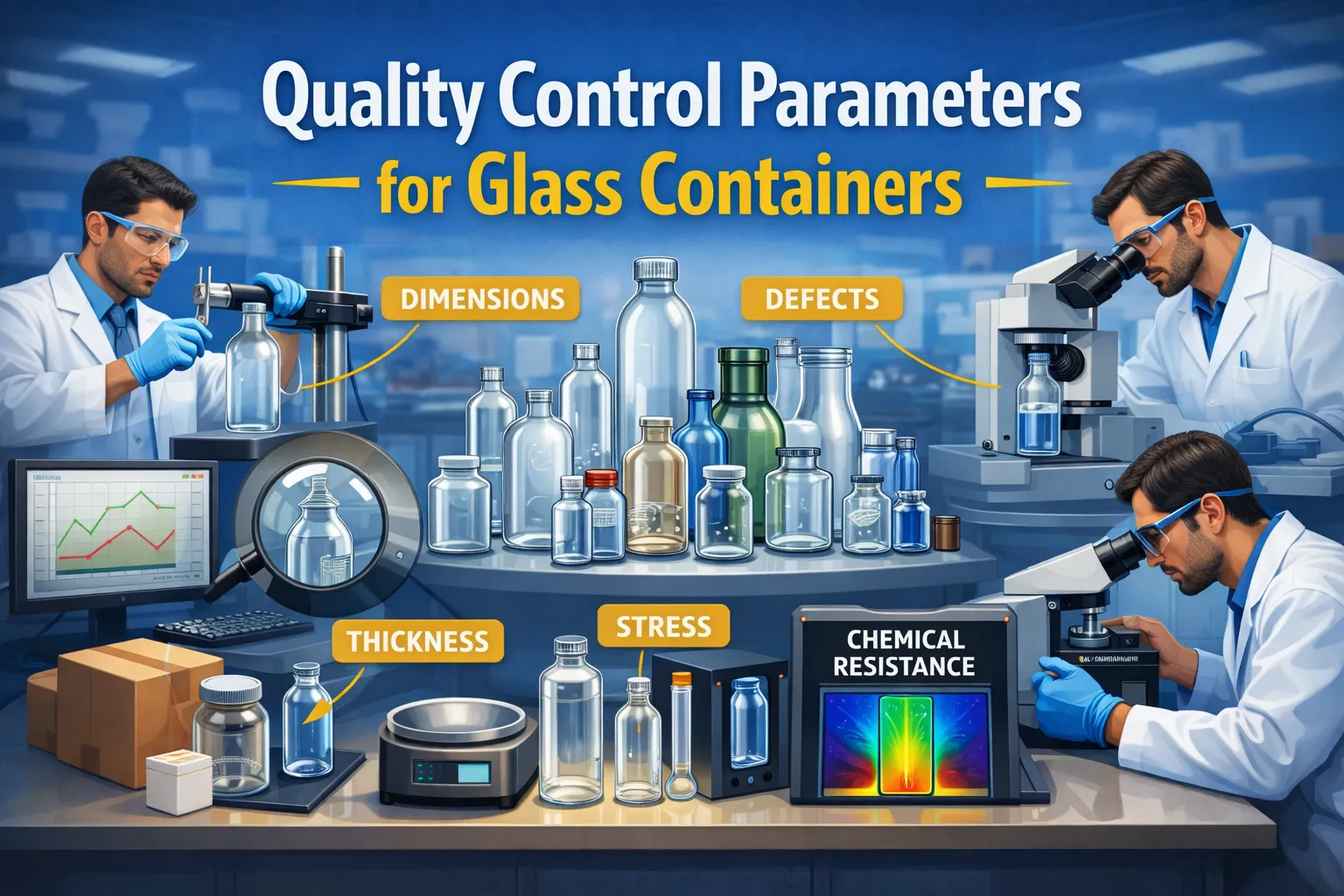
Quality Control Parameters for Glass Containers

-
Hydrolytic Resistance (Chemical Resistance)
- Evaluates how much alkali is extracted from the glass surface when exposed to water.
- Testing involves:
- Washing the container
- Filling with purified water
- Autoclaving
- Titrating the solution to measure extracted alkali
- Used to classify glass into Type I, Type II, or Type III based on resistance.
-
Arsenic Content Test
- Ensures glass does not leach harmful levels of arsenic.
- Older glass formulations contained trace heavy metals, requiring compliance with pharmacopeial limits.
-
Internal Surface pH Test
- Determines if the container’s inner surface alters the product’s pH.
- Similar to hydrolytic resistance testing but focuses on pH shifts that could impact drug stability.
-
Light Transmission Test
- Ensures amber or colored glass provides adequate UV and visible light protection.
- Conducted using a spectrophotometer.
-
Fragmentation Test (for Ampoules)
- Assesses the tendency of ampoules to produce glass particles upon breaking.
- Critical for injectable products to minimize glass particulates.
-
Mechanical Strength / Breakage Resistance
- Evaluates the container’s ability to withstand mechanical stress, including:
- Vertical load resistance
- Impact resistance
- Evaluates the container’s ability to withstand mechanical stress, including:
Advertisements