
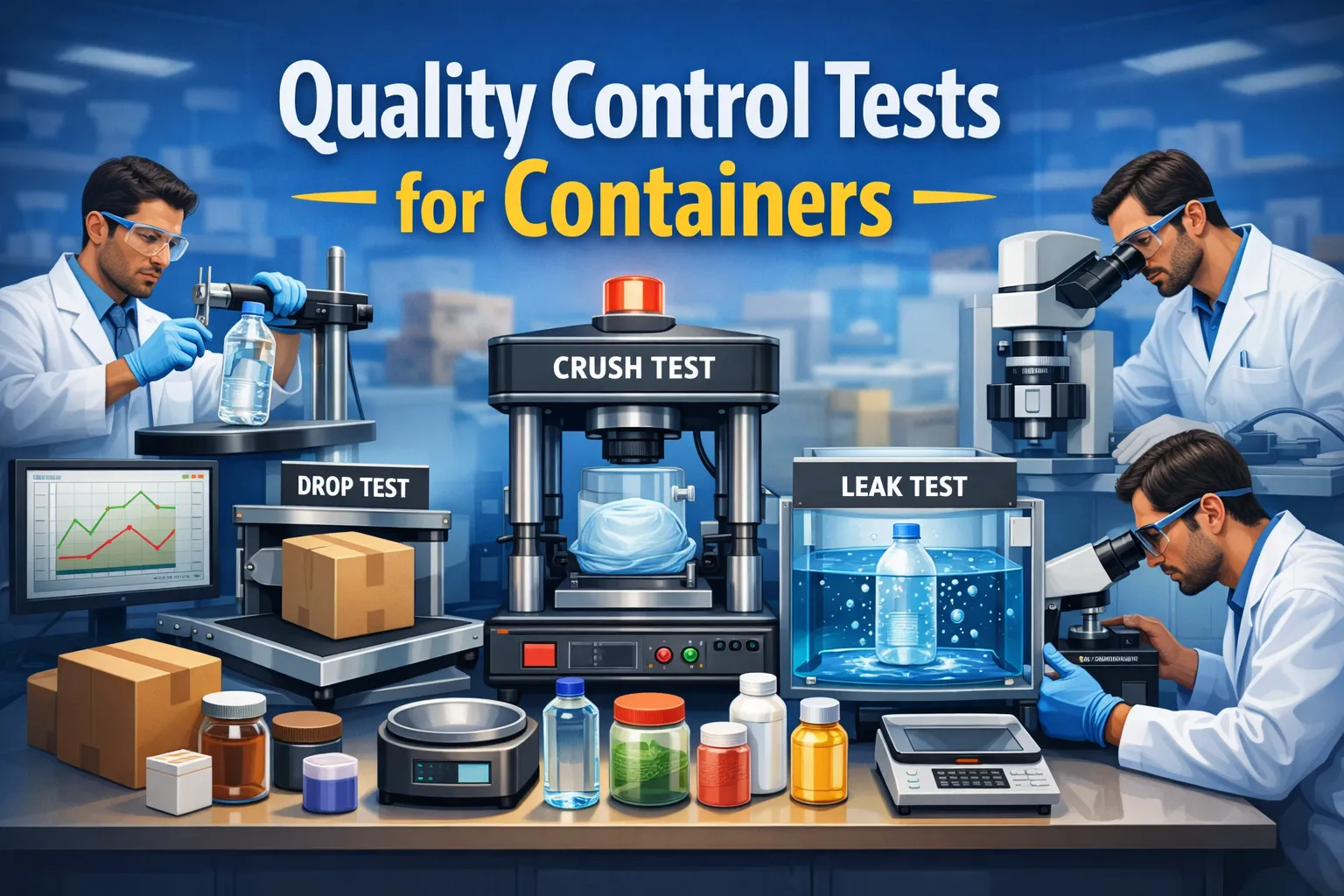
Quality Control Tests for Containers explain evaluation methods parameters and importance of packaging quality in pharmaceutical products.
Quality Control Tests for Containers
- Containers are primary packaging materials directly in contact with pharmaceutical formulations.
- They must be inert, safe, robust, chemically compatible, and impermeable to ensure drug stability.
Types of Containers

-
Glass Containers (Ampoules, Vials, Bottles)
- Commonly used for parenteral preparations, oral liquids, tablets, and capsules.
- Classified based on hydrolytic resistance:
- Type I: Borosilicate glass (high resistance)
- Type II: Treated soda-lime glass (moderate resistance)
- Type III: Soda-lime glass (lower resistance)
-
Plastic Containers (Bottles, Sachets, Syringes)
- Made from materials such as:
- Polyethylene (PE)
- Polypropylene (PP)
- Polyethylene terephthalate (PET)
- Polyvinyl chloride (PVC)
- Commonly used for oral liquids, topical formulations, eye/ear drops, and inhalation devices.
- Made from materials such as:
-
Metal Containers
- Less commonly used for direct contact with pharmaceuticals.
- Often used for aerosols and ointments.
- Quality tests include corrosion resistance and protective lining checks.
Advertisements