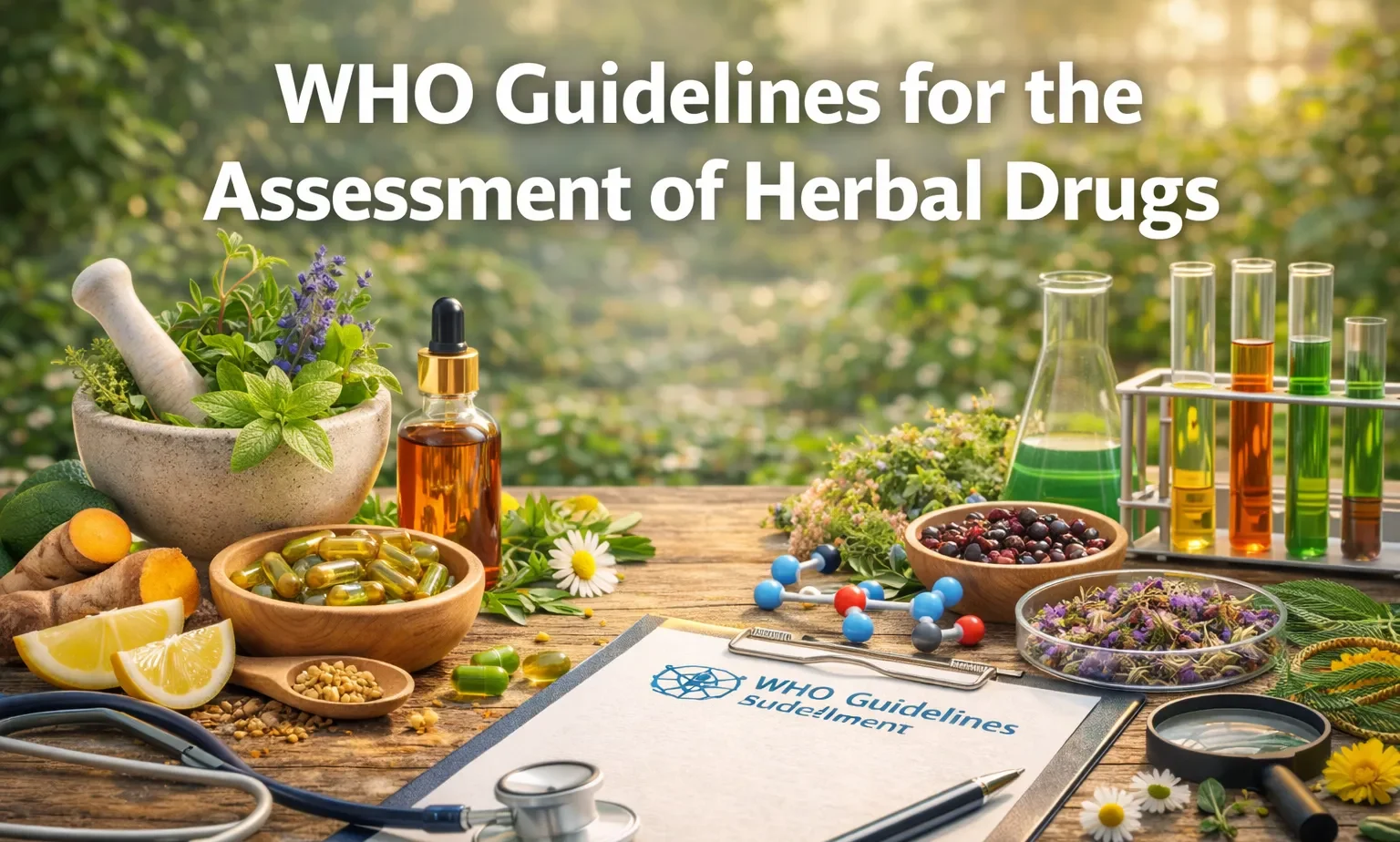
- The World Health Organization (WHO) provides guidelines for evaluating the quality, safety, and efficacy of herbal medicines.
- These guidelines help establish a regulatory framework ensuring their proper use based on traditional knowledge and scientific evidence.
Objectives:
- Promote the safety, efficacy, and quality of herbal medicines.
- Guide the assessment of botanical, chemical, pharmacological, and toxicological aspects.
- Provide methodologies for research and evaluation of herbal drugs.
- Support the standardization and regulation of herbal medicines.
- Encourage the conservation of medicinal plants and respect for indigenous knowledge.
Key Aspects of Assessment:
-
Quality Assessment
- Evaluates the physical, chemical, and biological properties of plant material.
- Uses macroscopic, microscopic, organoleptic, and chromatographic
-
Safety Assessment
- Determines the toxicological profile of herbal drugs.
- Includes acute, sub-acute, chronic toxicity, genotoxicity, and carcinogenicity
-
Efficacy Assessment
- Examines therapeutic properties through pharmacological and clinical tests.
- Uses animal models, human clinical trials, and systematic reviews.
-
Standardization
- Establishes specifications for plant materials and finished products.
- Uses reference standards, marker compounds, and chemical fingerprinting.
-
Manufacturing
- Ensures compliance with Good Manufacturing Practices (GMP).
- Covers the preparation, processing, and quality control of herbal drugs.
Advertisements
Click Here to Watch the Best Pharma Videos
Advertisements