
Mefenide Acetate

Mefenide Acetate

Chemical Structure / Formula of Mefenide Acetate Formula: C₉H₁₁N₃O₂S Structure: Sulfonamide derivative with a modified aromatic ring. Mechanism of Action Inhibits bacterial folate metabolism, similar to sulfonamides. Also penetrates eschar and has topical bacteriostatic Uses of Mefenide Acetate Topical agent for preventing infections in burn wounds. Active against Pseudomonas aeruginosa and other burn-related pathogens. Side … Read more
Sulphadiazine

Sulphadiazine

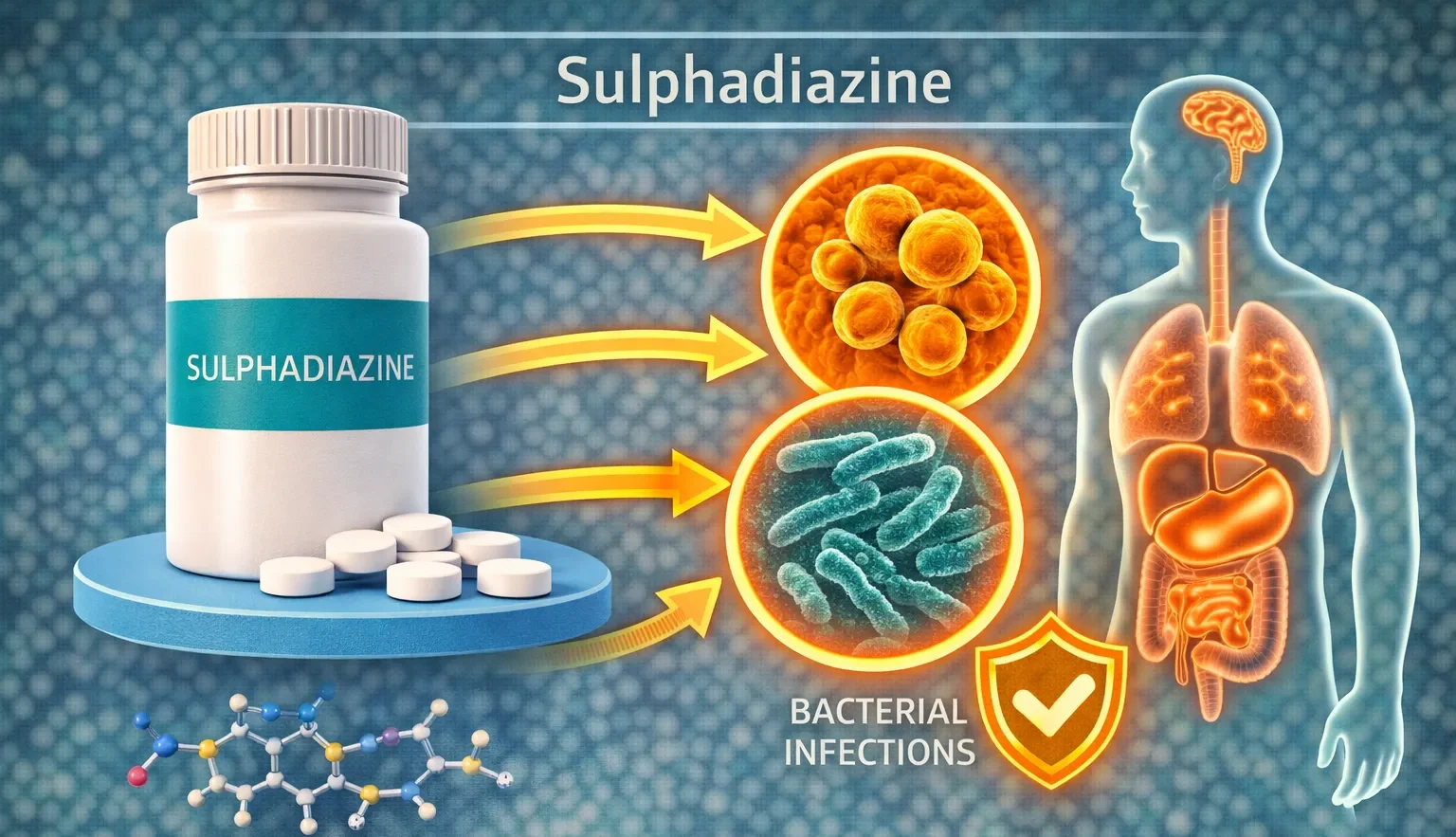
Chemical Structure / Formula of Sulphadiazine Formula: C₁₀H₁₀N₄O₂S Structure: Sulfonamide group with a diazine ring. Mechanism of Action Inhibits dihydropteroate synthase, interfering with folate synthesis. Bacteriostatic Uses of Sulphadiazine Used with pyrimethamine for toxoplasmosis. Treats malaria, meningitis, and urinary tract infections. Broad-spectrum activity against Gram-positive and Gram-negative bacteria. Side Effects Nausea, vomiting, hypersensitivity reactions. Crystalluria, … Read more

Sulfamethoxazole

Sulfamethoxazole

Chemical Structure / Formula of Sulfamethoxazole Formula: C₁₀H₁₁N₃O₃S Structure: Isoxazole-containing sulfonamide. Mechanism of Action Inhibits dihydropteroate synthase, blocking folic acid synthesis. Uses UTIs, respiratory tract infections (combined with trimethoprim = Cotrimoxazole). Side Effects Hypersensitivity reactions, crystalluria, nephrotoxicity. Synthesis of Sulfamethoxazole Structure-Activity Relationship (SAR) Structural Feature SAR Insight 5-methylisoxazole ring Enhances absorption and distribution. p-Aminobenzenesulfonamide core … Read more

Sulphapyridine

Sulphapyridine

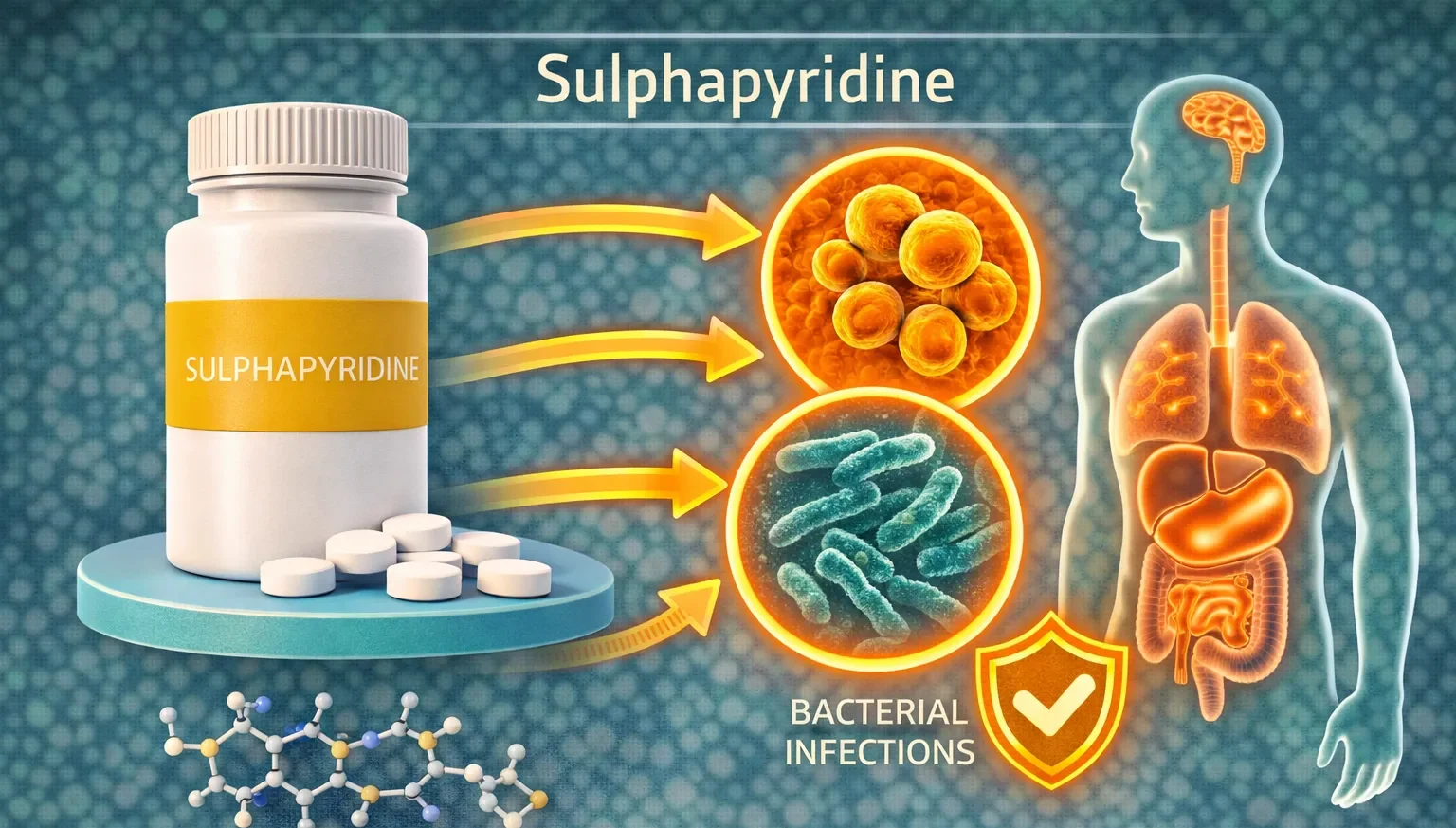
Chemical Structure / Formula of Sulphapyridine Formula: C11H11N3O2S Structure: Sulfonamide group attached to a pyridine ring. Mechanism of Action Inhibits dihydropteroate synthase, blocking folic acid synthesis in bacteria. Bacteriostatic Uses of Sulphapyridine Used in the past for bacterial infections (e.g., pneumonia, UTIs). Largely replaced by newer sulfonamides due to side effects. Component of sulfasalazine (metabolized … Read more

Sulfacetamide

Sulfacetamide

Chemical Structure / Formula of Sulfacetamide Formula: C8H10N2O3S Structure: Acetamide-containing sulfonamide. Mechanism of Action Inhibits folic acid synthesis by competing with PABA. Uses Ophthalmic infections (bacterial conjunctivitis, corneal ulcers). Side Effects Local irritation, allergic reactions. Structure-Activity Relationship (SAR) Structural Feature SAR Insight Acetamide group Improves water solubility (used in ophthalmic preparations). Para-amino benzene sulfonamide core … Read more

Sulfamethizine

Sulfamethizine

Chemical Structure / Formula of Sulfamethizine Formula: C₁₂H₁₄N₄O₂S Structure: Thiazole-containing sulfonamide. Mechanism of Action Inhibits folic acid synthesis, preventing bacterial DNA replication. Uses of Sulfamethizine Respiratory and urinary tract infections. Side Effects Hypersensitivity reactions, nephrotoxicity, anemia.

Sulfapyridine

Sulfapyridine

Chemical Structure / Formula of Sulfapyridine Formula: C₁₁H₁₁N₃O₂S Structure: Pyridine-containing sulfonamide. Mechanism of Action Inhibits dihydropteroate synthase, blocking folate metabolism. Uses of Sulfapyridine Used in combination (as sulfasalazine) for inflammatory bowel diseases (IBD, ulcerative colitis, Crohn’s disease). Side Effects Hypersensitivity, GI upset, hemolysis in G6PD-deficient patients.

Sulfisoxazole

Sulfisoxazole

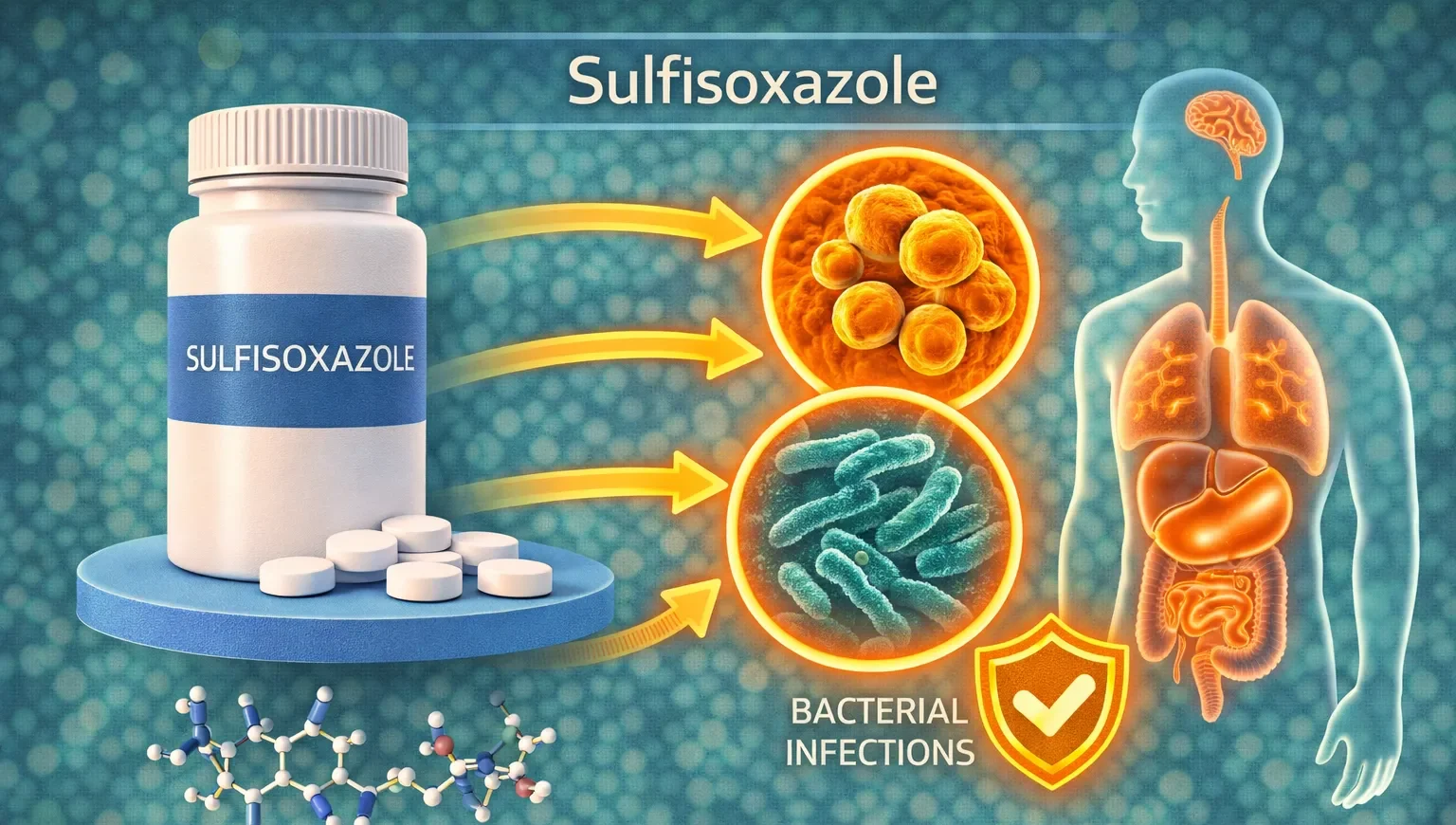
Chemical Structure / Formula of Sulfisoxazole Formula: C11H13N3O3S Structure: Isoxazole-containing sulfonamide. Mechanism of Action Inhibits folic acid synthesis by competing with para-aminobenzoic acid (PABA) for dihydropteroate synthase. Uses of Sulfisoxazole UTIs, otitis media (often in combination with erythromycin). Side Effects GI upset, allergic reactions, crystalluria.

Sulfamethizole

Sulfamethizole

Chemical Structure / Formula of Sulfamethizole Formula: C₉H₁₀N₄O₂S₂ Structure: A thiazole-containing sulfonamide. Mechanism of Action Inhibits dihydropteroate synthase, blocking folic acid synthesis in bacteria. Bacteriostatic: prevents bacterial growth. Uses of Sulfamethizole Urinary tract infections (UTIs). Respiratory infections. Side Effects Hypersensitivity reactions (rash, Stevens-Johnson syndrome). Crystalluria, nephrotoxicity.

Sulfonamides and Sulfones

Sulfonamides and Sulfones

Introduction to Sulfonamides and Sulfones Sulfonamides and sulfones are antimicrobial agents that inhibit bacterial growth by targeting folic acid synthesis, a crucial pathway for bacterial survival. Historical Development Sulfonamides were the first synthetic antibacterial agents, discovered in the 1930s. Sulfones, like Dapsone, emerged later and became essential for treating leprosy and other bacterial infections. Chemistry … Read more