
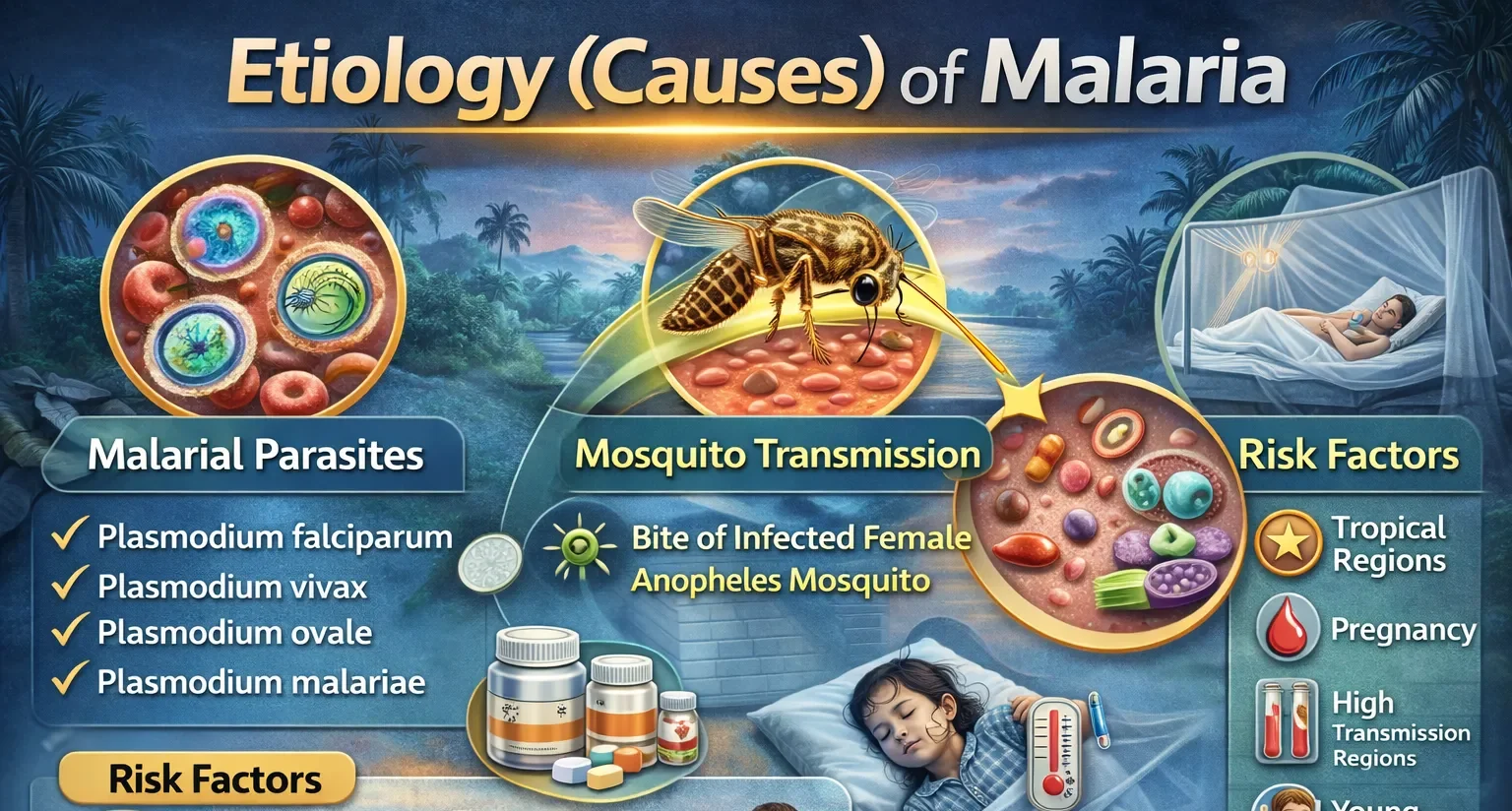
Etiology (Causes) of Malaria explains how Plasmodium parasites transmitted by female Anopheles mosquitoes cause malaria infection in humans.
Etiology (Causes) of Malaria
- Malaria is caused by Plasmodium parasites, transmitted by female Anopheles mosquitoes. The main species causing malaria in humans are:
-
- Plasmodium falciparum: Most severe, can cause cerebral malaria.
- Plasmodium vivax: Causes relapses due to liver hypnozoites.
- Plasmodium ovale: Similar to P. vivax, but less common.
- Plasmodium malariae: Can cause chronic infection.
- Plasmodium knowlesi: Zoonotic malaria, found in Southeast Asia.
Advertisements
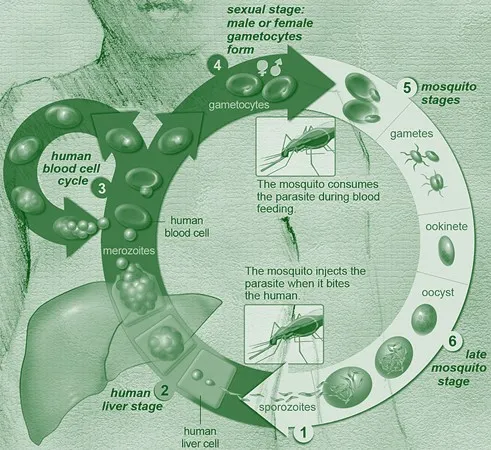
Transmission & Life Cycle
-
Mosquito Stage
- The mosquito injects sporozoites into the human bloodstream during a bite.
-
Liver Stage (Pre-Erythrocytic Stage)
- Sporozoites invade liver cells, multiply, and form merozoites.
-
Blood Stage (Erythrocytic Cycle)
- Merozoites infect red blood cells (RBCs), multiply, rupture RBCs, and cause fever.
-
Gametocyte Formation
- Some parasites develop into gametocytes, which are taken up by a mosquito.
-
Mosquito Cycle
- Gametocytes mature into sporozoites, completing the cycle.
Symptoms of Malaria
- High fever, chills, sweating (classic tertian or quartan fever cycles)
- Headache, muscle pain, fatigue
- Severe malaria (P. falciparum) → Organ failure, coma, death
Advertisements
Prevention & Treatment
- Prevention: Mosquito control (nets, repellents), prophylactic drugs (chloroquine, doxycycline).
- Treatment: Antimalarial drugs (artemisinin-based combination therapies, chloroquine, mefloquine).