
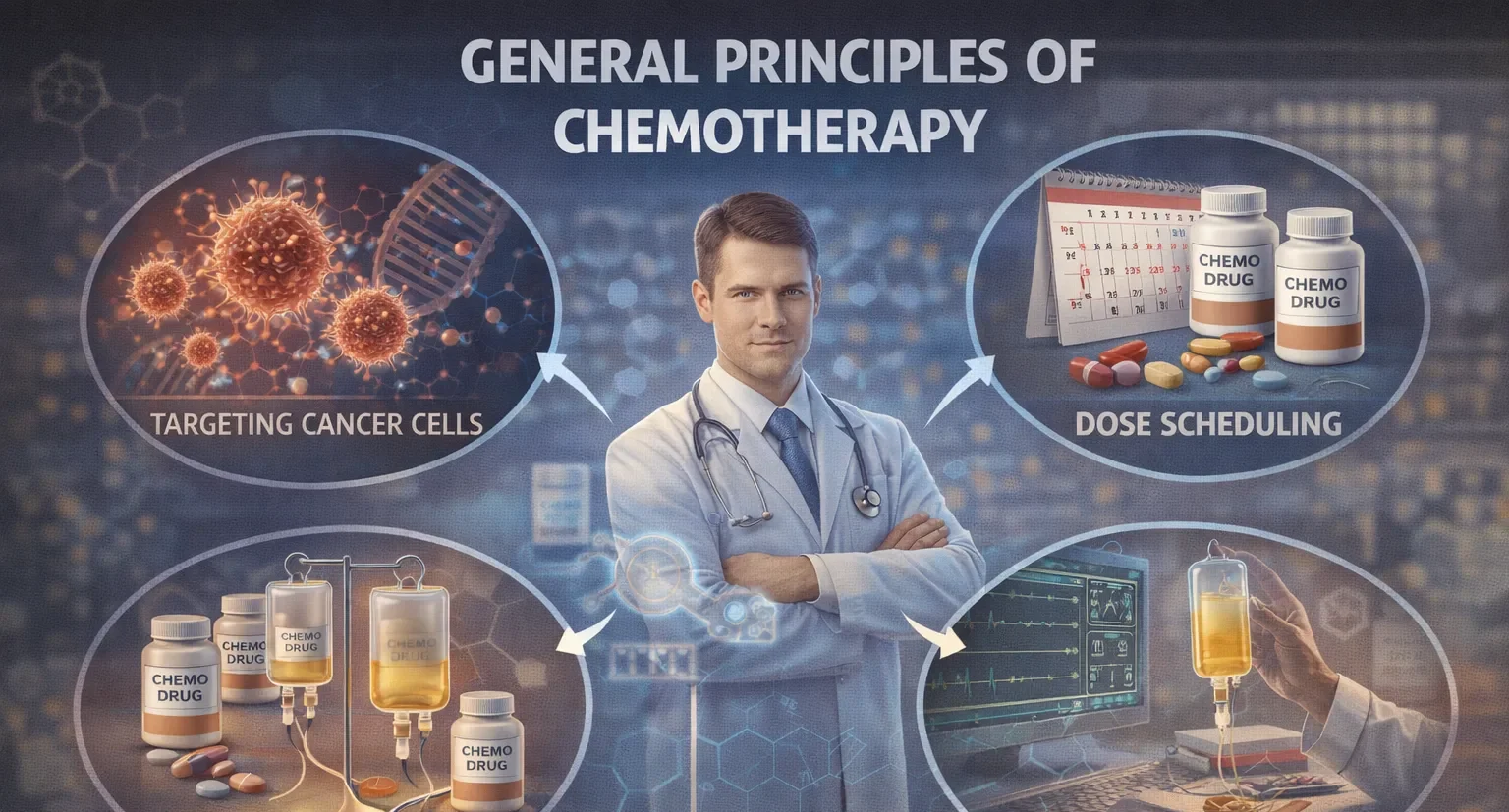
- General Principles of Chemotherapy explain selective toxicity, drug resistance, and combination therapy in treating infections and cancer.
General Principles of Chemotherapy
- Chemotherapy in pharmacology refers to the use of chemical agents to destroy or inhibit the growth of infectious organisms or cancer cells.
- In the context of antimicrobial chemotherapy, it primarily targets bacteria, viruses, fungi, and parasites.
Advertisements
Key Concepts
-
Selective Toxicity
- The drug should target microbes without harming the host.
-
Spectrum of Activity
- Narrow-spectrum: Targets specific bacteria (e.g., Penicillin G).
- Broad-spectrum: Covers a wide range (e.g., Tetracyclines).
-
Bactericidal vs. Bacteriostatic
- Bactericidal: Kills microbes (e.g., Penicillin).
- Bacteriostatic: Inhibits growth, aiding the immune system (e.g., Chloramphenicol).
-
Combination Therapy
- Used for synergy, resistance prevention, or broad coverage.
-
Resistance
-
Prophylactic vs. Therapeutic Use
- Prophylactic: Prevents infection (e.g., before surgery).
- Therapeutic: Treats existing infection.
Click Here to Watch the Best Pharma Videos
Advertisements