
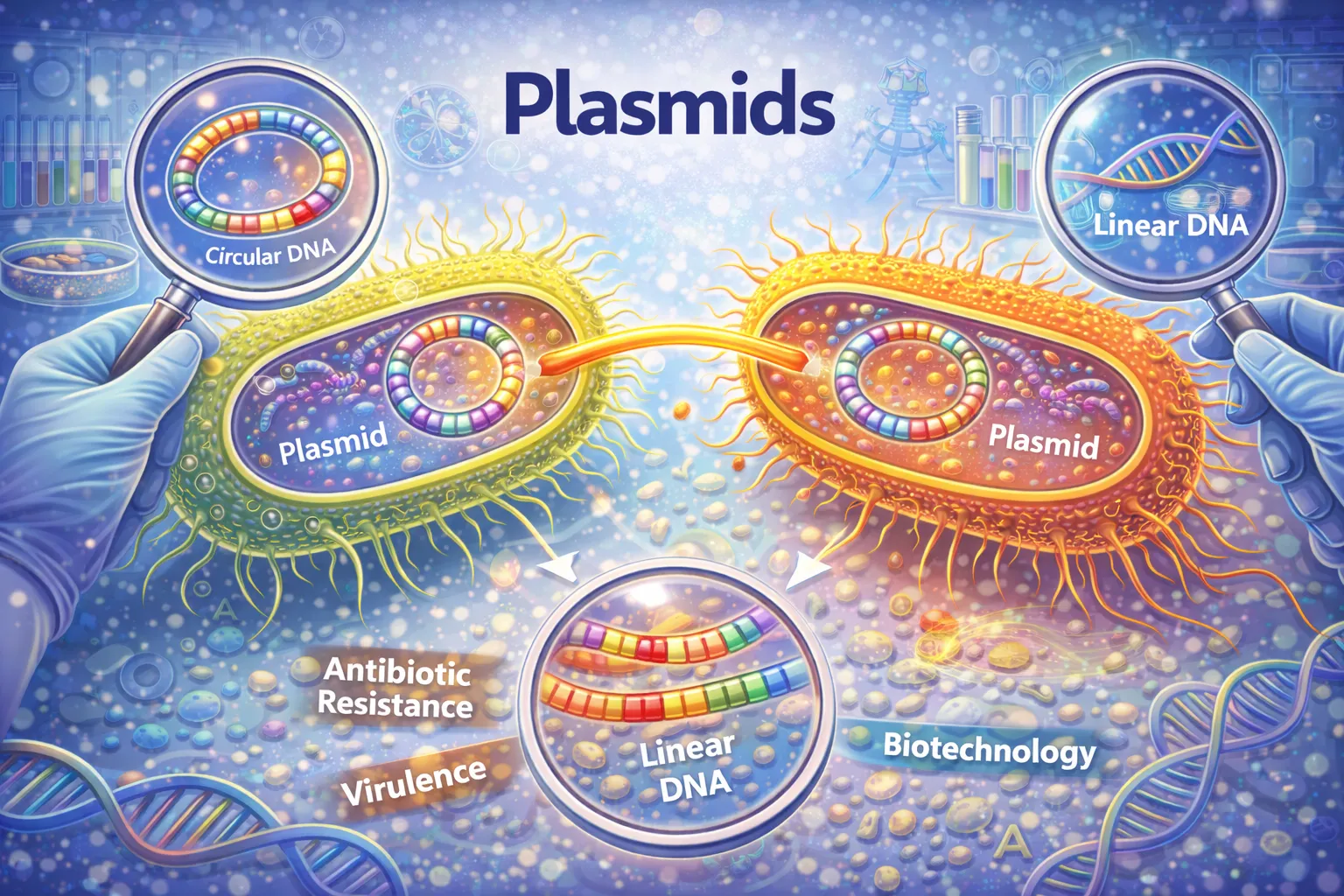
Plasmids explain structure types replication and role in gene transfer antibiotic resistance and genetic engineering.
Definition:
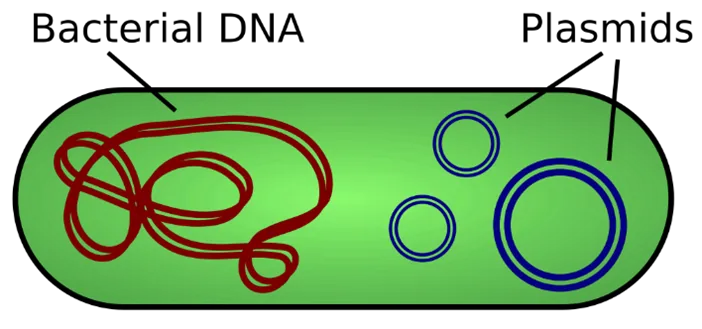
- Plasmids are small, circular, double-stranded DNA molecules that exist independently of the bacterial chromosome.
- They replicate autonomously and can be transferred between bacteria.
Types of Plasmids:
-
Fertility (F)
- Carry genes for conjugation (tra genes), enabling DNA transfer between bacteria.
-
Resistance (R)
- Carry antibiotic resistance genes, promoting the spread of drug-resistant bacteria.
-
Col
- Encode bacteriocins, protein toxins that kill competing bacteria.
-
Virulence
- Carry genes that enable bacteria to cause infections (e.g., Ti plasmid in Agrobacterium tumefaciens).
-
Metabolic
- Carry genes for specific metabolic functions, such as nitrogen fixation and organic compound degradation.
-
Cryptic
- Have no known function but contribute to genetic diversity.
Advertisements
Functions and Significance:
- Mediate horizontal gene transfer and genetic diversity.
- Enable antibiotic resistance, posing a challenge in medicine.
- Used in biotechnology for cloning and genetic engineering (e.g., pUC19, pBR322 plasmids).