
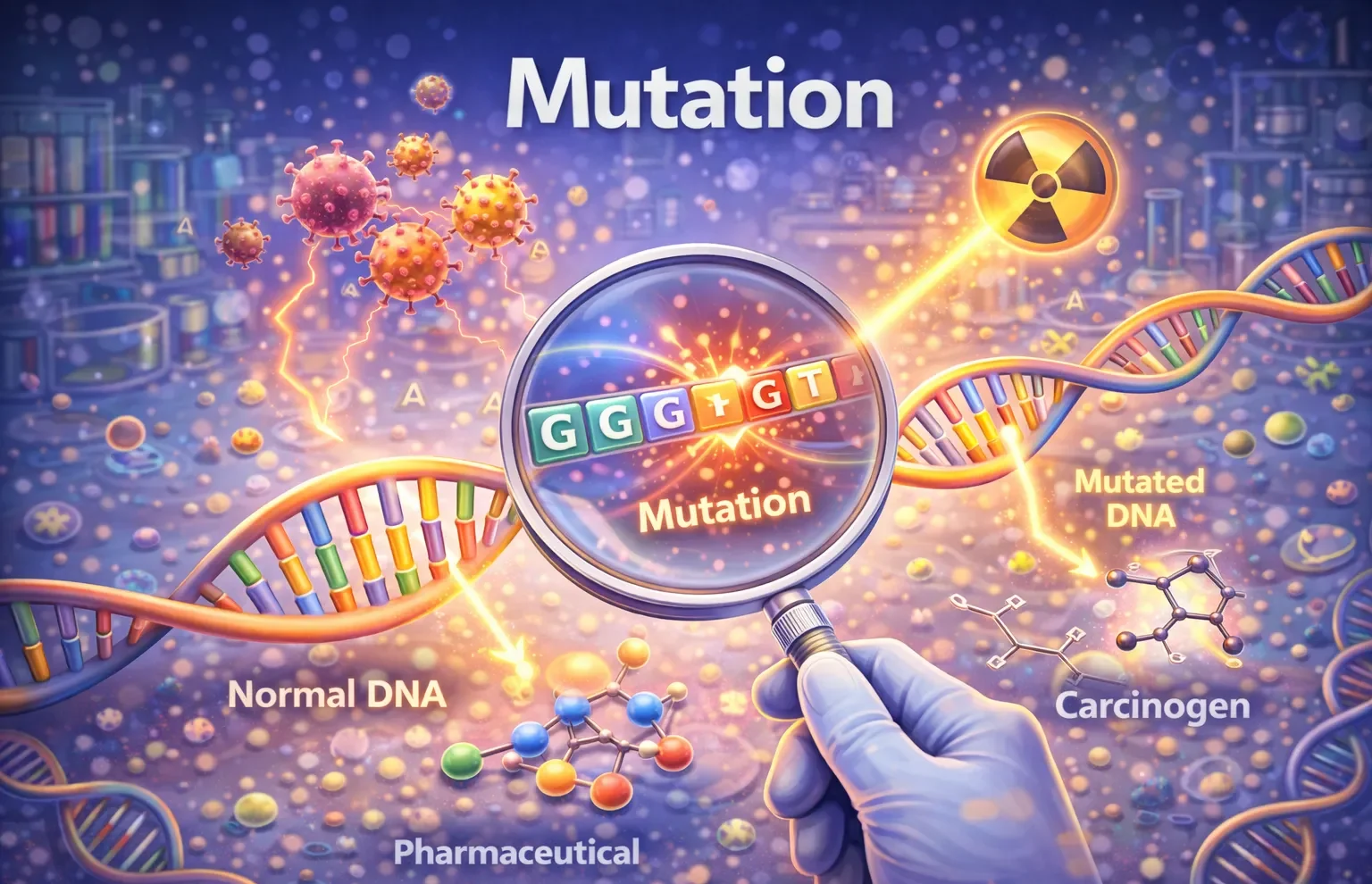
Mutation explains types causes mechanisms and its significance in genetic variation evolution and disease development.
Introduction to Mutation
- Mutation is a change in the DNA sequence of an organism.
- Can occur spontaneously during DNA replication or be induced by external factors like radiation, chemicals, or viruses.
- May result in altered genetic information that is inherited by offspring.
- Can produce beneficial, neutral, or harmful effects on the organism.
Types of Mutations
- Point Mutation – A single nucleotide base pair is altered.
- Insertion or Deletion Mutation – One or more nucleotide base pairs are added or removed, potentially causing frameshift mutations.
- Chromosomal Mutation – Structural or numerical changes in chromosomes, such as translocations, inversions, or duplications.
- Spontaneous Mutation – Naturally occurring mutations without external influence.
- Induced Mutation – Caused by external mutagens like radiation, chemicals, or viruses.
- Duplication – Extra copy of a DNA segment, which can affect gene function.
- Inversion – Reversal of a DNA segment, potentially leading to genetic disorders.
Advertisements
Types of Mutagens

-
Chemical Mutagens
- Alkylating Agents – Add alkyl groups to DNA, causing mispairing (e.g., EMS, MMS).
- Base Analogs – Mimic nucleotides, leading to errors in replication (e.g., 5-bromouracil, 2-aminopurine).
- Intercalating Agents – Insert between base pairs, causing frameshift mutations (e.g., ethidium bromide, proflavine).
- Reactive Oxygen Species (ROS) – By-products of metabolism that damage DNA.
-
Physical Mutagens
- Ionizing Radiation – X-rays, gamma rays, and cosmic rays cause DNA strand breaks and chromosomal abnormalities.
- Ultraviolet (UV) Radiation – Causes pyrimidine dimer formation, interfering with DNA replication.
- High Temperature – Can denature DNA, leading to strand breaks.
Effects of Mutation
- Neutral Effect – No impact if it occurs in non-coding regions or results in silent mutations.
- Harmful Effect – Can lead to genetic disorders like cystic fibrosis or cancer by disrupting protein function.
- Beneficial Effect – In rare cases, can enhance survival (e.g., antibiotic resistance in bacteria).
- Conditional Effect – Impact depends on environmental factors (e.g., temperature-sensitive mutations).
- Lethal Effect – Mutations affecting essential genes may cause embryonic lethality.
Advertisements