
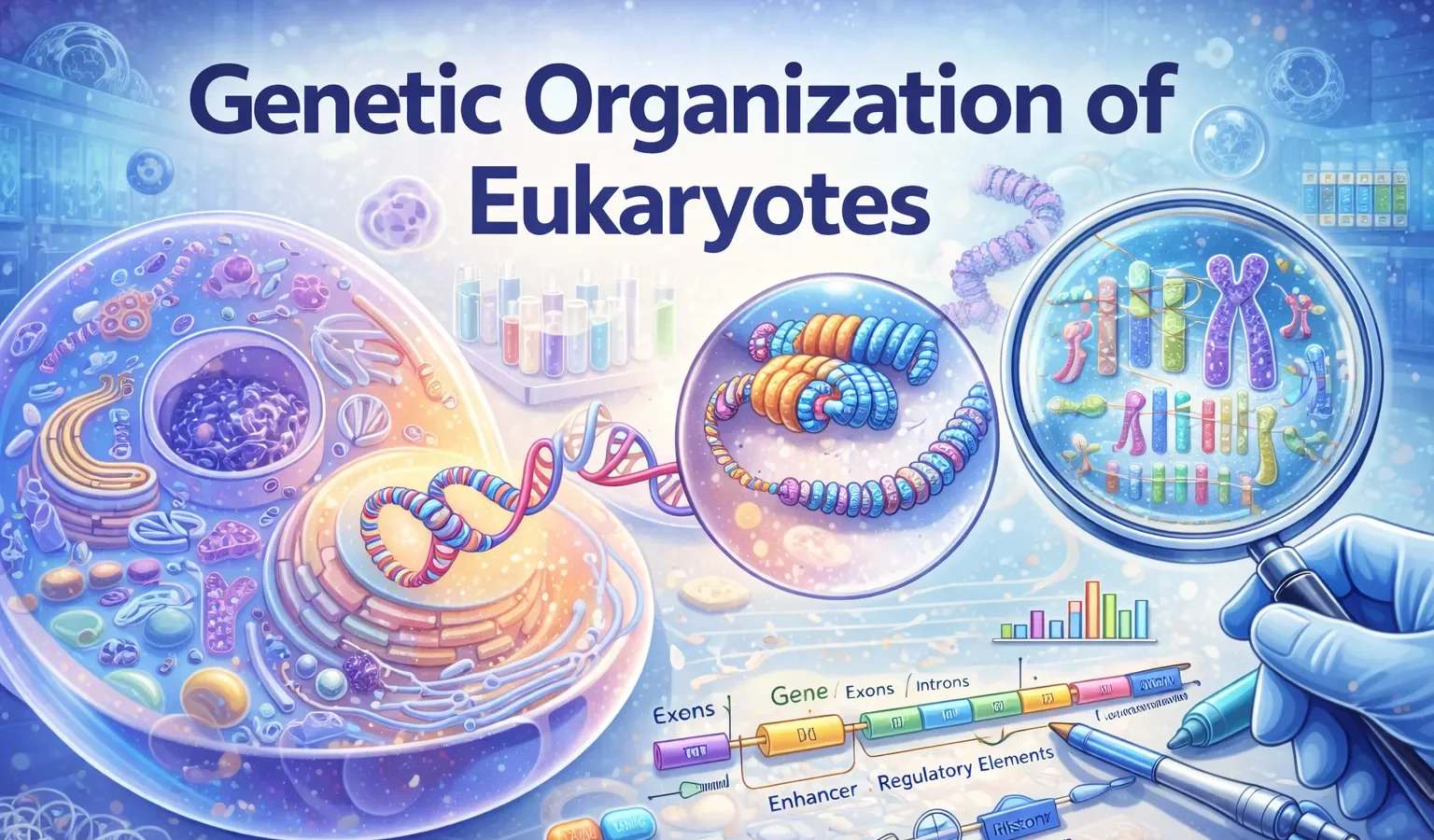
Genetic Organization of Eukaryotes explains chromosome structure gene organization regulatory elements and genome complexity in eukaryotic cells.
Genetic Organization of Eukaryotes
Eukaryotic genomes are larger and more complex, with genetic material compartmentalized inside the nucleus.
-
Linear Chromosomes:
- Eukaryotic DNA is organized into multiple linear chromosomes contained in the nucleus.
- Chromosomes are composed of DNA and histone proteins, forming chromatin.
-
Presence of Introns and Exons:
- Eukaryotic genes contain introns (non-coding regions) and exons (coding regions).
- RNA splicing removes introns before translation.
-
Regulation of Gene Expression:
- Controlled by complex regulatory sequences, including enhancers, silencers, and promoters.
-
Compartmentalized Transcription and Translation:
- Transcription occurs in the nucleus, and translation occurs in the cytoplasm.
- mRNA undergoes processing (capping, polyadenylation, and splicing) before translation.
-
Mitochondrial and Chloroplast DNA:
- Eukaryotic cells contain additional organelle DNA in mitochondria (mtDNA) and chloroplasts (cpDNA) (Endosymbiotic Theory).
-
Epigenetic Modifications:
- DNA methylation, histone modifications, and chromatin remodeling regulate gene expression.
-
Repetitive DNA and Transposable Elements:
- Large portions of eukaryotic genomes contain repetitive sequences, satellite DNA, and transposable elements (jumping genes).
Click Here to Watch the Best Pharma Videos
Advertisements