
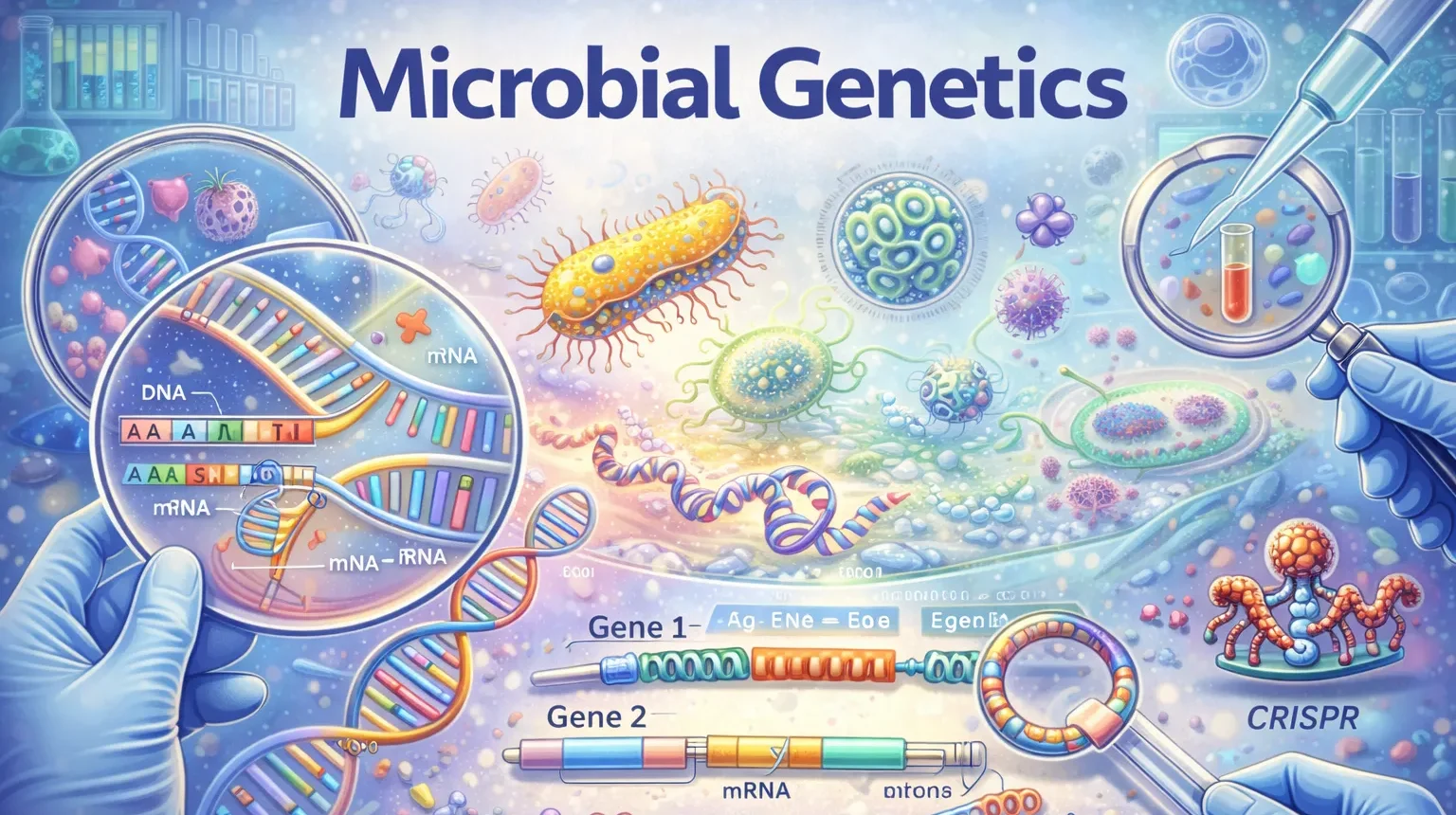
Microbial Genetics explains gene structure mutation recombination and regulation mechanisms in microorganisms.
Microbial Genetics
- It studies the genetic material of microorganisms, including bacteria, viruses, fungi, and archaea.
- It focuses on gene organization, inheritance, and transfer, with processes like transformation, transduction, and conjugation playing key roles in microbial adaptation, antibiotic resistance, and evolution.
- This field is crucial for understanding microbial diversity, evolution, and ecological roles, with applications in biotechnology, including antibiotic and vaccine development, biofuels, and pathogen control.
Key Areas of Study
- Genome Structure & Function – Examines gene organization, expression, and DNA replication, recombination, and repair.
- Genetic Diversity & Evolution – Investigates variation through mutation, recombination, and horizontal gene transfer.
- Gene Transfer & Engineering – Studies genetic exchange via transformation, transduction, and conjugation, with applications in biotechnology.
- Microbial Pathogenesis – Explores genetic factors behind microbial virulence and immune evasion.
- Understanding microbial genetics aids in combating diseases, advancing industrial microbiology, and driving biotechnological innovations.
Click Here to Watch the Best Pharma Videos
Advertisements