
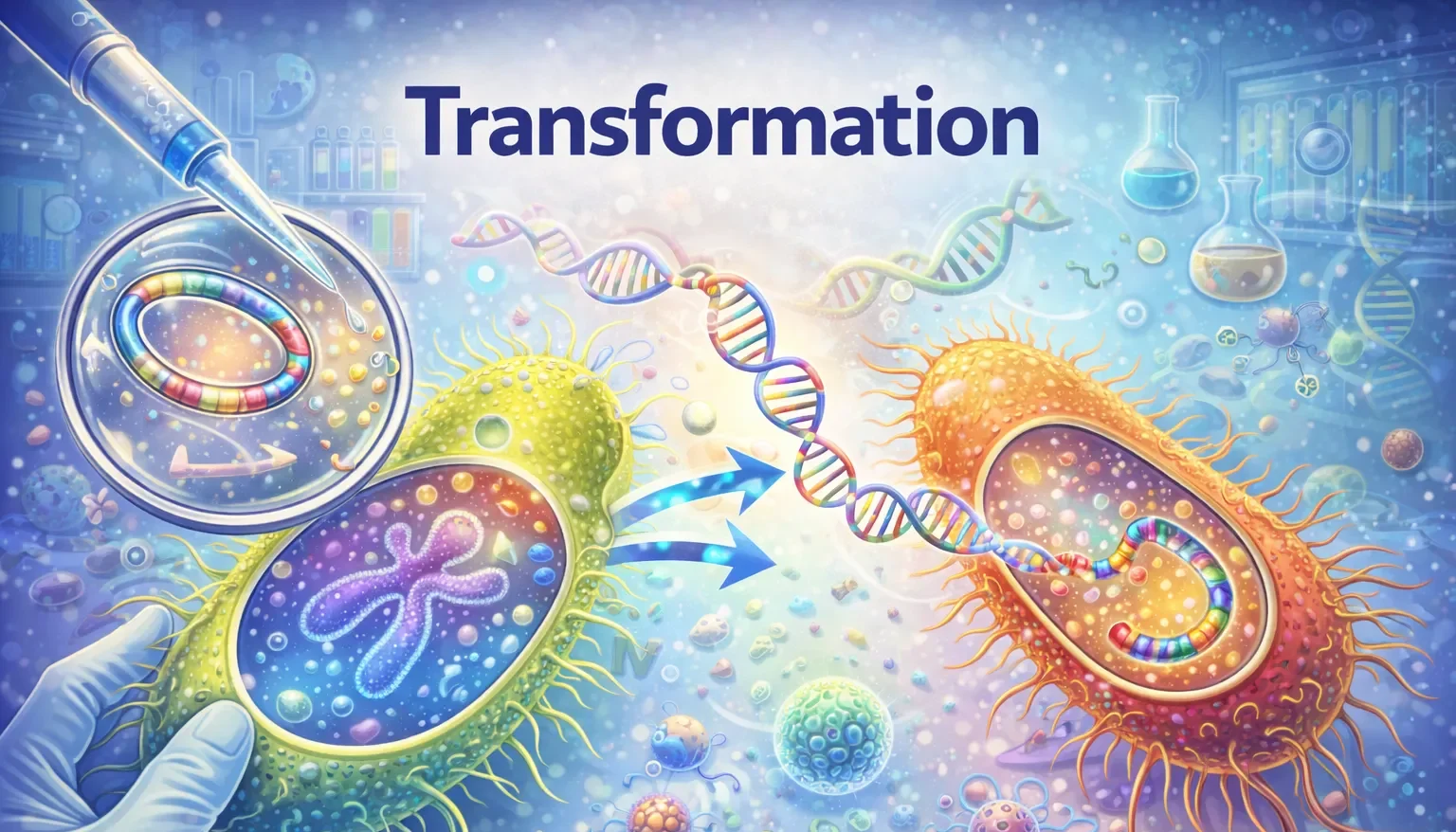
Definition of Transformation:
- It is the process by which bacteria take up naked DNA from their environment and incorporate it into their genome.
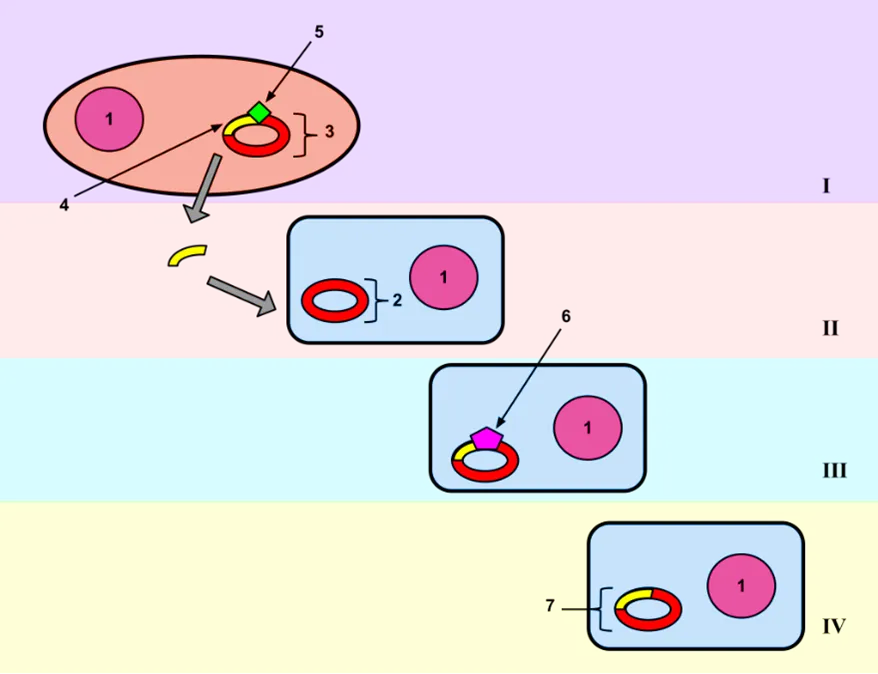
Steps:
- DNA Uptake: The recipient bacterial cell takes up free, extracellular DNA (usually from lysed bacterial cells).
- Integration: The DNA may recombine with the host genome or exist as a plasmid.
- Expression: If successfully integrated, the new genes may be expressed, leading to a change in phenotype.
Types of Transformation:
- Natural: Some bacteria (e.g., Streptococcus pneumoniae, Bacillus subtilis) naturally take up DNA.
- Artificial: In the laboratory, it can be induced using chemical treatment (CaCl₂ method) or electroporation.
Significance:
- Used in genetic engineering to introduce new genes into bacteria (e.g., recombinant DNA technology).
- Plays a role in the spread of antibiotic resistance genes.
Advertisements