
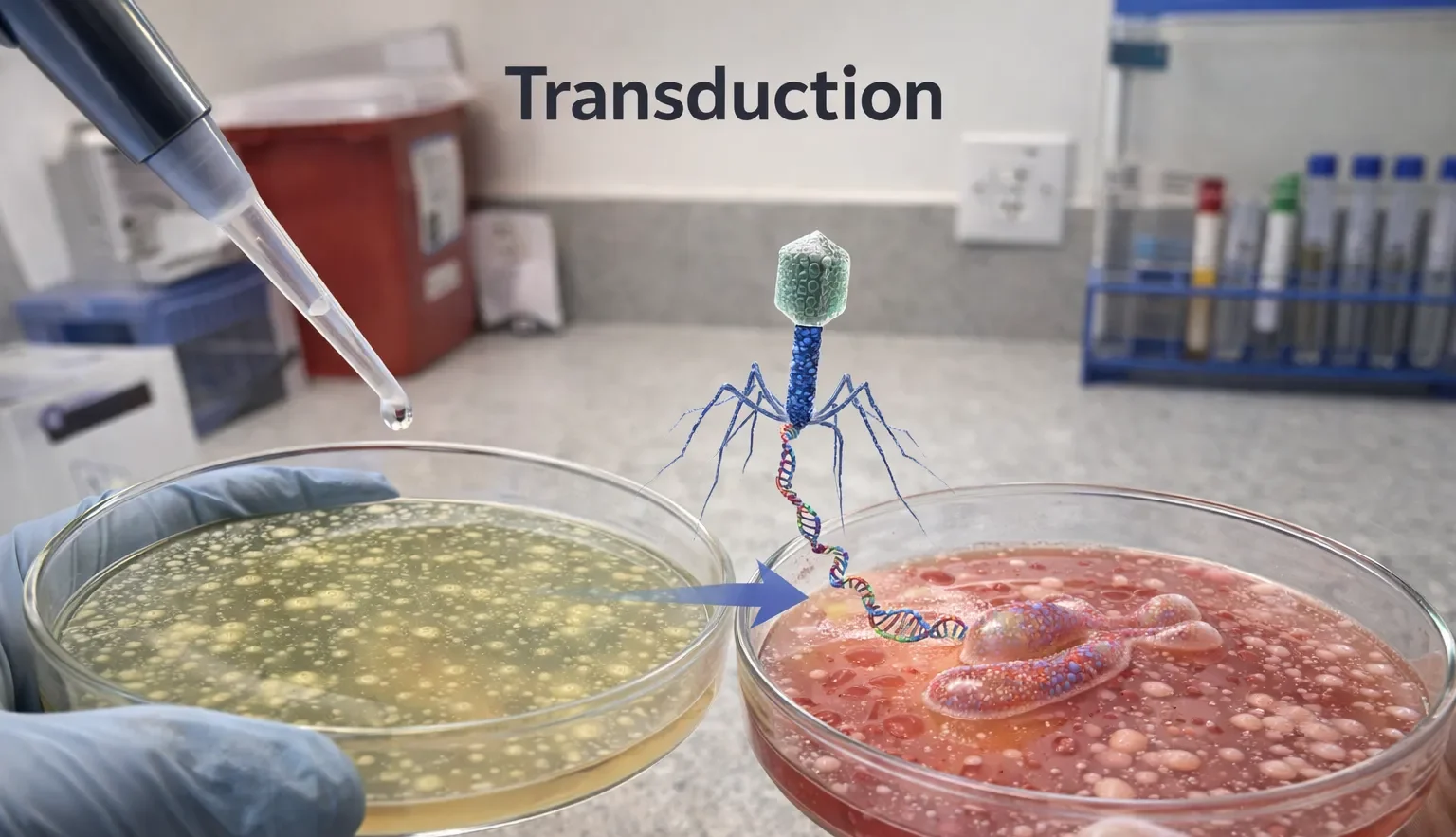
Transduction explains mechanism types and role in bacteriophage mediated gene transfer in bacteria.
Definition:
- It is the transfer of genetic material from one bacterium to another via a bacteriophage (virus that infects bacteria).
Types of Transduction:
-
Generalized:
- Occurs when a bacteriophage accidentally packages random bacterial DNA instead of its own viral DNA.
- When this phage infects another bacterium, the foreign bacterial DNA gets incorporated into the recipient’s genome.
-
Specialized:
- Occurs when a temperate phage (lysogenic phage) integrates into the bacterial chromosome and later excises, carrying adjacent bacterial genes with it.
- This DNA is then transferred to another bacterium upon infection.
Significance:
- Contributes to horizontal gene transfer in bacteria.
- Can transfer toxin-producing genes (e.g., Corynebacterium diphtheriae toxin gene is acquired via phage transduction).
- Plays a role in bacterial evolution and diversity.