
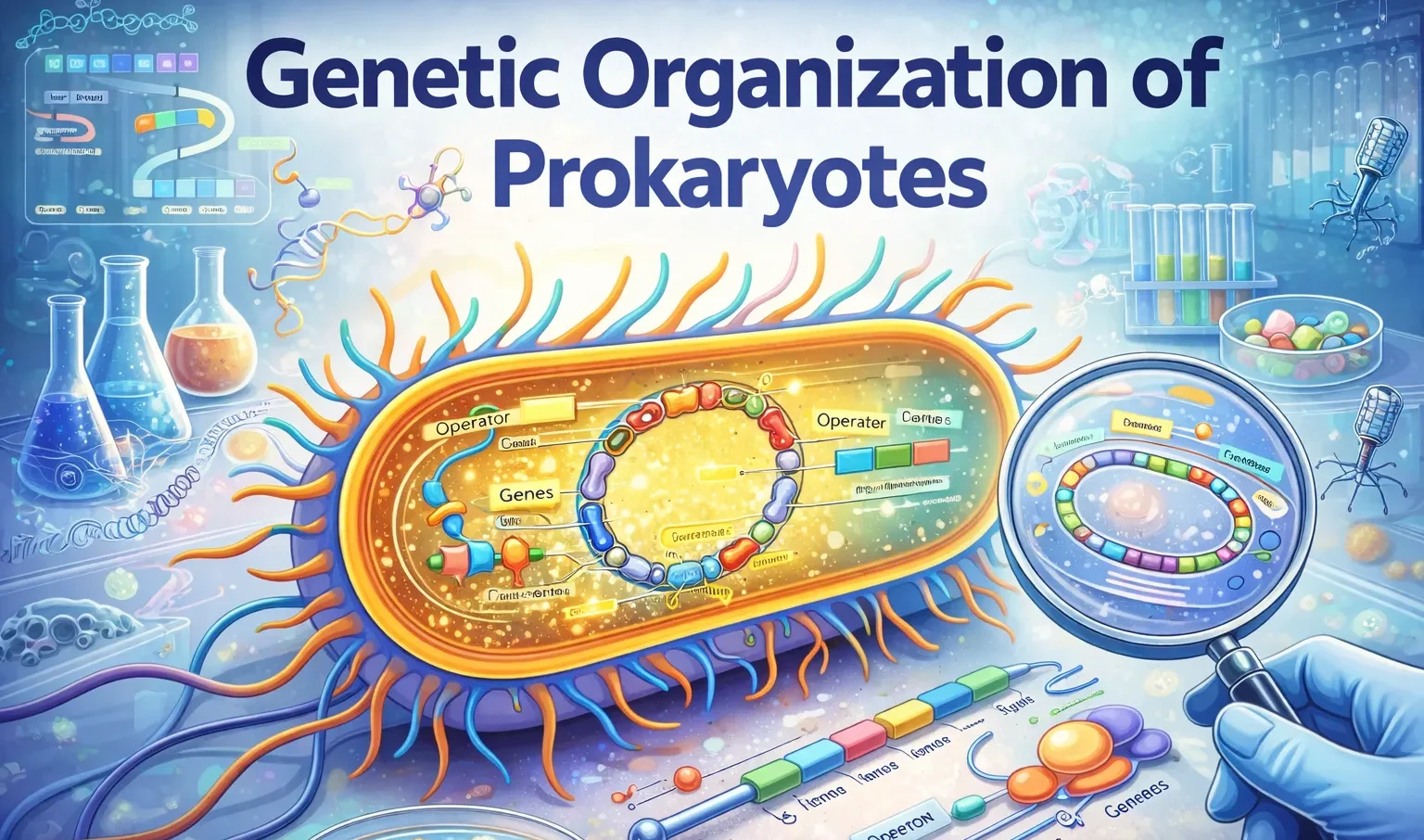
Genetic Organization of Prokaryotes explains structure gene arrangement operons plasmids and regulation in bacterial cells.
Genetic Organization of Prokaryotes
- Prokaryotic genomes are simpler, smaller, and lack a nucleus.
- The key features include:
-
Single Circular DNA Molecule (Chromosome):
- Most prokaryotes have a single, circular chromosome located in the nucleoid region.
- The chromosome is not enclosed in a membrane-bound nucleus.
-
Plasmids:
- Small, circular, extrachromosomal DNA molecules.
- Can carry antibiotic resistance genes or virulence factors.
- Replicate independently of the main chromosome.
-
Operons:
- Genes in prokaryotes are often organized into operons, which are clusters of functionally related genes controlled by a single promoter.
- Example: The lac operon regulates lactose metabolism in coli.
-
Lack of Introns:
- Prokaryotic genes are mostly continuous, without introns.
- Transcription and translation occur simultaneously in the cytoplasm.
-
Regulatory Sequences:
- Operons contain promoters, operators, and regulatory genes that control gene expression.
-
Horizontal Gene Transfer:
- Prokaryotes can exchange genetic material via transformation, transduction, and conjugation, contributing to genetic diversity.
Click Here to Watch the Best Pharma Videos
Advertisements