
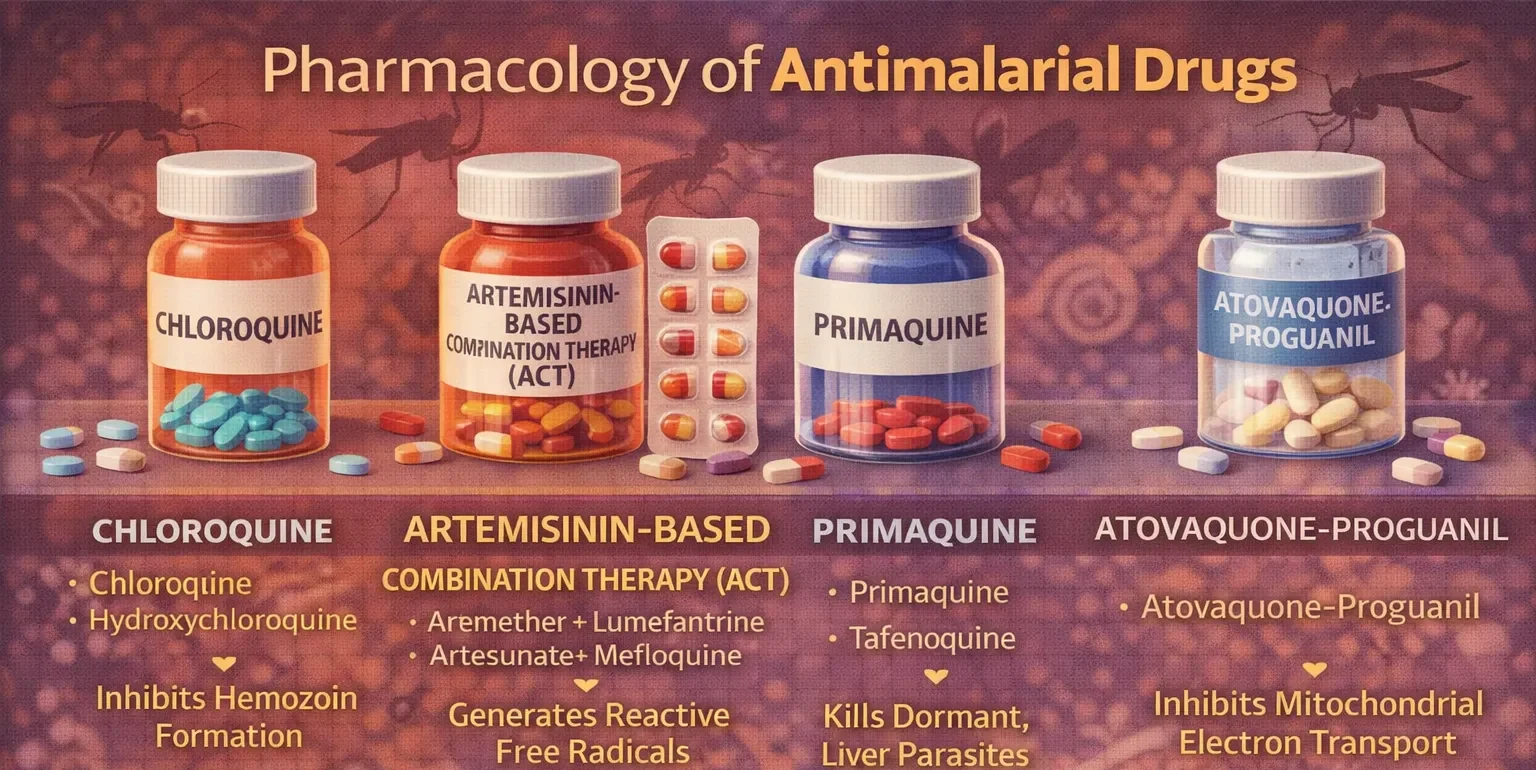
Pharmacology of Antimalarial Drugs explains mechanisms and actions of drugs used to treat malaria by targeting Plasmodium.
Overview of Pharmacology of Antimalarial Drugs
- Malaria is caused by Plasmodium species (P. falciparum, P. vivax, P. malariae, P. ovale), transmitted by the bite of female Anopheles
- Antimalarial drugs are classified based on the stage of the parasite they act upon:
- Tissue schizonticides: Act on liver stages
- Blood schizonticides: Act on asexual blood stages
- Gametocides: Destroy sexual forms to prevent transmission
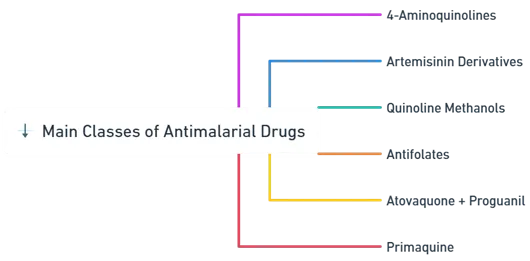
Main Classes of Antimalarial Drugs
Advertisements
-
4-Aminoquinolines
- Examples: Chloroquine, Amodiaquine
- Mechanism: Inhibits heme polymerase → toxic heme accumulates → parasite death
- Use: Effective against vivax, P. ovale, and sensitive P. falciparum
- Adverse Effects: Retinopathy, pruritus, GI upset
- Note: Resistance common in falciparum
-
Artemisinin Derivatives
- Examples: Artesunate, Artemether, Dihydroartemisinin
- Mechanism: Generates free radicals → damages parasite proteins
- Use: First-line for severe or resistant falciparum malaria (always in combination = ACT)
- Note: Very rapid action, short half-life
-
Quinoline Methanols
- Example: Quinine
- Use: Severe malaria (especially multidrug-resistant)
- Adverse Effects: Cinchonism (tinnitus, headache), hypoglycemia, cardiac effects
-
Antifolates
- Examples: Pyrimethamine + Sulfadoxine (Fansidar)
- Mechanism: Inhibit folate synthesis in parasites
- Use: Not used alone due to resistance
- Note: Commonly used as prophylaxis or in combination
-
Atovaquone + Proguanil
- Mechanism: Mitochondrial inhibition (atovaquone), folate antagonist (proguanil)
- Use: Prophylaxis and treatment of falciparum malaria
-
Primaquine
- Mechanism: Tissue schizonticide and gametocide
- Use: Radical cure of vivax and P. ovale (kills hypnozoites)
- Caution: Contraindicated in G6PD deficiency → risk of hemolysis
Pharmacokinetics of Antimalarial Drugs
| Phase | Key Features |
| Absorption | Mostly oral; absorption varies with food. Artemisinin has poor oral bioavailability, so sometimes given IV or rectally. |
| Distribution | Accumulates in liver, spleen, and RBCs. Tissue binding and protein binding vary by drug. |
| Metabolism | Most metabolized in the liver. For example, chloroquine undergoes hepatic metabolism. CYP enzymes may be involved. |
| Excretion | Mostly renal (e.g., chloroquine, quinine) or biliary. Long half-life drugs can accumulate and cause toxicity. |
| Drug Interactions | Enzyme inducers/inhibitors may affect levels. QT prolongation is additive with other drugs that affect cardiac rhythm. |
Click Here to Watch the Best Pharma Videos
Advertisements