
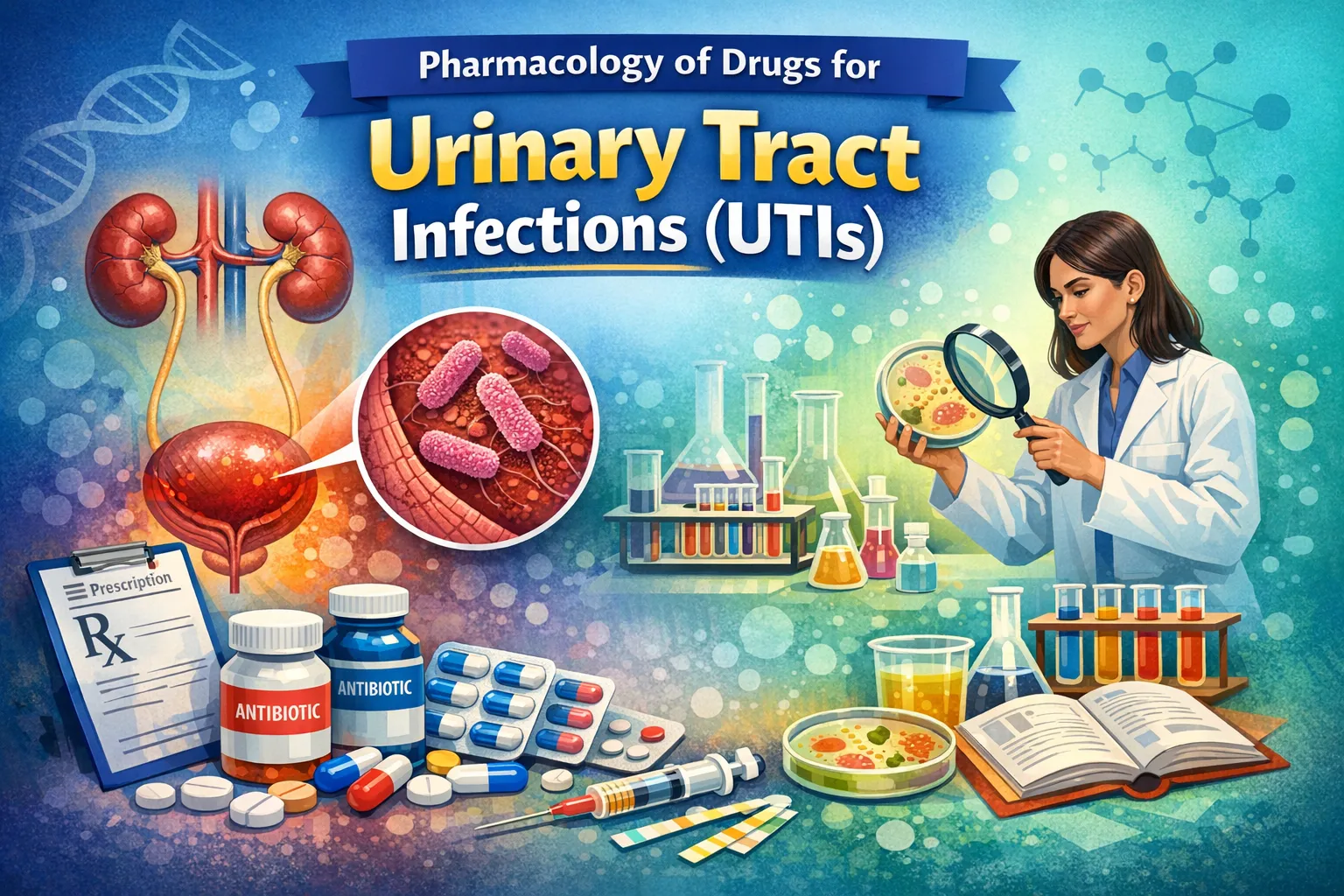
Pharmacology of Drugs for Urinary Tract Infections explains mechanisms of drugs used to treat bacterial infections of the urinary tract
Pharmacology of Drugs for Urinary Tract Infections (UTIs)
-
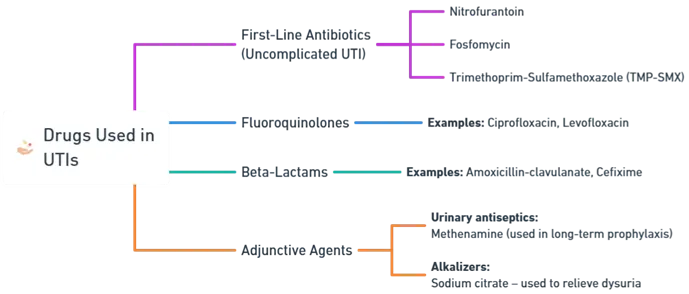
First-Line Antibiotics (Uncomplicated UTI)
-
Nitrofurantoin
- Mechanism: Damages bacterial DNA
- Use: Cystitis (not for pyelonephritis)
- Note: Avoid in renal impairment
-
Fosfomycin
- Mechanism: Inhibits bacterial cell wall synthesis
- Use: Single-dose treatment for uncomplicated UTI
-
Trimethoprim-Sulfamethoxazole (TMP-SMX)
- Mechanism: Inhibits folate synthesis
- Use: Acute cystitis, but resistance is rising
-
-
Fluoroquinolones
- Examples: Ciprofloxacin, Levofloxacin
- Mechanism: Inhibit DNA gyrase & topoisomerase IV
- Use: Pyelonephritis, complicated UTI
- Caution: Tendon rupture, QT prolongation; avoid overuse
-
Beta-Lactams
- Examples: Amoxicillin-clavulanate, Cefixime
- Use: Alternative in pregnancy or resistant infections
Adjunctive Agents
- Urinary antiseptics: Methenamine (used in long-term prophylaxis)
- Alkalizers: Sodium citrate – used to relieve dysuria