
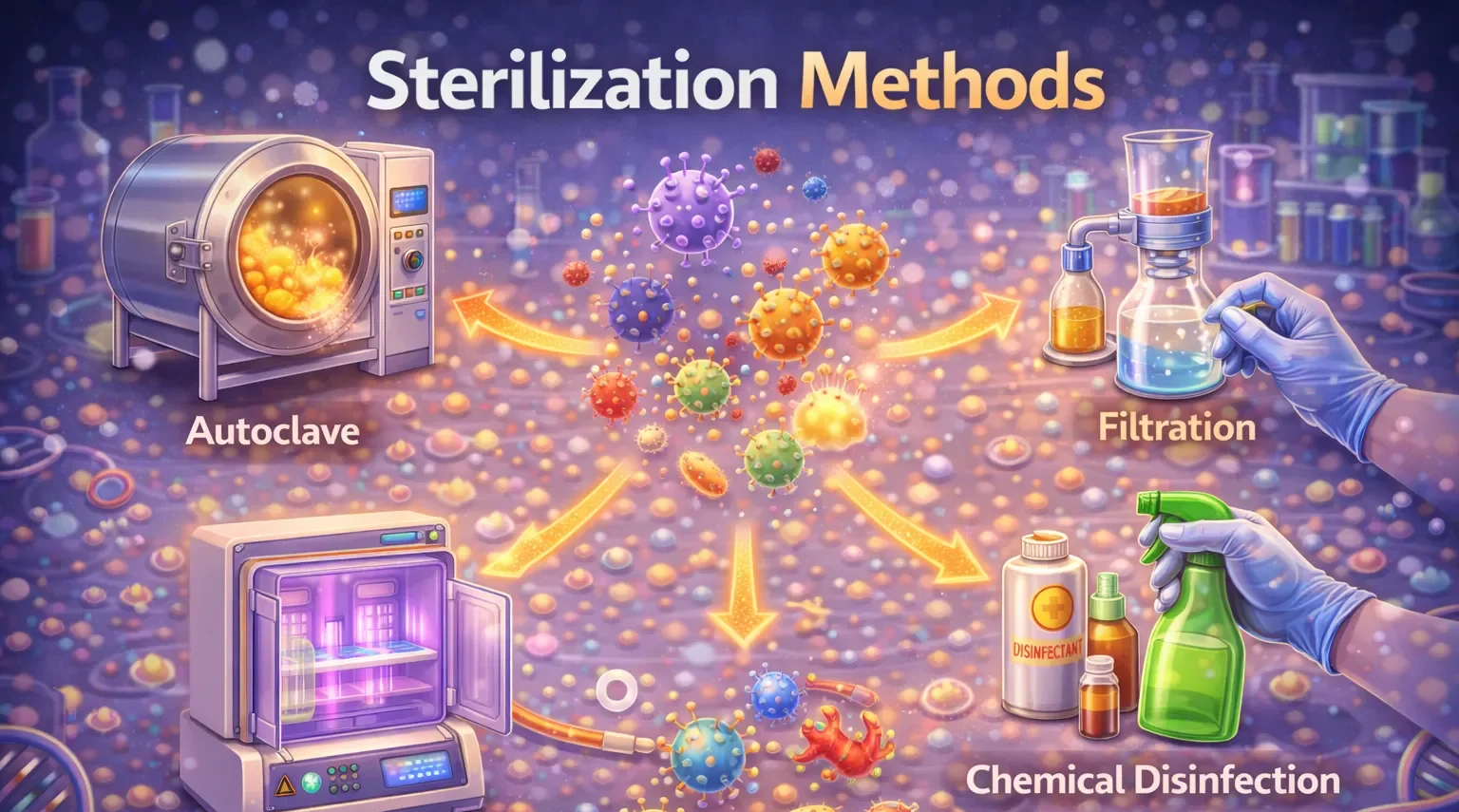
Sterilization methods explain types principles procedures and importance in ensuring microbial control in pharmaceutical practice.
Sterilization methods
- Sterilization is the process of killing or removing all viable microorganisms, ensuring that only the desired production strain thrives in the fermenter.
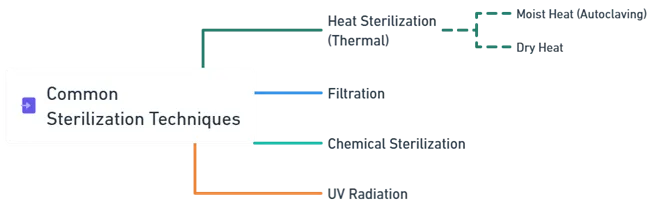
Common Sterilization Techniques
Advertisements
-
Heat Sterilization (Thermal)
-
Moist Heat (Autoclaving):
- Uses steam under pressure (usually 121 °C at 15 psi for 15-20 minutes in a lab setting).
- At industrial scale, in-situ sterilization in large reactors may involve higher temperatures and times that depend on scale.
-
Dry Heat:
- Hot air ovens at 160-180 °C. More common for glassware and metal equipment.
-
-
Filtration
- For temperature-sensitive media components (e.g., vitamins, enzymes) or for sterilizing incoming air.
- Membrane filters (0.2 μm) remove bacteria and most contaminants.
-
Chemical Sterilization
- Chemicals like ethylene oxide, peracetic acid, or bleach can disinfect surfaces.
- Rare in industrial fermentation due to residues and potential toxicity.
-
UV Radiation
- Sometimes used to sterilize surfaces or air in certain chambers, but not common for liquid media at large scale.
Key Considerations
- Sterilization Time and Temperature: Must be high/long enough to eliminate contaminants yet not so high or long as to degrade the medium significantly.
- Validation: Verification that sterilization conditions consistently achieve complete sterility.
Click Here to Watch the Best Pharma Videos
Advertisements