
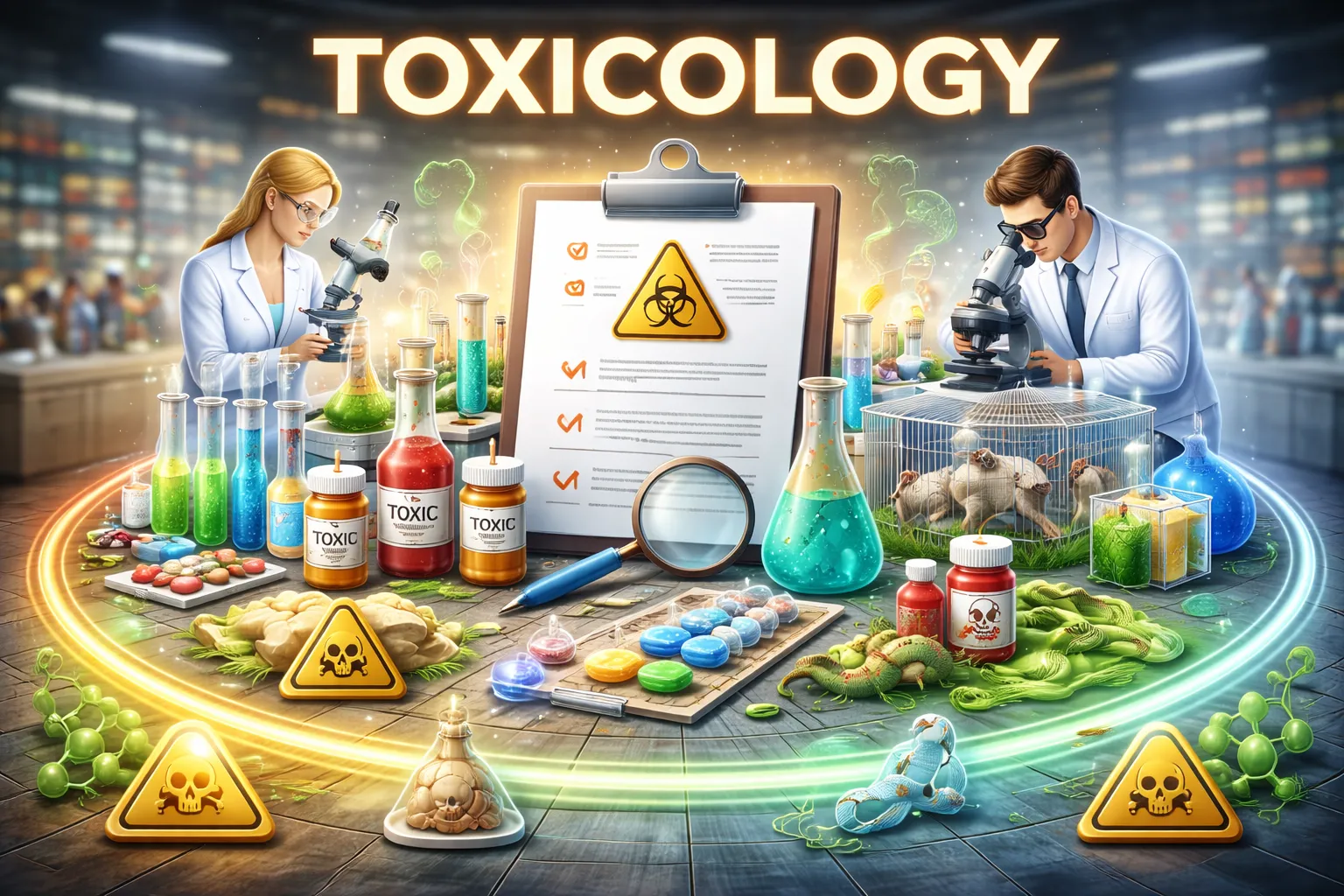
Toxicology
- Toxicology is the study of the adverse effects of chemicals on living organisms.
- In drug development, toxicological studies assess the potential harmful effects of drug candidates.
Types of Toxicity Studies

-
Acute Toxicity
- Objective: Determine the effects of a single dose.
- Endpoints: Lethal dose (LD50), clinical signs, organ toxicity.
-
Repeated Dose Toxicity
- Subacute (up to 28 days) and Subchronic (up to 90 days)
- Objective: Assess effects of repeated dosing over time.
- Endpoints: Clinical observations, hematology, clinical chemistry, histopathology.
-
Chronic Toxicity
- Duration: Typically, longer than 90 days, up to 1 year or more.
- Objective: Identify long-term effects.
-
Genotoxicity
- Tests: Ames test, micronucleus test, chromosomal aberration tests.
- Objective: Detect mutations, chromosomal damage.
-
Carcinogenicity
- Objective: Assess potential to cause cancer.
- Duration: Long-term studies, often in rodents.
-
Reproductive and Developmental Toxicity
- Segments:
- Segment I: Fertility and early embryonic development.
- Segment II: Embryo-fetal development (teratogenicity).
- Segment III: Pre- and postnatal development.
- Segments:
-
Immunotoxicity
- Objective: Evaluate effects on the immune system.
-
Local Tolerance
- Objective: Assess irritation or sensitization at administration sites.
Advertisements
Regulatory Guidelines
- ICH M3(R2): Guidance on non-clinical safety studies.
- OECD Guidelines: Standardized methods for toxicology testing.
Advertisements