
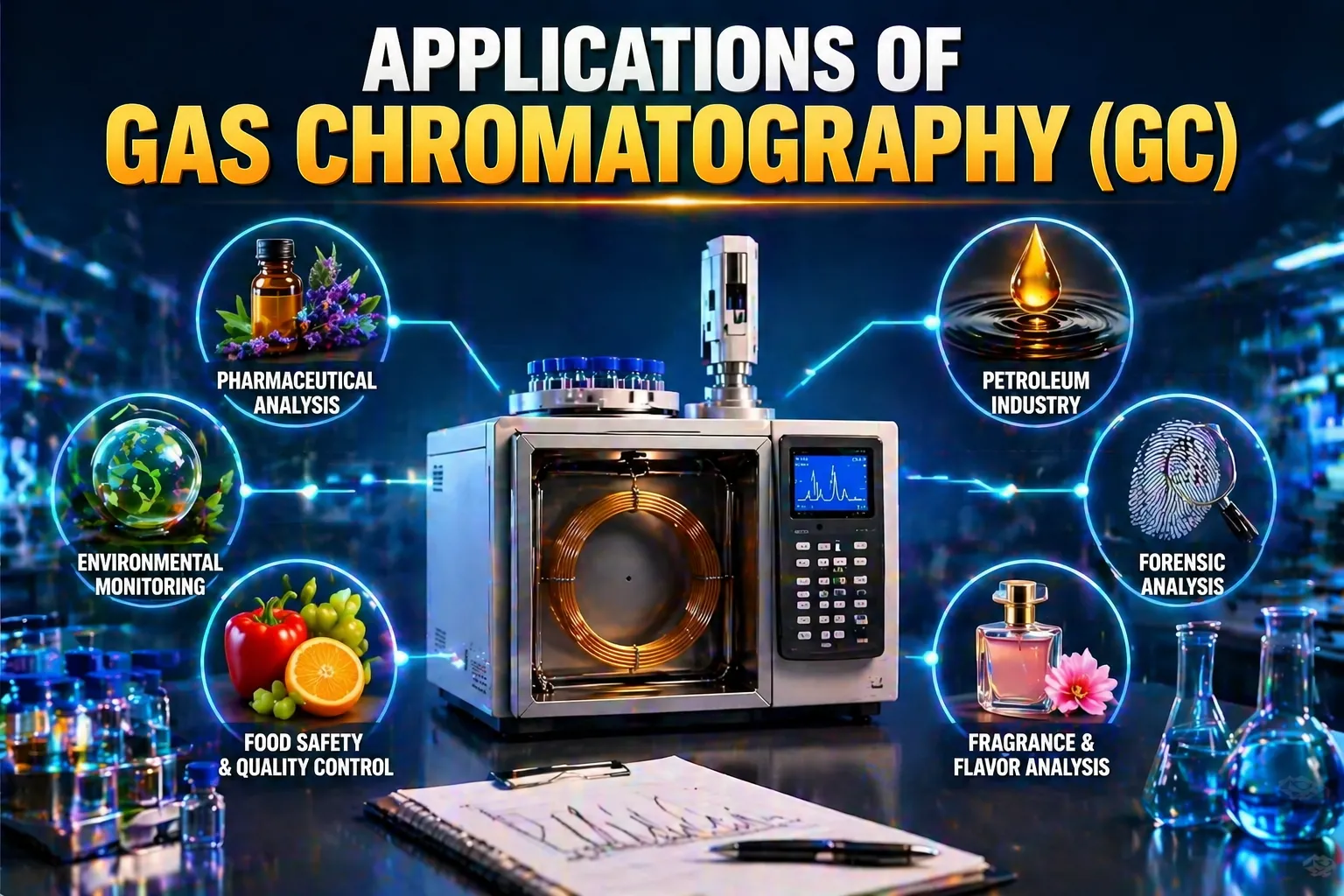
Applications of Gas Chromatography (GC)
Applications of Gas Chromatography (GC) include analysis of pharmaceuticals, environmental samples, and food components.
-
Environmental Analysis
- Purpose: Detection of pollutants and contaminants in air, water, and soil samples.
- Examples: Monitoring volatile organic compounds (VOCs), pesticides, and industrial emissions.
-
Pharmaceuticals
- Purpose: Quality control, impurity profiling, and drug metabolism studies.
- Examples: Analyzing active pharmaceutical ingredients (APIs) and degradation products.
-
Food Analysis
- Purpose: Determining food composition, detecting additives, flavors, contaminants, and spoilage indicators.
- Examples: Analyzing fatty acid profiles, flavor compounds, and pesticide residues.
-
Forensic Science
- Purpose: Analyzing biological samples for substances like drugs, poisons, and alcohol.
- Examples: Toxicology reports, arson investigations to identify accelerants.
-
Petrochemical Industry
- Purpose: Analysis of hydrocarbons and determining the composition of fuels.
- Examples: Quality control of gasoline, diesel, and natural gas.
-
Clinical Toxicology
- Purpose: Detection of drugs, alcohol, and toxic substances in biological fluids.
- Examples: Blood and urine analysis for substance abuse screening.
-
Perfume and Flavor Industry
- Purpose: Analyzing the composition of fragrances and flavors.
- Examples: Identifying and quantifying essential oils and aroma compounds.
-
Academic and Research
- Purpose: Various research applications, including studying reaction mechanisms and developing new separation methods.
- Examples: Investigating biochemical pathways, environmental studies, and materials science research.
Advertisements