
Tolnaftate

Tolnaftate

Chemical Structure / Formula of Tolnaftate Formula: C₁₉H₁₇NOS Structure: A thiocarbamate antifungal with a naphthyl group. Mechanism of Action Inhibits squalene epoxidase, preventing ergosterol synthesis and causing toxic squalene accumulation in fungal cells. Uses of Tolnaftate Topical antifungal (tinea infections, athlete’s foot, jock itch, ringworm). Side Effects Mild skin irritation, dryness, redness. Structure-Activity Relationship (SAR) … Read more
Naftifine Hydrochloride

Naftifine Hydrochloride

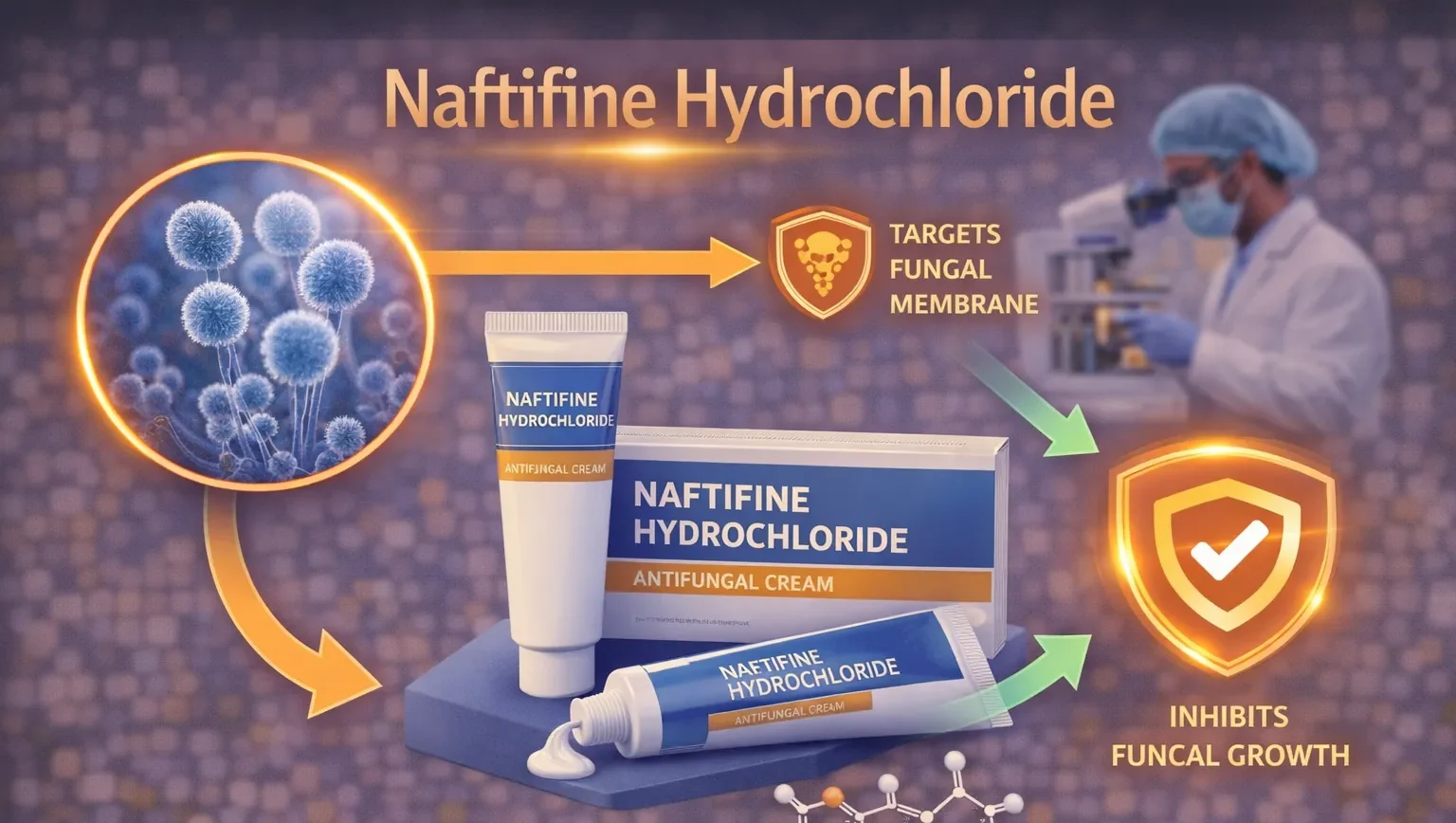
Chemical Structure / Formula of Naftifine Hydrochloride Formula: C₂₁H₂₁N · HCl Structure: Allylamine antifungal with a naphthalene core. Mechanism of Action Inhibits squalene epoxidase, blocking ergosterol synthesis and leading to toxic squalene accumulation. Uses of Naftifine Hydrochloride Topical antifungal (tinea infections, athlete’s foot, jock itch, ringworm). Side Effects Skin irritation, redness, burning.

Fluconazole

Fluconazole

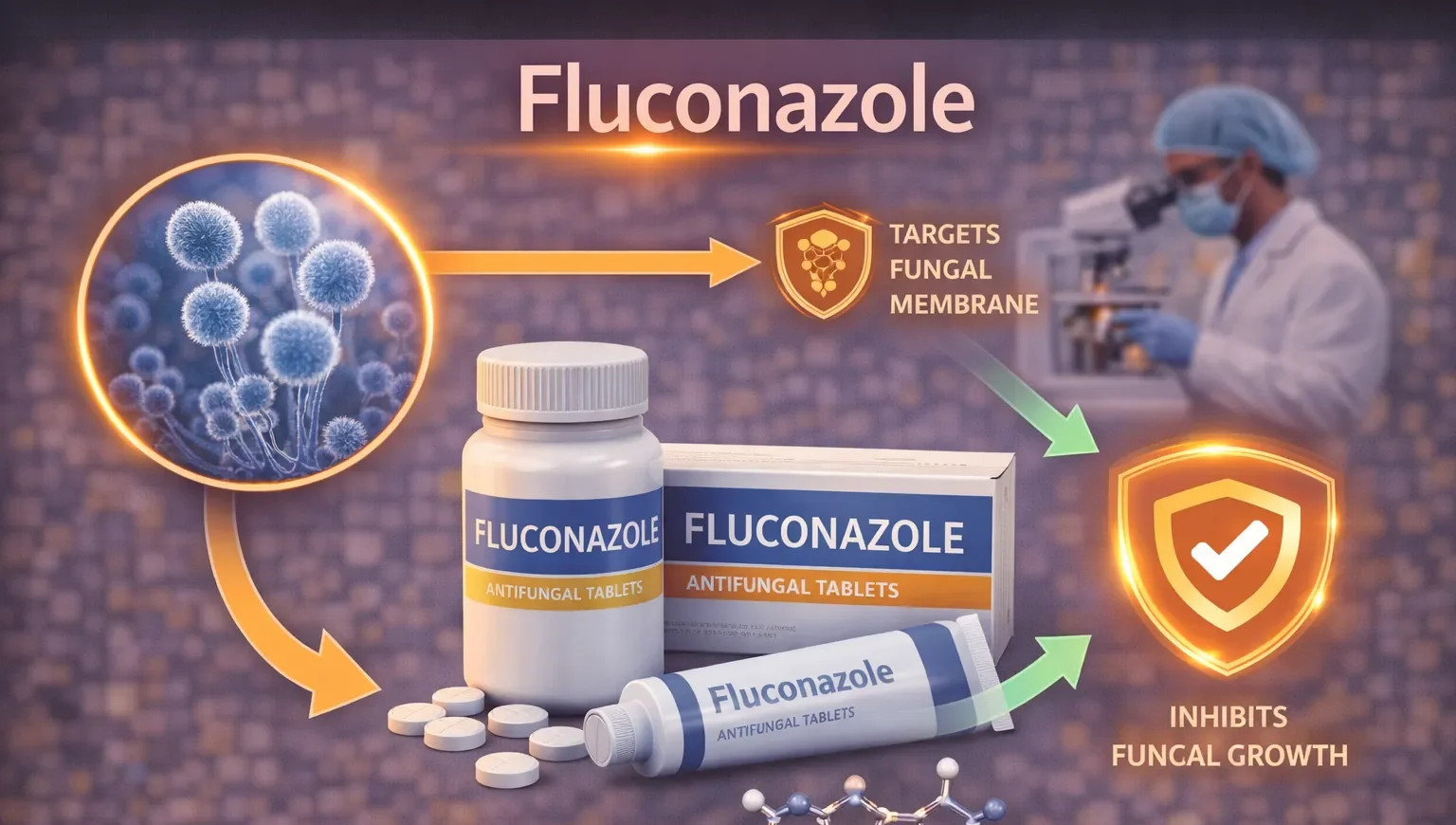
Chemical Structure / Formula of Fluconazole Formula: C₁₃H₁₂F₂N₆O Structure: Triazole antifungal with two fluorine atoms (F) on benzyl ring. Mechanism of Action Inhibits lanosterol 14α-demethylase, preventing ergosterol formation. Uses of Fluconazole Candidiasis (oral, esophageal, vaginal, systemic). Cryptococcal meningitis (especially in HIV patients). Dermatophytosis and fungal UTIs. Side Effects Hepatotoxicity, GI upset. QT prolongation, alopecia (long-term … Read more

Itraconazole

Itraconazole

Chemical Structure / Formula of Itraconazole Formula: C₃₅H₃₈Cl₂N₈O₄ Structure: Triazole antifungal with lipophilic side chains. Mechanism of Action Inhibits lanosterol 14α-demethylase, preventing ergosterol synthesis. Uses of Itraconazole Systemic fungal infections (Histoplasmosis, Aspergillosis, Candidiasis, Blastomycosis). Onychomycosis (fungal nail infections). Side Effects Hepatotoxicity, GI upset, headache. Heart failure risk (black box warning: negative inotropic effects).

Terconazole

Terconazole

Chemical Structure / Formula of Terconazole Formula: C₂₂H₂₇Cl₃N₄O₃ Structure: Triazole antifungal with a chlorinated phenyl group. Mechanism of Action Inhibits ergosterol biosynthesis, disrupting fungal membrane stability. Uses of Terconazole Vaginal candidiasis (topical and suppository forms). Side Effects Local irritation, vaginal burning, pruritus.

Ketoconazole

Ketoconazole

Chemical Structure / Formula of Ketoconazole Formula: C₂₆H₂₈Cl₂N₄O₄ Structure: A imidazole antifungal with two chlorinated benzyl groups. Mechanism of Action Inhibits lanosterol 14α-demethylase, blocking ergosterol synthesis and disrupting fungal membrane integrity. Uses of Ketoconazole Topical and oral use for fungal infections: Systemic fungal infections (Histoplasmosis, Blastomycosis, Candidiasis) (oral use). Seborrheic dermatitis, tinea infections, dandruff (topical … Read more

Miconazole

Miconazole

Chemical Structure / Formula of Miconazole Formula: C₁₈H₁₄Cl₄N₂O Structure: Imidazole antifungal with multiple chlorine substitutions. Mechanism of Action Inhibits ergosterol synthesis, disrupting fungal membrane stability. Uses of Miconazole Oral thrush, cutaneous fungal infections, vaginal candidiasis. Side Effects Skin irritation, burning, redness. Synthesis of Miconazole Structure-Activity Relationship (SAR) of Miconazole Structural Feature SAR Insight Imidazole ring … Read more

Tioconazole

Tioconazole

Chemical Structure / Formula of Tioconazole Formula: C₁₆H₁₃Cl₃N₂OS Structure: Imidazole antifungal with a thiophene ring. Mechanism of Action Inhibits lanosterol 14α-demethylase, preventing ergosterol formation. Uses of Tioconazole Vaginal yeast infections, tinea infections. Side Effects Local irritation, burning, itching.

Oxiconazole

Oxiconazole

Chemical Structure / Formula of Oxiconazole Formula: C₁₈H₁₄Cl₄N₂O Structure: Imidazole antifungal with a chlorinated benzodioxane core. Mechanism of Action Disrupts fungal ergosterol biosynthesis, leading to cell lysis. Uses of Oxiconazole Topical antifungal (tinea infections, candidiasis). Side Effects Skin irritation, redness, burning.

Butoconazole

Butoconazole

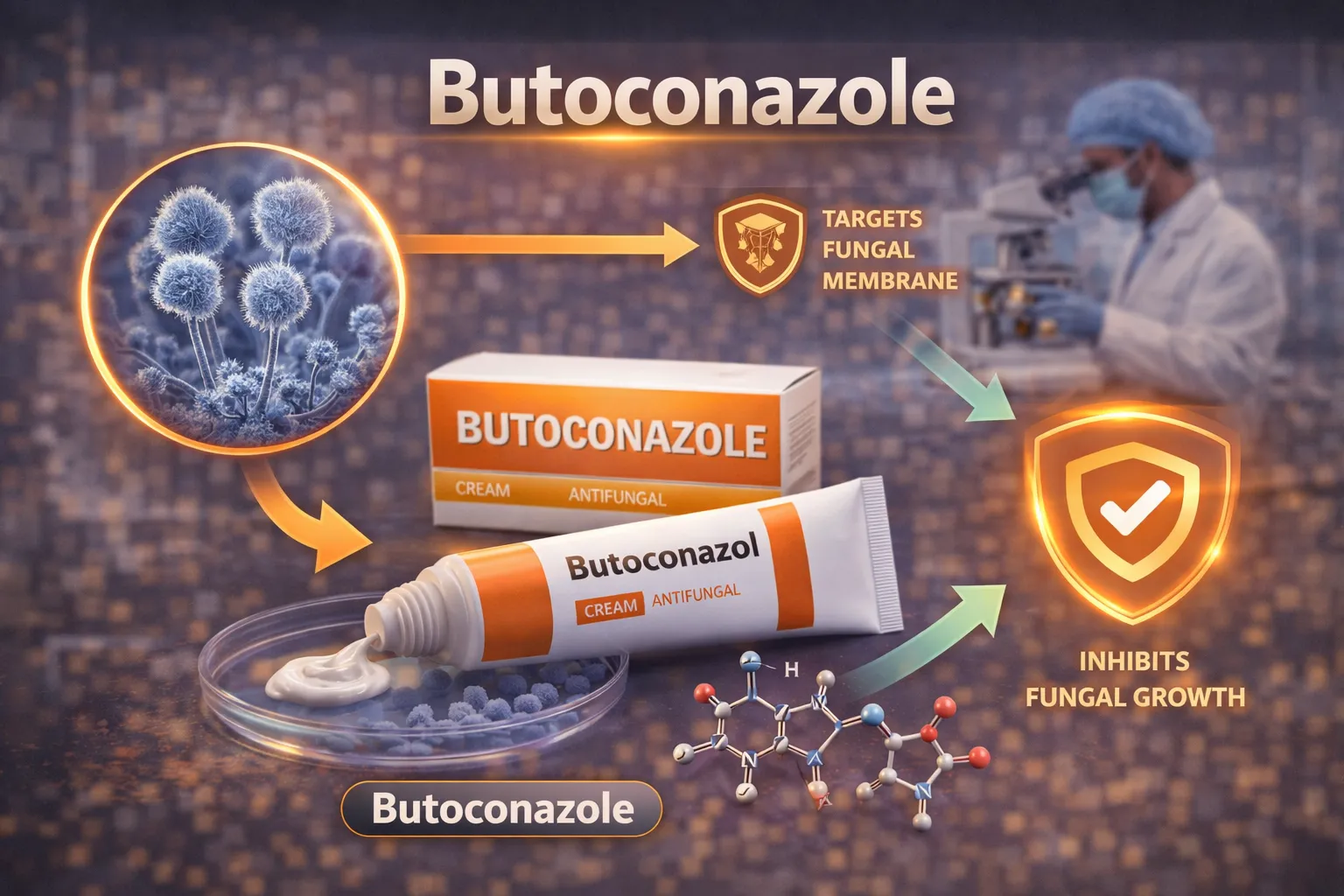
Chemical Structure / Formula of Butoconazole Formula: C₁₉H₁₇Cl₃N₂OS Structure: Imidazole antifungal with a chlorinated benzothiophene ring. Mechanism of Action Inhibits lanosterol 14α-demethylase, blocking ergosterol biosynthesis. Uses of Butoconazole Vaginal candidiasis treatment (topical application). Side Effects Vaginal burning, itching, irritation.