Anthelmintic Agents

Anthelmintic Agents

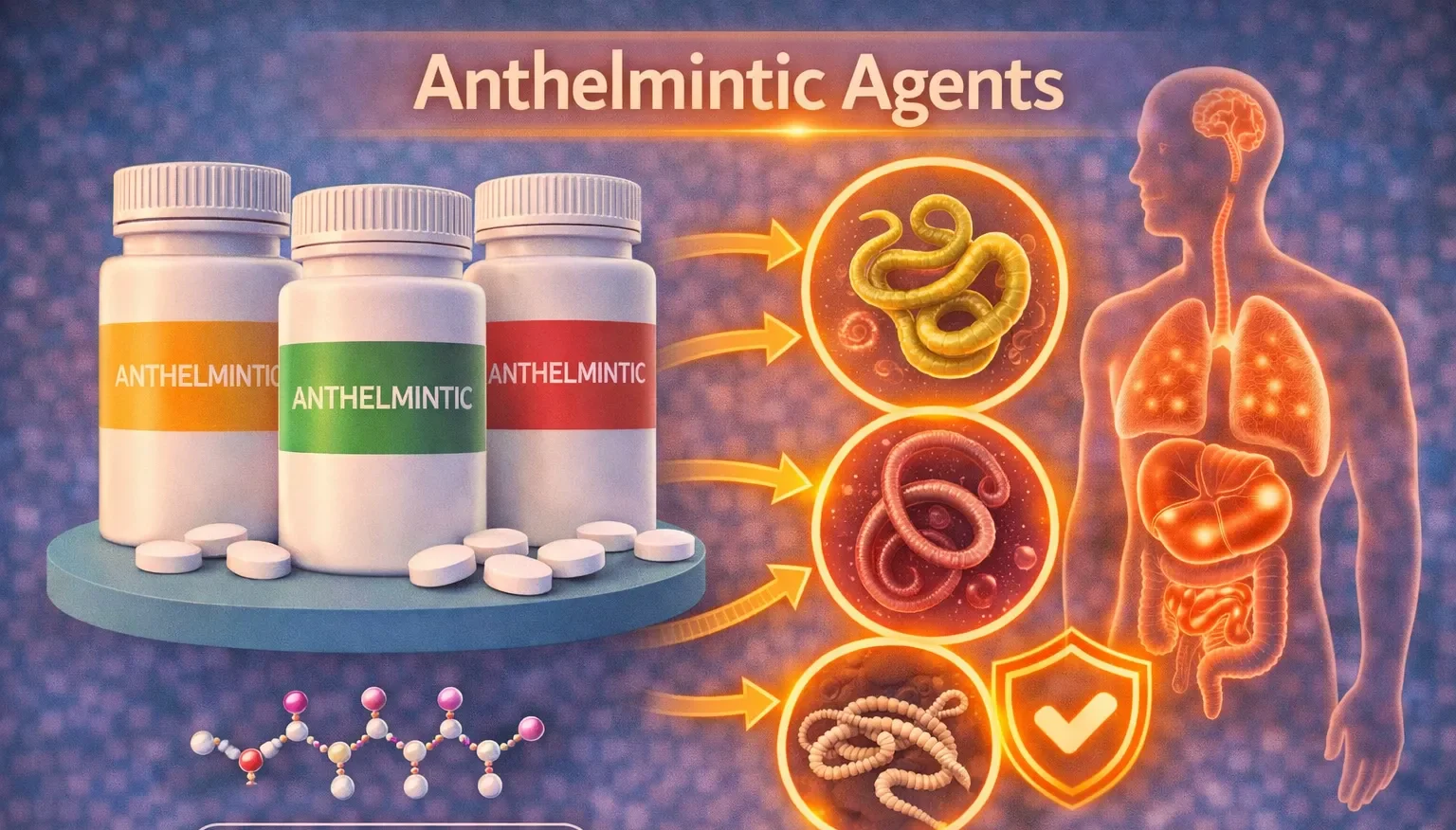
What Are Anthelmintic Agents? Anthelmintics (also called antihelminthic or vermifuge drugs) are medications used to eliminate parasitic worms (helminths) from the human or animal body. Helminths (Parasitic Worms) Helminths are multicellular, worm-like organisms that cause various infections. They are classified into three major groups: Nematodes (Roundworms): e.g., Ascaris lumbricoides, Hookworms Cestodes (Tapeworms): e.g., Taenia saginata, … Read more
Eflornithine

Eflornithine

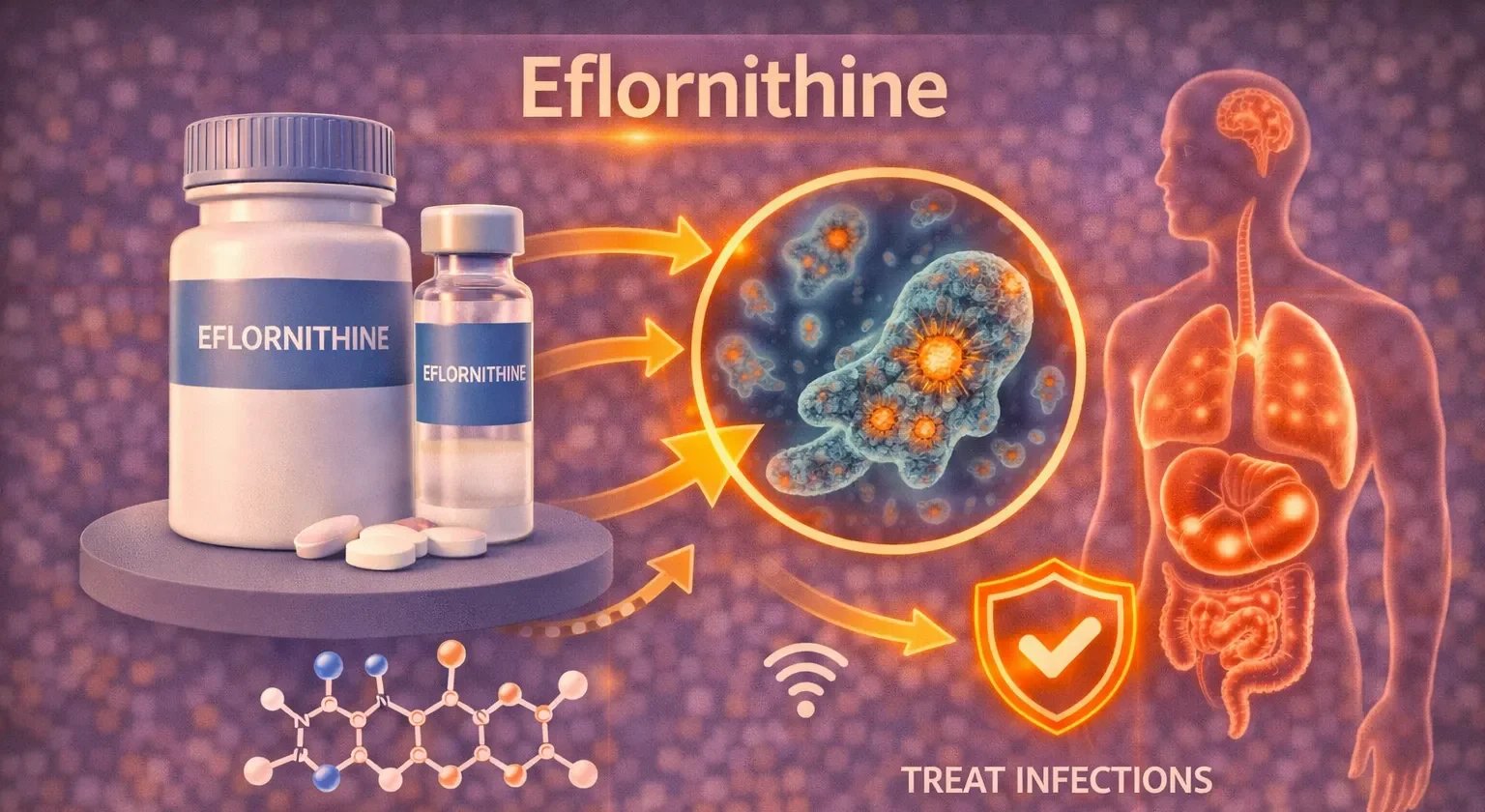
Chemical Structure / Formula of Eflornithine Formula: C₆H₁₂F₂N₂O₂ Mechanism of Action Inhibits ornithine decarboxylase, blocking polyamine synthesis, which is essential for Trypanosoma growth. Uses of Eflornithine Trypanosomiasis (African sleeping sickness: first-line for late-stage disease). Side Effects Bone marrow suppression (anemia, leukopenia). Seizures, neurotoxicity.

Pentamidine Isethionate

Pentamidine Isethionate

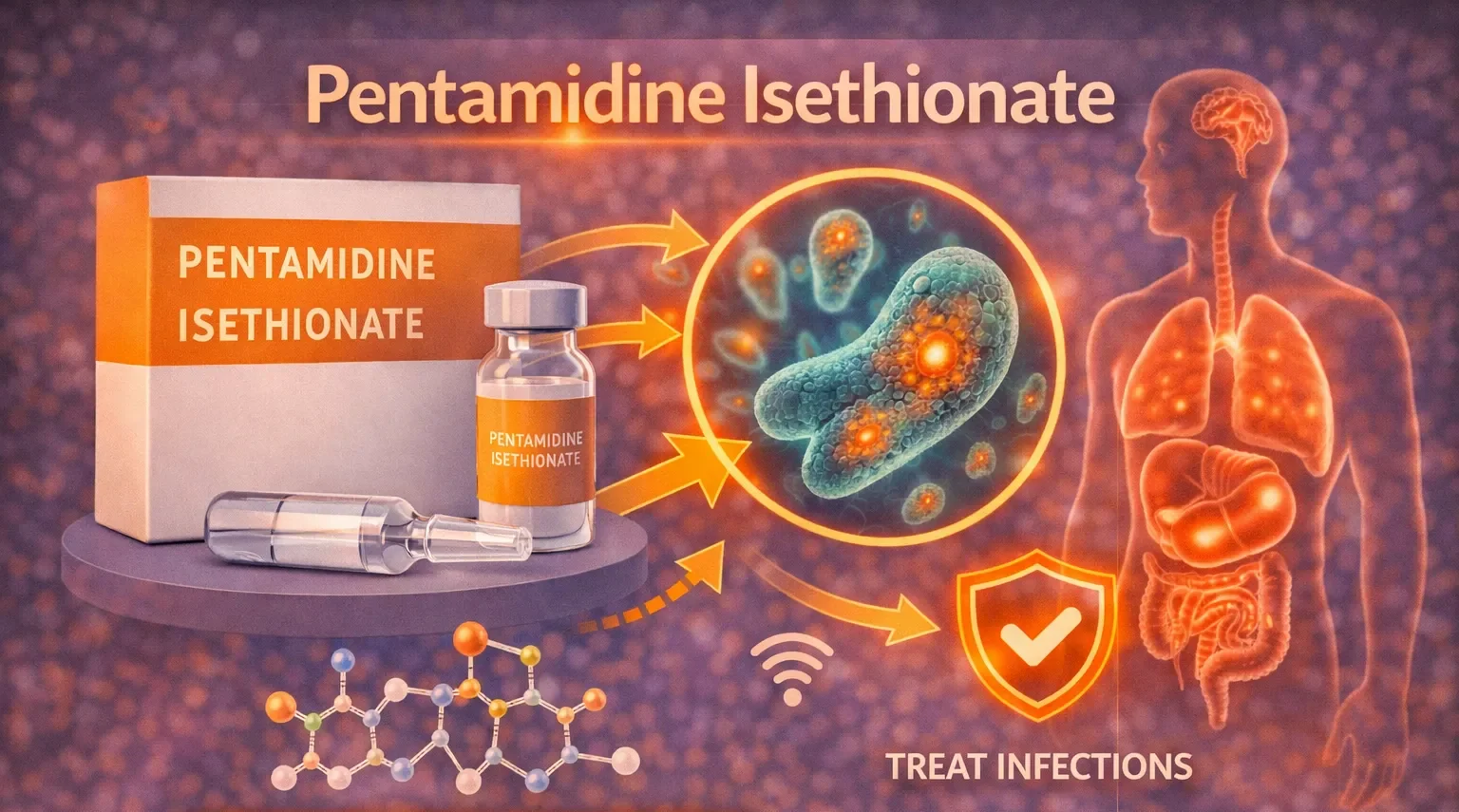
Chemical Structure / Formula of Pentamidine Isethionate Formula: C₁₉H₂₄N₄O₂ · C₂H₆O₄S Structure: Aromatic diamidine with an isethionate salt. Mechanism of Action Binds to DNA and inhibits RNA synthesis in protozoa. Disrupts mitochondrial function. Uses of Pentamidine Isethionate Pneumocystis jirovecii pneumonia (PCP) in HIV/AIDS patients. Trypanosomiasis (African sleeping sickness). Side Effects Nephrotoxicity, hypotension, pancreatitis.

Iodoquinol

Iodoquinol

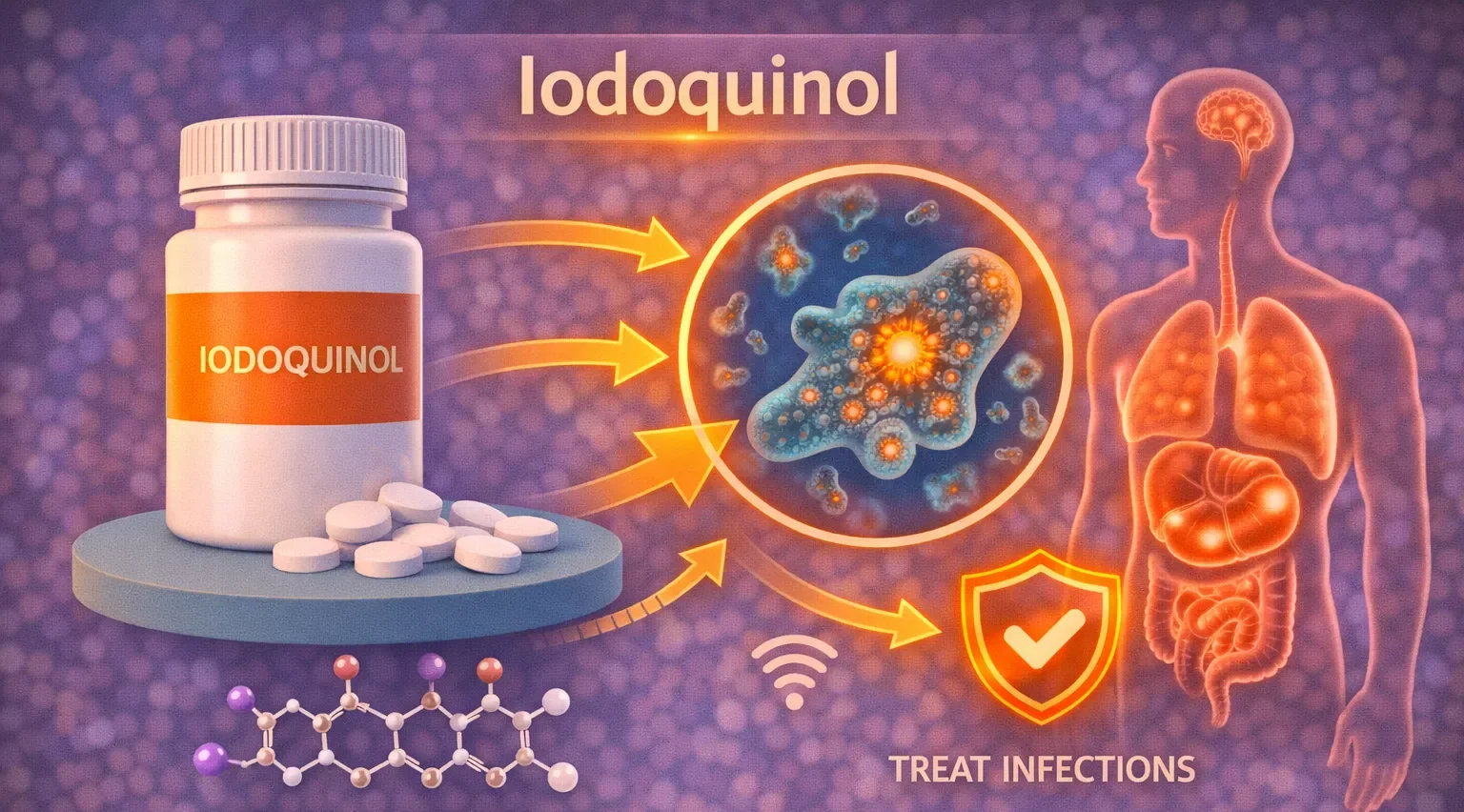
Chemical Structure / Formula of Iodoquinol Formula: C₉H₅I₂NO Structure: Iodinated hydroxyquinoline derivative. Mechanism of Action Unknown, but disrupts protozoal metabolism and enzyme function. Uses of Iodoquinol Amoebiasis (luminal agent, acts against cysts and trophozoites in the intestine). Side Effects Iodine toxicity (thyroid dysfunction, goiter). GI upset, neurotoxicity with long-term use.

Diloxanide

Diloxanide

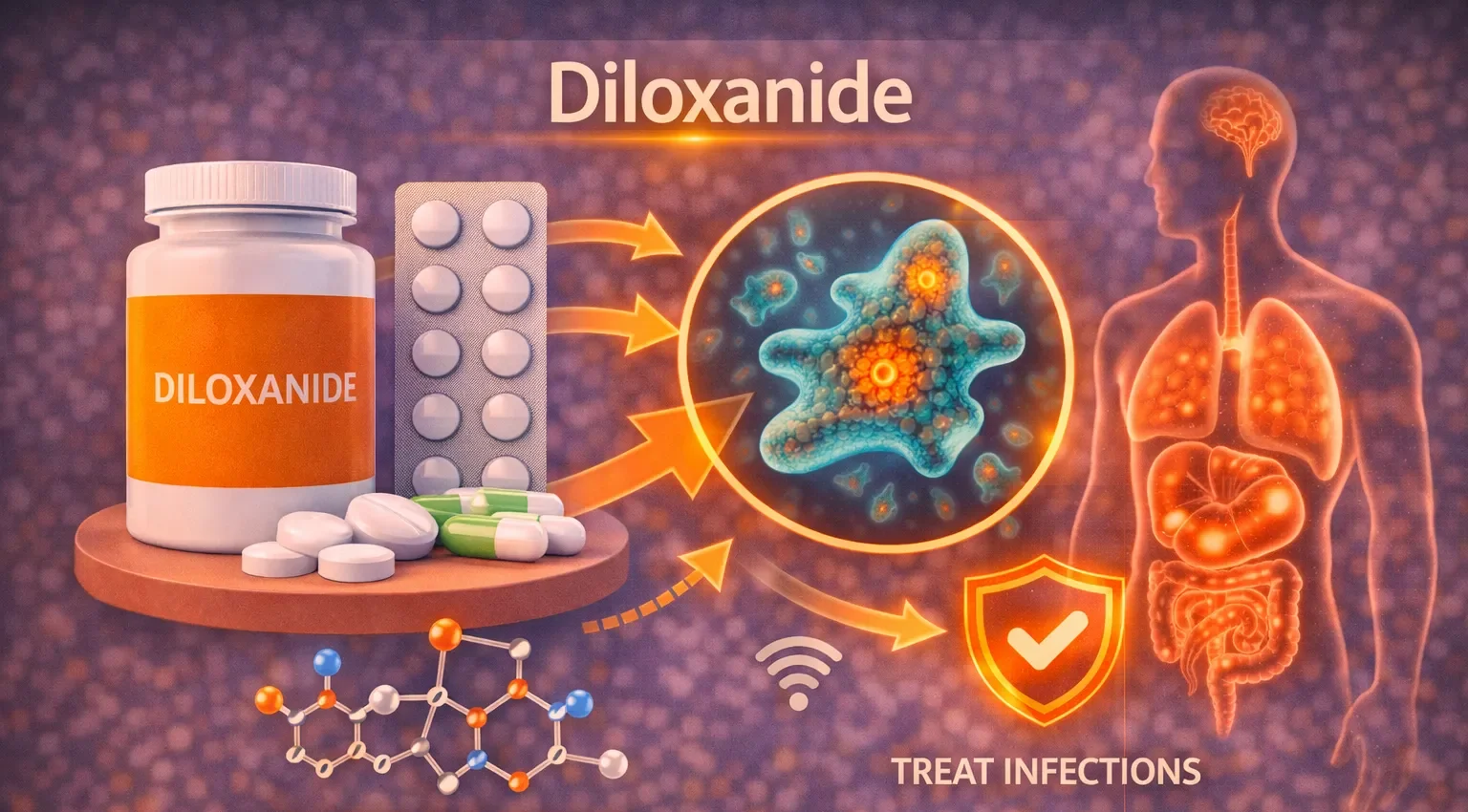
Chemical Structure / Formula of Diloxanide Formula: C₁₄H₁₁Cl₂NO₄ Structure: Dichlorinated amide derivative. Mechanism of Action Unknown, but thought to interfere with trophozoite metabolism in the intestine. Uses of Diloxanide Amoebiasis (luminal agent, kills trophozoites in the intestine but not in tissues). Used with Metronidazole for invasive amoebiasis. Side Effects Flatulence, nausea, rash. Not effective for … Read more

Ornidazole

Ornidazole

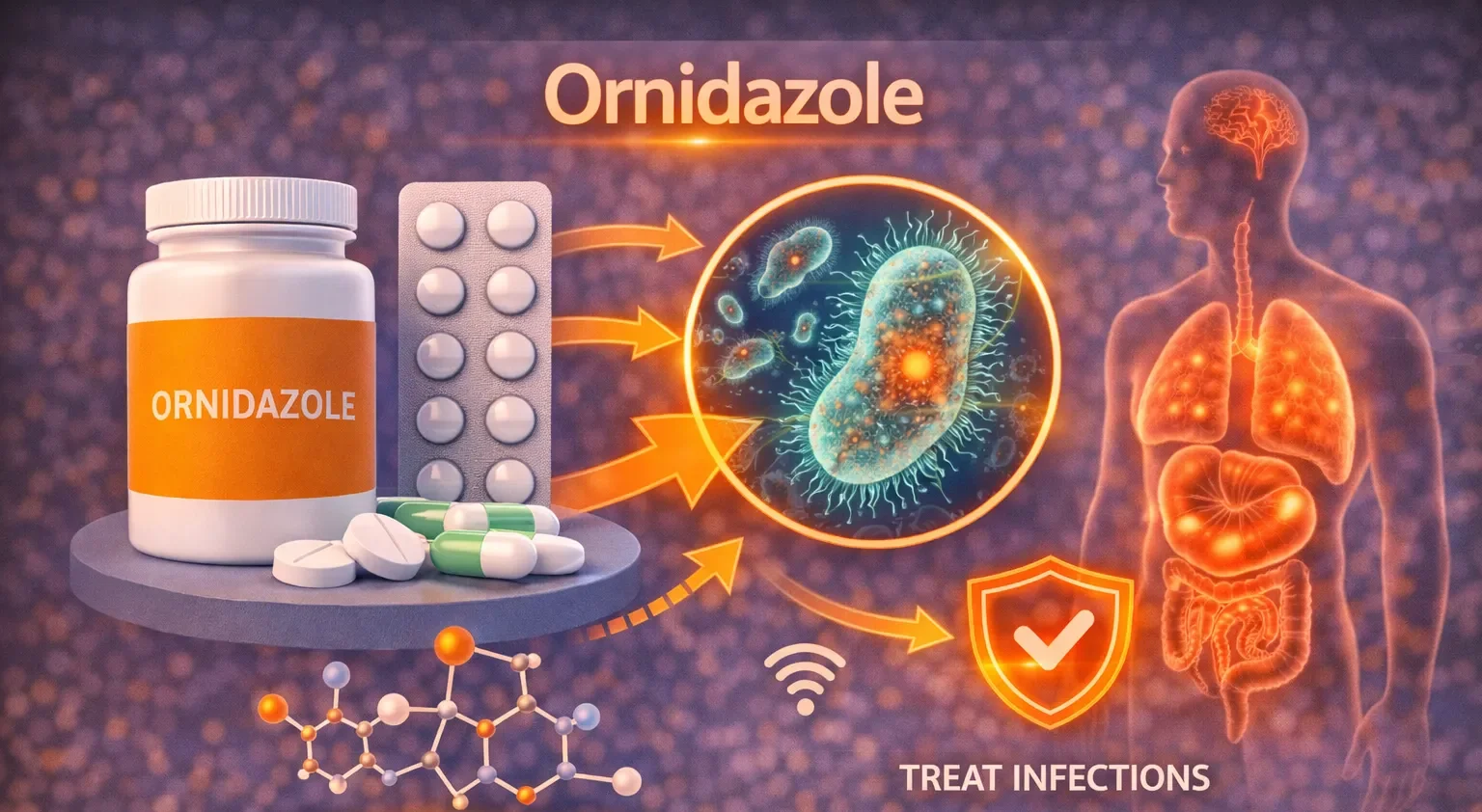
Chemical Structure / Formula of Ornidazole Formula: C₇H₁₀ClN₃O₃ Structure: Nitroimidazole derivative with a chlorinated side chain. Mechanism of Action Same as Metronidazole: activated in anaerobic organisms, causing DNA damage via ROS. Uses of Ornidazole Amoebiasis, giardiasis, trichomoniasis. Alternative to Metronidazole with better tolerability. Side Effects Dizziness, headache, GI upset. Less disulfiram-like reaction compared to Metronidazole.

Tinidazole

Tinidazole

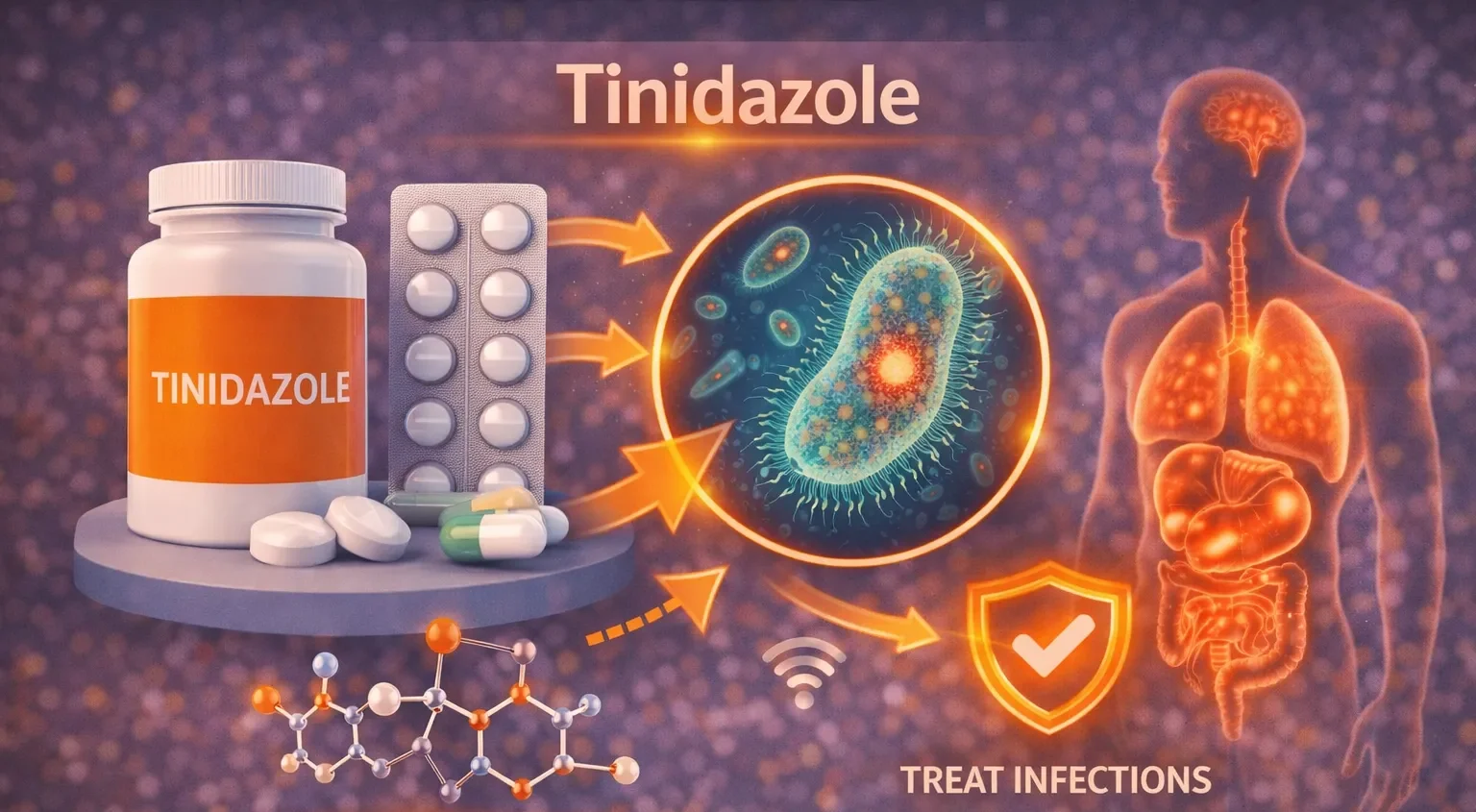
Chemical Structure / Formula of Tinidazole Formula: C₈H₁₃N₃O₄S Structure: Nitroimidazole derivative with a sulfur (-S) group. Mechanism of Action Prodrug activated under anaerobic conditions by PFOR enzyme. Generates ROS, leading to DNA strand breaks and cell death. Uses of Tinidazole Similar to Metronidazole but has a longer half-life (used for single-dose treatments). Amoebiasis, giardiasis, trichomoniasis. … Read more

Metronidazole

Metronidazole

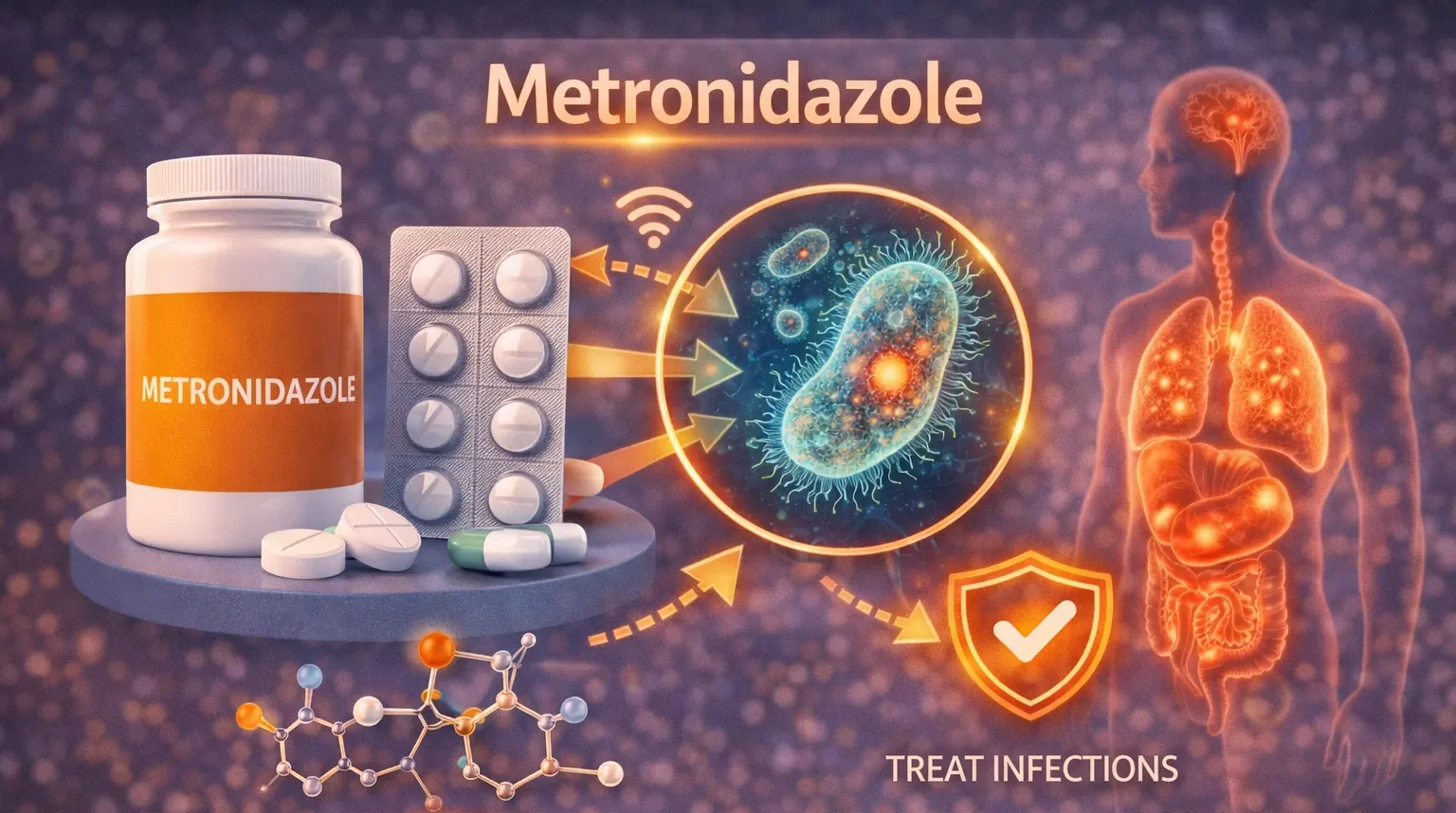
Chemical Structure / Formula of Metronidazole Formula: C₆H₉N₃O₃ Structure: A nitroimidazole with a nitro (-NO₂) group at the 5th position of the imidazole ring. Mechanism of Action Prodrug, activated by anaerobic protozoa and bacteria via pyruvate-ferredoxin oxidoreductase (PFOR) enzyme. The nitro group is reduced, generating reactive oxygen species (ROS), leading to DNA damage and cell … Read more

Anti-Protozoal Agents

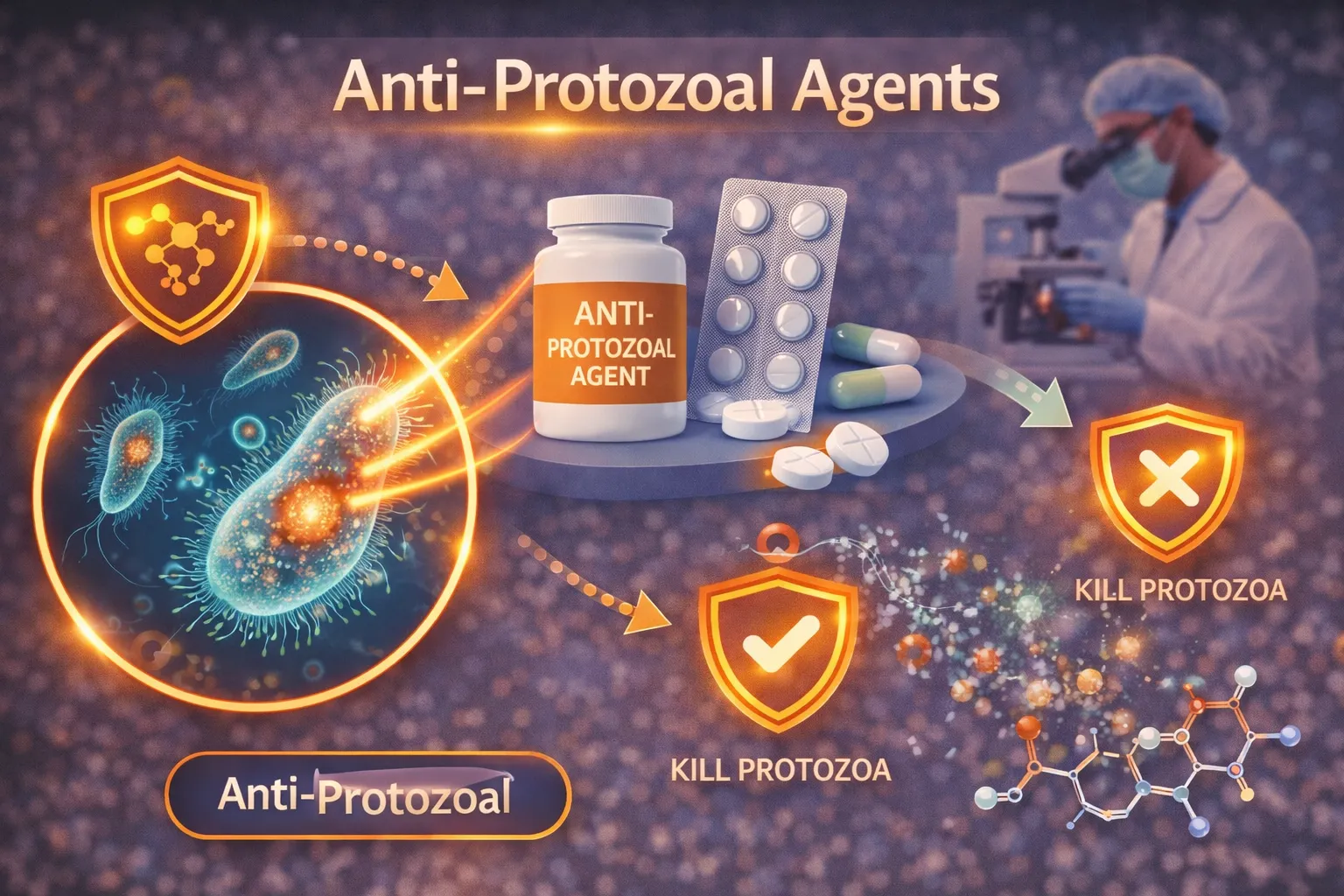
Anti-protozoal agents are medications designed to eliminate protozoan parasites by disrupting their essential life processes, including: Cell membrane integrity Protein synthesis DNA replication Energy metabolism These agents are infection-specific, meaning their use depends on the type of protozoan infection and disease severity. Classification Amoebicidal Agents: Used for amoebiasis and other protozoal infections Metronidazole Tinidazole Ornidazole … Read more

Protozoa

Protozoa

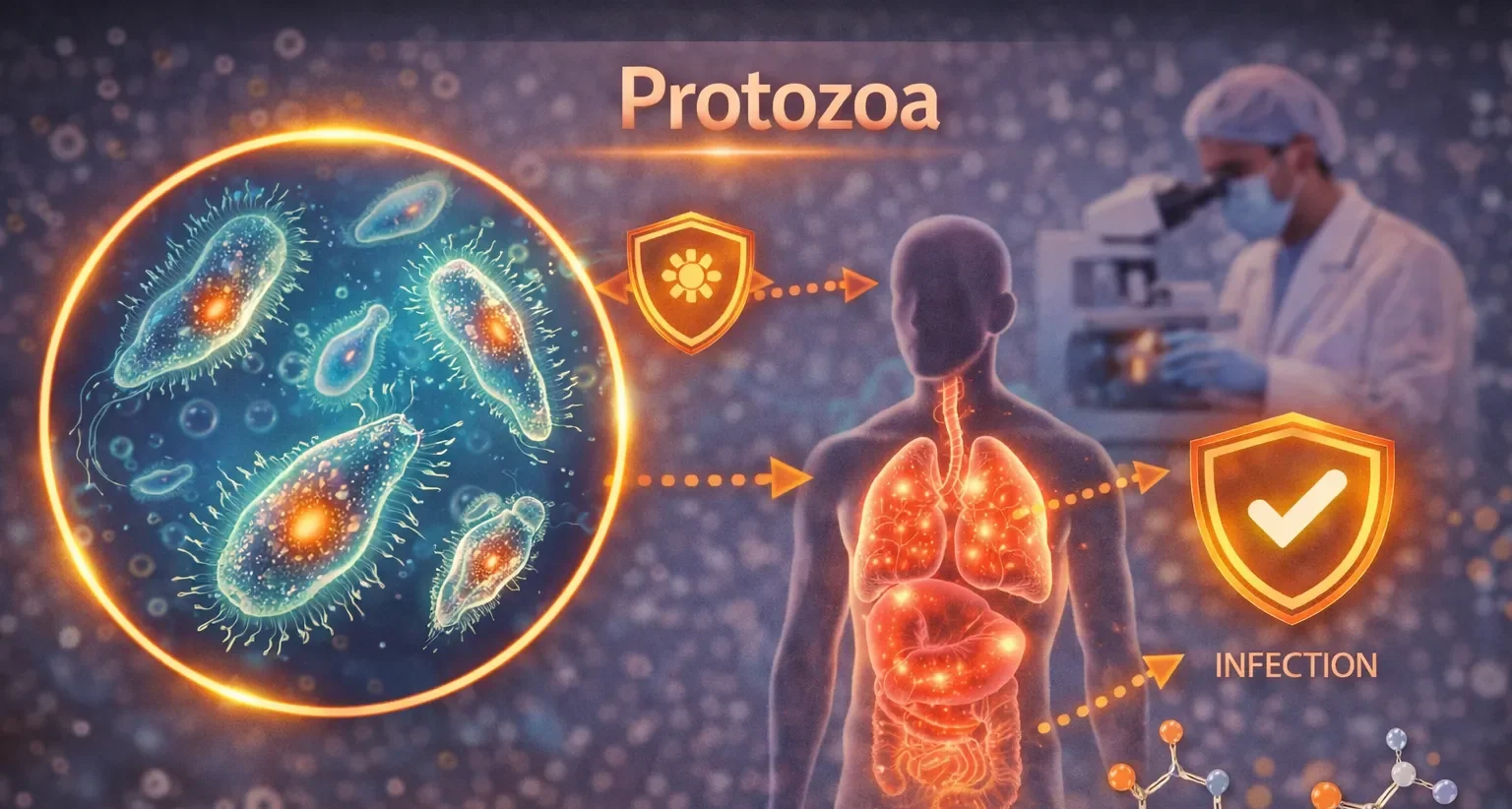
Protozoa are single-celled, microscopic eukaryotic organisms belonging to the Protista kingdom. They exist in various environments, including soil, water, and as parasites within other organisms. Some protozoa are harmless, while others cause infections in humans and animals. They have a complex structure with a cell membrane, nucleus, and organelles, enabling reproduction, metabolism, and movement. Transmission … Read more