Paper Chromatography

Paper Chromatography
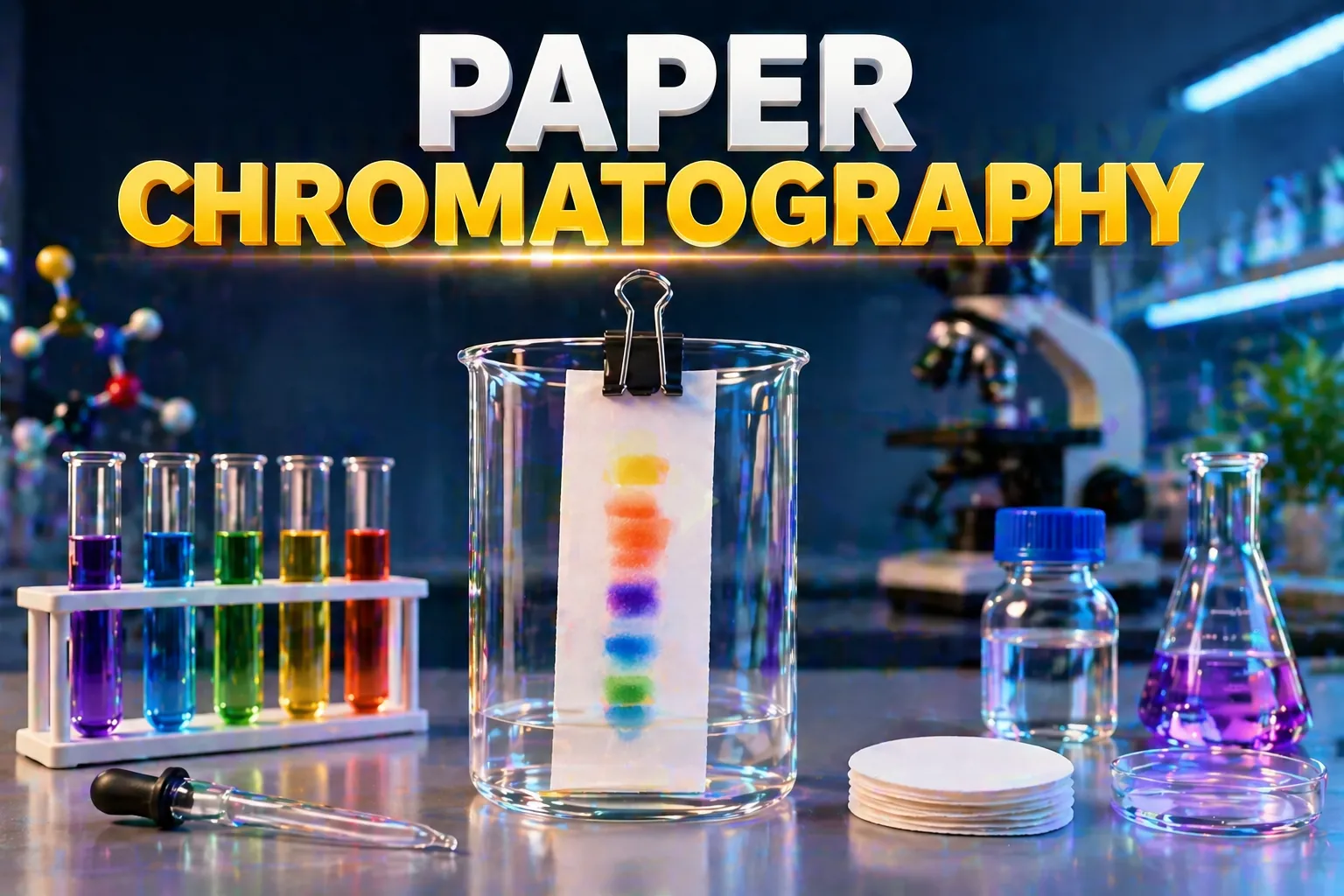
Introduction to Paper Chromatography Paper chromatography is an analytical technique used to separate and identify mixtures of soluble substances. It is one of the simplest forms of chromatography, utilizing paper as the stationary phase and a solvent as the mobile phase. Principle of Paper Chromatography The separation in paper chromatography is based on differential solubility … Read more
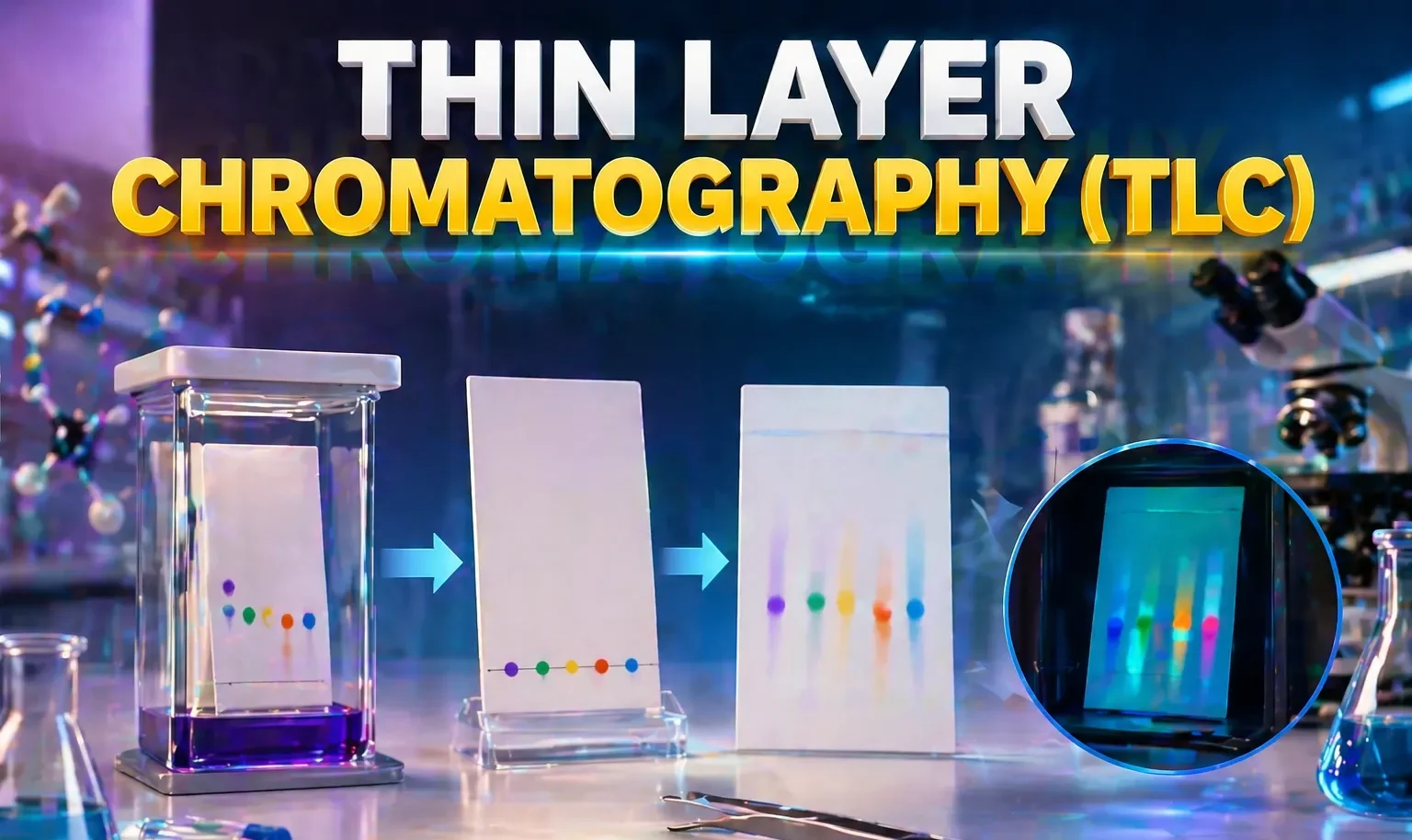
Thin Layer Chromatography (TLC)

Thin Layer Chromatography (TLC)

Introduction to Thin Layer Chromatography (TLC) Thin Layer Chromatography (TLC) is a simple, rapid, and versatile analytical technique used to separate and identify compounds within a mixture. It is widely used in laboratories for qualitative analysis and monitoring reactions. Principle of Thin Layer Chromatography (TLC) TLC operates on the principle of differential migration of components … Read more

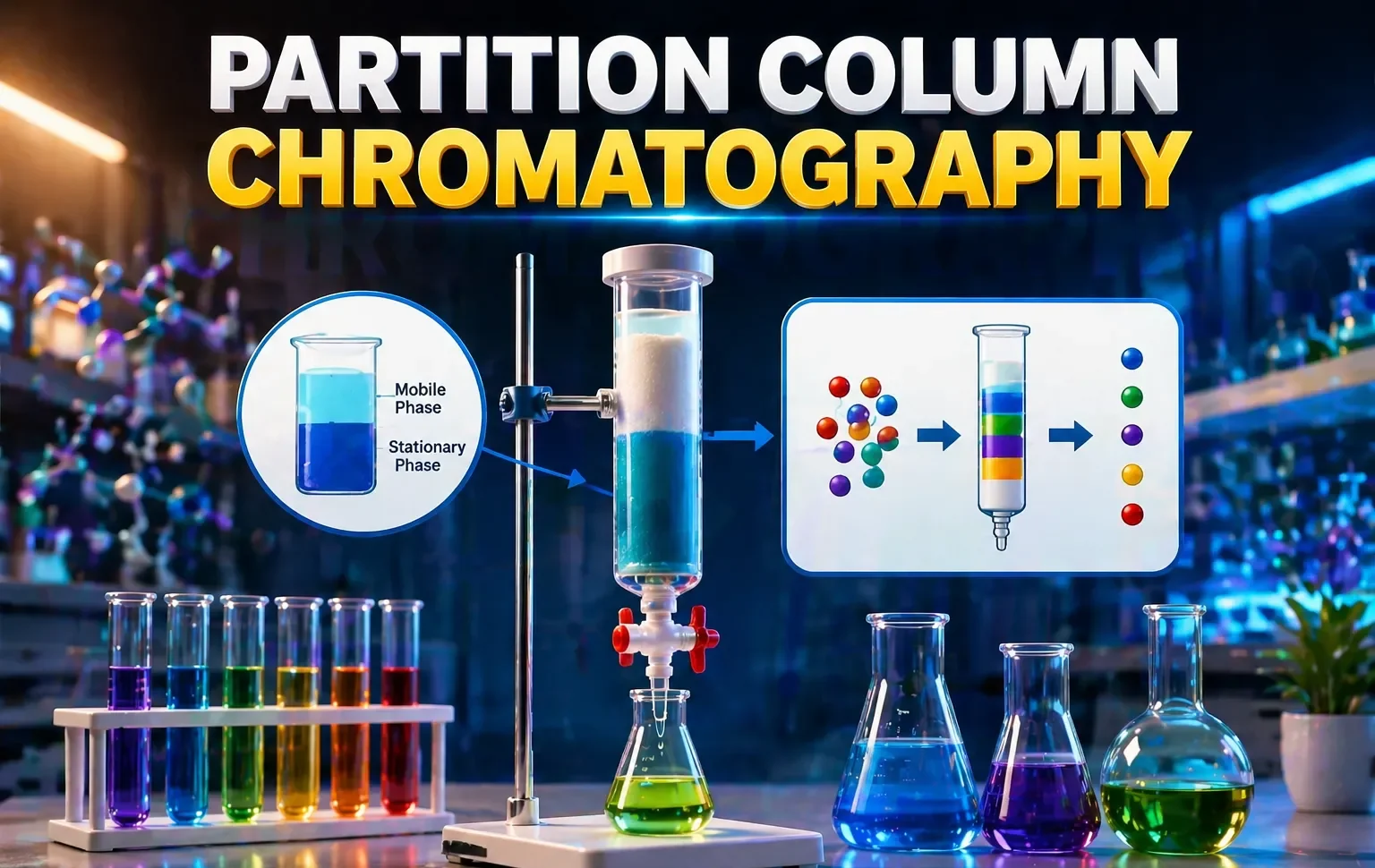
Partition Column Chromatography

Partition Column Chromatography

Introduction to Partition Column Chromatography Partition column chromatography utilizes a liquid stationary phase supported on an inert solid, relying on the partitioning of solutes between the mobile and stationary phases for separation. Principle of Partition Column Chromatography Separation occurs based on the solubility of components in the mobile phase relative to the stationary phase. Components … Read more

Adsorption Column Chromatography

Adsorption Column Chromatography

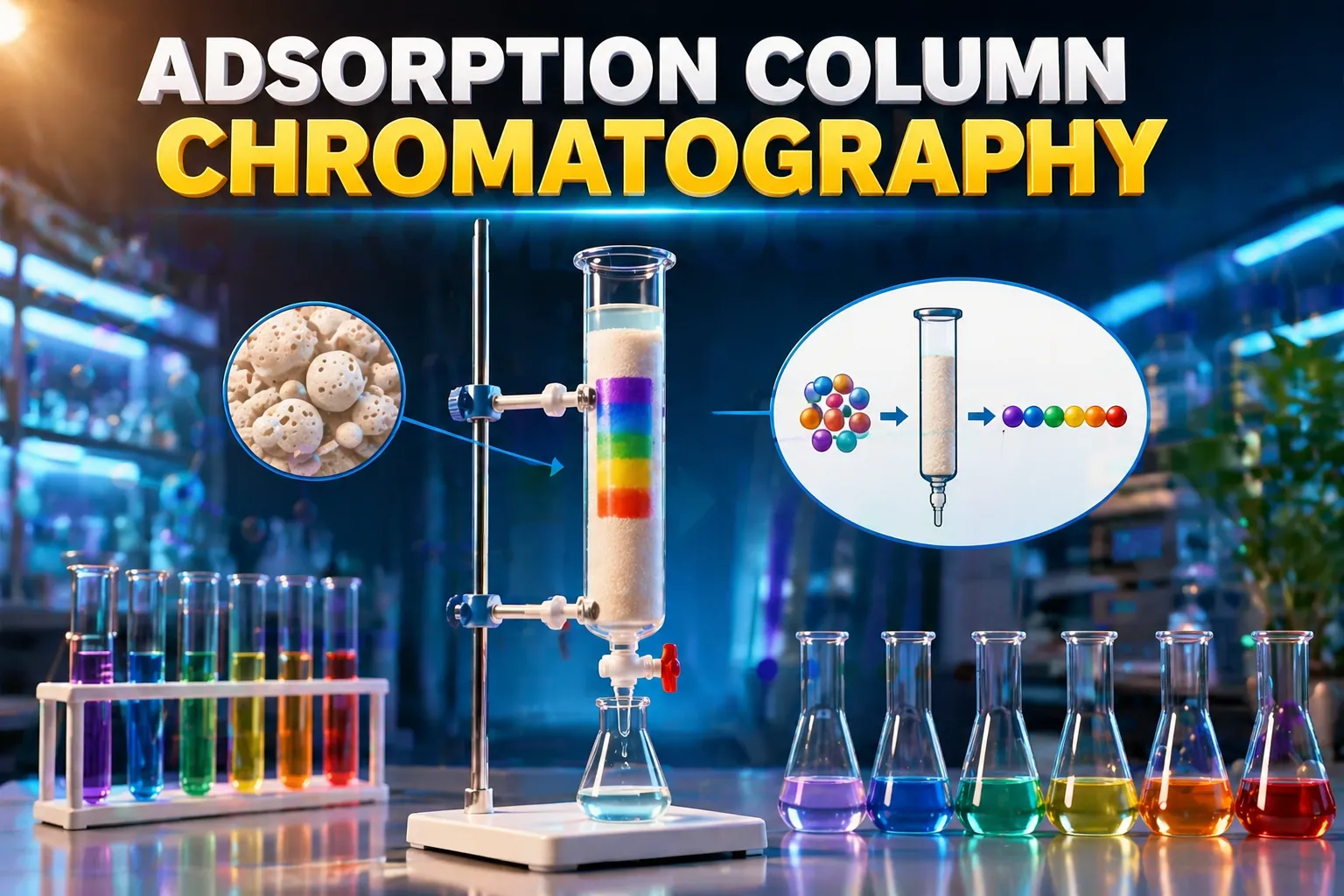
Introduction to Adsorption Column Chromatography Adsorption column chromatography is one of the earliest and most fundamental forms of column chromatography. It relies on the differential adsorption of components in a mixture onto the surface of a solid stationary phase. Principle The separation is based on the varying affinities of different components for the stationary phase. … Read more

Introduction to Chromatography

Introduction to Chromatography

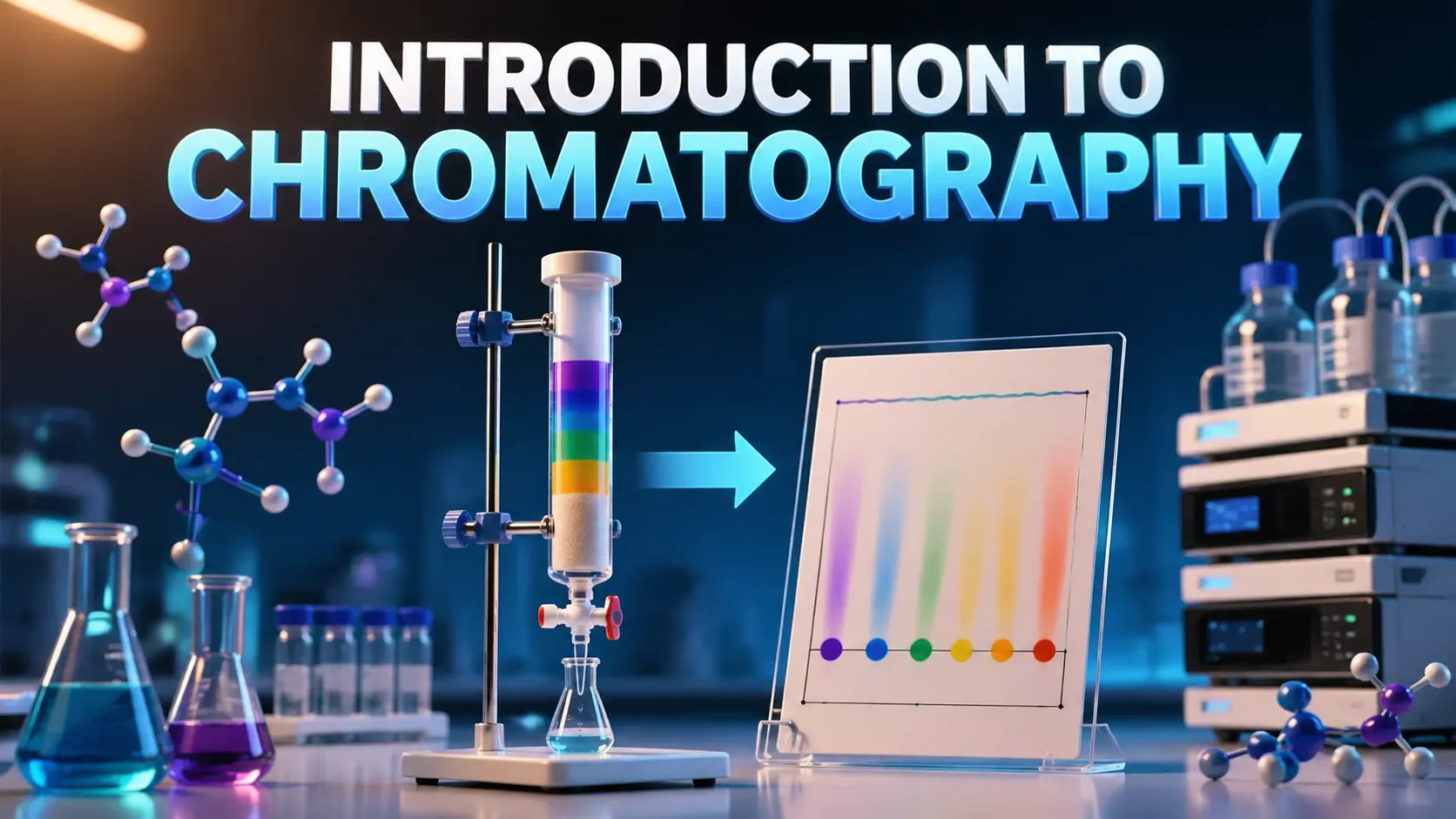
Chromatography is a versatile analytical technique used to separate, identify, and sometimes quantify components within complex mixtures. It is widely applied in chemistry, biochemistry, environmental science, food science, pharmaceuticals, and more, enabling the isolation and study of individual substances. Fundamental Principle It operates on the differential interactions of components in a mixture with two phases: … Read more

Applications of Nepheloturbidometry

Applications of Nepheloturbidometry

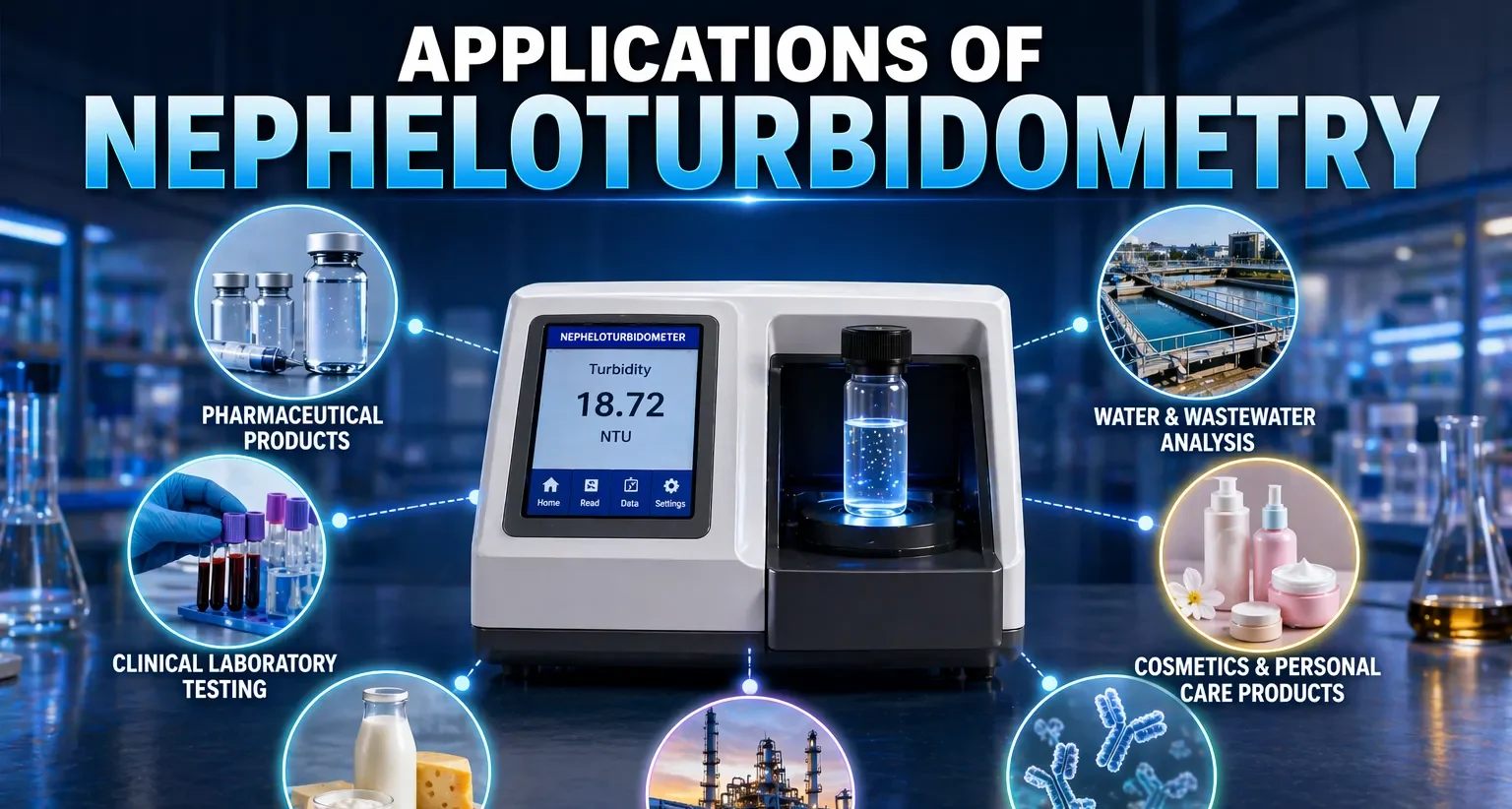
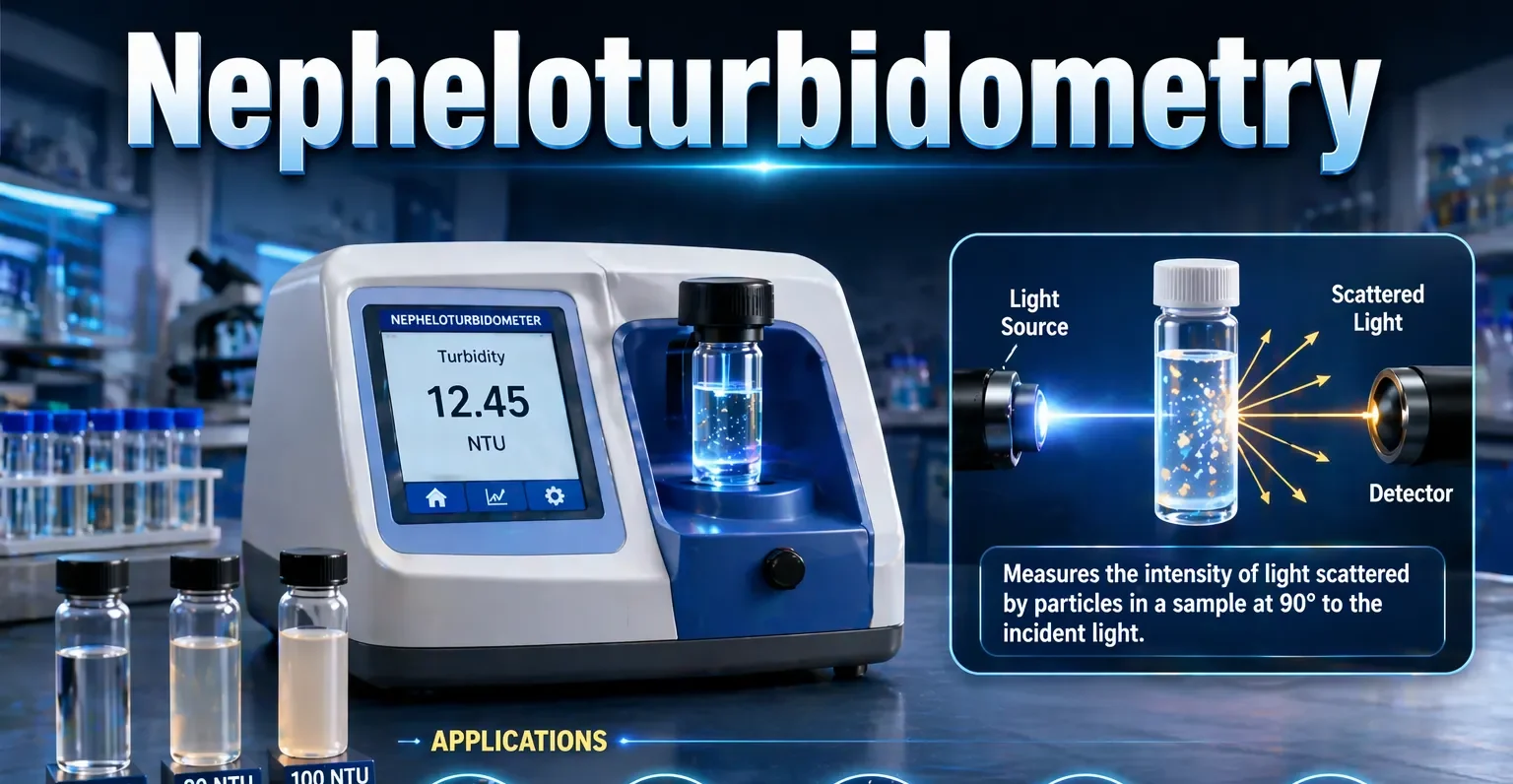
Applications of Nepheloturbidometry Applications of Nepheloturbidometry include analysis of proteins, microbes, and turbidity in pharmaceutical samples. Clinical Diagnostics: Measures components like proteins, enzymes, lipids, and ions in serum. Commonly used in immunological assays to quantify antibodies or antigens. Water Quality Testing: Determines water turbidity to assess quality, indicating the presence of microbes, algae, or pollutants. … Read more

Instrumentation of Nepheloturbidometry

Instrumentation of Nepheloturbidometry

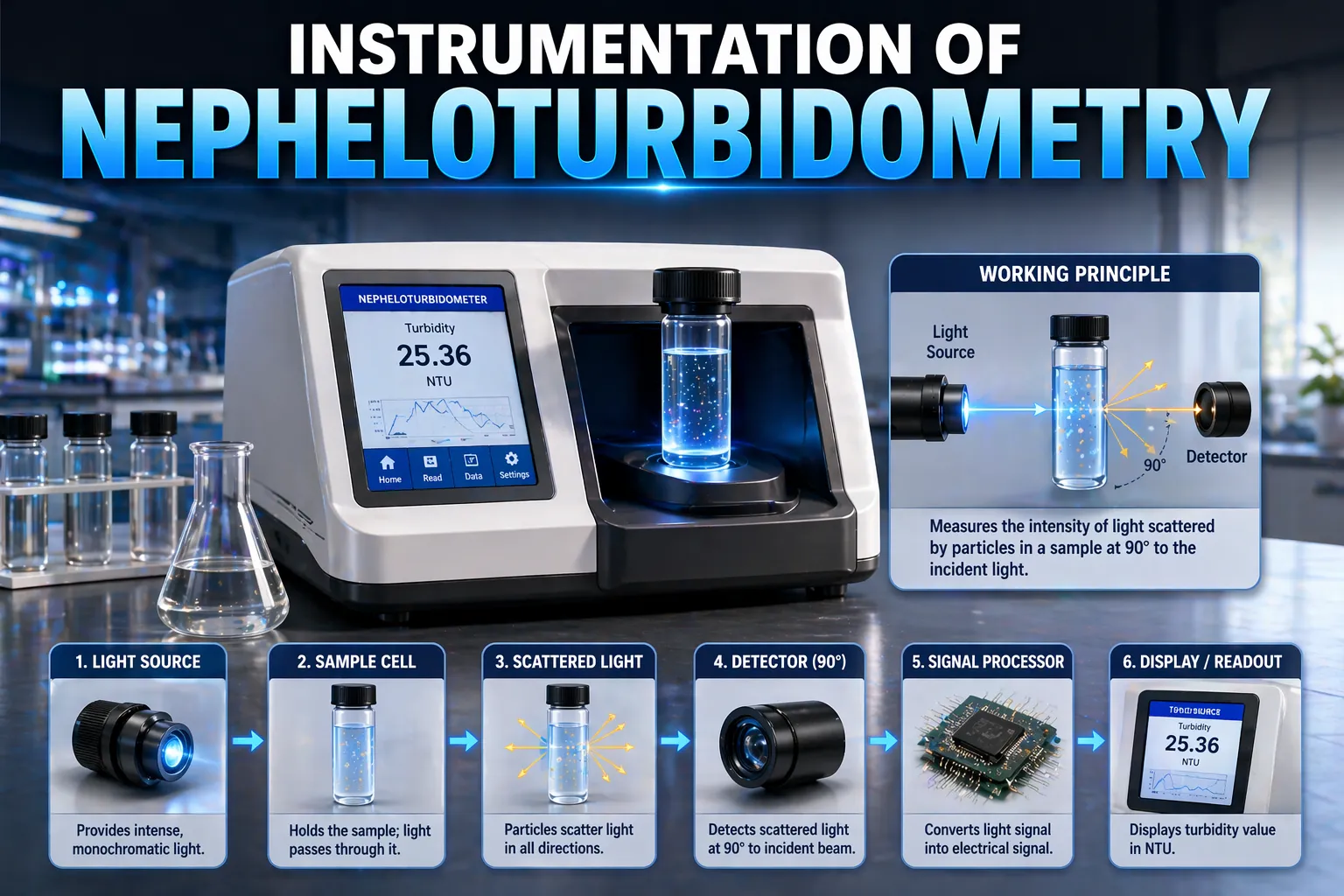
Instrumentation of Nepheloturbidometry includes light source, sample holder, detector, and measurement system. Instrumentation of Nepheloturbidometry Nepheloturbidometers are designed to measure light scattered by particles in a sample. Key components include: Light Source: Monochromatic light (laser or LED) is used, with the wavelength selected based on the sample. Sample Chamber: Holds the sample, ensuring uniform illumination … Read more

Nepheloturbidometry

Nepheloturbidometry

Nepheloturbidometry Nepheloturbidometry is an instrumental technique used to quantitatively analyze substances in solution by measuring their light-scattering properties. Principle of Nepheloturbidometry: When a light beam passes through a sample containing suspended particles (larger than the wavelength of light), the particles scatter light in all directions. Nephelometry: Measures light scattered at an angle (typically 90°) to … Read more

Application of Atomic absorption spectroscopy

Application of Atomic absorption spectroscopy

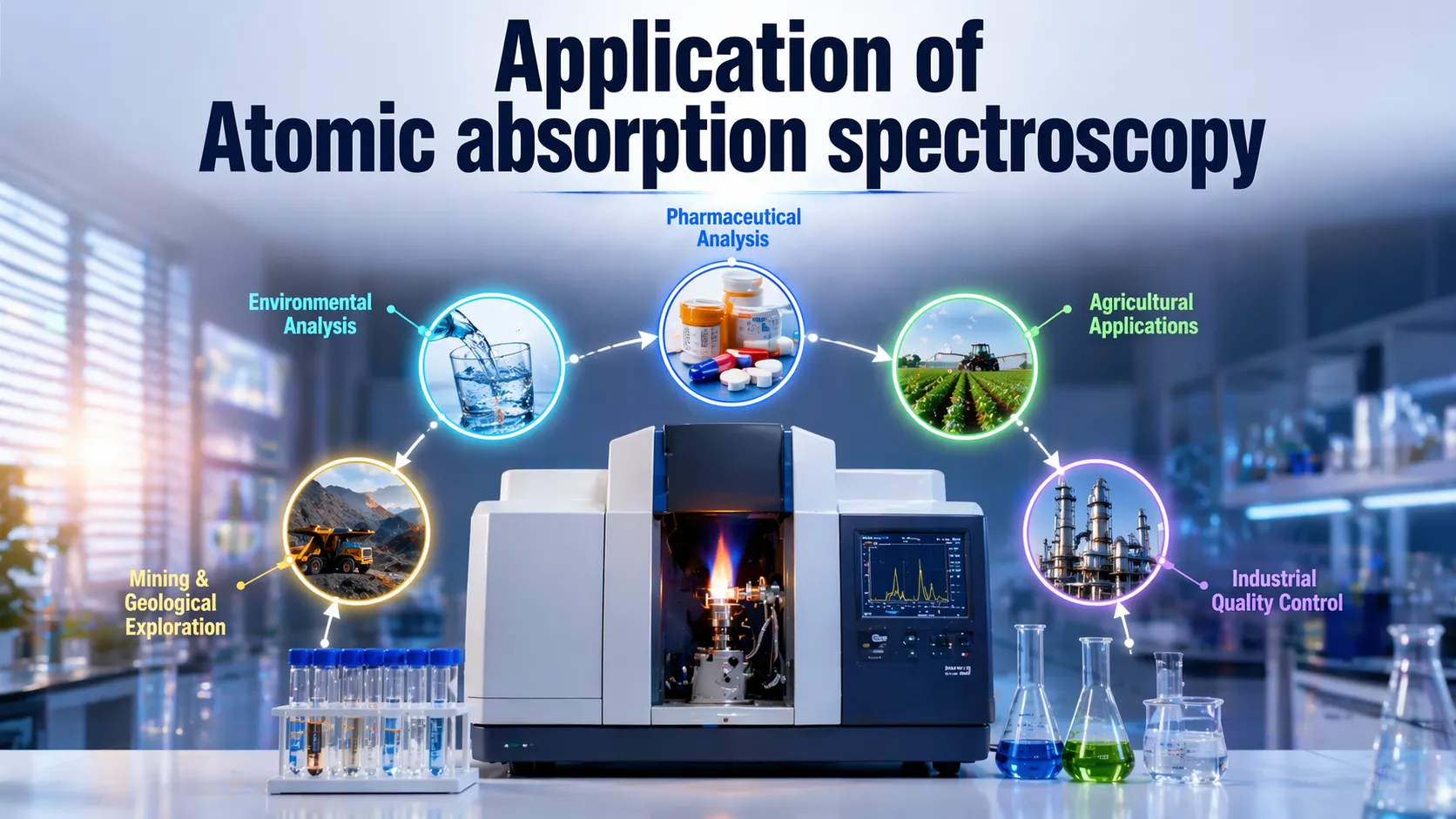
Application of Atomic Absorption Spectroscopy includes determination of metal ions in biological, environmental, and pharmaceutical samples. Application of Atomic absorption spectroscopy Atomic Absorption Spectroscopy (AAS) is used for: Environmental Analysis: Used to detect metals and several non-metals in water, air, and soil samples to monitor pollution levels. Clinical Analysis: Employed to determine metals in biological … Read more

Instrumentation of Atomic Absorption Spectroscopy (AAS)

Instrumentation of Atomic Absorption Spectroscopy (AAS)

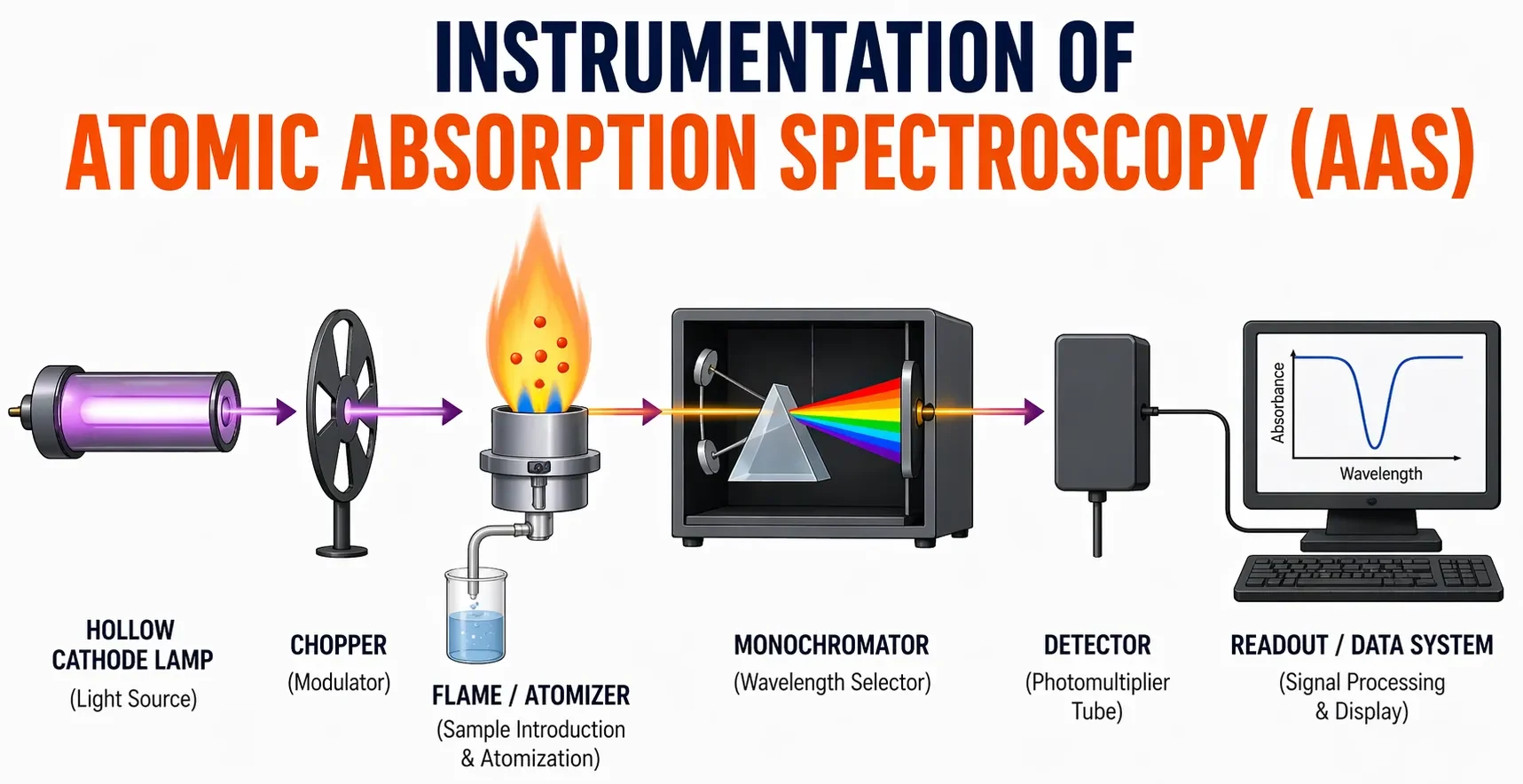
Instrumentation of Atomic Absorption Spectroscopy (AAS) includes lamp, atomizer, detector, and readout system. Instrumentation of Atomic Absorption Spectroscopy (AAS) AAS instruments detect and quantify metallic elements using the following key components: Source: Hollow Cathode Lamp (HCL): Emits element-specific radiation via metal ions in the lamp returning to their ground state. Electrodeless Discharge Lamp (EDL): Used … Read more