Interferences in Atomic Absorption Spectroscopy (AAS)

Interferences in Atomic Absorption Spectroscopy (AAS)
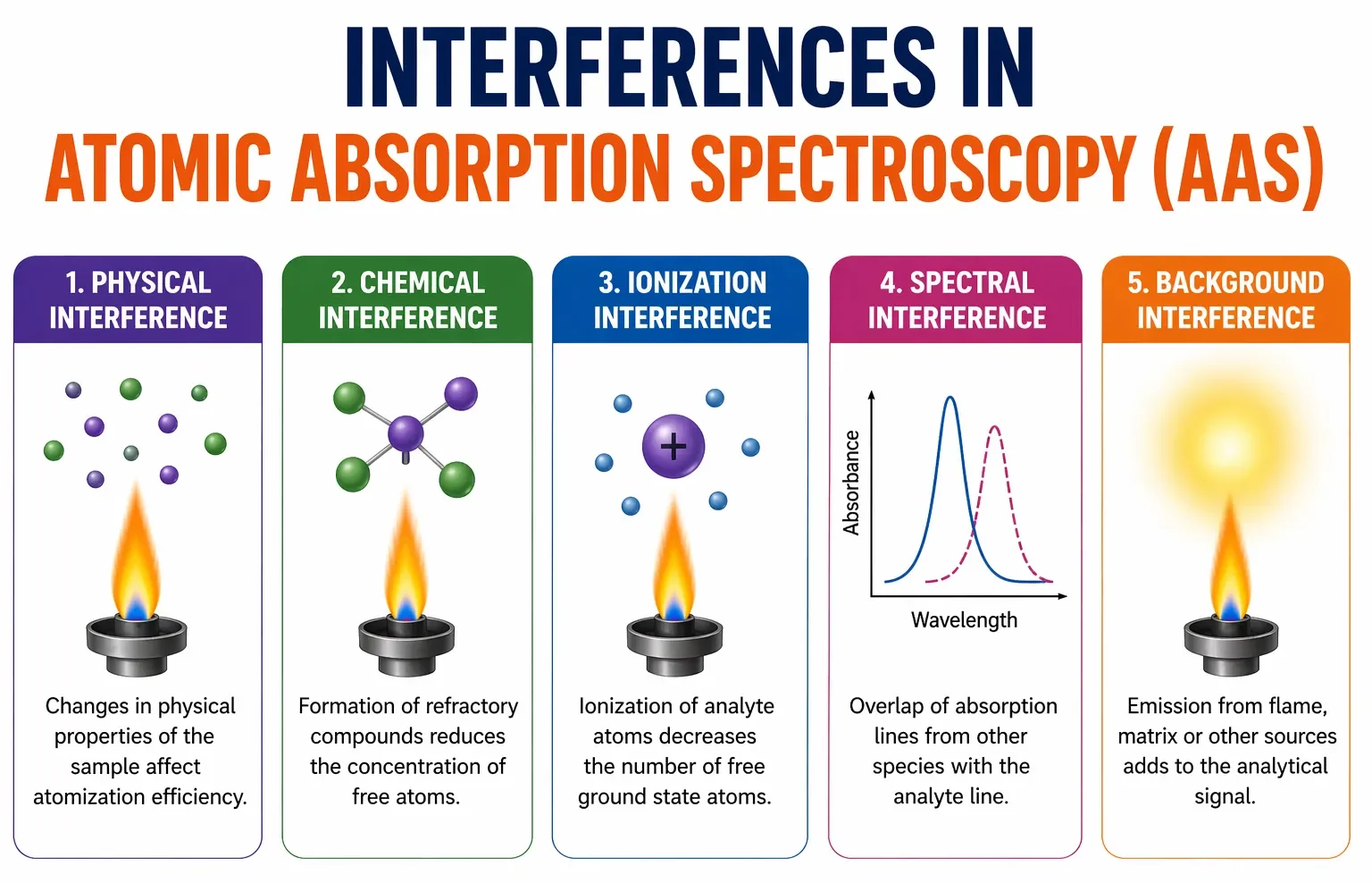
Interferences in Atomic Absorption Spectroscopy (AAS) include spectral and chemical effects reducing accuracy. Interferences in Atomic Absorption Spectroscopy (AAS) Interferences in AAS can impact the accuracy and reliability of measurements. They are categorized into three types: Spectral Interferences: Cause: Occur when another species absorbs light at the same or nearby wavelength as the analyte. Examples: … Read more
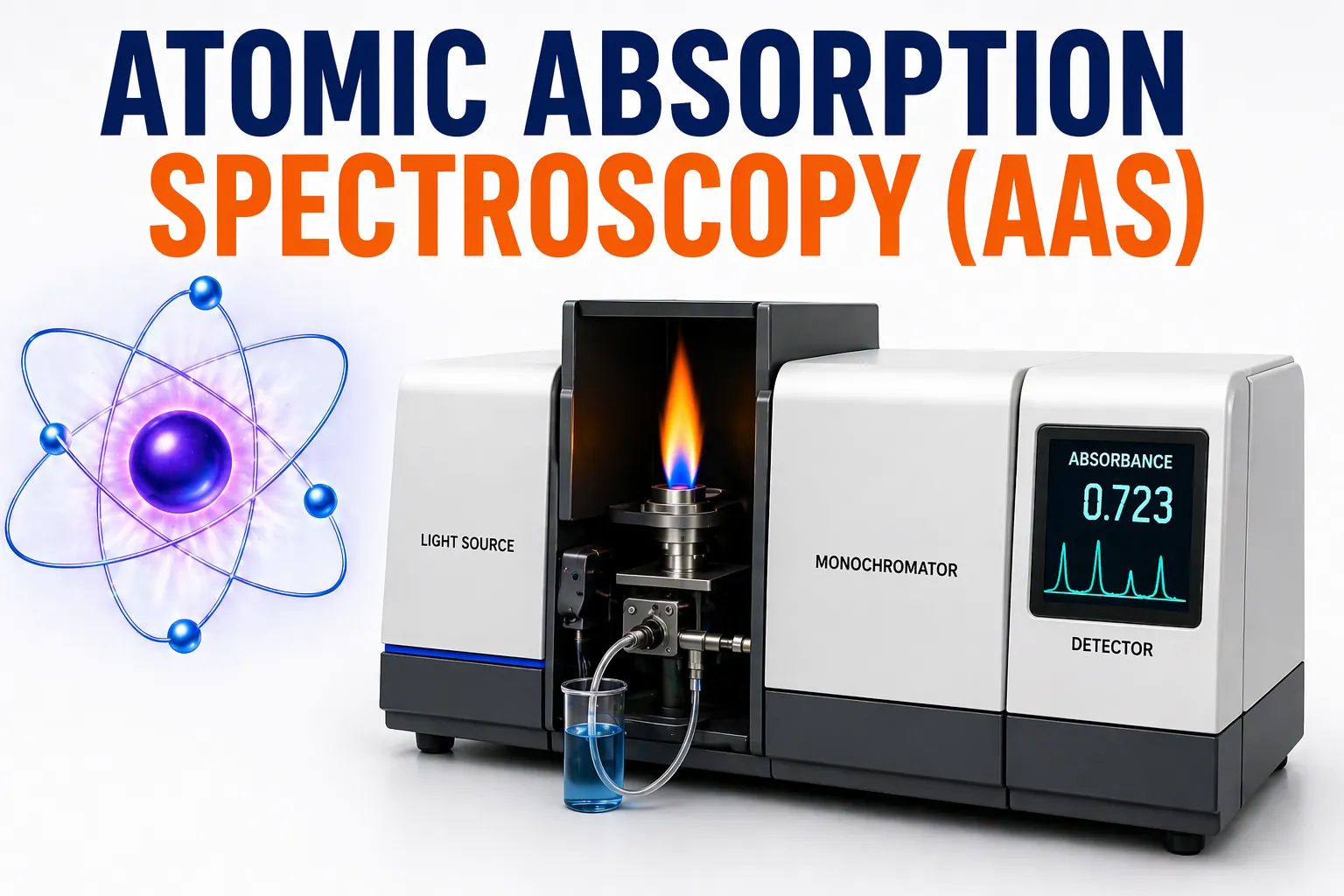
Atomic Absorption Spectroscopy (AAS)

Atomic Absorption Spectroscopy (AAS)

Introduction to Atomic Absorption Spectroscopy (AAS) Atomic Absorption Spectroscopy (AAS) is a quantitative analytical technique that measures the concentrations of elements by detecting the absorption of optical radiation (light) by free atoms in the gaseous state. AAS is widely used for the analysis of metals in various samples due to its specificity, sensitivity, and relatively … Read more

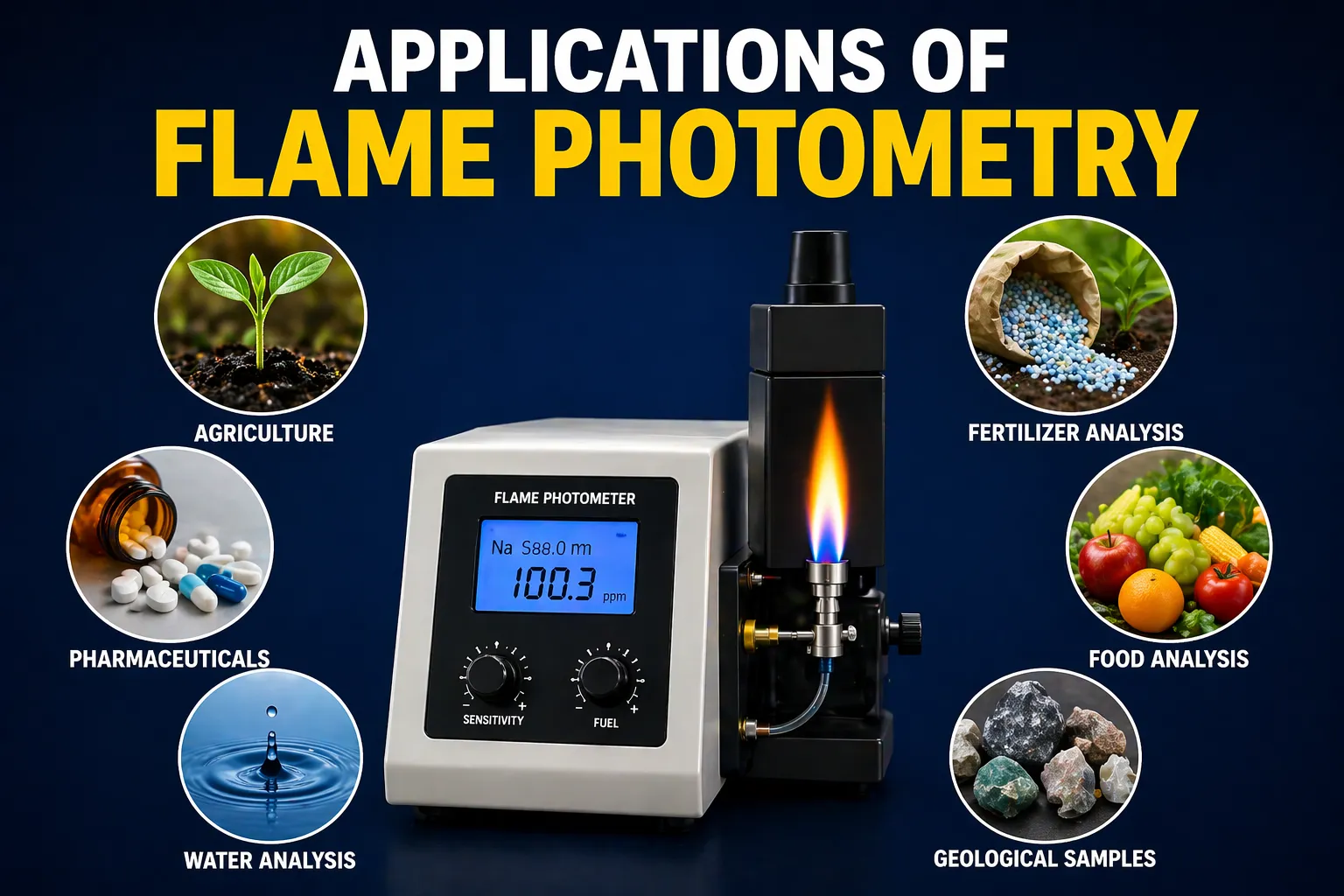
Application of Flame Photometry

Application of Flame Photometry

Application of Flame Photometry This article explains about the Application of Flame Photometry includes estimation of sodium, potassium, calcium, and lithium ions. Clinical Analysis Electrolyte Monitoring: Measurement of sodium and potassium levels in blood serum or urine for diagnosing and monitoring diseases like hypertension and kidney disorders. Lithium Therapy: Monitoring lithium levels in psychiatric treatments … Read more

Instrumentation of Flame Photometry

Instrumentation of Flame Photometry

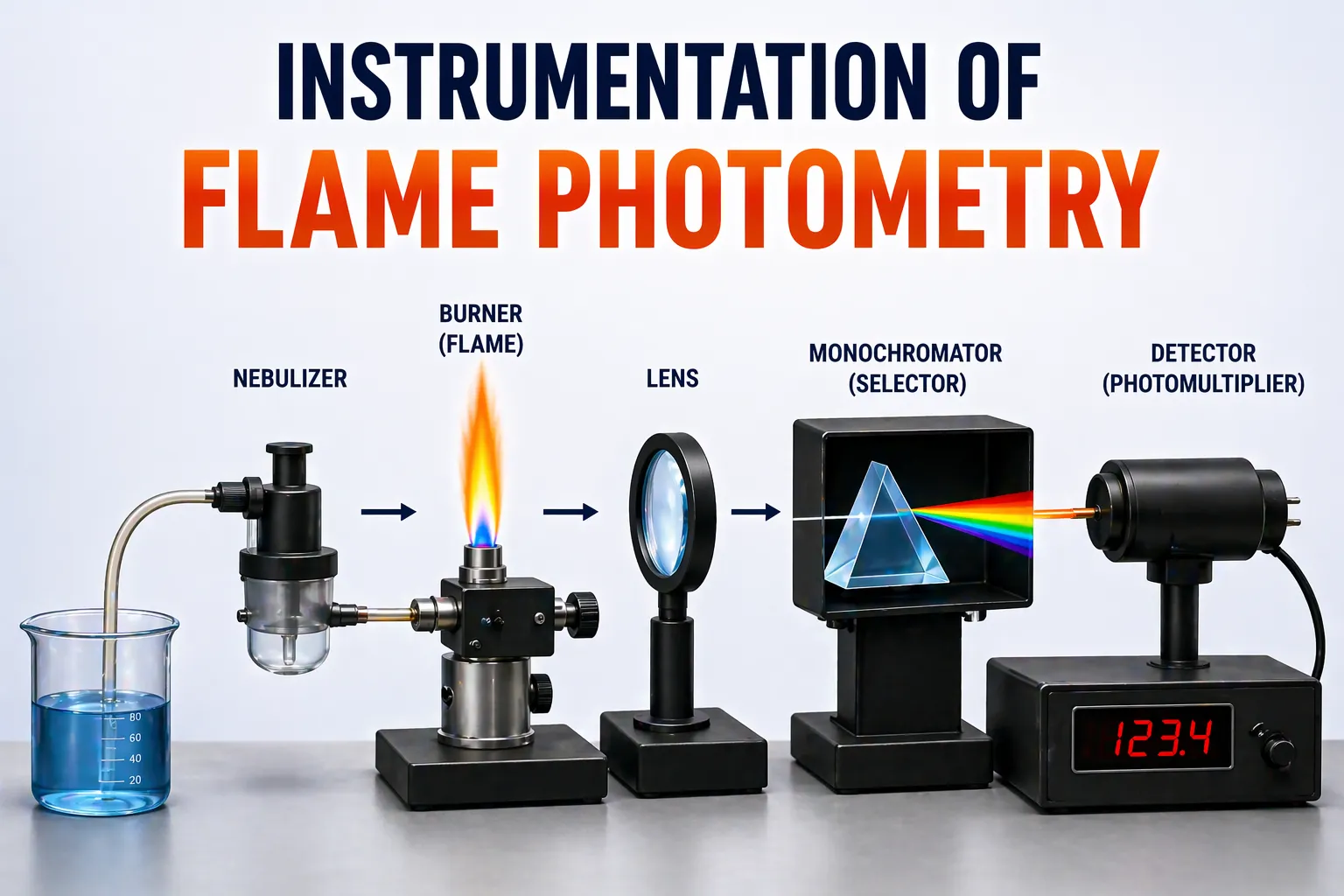
Instrumentation of Flame Photometry The instrumentation of Flame Photometry is relatively straightforward, comprising several key components: Sample Introduction System Nebulizer: Converts liquid sample into an aerosol. Spray Chamber: Removes large droplets, allowing only fine mist to enter the flame. Flame and Burner System Fuel and Oxidant: Commonly air-acetylene or air-propane flames are used. Burner Head: … Read more

Interferences of Flame Photometry

Interferences of Flame Photometry

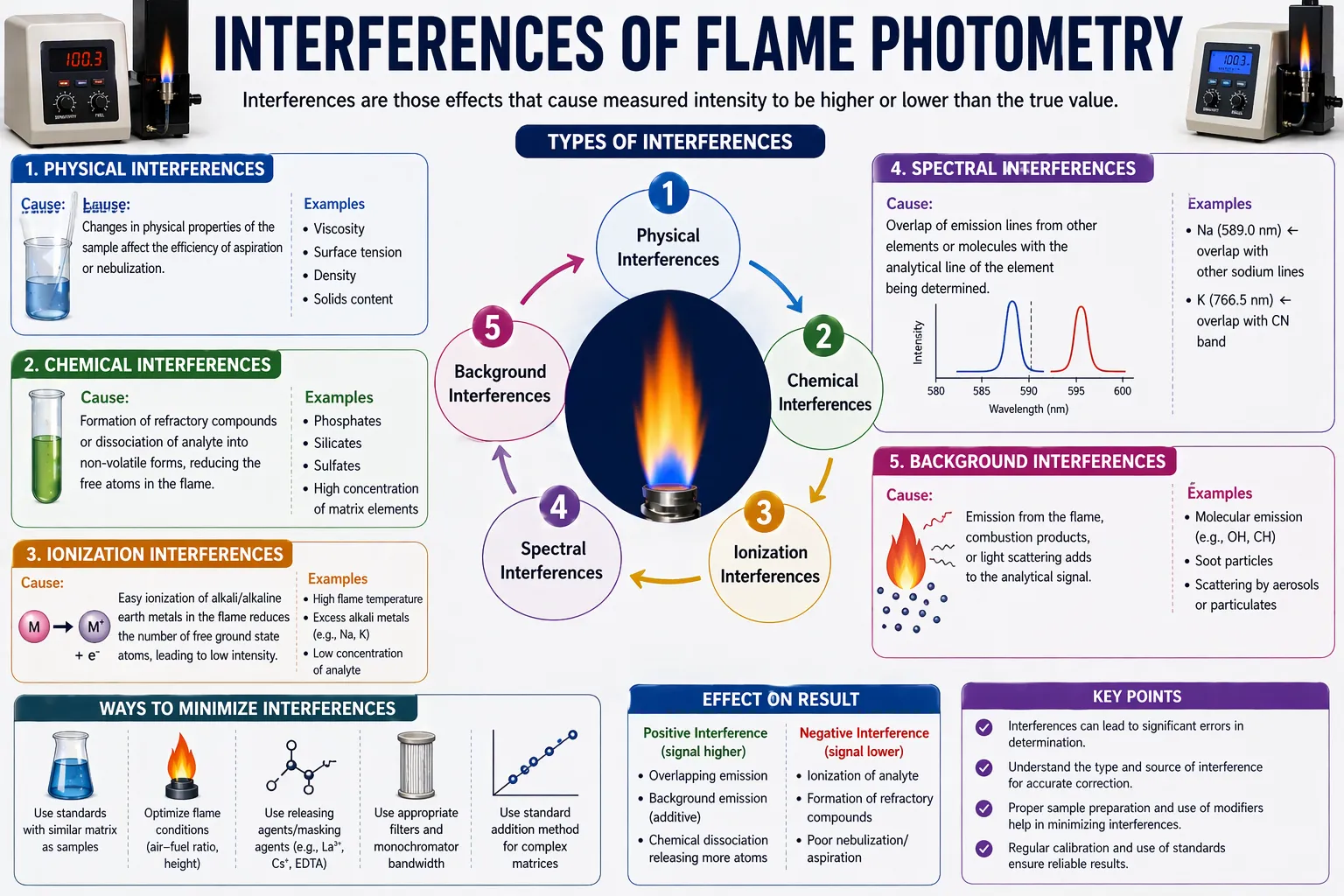
Interferences of Flame Photometry include spectral, chemical, and ionization effects that affect accuracy. Interferences of Flame Photometry Interferences can affect measurement accuracy and are categorized as: Spectral Interferences: Causes: Overlapping emission lines, background flame emission, and light scattering by particulates. Mitigation: Use narrow bandpass filters, monochromators, and background correction. Chemical Interferences: Causes: Formation of refractory … Read more

Flame Photometry

Flame Photometry

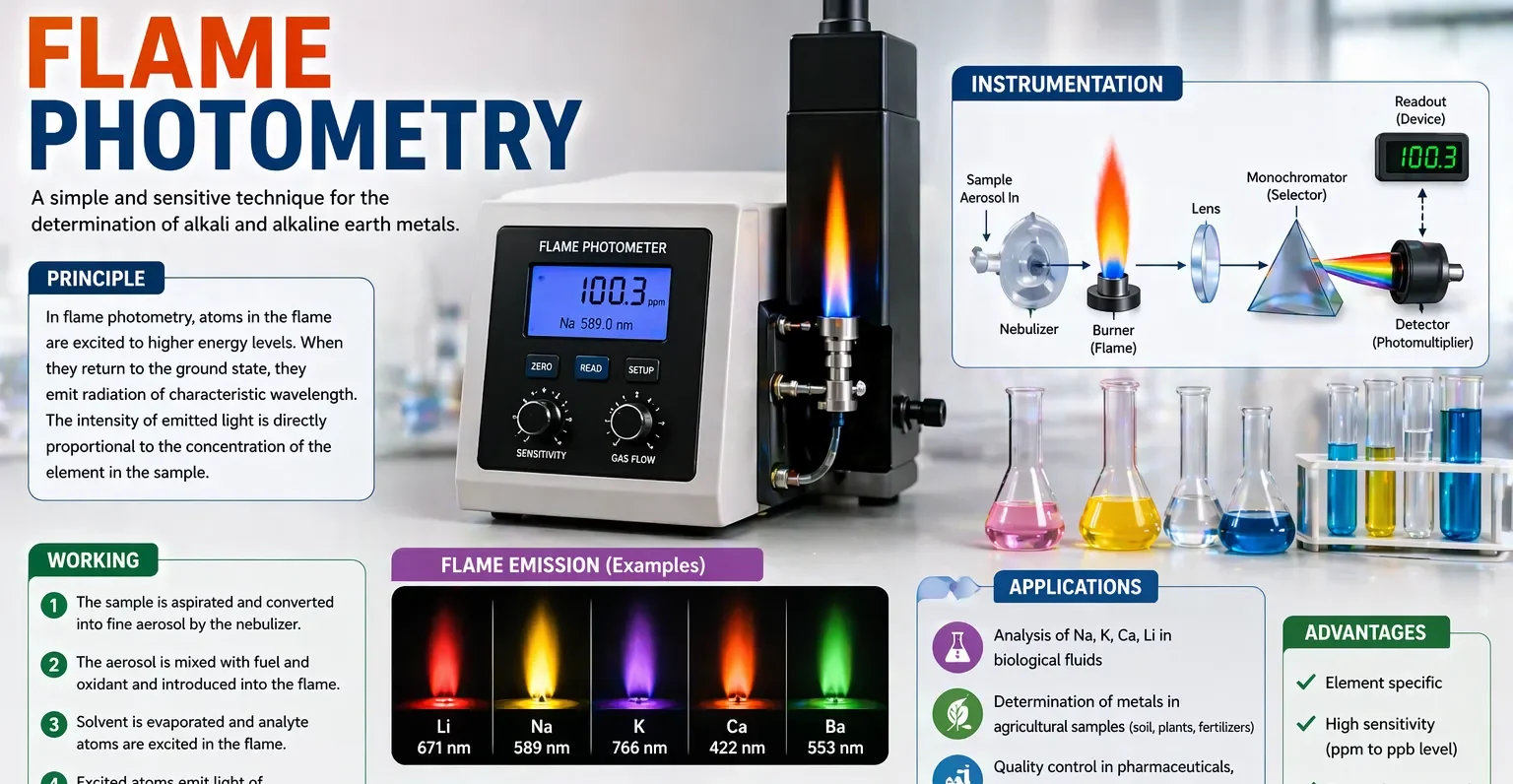
Definition of Flame Photometry: Flame photometry, or flame atomic emission spectrometry (FAES), is used to determine alkali and alkaline earth metals by analyzing the light emitted when a sample is introduced into a flame. Principle: Excitation: Metal atoms in the flame get vaporized and excited to higher energy levels. Emission: On returning to the ground … Read more

Applications of IR spectroscopy

Applications of IR spectroscopy

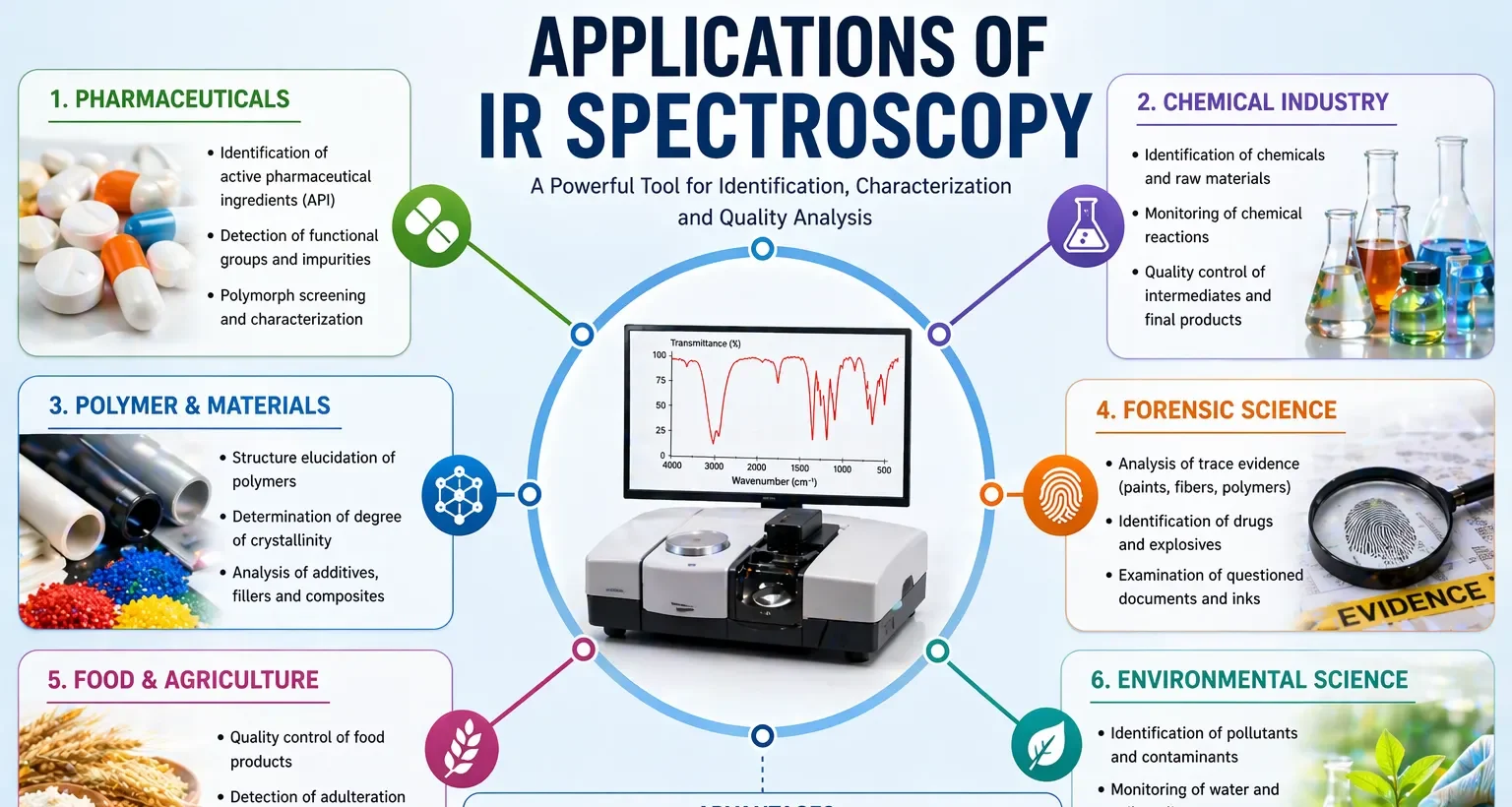
Applications of IR spectroscopy Applications of IR spectroscopy include compound identification, purity testing, and functional group analysis. Qualitative Analysis: Functional Group Identification: Detects groups like hydroxyl (-OH), carbonyl (C=O), and alkene (C=C). Compound Characterization: Confirms synthesis or isolation using the unique “fingerprint” region. Quantitative Analysis: Measures species concentration through IR absorption, especially effective with ATR-FTIR … Read more

Instrumentation in infrared (IR) spectroscopy

Instrumentation in infrared (IR) spectroscopy

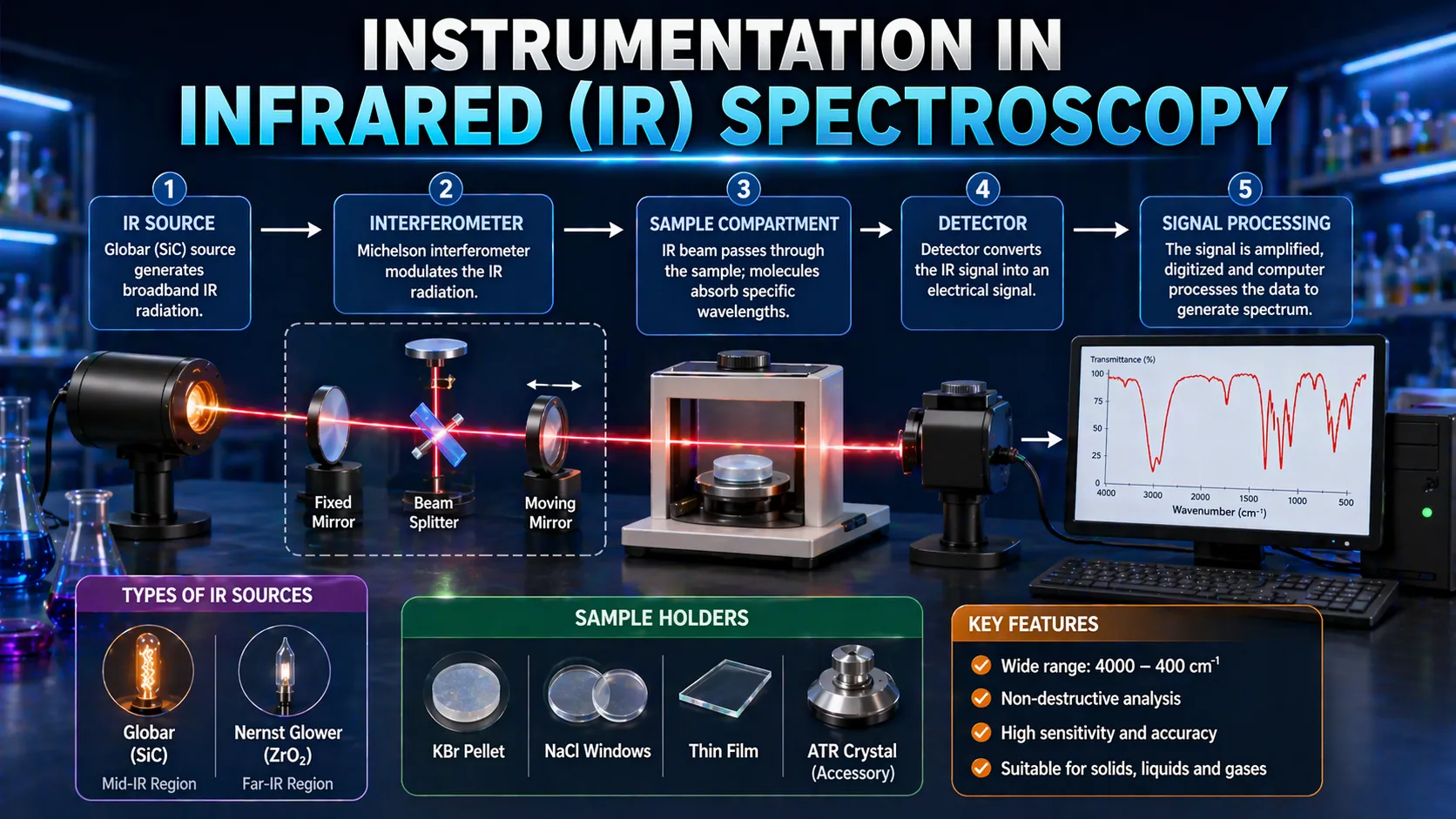
Instrumentation in infrared (IR) spectroscopy includes source, monochromator, sample holder, and detector. Instrumentation in infrared (IR) spectroscopy A spectrometer measures light properties across specific electromagnetic spectrum ranges, aiding in material identification. Key components include the source, wavelength selectors, and detectors. Sources of Radiation: Provide stable, long-lasting IR radiation over the desired wavelength range. Globar: Silicon … Read more

Factors Affecting Vibrations in Infrared Spectroscopy

Factors Affecting Vibrations in Infrared Spectroscopy

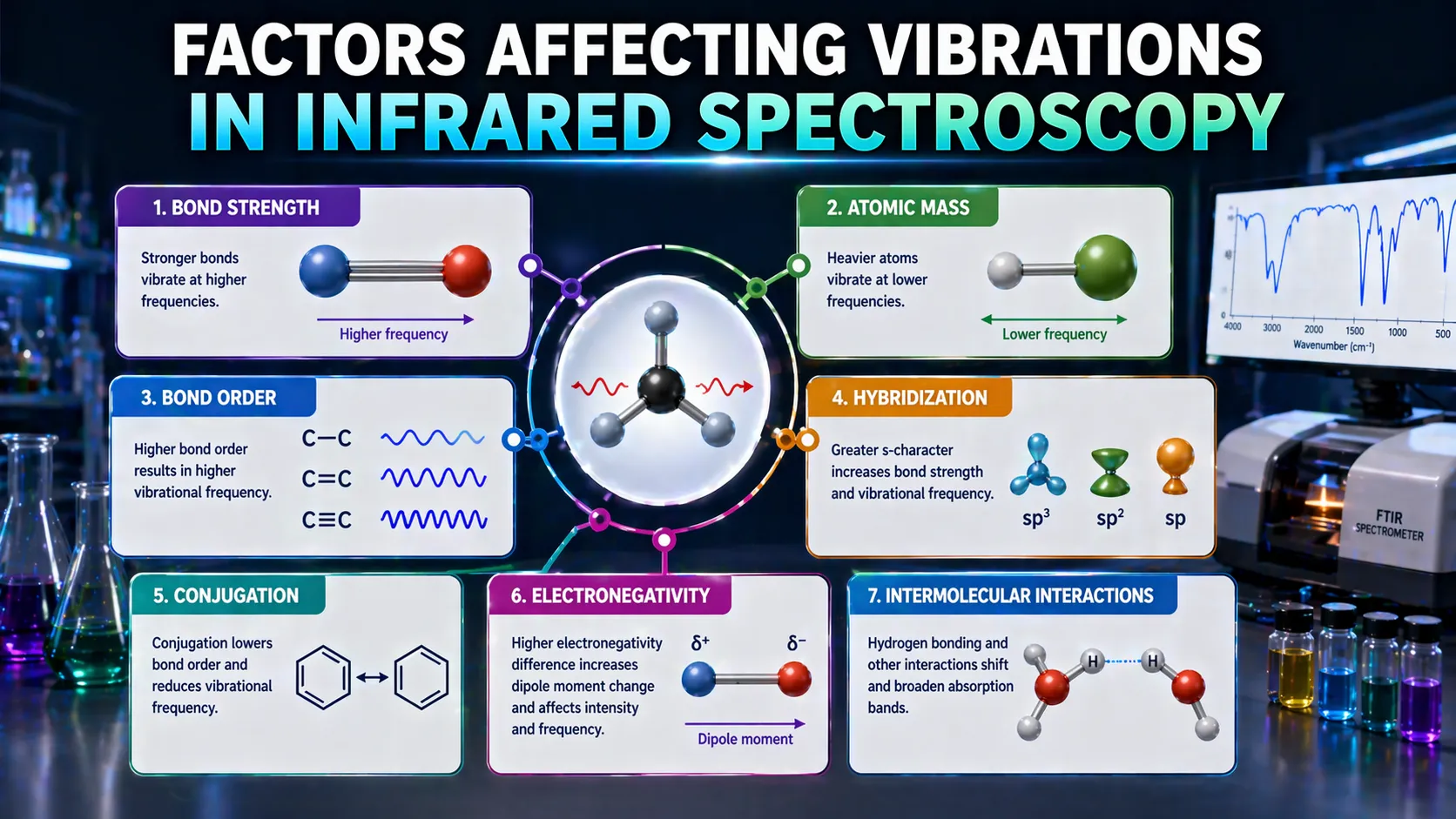
Factors Affecting Vibrations in Infrared Spectroscopy Factors Affecting Vibrations in Infrared Spectroscopy include bond strength, mass, and molecular structure. Mass of the Atoms Influence: Heavier atoms vibrate at lower frequencies compared to lighter atoms. Hooke’s Law: $\nu = \frac{1}{2\pi c}\sqrt{\frac{k}{\mu}}$  ν = frequency of vibration c = speed of light k = force constant (bond … Read more

Sample Handling Techniques in Infrared (IR) Spectroscopy

Sample Handling Techniques in Infrared (IR) Spectroscopy

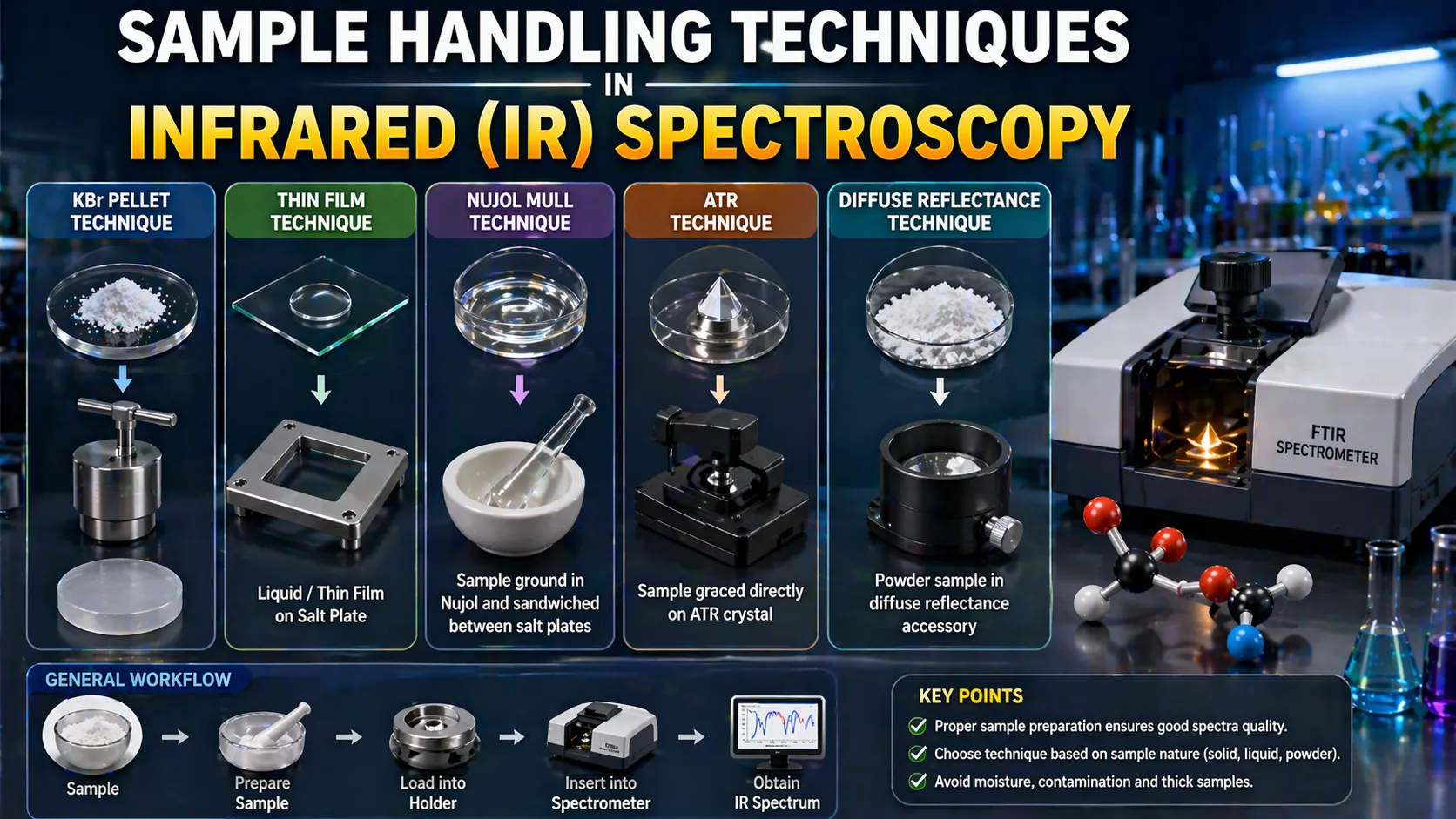
Sample Handling Techniques in Infrared (IR) Spectroscopy cover methods for preparing solids, liquids, and gases. Sample Handling Techniques in Infrared (IR) Spectroscopy Proper sample preparation is essential for obtaining accurate IR spectra. Techniques vary based on the sample’s physical state: solid, liquid, gas, or solution. Solid Sampling: KBr Pellet Technique: Solid is ground with potassium … Read more