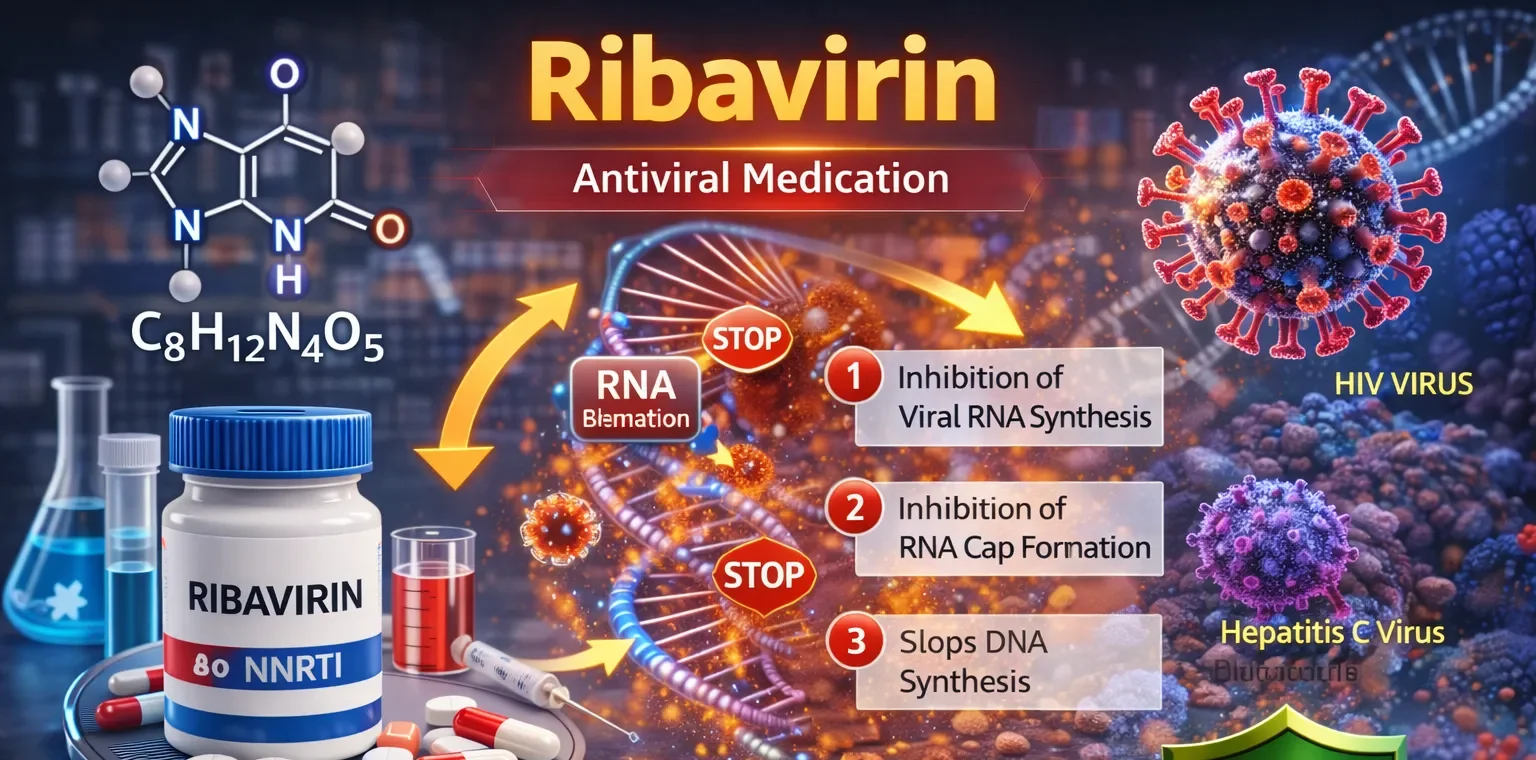
Ribavirin

Ribavirin

Chemical Structure / Formula of Ribavirin Formula: C₈H₁₂N₄O₅ Structure: A purine analog with a ribose-like sugar. Mechanism of Action Converted into Ribavirin triphosphate, which inhibits RNA polymerase and viral mRNA synthesis. Uses of Ribavirin Hepatitis C (in combination with interferon-alpha). Respiratory syncytial virus (RSV) in severe pediatric cases. Lassa fever, other viral hemorrhagic fevers. Side … Read more
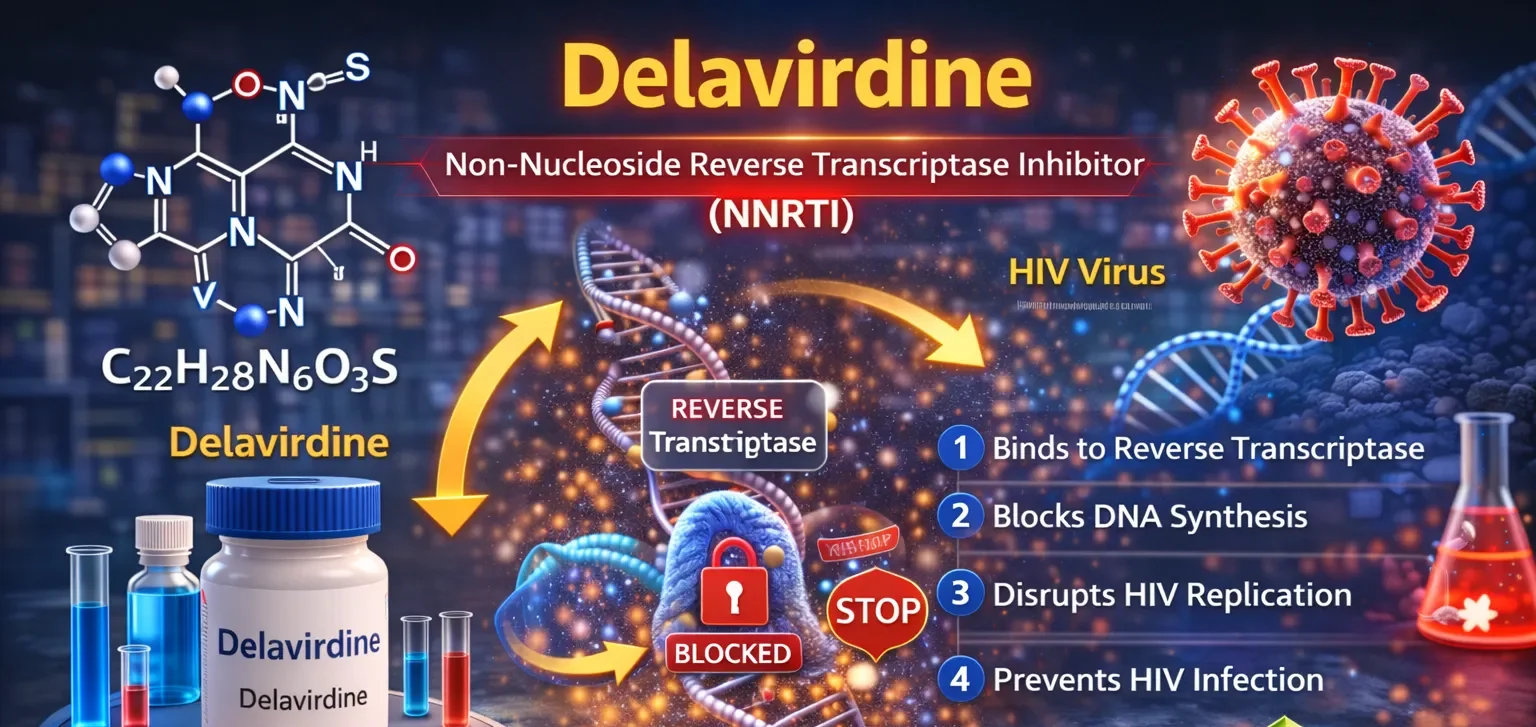
Delavirdine

Delavirdine

Chemical Structure / Formula of Delavirdine Formula: C₂₂H₂₈N₆O₃ Structure: An NNRTI with a pyridine core. Mechanism of Action Binds directly to HIV-1 reverse transcriptase, preventing DNA synthesis. Uses of Delavirdine HIV/AIDS therapy (HAART regimen, rarely used today). Side Effects Rash, hepatotoxicity. GI upset, headache. Inhibits CYP3A4 (drug interactions).

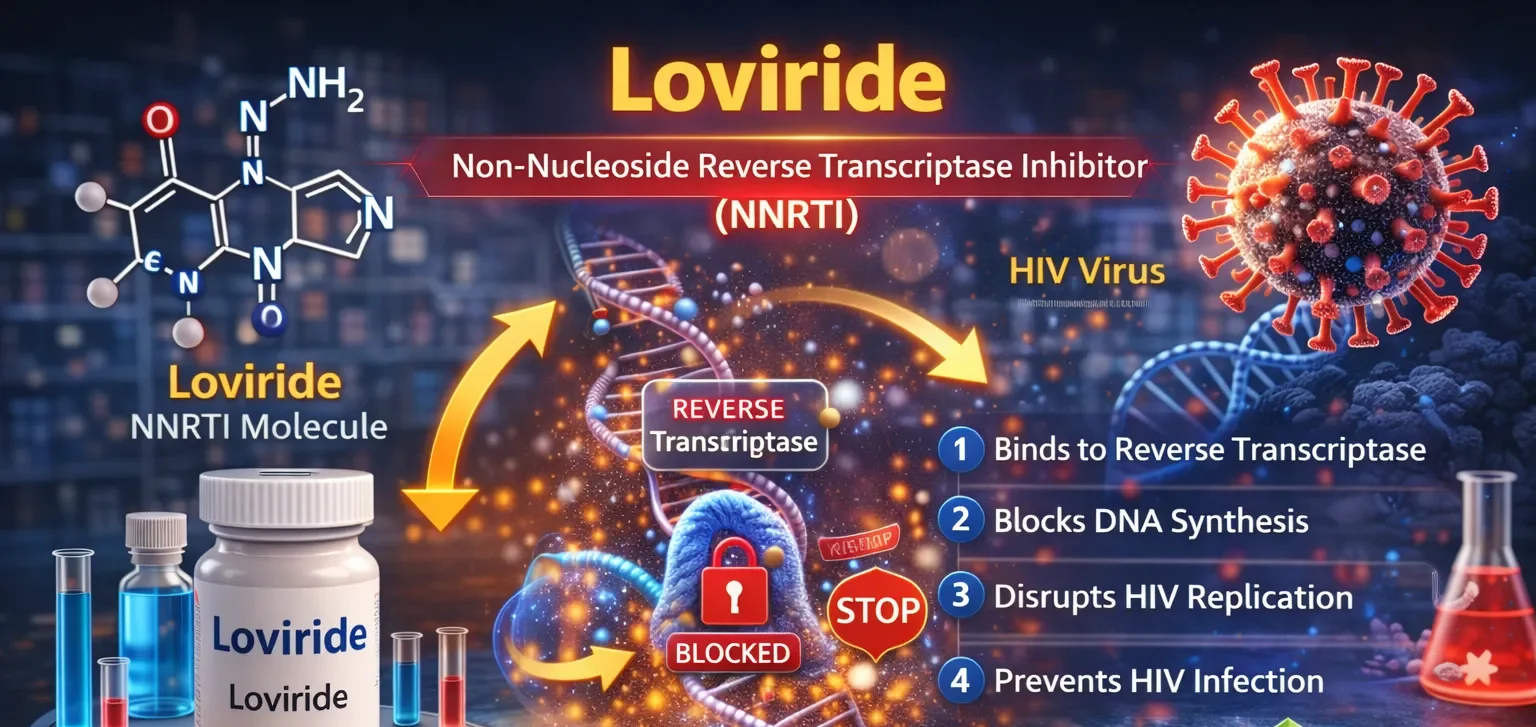
Loviride

Loviride

Chemical Structure / Formula of Loviride Formula: C₁₇H₁₉N₃O₂ Structure: A non-nucleoside reverse transcriptase inhibitor (NNRTI). Mechanism of Action Directly inhibits HIV reverse transcriptase (binds allosterically, non-competitive inhibition). Uses of Loviride HIV/AIDS therapy (NNRTI-based HAART regimen, rarely used today). Side Effects Skin rash, hepatotoxicity. CNS symptoms (insomnia, dizziness, depression).

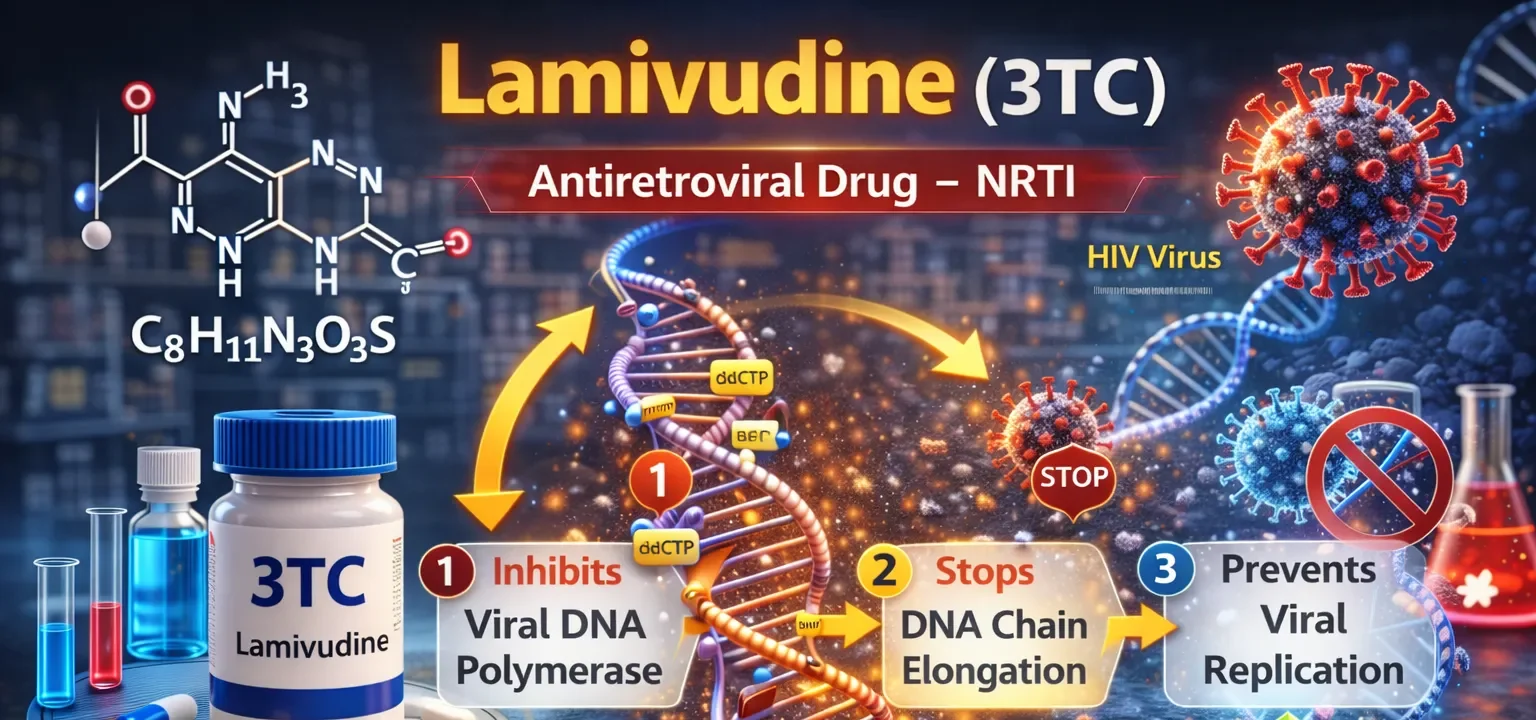
Lamivudine (3TC)

Lamivudine (3TC)

Chemical Structure / Formula of Lamivudine (3TC) Formula: C₈H₁₁N₃O₃S Structure: Cytosine analog with a sulfur (-S) group. Mechanism of Action Converted to Lamivudine triphosphate, which inhibits HIV reverse transcriptase. Also inhibits HBV polymerase (used in hepatitis B treatment). Uses of Lamivudine (3TC) HIV/AIDS therapy (HAART regimen, commonly used with Abacavir or Zidovudine). Chronic hepatitis B … Read more

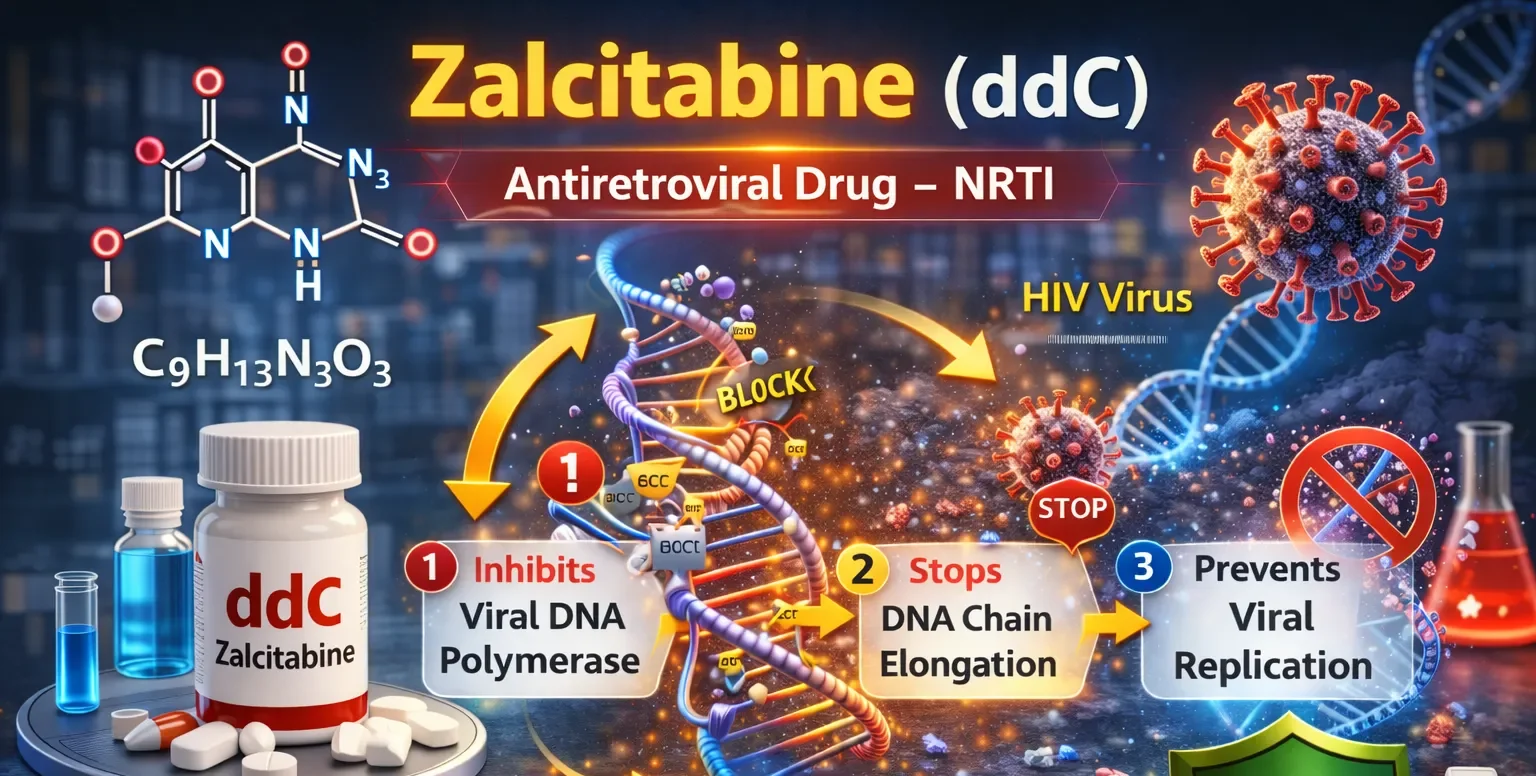
Zalcitabine (ddC)

Zalcitabine (ddC)

Chemical Structure / Formula of Zalcitabine (ddC) Formula: C₉H₁₃N₃O₃ Structure: A cytosine analog without a 3′-OH group, causing chain termination. Mechanism of Action Phosphorylated into Zalcitabine triphosphate, which inhibits HIV reverse transcriptase and leads to chain termination. Uses of Zalcitabine (ddC) HIV/AIDS therapy (HAART regimen, rarely used now). Side Effects Peripheral neuropathy (most common). Lactic … Read more

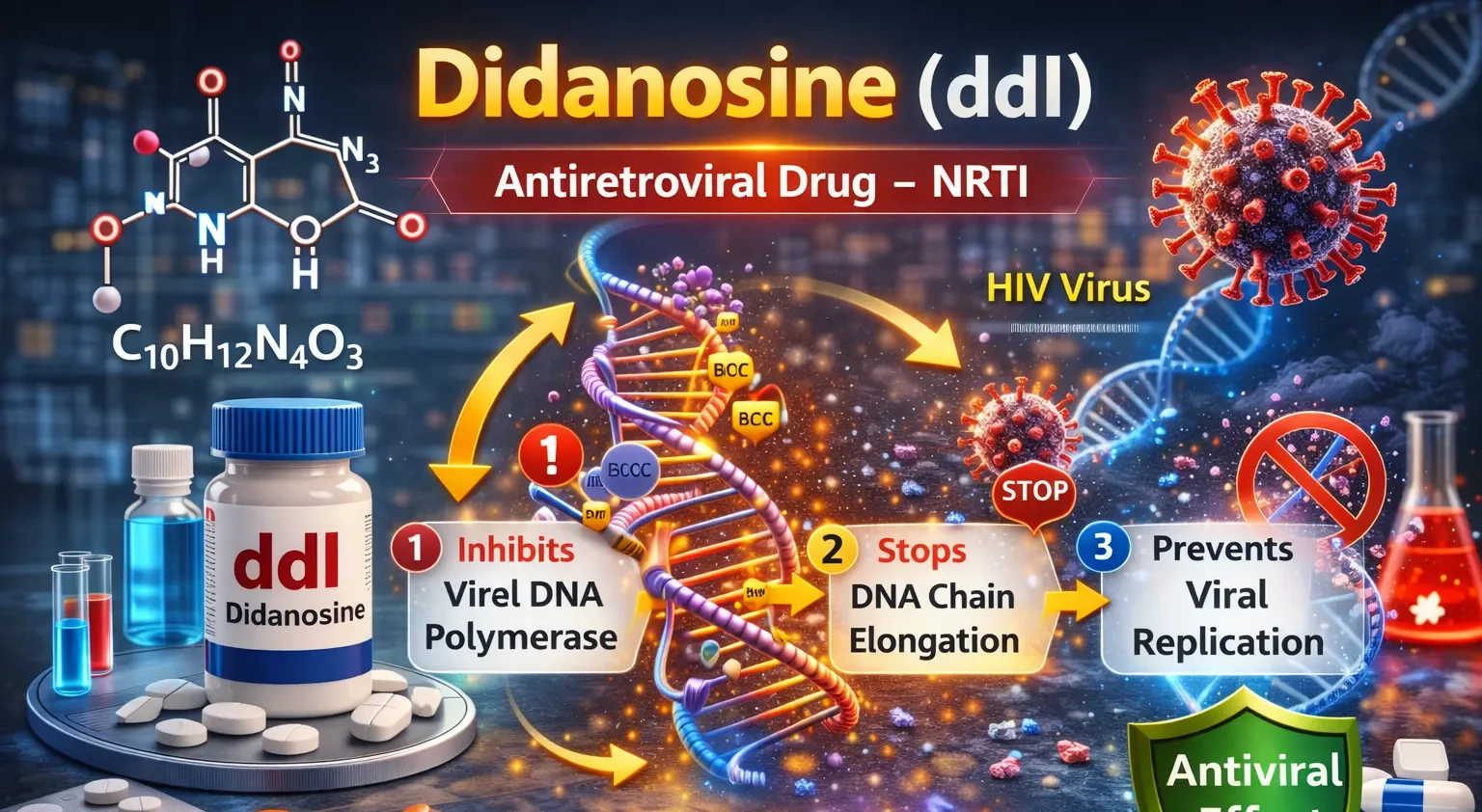
Didanosine (ddI)

Didanosine (ddI)

Chemical Structure / Formula of Didanosine (ddI) Formula: C₁₀H₁₂N₄O₃ Structure: A purine nucleoside analog (dideoxyinosine) lacking a 3′-OH group. Mechanism of Action Converted into Didanosine triphosphate, which inhibits HIV reverse transcriptase. Causes chain termination due to lack of 3′-OH group. Uses of Didanosine (ddI) HIV/AIDS therapy (HAART regimen). Side Effects Pancreatitis (dose-dependent, severe). Peripheral neuropathy, … Read more

Ganciclovir

Chemical Structure / Formula of Ganciclovir Formula: C₉H₁₃N₅O₄ Structure: A synthetic analog of guanosine with an additional hydroxymethyl (-CH2OH) side chain. Mechanism of Action Prodrug activated by viral thymidine kinase (TK) in HSV or UL97 kinase in CMV. Phosphorylated to Ganciclovir triphosphate, which inhibits viral DNA polymerase, leading to DNA chain termination. Uses of Ganciclovir … Read more

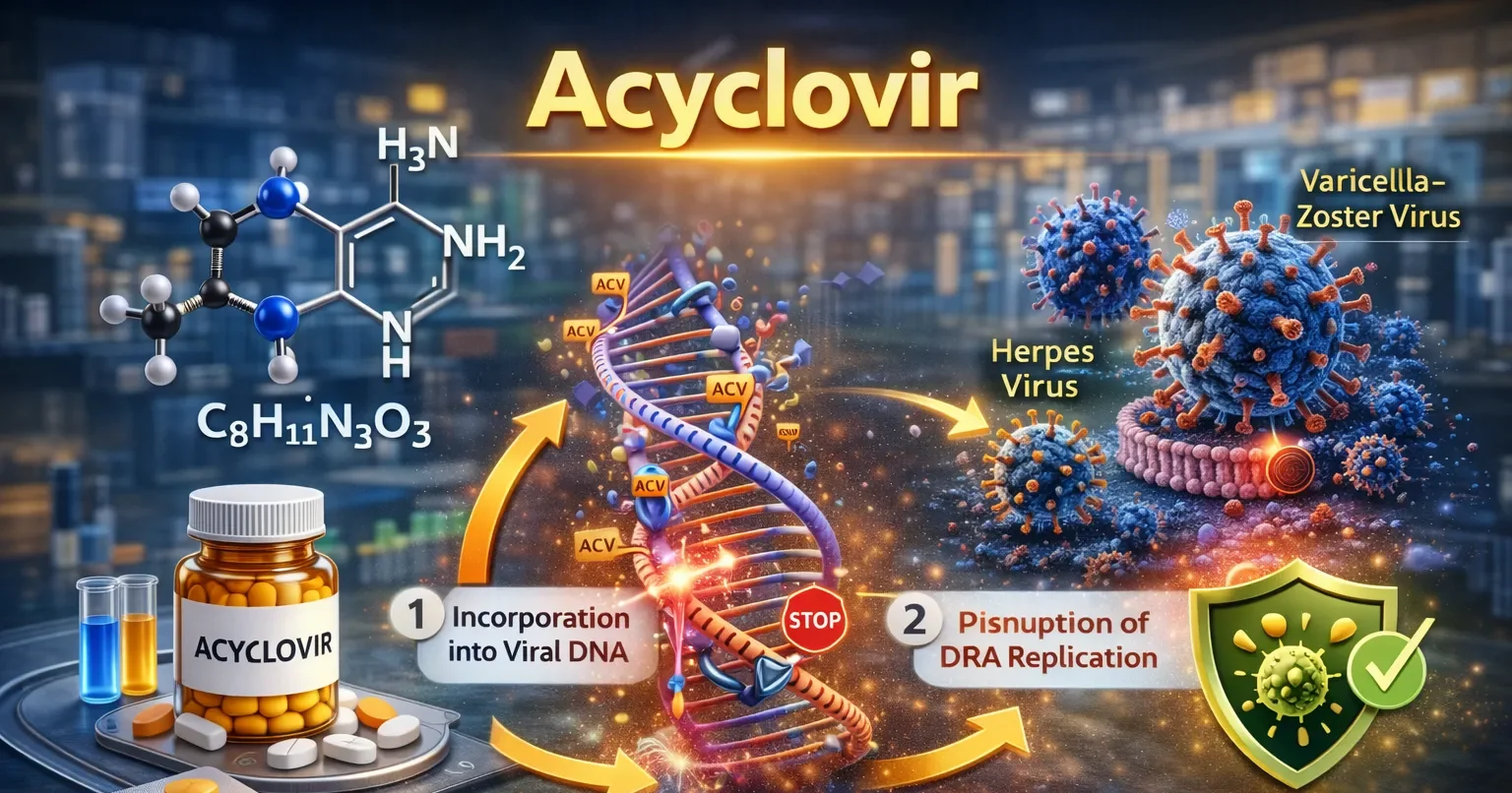
Acyclovir

Acyclovir

Chemical Structure / Formula of Acyclovir Formula: C₈H₁₁N₅O₃ Structure: A purine nucleoside analog (acyclic guanosine derivative). Mechanism of Action Prodrug activated by viral thymidine kinase (TK) to acyclovir monophosphate. Further phosphorylated to acyclovir triphosphate, which inhibits viral DNA polymerase and causes chain termination. Uses HSV-1, HSV-2 (herpes labialis, genital herpes, encephalitis). Varicella-zoster virus (chickenpox, shingles). … Read more

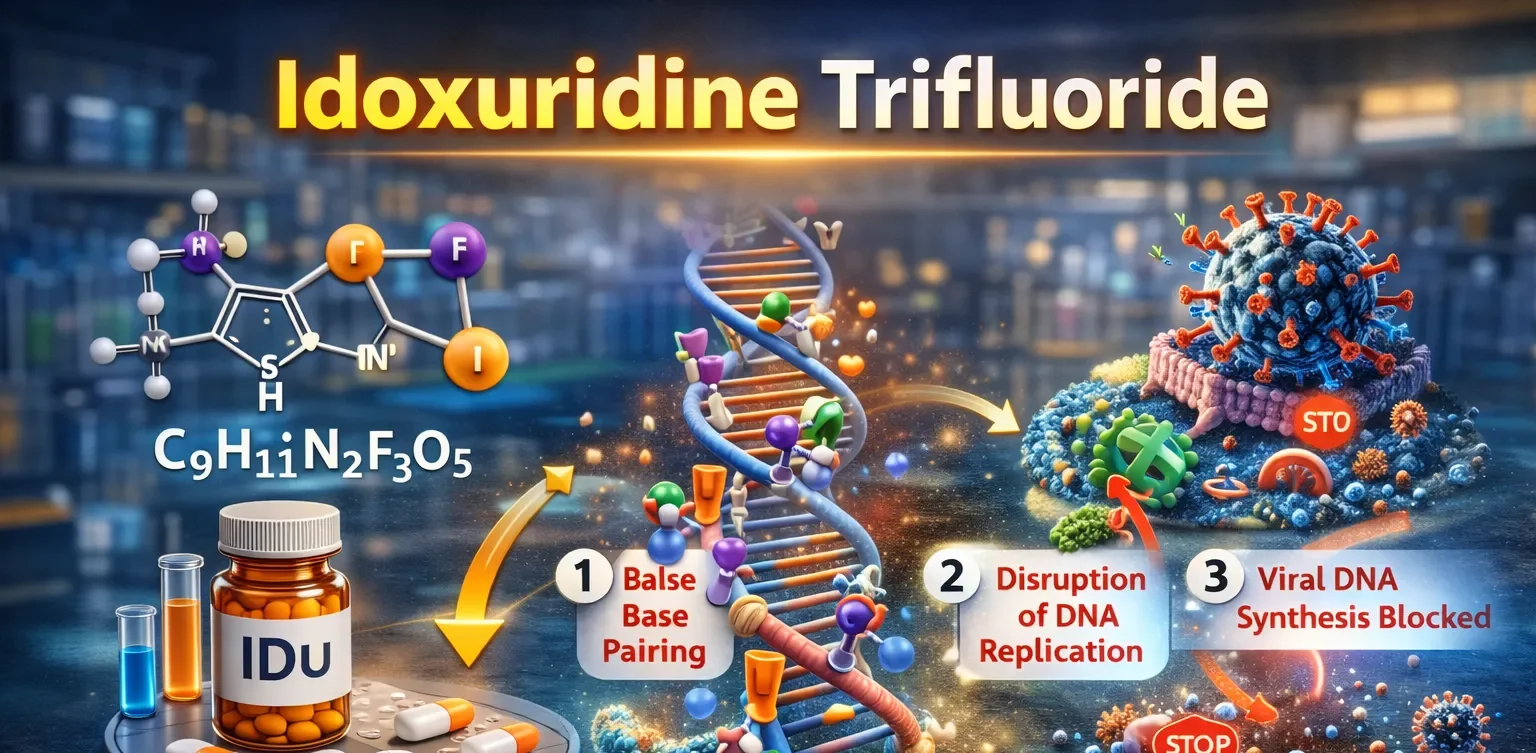
Idoxuridine Trifluoride

Idoxuridine Trifluoride

Chemical Structure / Formula of Idoxuridine Trifluoride Formula: C₉H₁₁IN₂O₅ Structure: A pyrimidine nucleoside analog with an iodine at position 5. Mechanism of Action Incorporates into viral DNA, leading to strand breaks and faulty replication. Uses of Idoxuridine Trifluoride Herpes simplex keratitis (HSV eye infections, topical use only). Side Effects Corneal irritation, photophobia, burning sensation.

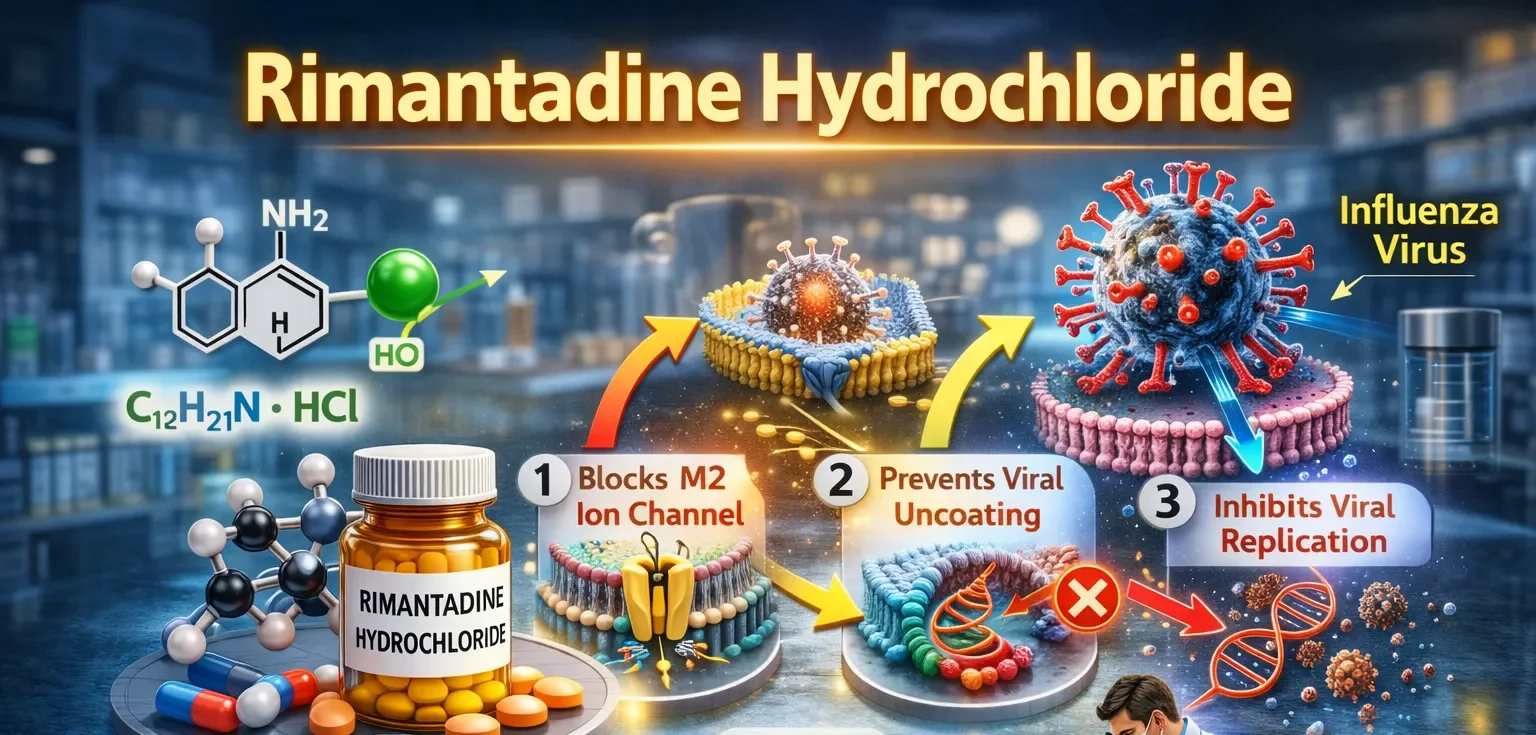
Rimantadine Hydrochloride

Rimantadine Hydrochloride

Chemical Structure / Formula of Rimantadine Hydrochloride Formula: C₁₂H₂₁N · HCl Structure: Adamantane derivative with a methyl-substituted amine (more lipophilic than amantadine). Mechanism of Action Inhibits M2 ion channel of Influenza A, preventing viral uncoating. More potent and has fewer CNS side effects than amantadine. Uses of Rimantadine Hydrochloride Influenza A prevention and treatment. Side … Read more