Pharmacology of Nasal Decongestants

Pharmacology of Nasal Decongestants
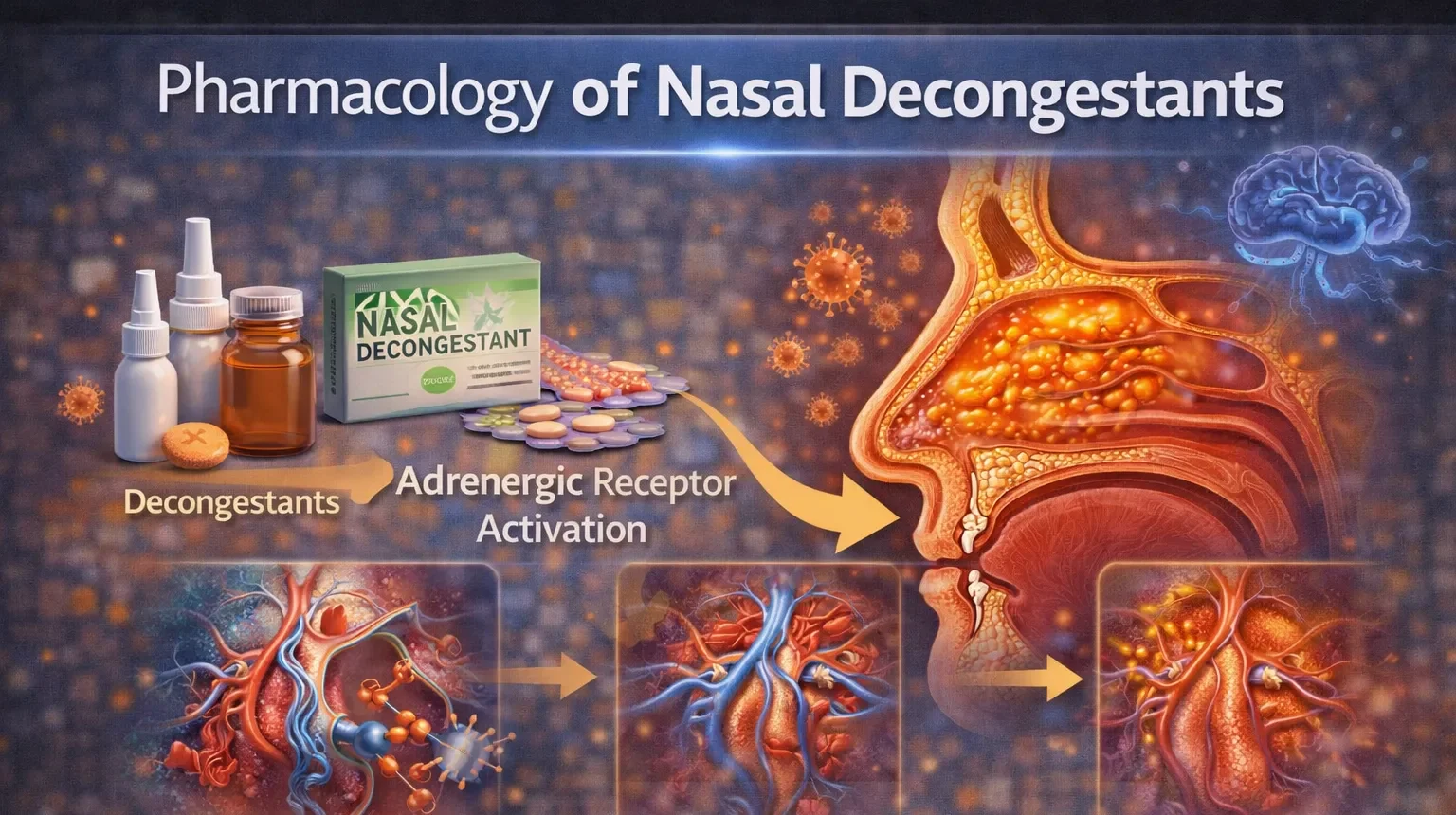
Pharmacology of Nasal Decongestants explains drugs that relieve nasal congestion by causing vasoconstriction in nasal mucosa. Pharmacology of Nasal Decongestants Nasal congestion is caused by: Dilation of nasal blood vessels Swelling of nasal mucosa Increased nasal secretions It commonly occurs in: Common cold Allergic rhinitis Sinusitis Nasal decongestants (also called sympathomimetics) relieve congestion by vasoconstriction … Read more


Nasal Congestion

Nasal Congestion

Nasal congestion is swelling and inflammation inside the nose, making breathing difficult. Common Causes: Allergies Infections (cold, sinusitis) Environmental irritants (smoke, pollution) Structural issues (deviated septum, polyps) Medications (certain BP meds, decongestants) Hormonal changes Weather fluctuations Stress Symptoms Blocked or stuffy nose Runny nose Postnasal drip Sneezing and itchy nose Headache or sinus pressure Reduced … Read more

Antitussives

Antitussives

Antitussives are drugs that suppress the cough reflex by acting on the cough center or peripheral pathways to relieve dry cough. Purpose: Used in dry, irritating, non-productive cough to suppress the cough reflex. Antitussives Function: Suppress or reduce the urge to cough Use: For non-productive (dry) coughs Mechanism: Act on the cough center in the … Read more

Expectorants

Expectorants

Expectorants are drugs that increase respiratory mucus secretion and help loosen and remove sputum from the respiratory tract. Purpose: Used to treat productive (wet) cough by facilitating mucus clearance. Expectorants Function: Loosen and thin mucus, making it easier to expel Use: For productive (wet) coughs Mechanism: Increase secretions and reduce mucus viscosity Examples: Guaifenesin Types … Read more

Cough

Cough

Cough is a protective reflex that clears the airways of mucus, irritants, foreign particles, or infections. It can be: Productive (wet): Produces mucus or phlegm Non-productive (dry): No mucus produced Types of Cough Productive Cough “Wet” cough that expels mucus Common in colds, bronchitis, pneumonia Non-Productive Cough “Dry” cough with no mucus Caused by irritants, … Read more

Drugs Used in the Management of COPD

Drugs Used in the Management of COPD

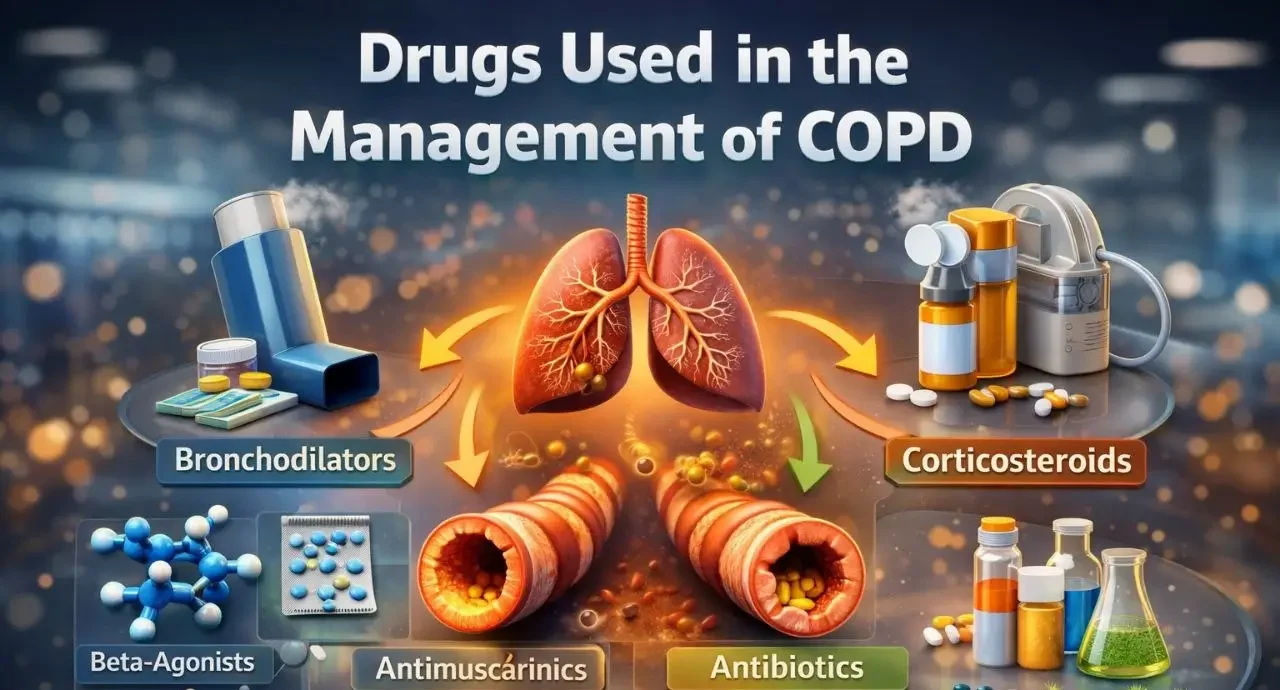
Drugs Used in the Management of COPD include bronchodilators, corticosteroids, and other agents to improve airflow and reduce symptoms. Types of Drugs Used in COPD Management Bronchodilators Function: Relax airway muscles to ease breathing Types: Beta-agonists (e.g., Salbutamol) Anticholinergics (e.g., Ipratropium) Combination inhalers Inhaled Corticosteroids (ICS) Reduce airway inflammation Used in moderate to severe cases … Read more

Chronic Obstructive Pulmonary Disease (COPD)

Chronic Obstructive Pulmonary Disease (COPD)

What is COPD? Chronic Obstructive Pulmonary Disease (COPD) is a progressive respiratory condition that causes difficulty in breathing. It includes: Chronic Bronchitis: Inflammation and narrowing of airways with excessive mucus production. Emphysema: Damage to alveoli (air sacs), reducing lung function. Refractory Asthma: Asthma that doesn’t respond well to standard treatments. Causes: Long-term exposure to irritants … Read more

Pharmacology of anti-asthmatic drugs

Pharmacology of anti-asthmatic drugs

Pharmacology of anti-asthmatic drugs Pharmacology of Anti-Asthmatic Drugs explains mechanisms and actions of drugs used to relieve bronchoconstriction and airway inflammation. Main Classes of Anti-Asthmatic Drugs Bronchodilators These drugs relieve bronchoconstriction and are primarily used in acute asthma attacks. β2-Adrenergic Agonists Examples: Salbutamol (short-acting), Salmeterol (long-acting) Mechanism: Stimulate β2-receptors in bronchial smooth muscle → ↑ … Read more

Solution-Phase Synthesis in Combinatorial Chemistry

Solution-Phase Synthesis in Combinatorial Chemistry

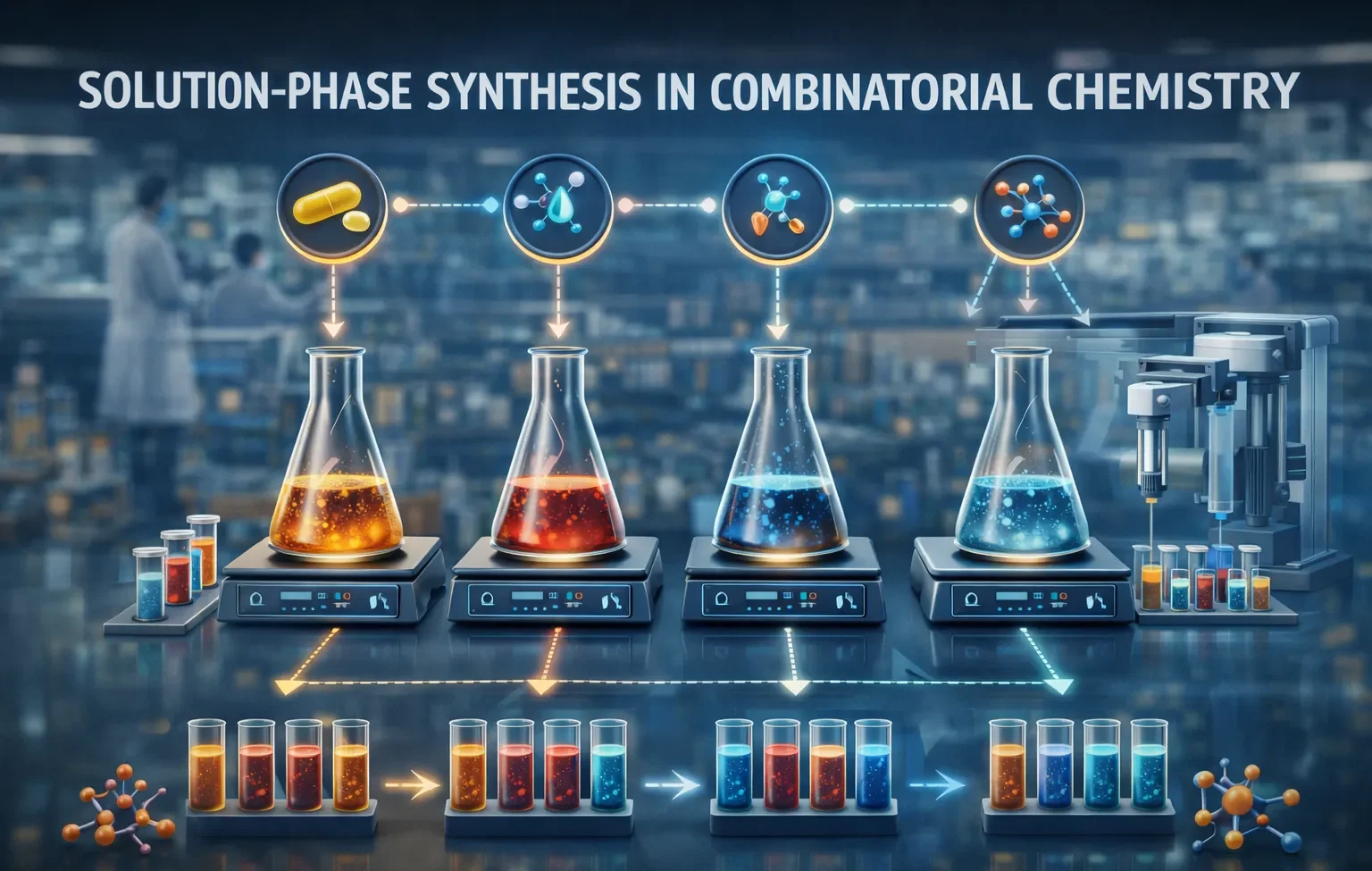
Solution-phase synthesis is a flexible method for generating diverse compounds in liquid solvents. It allows for a wide range of reaction conditions and is easily scalable, making it ideal for high-throughput screening. Applications of Solution-Phase Synthesis Drug Discovery: Developing novel therapeutic agents. Materials Science: Creating new functional materials. Peptide Synthesis: Producing bioactive peptides. Catalysis: Designing … Read more

Solid-Phase Combinatorial Chemistry

Solid-Phase Combinatorial Chemistry

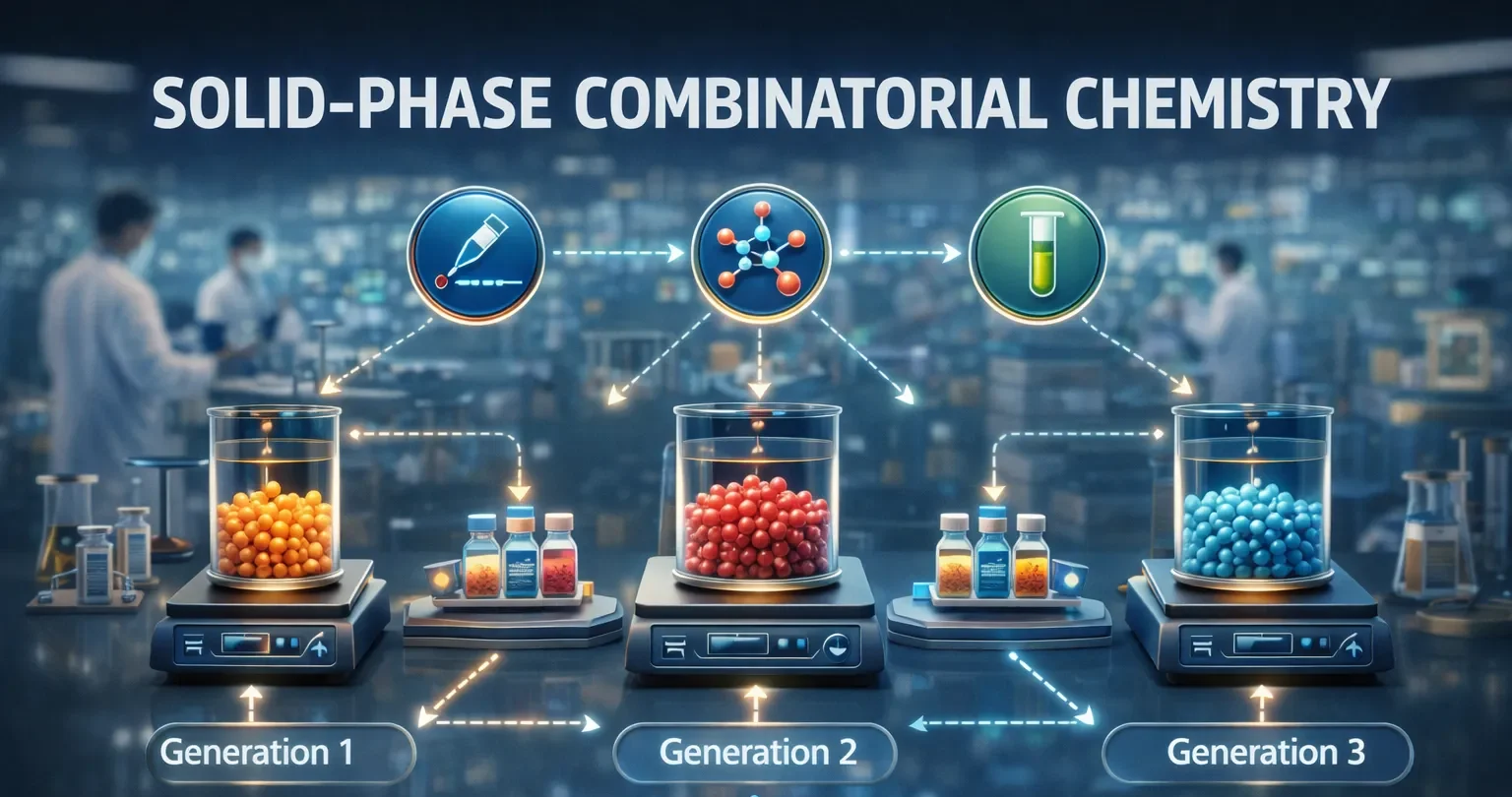
Solid-Phase Combinatorial Chemistry involves synthesis of compounds on solid supports for easy separation and high-throughput screening. A method where compounds are synthesized on a solid support, making synthesis, purification, and screening more efficient. This approach is automation-friendly and ideal for drug discovery and materials science. Applications of Solid-Phase Combinatorial Chemistry Drug Discovery: Identifying new drug … Read more