Pentamidine Isethionate

Pentamidine Isethionate
Chemical Structure / Formula of Pentamidine Isethionate Formula: C₁₉H₂₄N₄O₂ · C₂H₆O₄S Structure: Aromatic diamidine with an isethionate salt. Mechanism of Action Binds to DNA and inhibits RNA synthesis in protozoa. Disrupts mitochondrial function. Uses of Pentamidine Isethionate Pneumocystis jirovecii pneumonia (PCP) in HIV/AIDS patients. Trypanosomiasis (African sleeping sickness). Side Effects Nephrotoxicity, hypotension, pancreatitis.
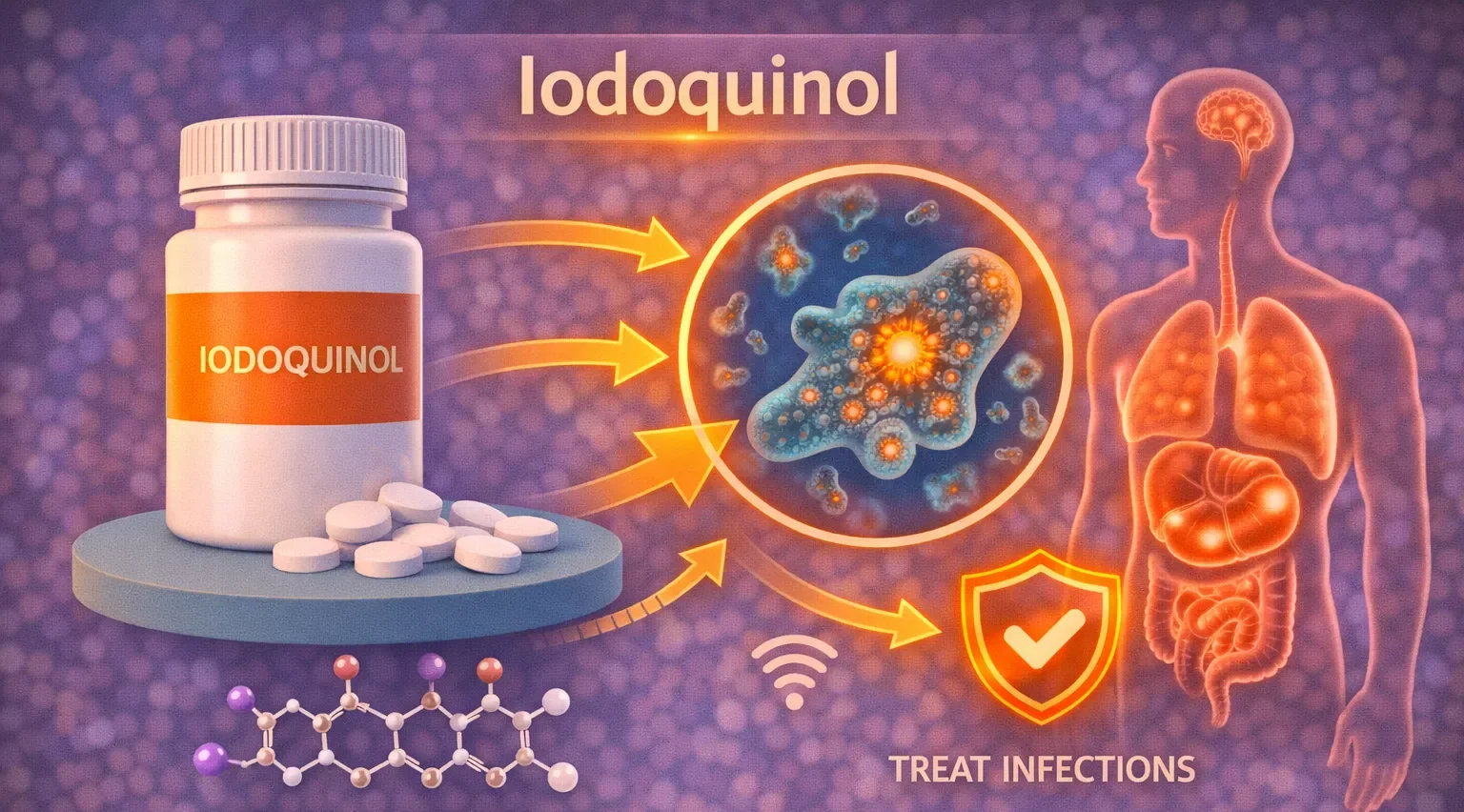
Iodoquinol

Iodoquinol

Chemical Structure / Formula of Iodoquinol Formula: C₉H₅I₂NO Structure: Iodinated hydroxyquinoline derivative. Mechanism of Action Unknown, but disrupts protozoal metabolism and enzyme function. Uses of Iodoquinol Amoebiasis (luminal agent, acts against cysts and trophozoites in the intestine). Side Effects Iodine toxicity (thyroid dysfunction, goiter). GI upset, neurotoxicity with long-term use.

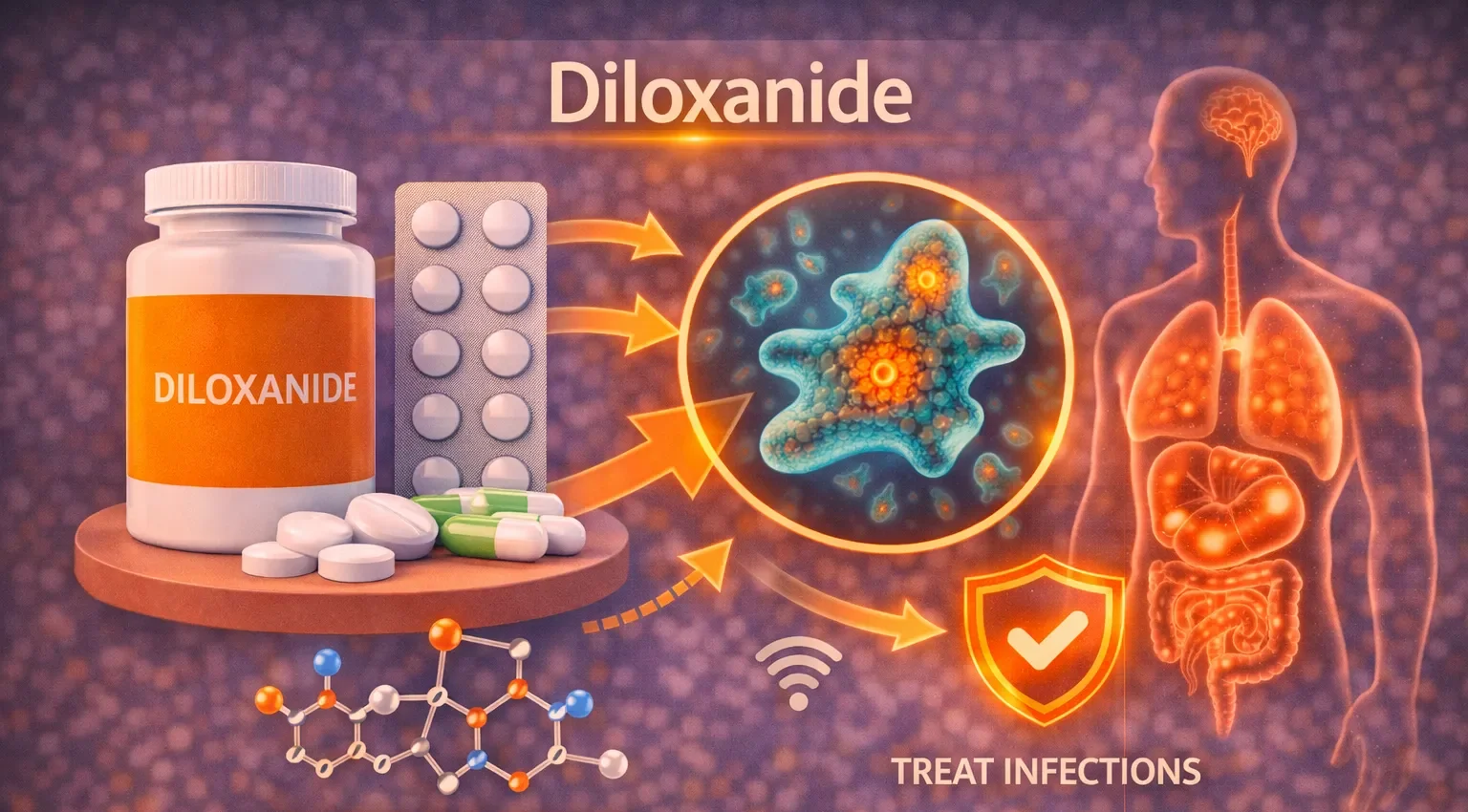
Diloxanide

Diloxanide

Chemical Structure / Formula of Diloxanide Formula: C₁₄H₁₁Cl₂NO₄ Structure: Dichlorinated amide derivative. Mechanism of Action Unknown, but thought to interfere with trophozoite metabolism in the intestine. Uses of Diloxanide Amoebiasis (luminal agent, kills trophozoites in the intestine but not in tissues). Used with Metronidazole for invasive amoebiasis. Side Effects Flatulence, nausea, rash. Not effective for … Read more

Ornidazole

Ornidazole

Chemical Structure / Formula of Ornidazole Formula: C₇H₁₀ClN₃O₃ Structure: Nitroimidazole derivative with a chlorinated side chain. Mechanism of Action Same as Metronidazole: activated in anaerobic organisms, causing DNA damage via ROS. Uses of Ornidazole Amoebiasis, giardiasis, trichomoniasis. Alternative to Metronidazole with better tolerability. Side Effects Dizziness, headache, GI upset. Less disulfiram-like reaction compared to Metronidazole.

Tinidazole

Tinidazole

Chemical Structure / Formula of Tinidazole Formula: C₈H₁₃N₃O₄S Structure: Nitroimidazole derivative with a sulfur (-S) group. Mechanism of Action Prodrug activated under anaerobic conditions by PFOR enzyme. Generates ROS, leading to DNA strand breaks and cell death. Uses of Tinidazole Similar to Metronidazole but has a longer half-life (used for single-dose treatments). Amoebiasis, giardiasis, trichomoniasis. … Read more

Metronidazole

Metronidazole

Chemical Structure / Formula of Metronidazole Formula: C₆H₉N₃O₃ Structure: A nitroimidazole with a nitro (-NO₂) group at the 5th position of the imidazole ring. Mechanism of Action Prodrug, activated by anaerobic protozoa and bacteria via pyruvate-ferredoxin oxidoreductase (PFOR) enzyme. The nitro group is reduced, generating reactive oxygen species (ROS), leading to DNA damage and cell … Read more

Anti-Protozoal Agents

Anti-protozoal agents are medications designed to eliminate protozoan parasites by disrupting their essential life processes, including: Cell membrane integrity Protein synthesis DNA replication Energy metabolism These agents are infection-specific, meaning their use depends on the type of protozoan infection and disease severity. Classification Amoebicidal Agents: Used for amoebiasis and other protozoal infections Metronidazole Tinidazole Ornidazole … Read more

Protozoa

Protozoa

Protozoa are single-celled, microscopic eukaryotic organisms belonging to the Protista kingdom. They exist in various environments, including soil, water, and as parasites within other organisms. Some protozoa are harmless, while others cause infections in humans and animals. They have a complex structure with a cell membrane, nucleus, and organelles, enabling reproduction, metabolism, and movement. Transmission … Read more

Tolnaftate

Tolnaftate

Chemical Structure / Formula of Tolnaftate Formula: C₁₉H₁₇NOS Structure: A thiocarbamate antifungal with a naphthyl group. Mechanism of Action Inhibits squalene epoxidase, preventing ergosterol synthesis and causing toxic squalene accumulation in fungal cells. Uses of Tolnaftate Topical antifungal (tinea infections, athlete’s foot, jock itch, ringworm). Side Effects Mild skin irritation, dryness, redness. Structure-Activity Relationship (SAR) … Read more

Naftifine Hydrochloride

Naftifine Hydrochloride

Chemical Structure / Formula of Naftifine Hydrochloride Formula: C₂₁H₂₁N · HCl Structure: Allylamine antifungal with a naphthalene core. Mechanism of Action Inhibits squalene epoxidase, blocking ergosterol synthesis and leading to toxic squalene accumulation. Uses of Naftifine Hydrochloride Topical antifungal (tinea infections, athlete’s foot, jock itch, ringworm). Side Effects Skin irritation, redness, burning.