Ion Exchange Resins

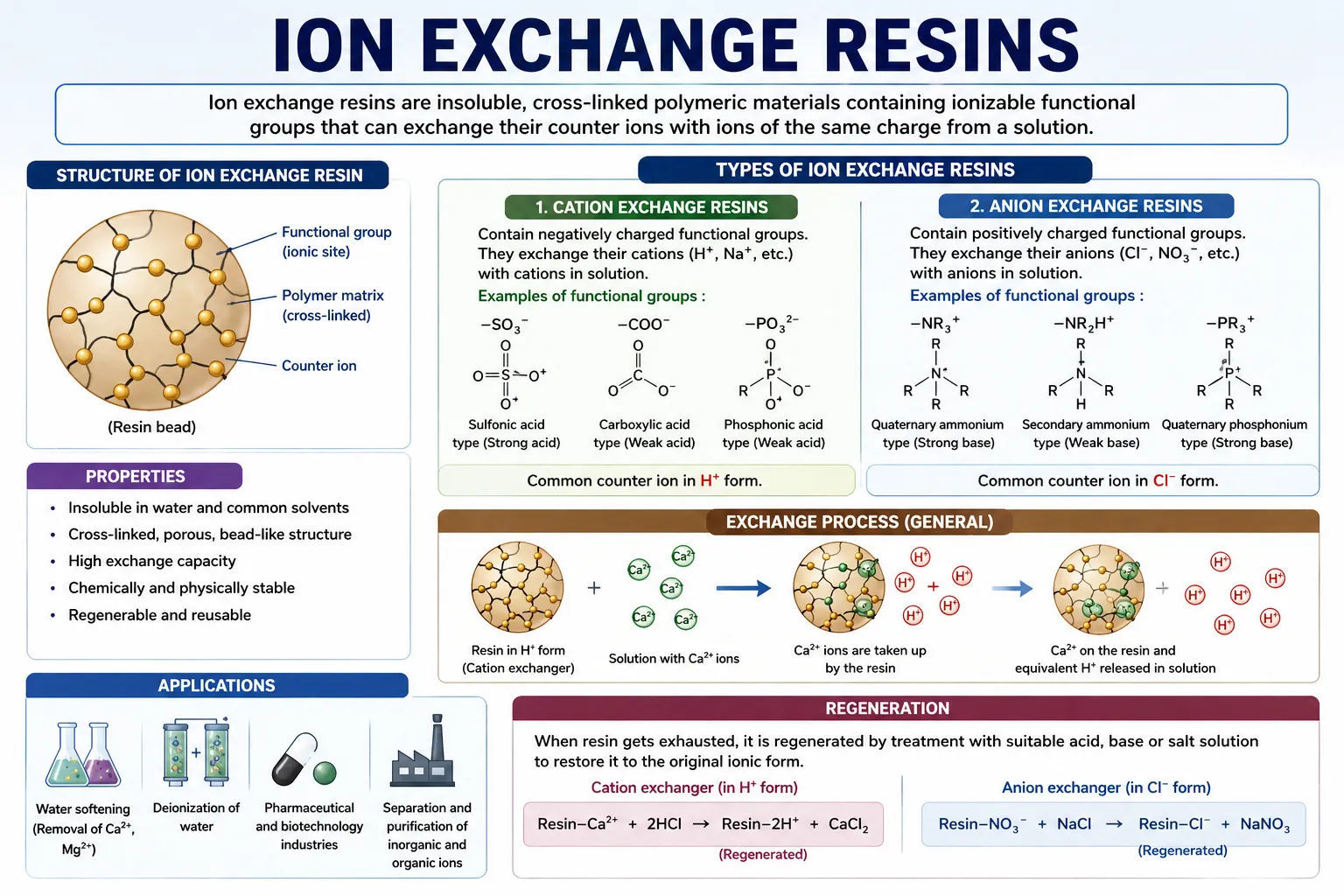
Ion Exchange Resins

Ion Exchange Resins Ion exchange resins are the core materials facilitating the separation of ions based on their charge. They are typically insoluble matrices in the form of small beads containing charged sites that attract and hold ions of opposite charge from a passing solution. Structure of Ion Exchange Resins Polymer Base: Can be natural … Read more
Classification of Ion Exchange Chromatography

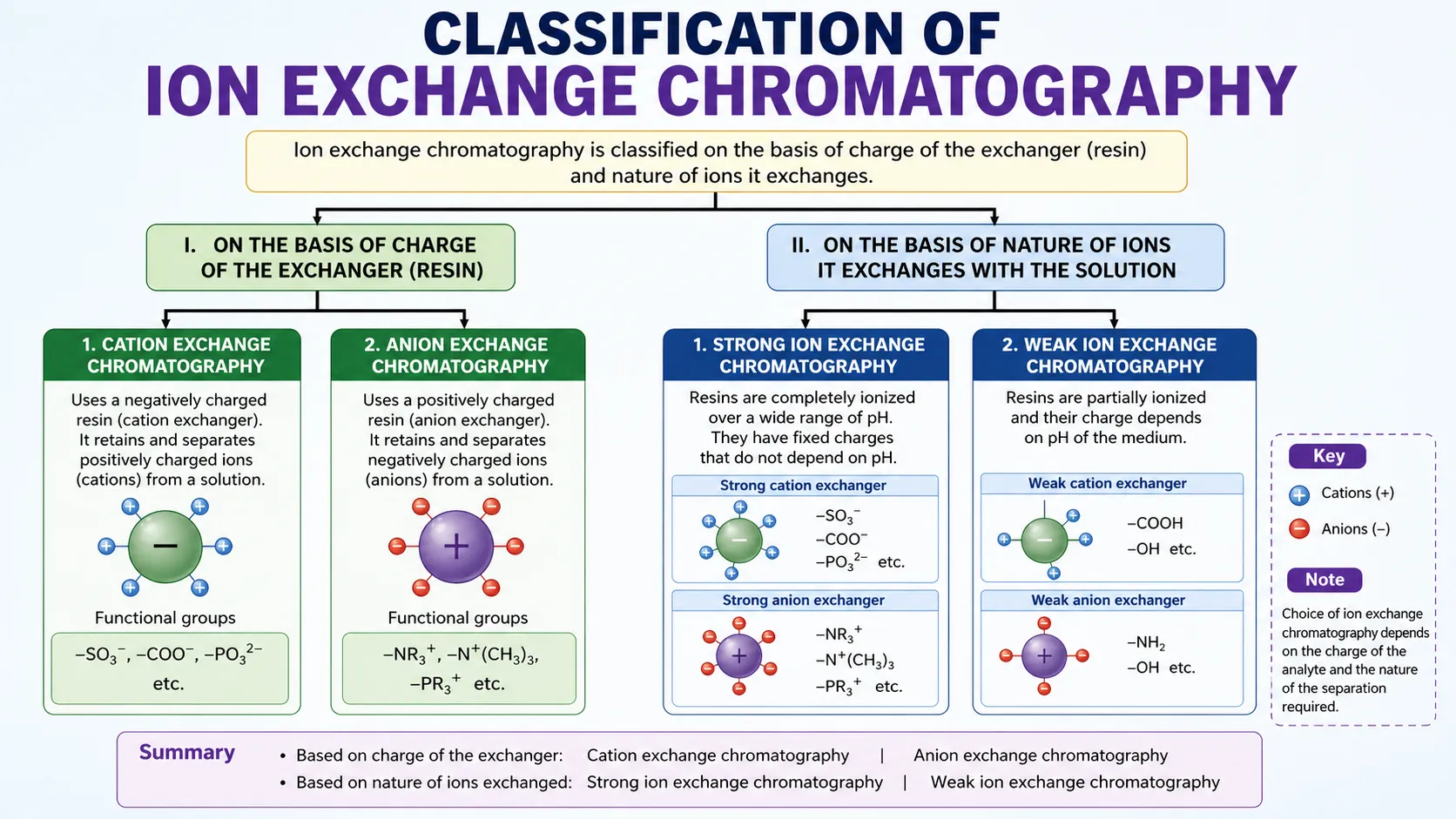
Classification of Ion Exchange Chromatography

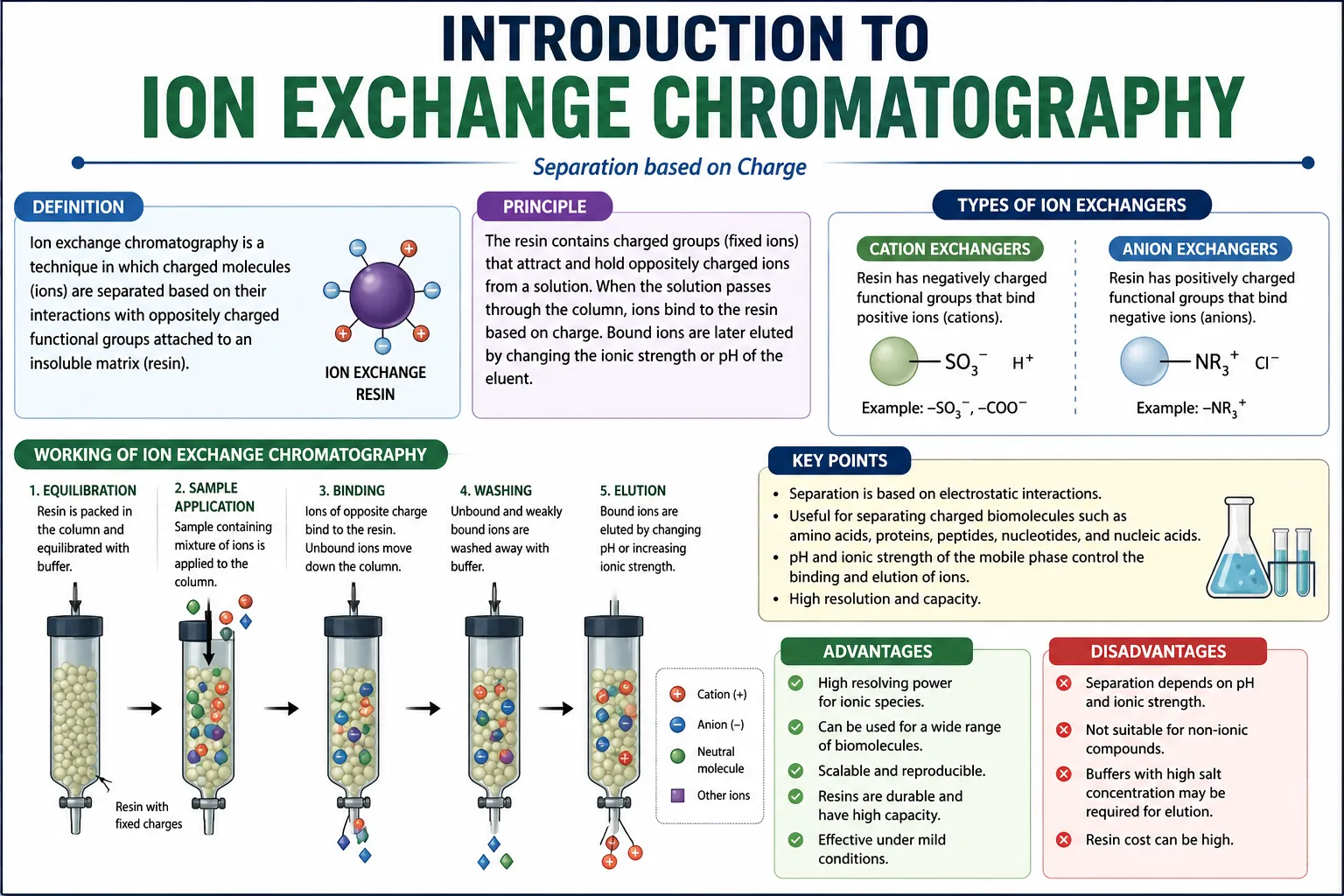
Classification of Ion Exchange Chromatography Classification of Ion Exchange Chromatography divides methods based on cation and anion exchange mechanisms. Based on the Charge of the Stationary Phase Cation Exchange Chromatography Stationary Phase: Negatively charged groups. Function: Attracts and exchanges positively charged cations from the solution. Anion Exchange Chromatography Stationary Phase: Positively charged groups. Function: Attracts … Read more

Introduction to Ion Exchange Chromatography

Introduction to Ion Exchange Chromatography

Introduction to Ion Exchange Chromatography explains separation of ions based on charge interaction with a stationary phase. Introduction to Ion Exchange Chromatography Ion Exchange Chromatography (IEC) is a type of chromatography that separates ions and polar molecules based on their charge. It is widely employed in various fields, including protein purification, water analysis, and diverse … Read more

Applications of HPLC

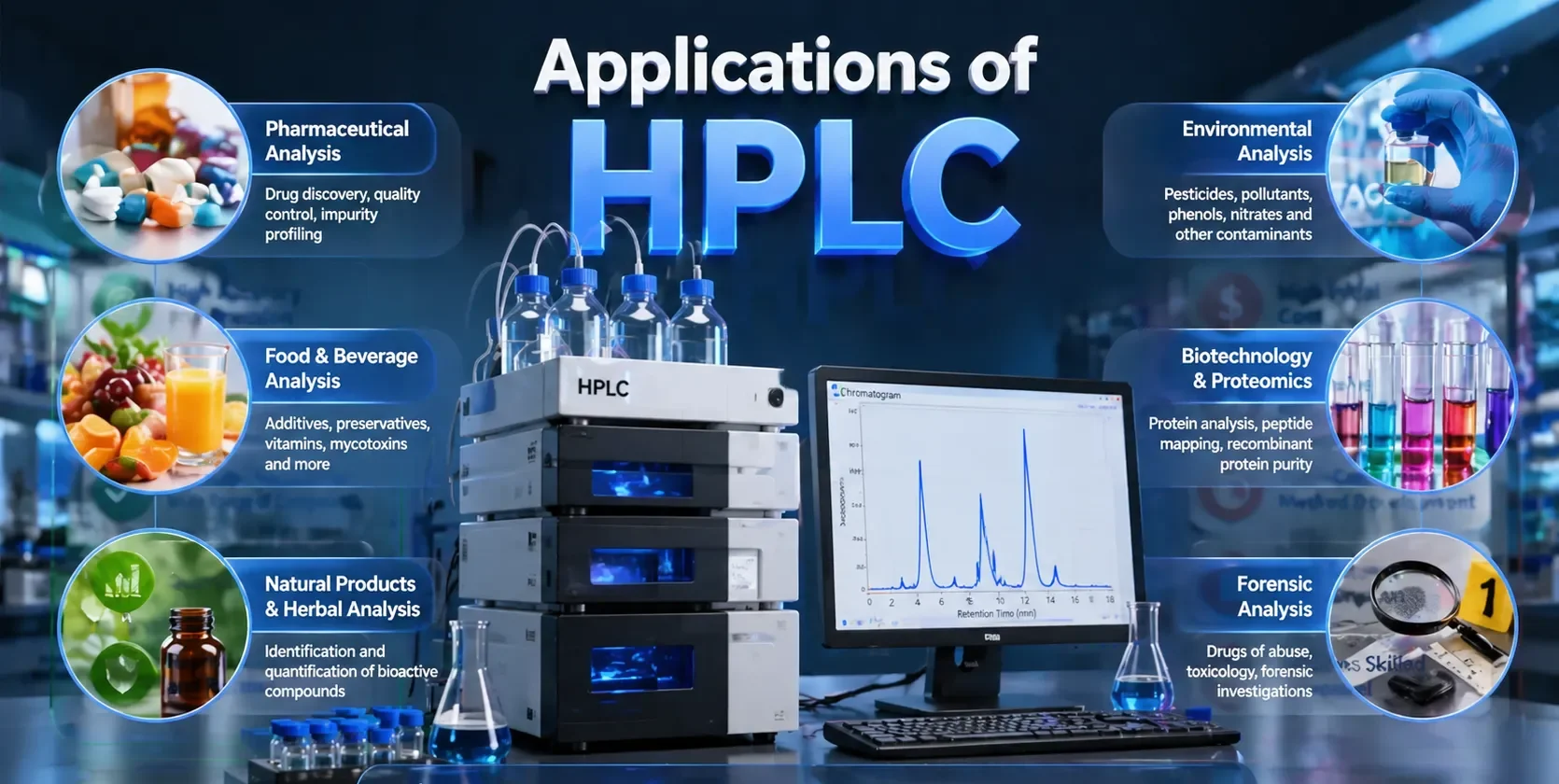
Applications of HPLC

Applications of HPLC include drug analysis, quality control, and separation of complex pharmaceutical compounds. Applications of HPLC HPLC is employed across various industries and research fields due to its robust separation capabilities and precision. Quality Control: Determining purity and content of pharmaceuticals. Drug Development: Identifying and quantifying drugs and their metabolites in biological matrices. Impurity … Read more

Advantages & Disadvantages of HPLC

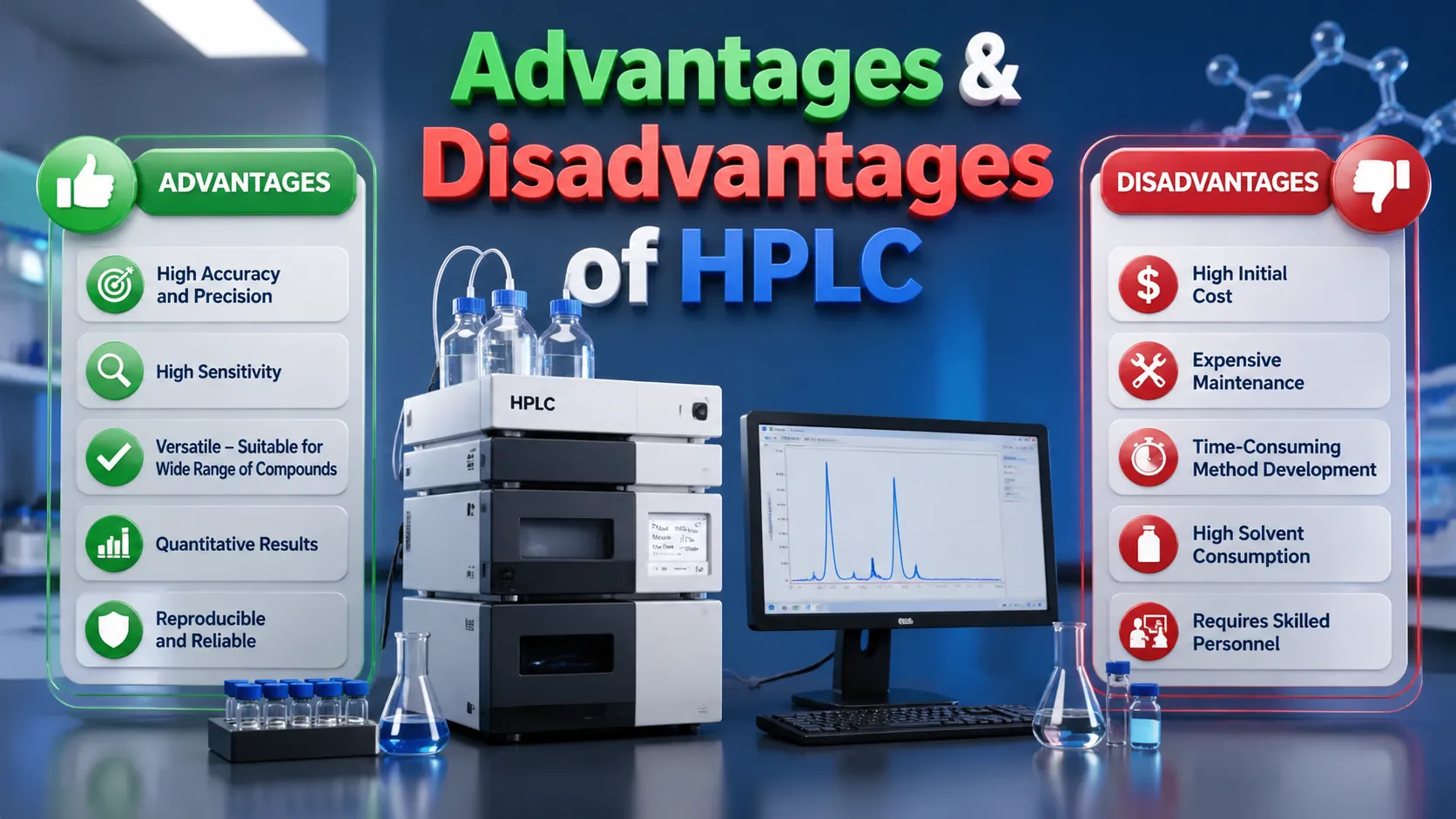
Advantages & Disadvantages of HPLC

Advantages & Disadvantages of HPLC Advantages and Disadvantages of HPLC highlight high resolution and sensitivity with limitations like cost and maintenance. Advantages High Resolution: Effective separation of complex mixtures. Versatility: Applicable to a wide range of compounds. Precision: Reliable quantitative analysis. Speed: Faster than traditional methods, especially with UHPLC. Disadvantages Cost: High initial investment and … Read more

Instrumentation of HPLC

Instrumentation of HPLC

Instrumentation of HPLC includes pump, injector, column, detector, and data system for accurate separation and analysis. Instrumentation of HPLC HPLC systems consist of the following components: Solvent Reservoir Holds mobile phase solvents, multiple reservoirs for gradient systems. Pump or Solvent Delivery System Ensures consistent flow of mobile phase at high pressures. Sample Injection System Introduces … Read more

Introduction & Theory of HPLC

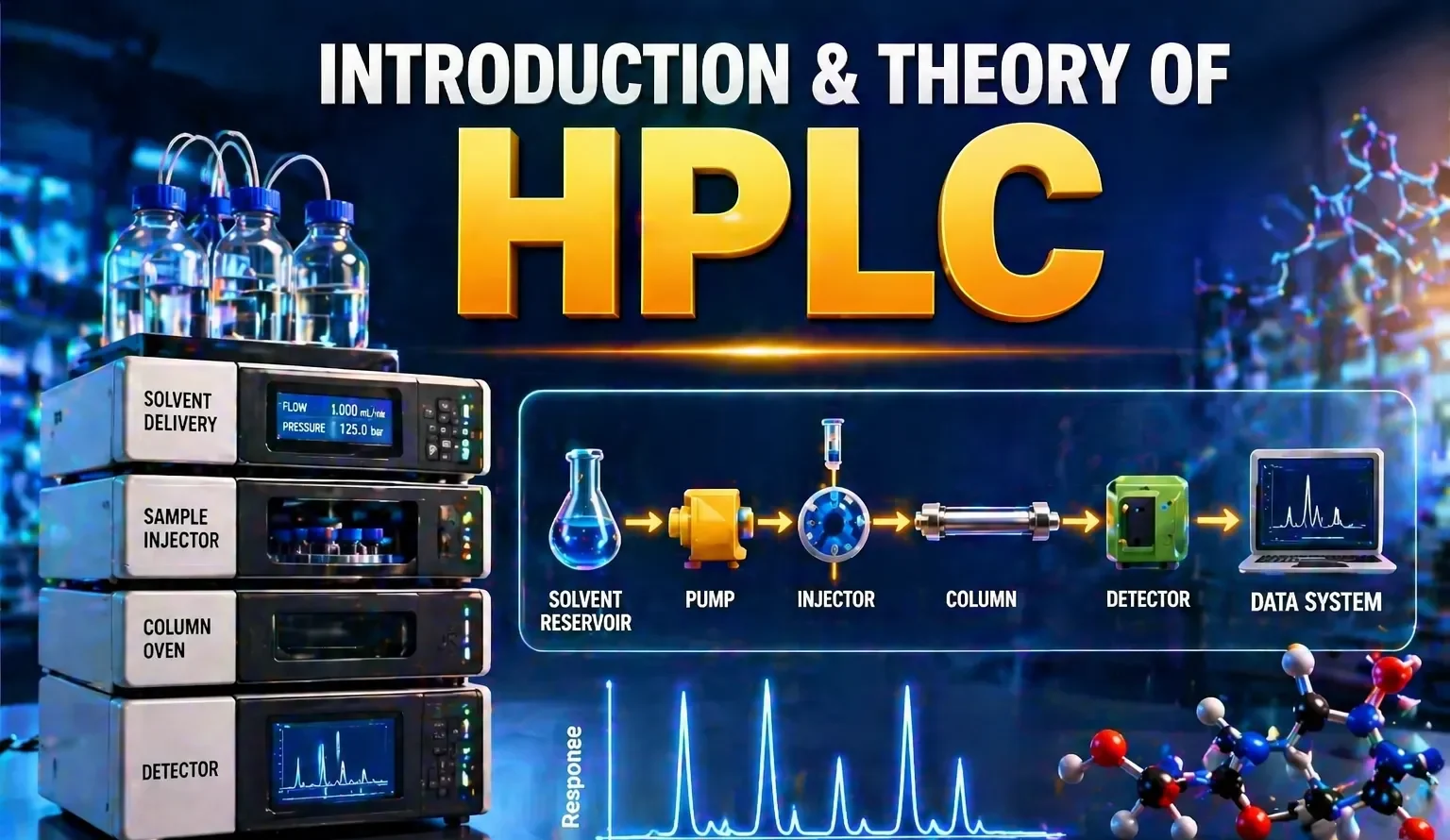
Introduction & Theory of HPLC

Introduction & Theory of HPLC Introduction and Theory of HPLC explains separation of compounds using high pressure liquid mobile phase and stationary phase. Introduction to HPLC Definition: An advanced liquid chromatography method for separating, identifying, and quantifying mixture components. Pharmaceutical Use: Widely adopted for its accuracy and reliability. Advancement: Unlike traditional liquid chromatography that uses … Read more

Applications of Gas Chromatography (GC)

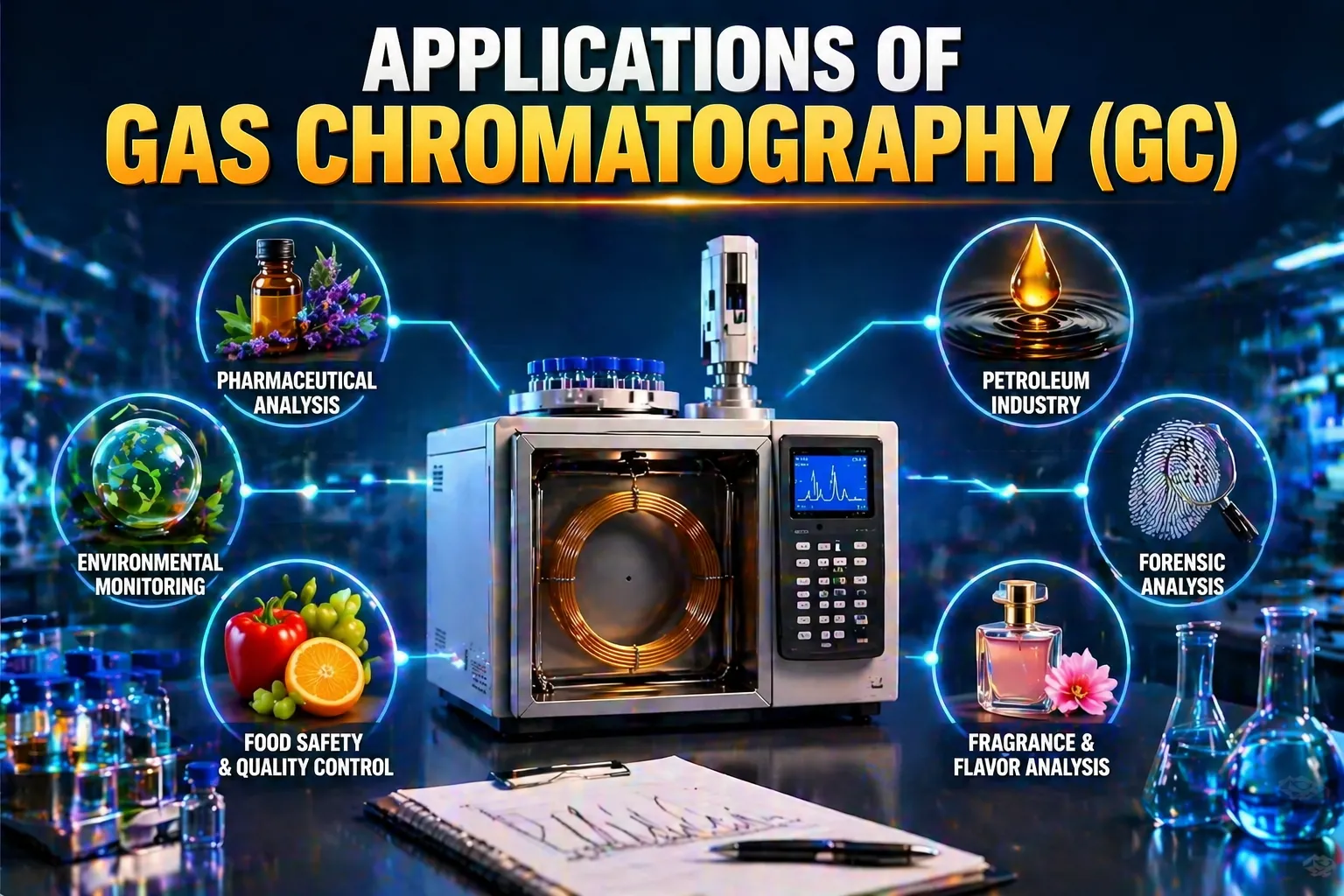
Applications of Gas Chromatography (GC)

Applications of Gas Chromatography (GC) Applications of Gas Chromatography (GC) include analysis of pharmaceuticals, environmental samples, and food components. Environmental Analysis Purpose: Detection of pollutants and contaminants in air, water, and soil samples. Examples: Monitoring volatile organic compounds (VOCs), pesticides, and industrial emissions. Pharmaceuticals Purpose: Quality control, impurity profiling, and drug metabolism studies. Examples: Analyzing … Read more

Advantages and Disadvantages of Gas Chromatography

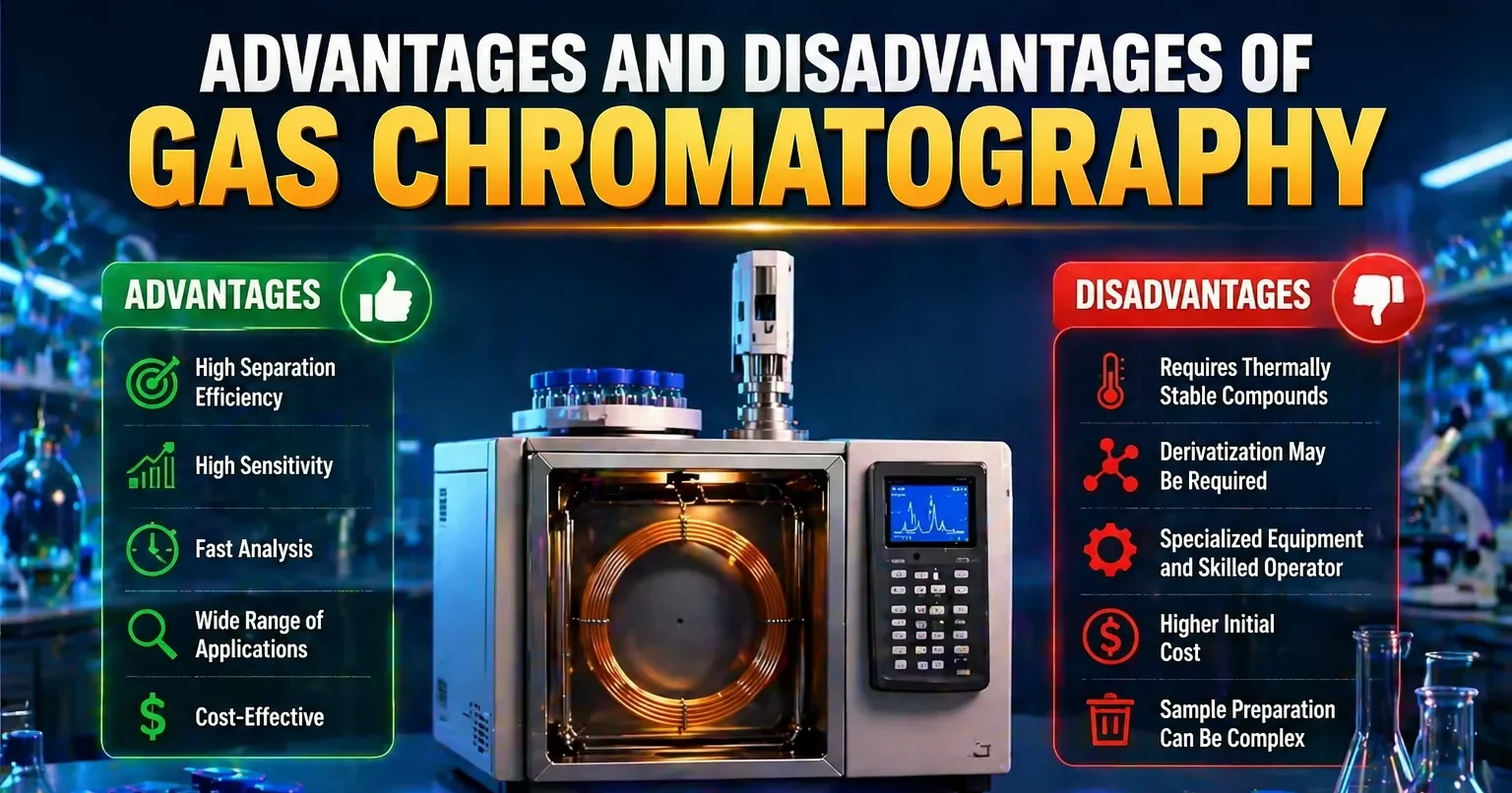
Advantages and Disadvantages of Gas Chromatography

Advantages and Disadvantages of Gas Chromatography Advantages and Disadvantages of Gas Chromatography highlight its high resolution, speed, and limitations with non-volatile compounds. Advantages High Resolution: Effective separation of complex mixtures, including trace components. Speed: Rapid analyses, often completed within minutes. Precision: Highly reproducible and suitable for quantitative analyses. Flexibility: Variety of detectors available for selective … Read more

Temperature Programming in Gas Chromatography

Temperature Programming in Gas Chromatography

Temperature Programming in Gas Chromatography varies column temperature to improve separation of compounds with different volatilities. Temperature programming involves changing the column temperature during analysis to improve separation and reduce run time, especially for compounds with a wide range of boiling points. Benefits Improved Resolution: Separates compounds that co-elute at constant temperatures. Reduced Analysis Time: … Read more