Derivatization in Gas Chromatography

Derivatization in Gas Chromatography
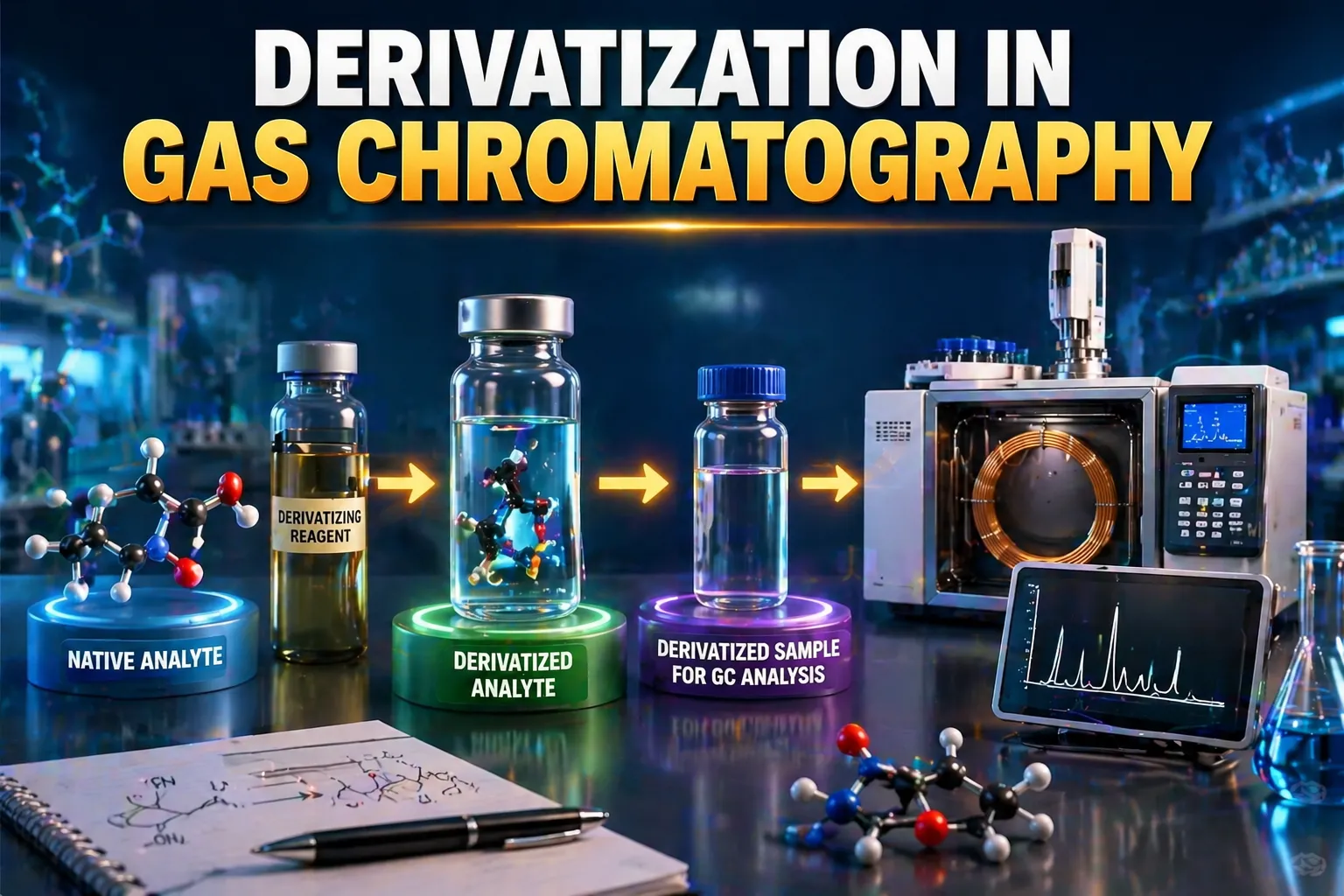
Derivatization in Gas Chromatography Derivatization in Gas Chromatography modifies compounds to increase volatility or detectability for accurate analysis. What is Derivatization? Chemical modification of a compound to form a derivative more suitable for GC analysis (improved volatility, thermal stability, and detectability). Why is Derivatization Needed? Enhance Volatility: Converts non-volatile or high boiling point compounds into … Read more
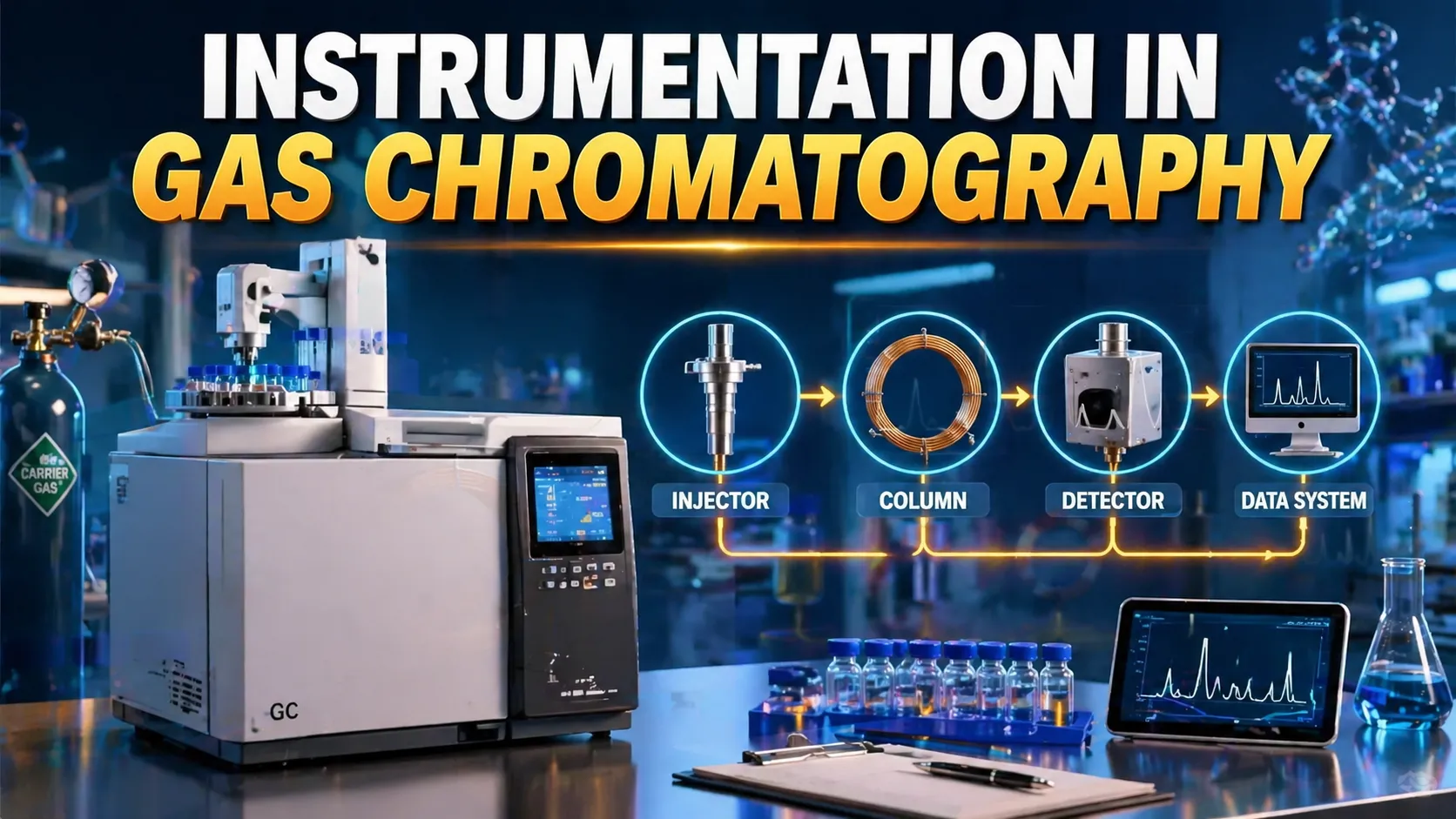
Instrumentation in Gas Chromatography

Instrumentation in Gas Chromatography

Instrumentation in Gas Chromatography Instrumentation in Gas Chromatography includes injector, column, detector, and data system for separating and analyzing volatile compounds. Sample Introduction System Injection Port: Heated port for sample introduction and vaporization. Auto-samplers: Automates sample introduction for precision and high throughput. Mobile Phase (Carrier Gas) System Carrier Gas Cylinder: Supplies inert gas (helium, hydrogen, … Read more

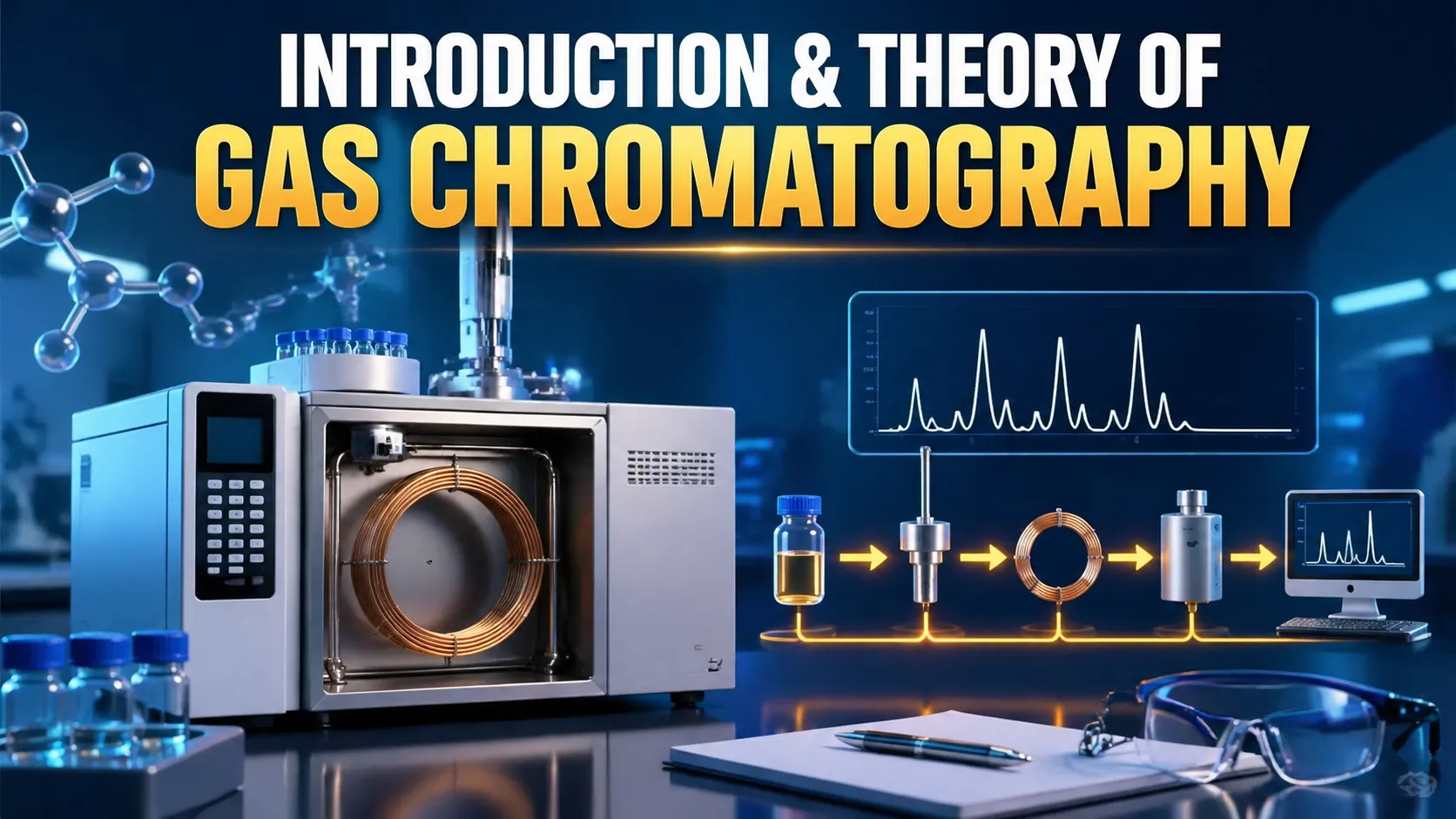
Introduction & Theory of Gas Chromatography

Introduction & Theory of Gas Chromatography

Introduction and Theory of Gas Chromatography explains separation of volatile compounds using a gaseous mobile phase and stationary phase. Introduction & Theory of Gas Chromatography Gas Chromatography (GC) is an analytical technique used to separate, identify, and quantify compounds in a mixture based on their volatility and interaction with a stationary phase. Basic Components Injection … Read more

Application of Electrophoresis

Application of Electrophoresis

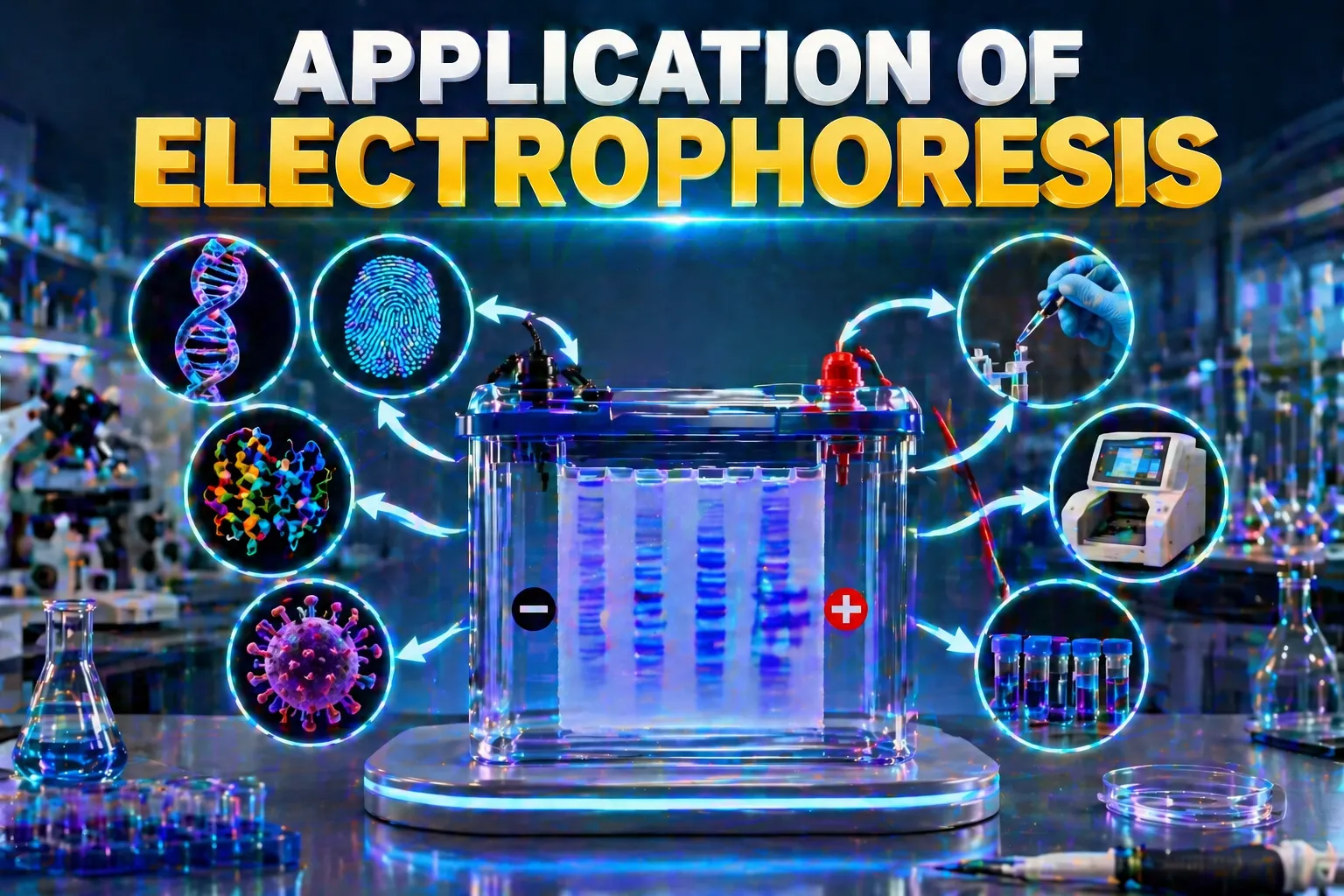
Application of Electrophoresis Application of Electrophoresis includes separation and analysis of DNA, RNA, and proteins for research, diagnostics, and quality control. Molecular Biology and Genetics: DNA and RNA fragment analysis, such as gene mapping, sequencing, and polymerase chain reaction (PCR) product evaluation. DNA fingerprinting and forensic analysis. Proteomics and Biochemistry: Protein purification and characterization. Detection … Read more

Capillary Electrophoresis (CE)

Capillary Electrophoresis (CE)

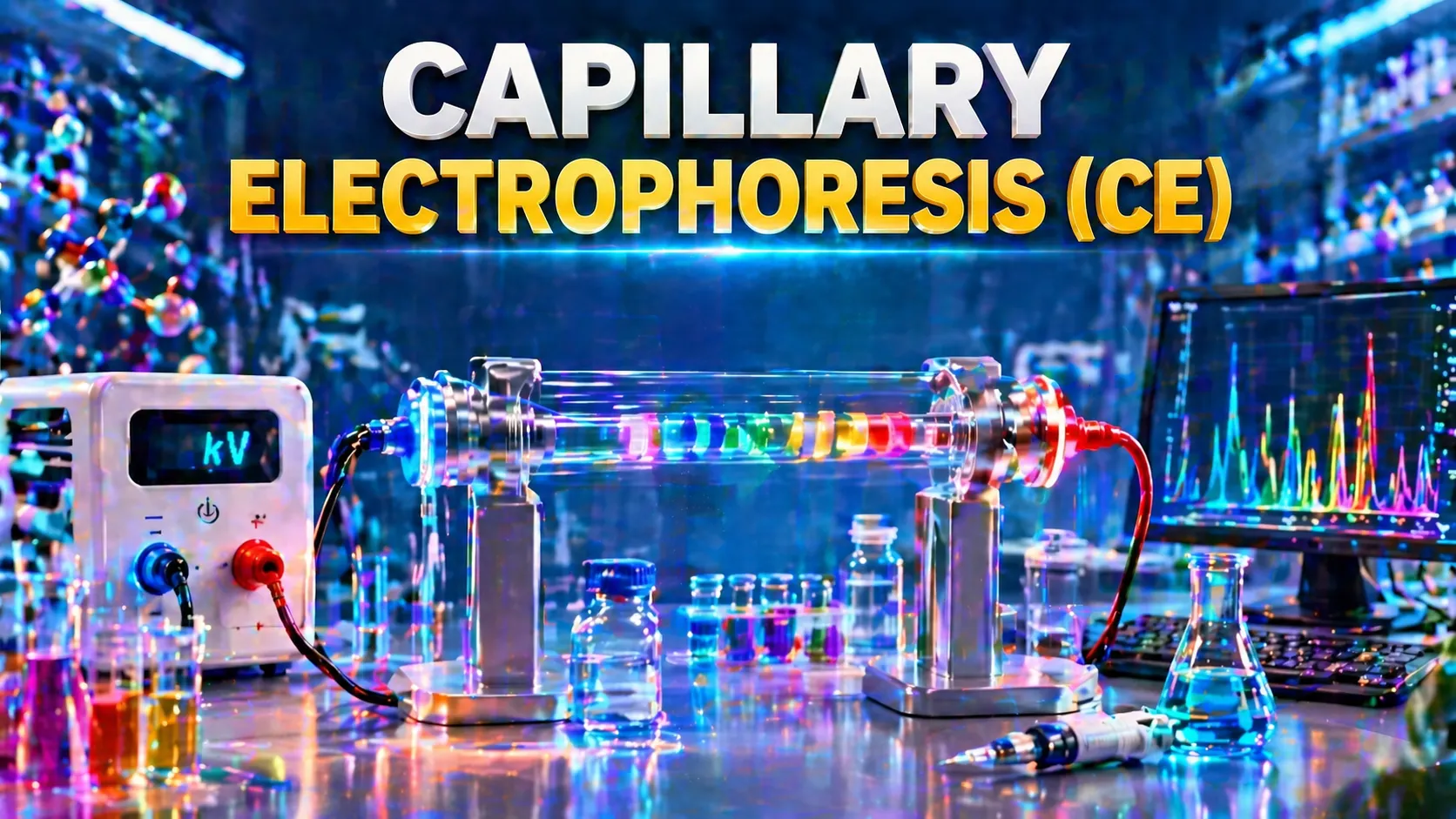
Introduction to Capillary Electrophoresis (CE) Capillary Electrophoresis (CE) is a sophisticated electrophoretic technique that utilizes narrow capillaries to achieve high-resolution separations with rapid analysis times. CE is highly automated and suitable for a wide range of applications, including the analysis of small ions, biomolecules, and pharmaceuticals. Principle of Capillary Electrophoresis (CE) In CE, an electric … Read more

Polyacrylamide Gel Electrophoresis (PAGE)

Polyacrylamide Gel Electrophoresis (PAGE)

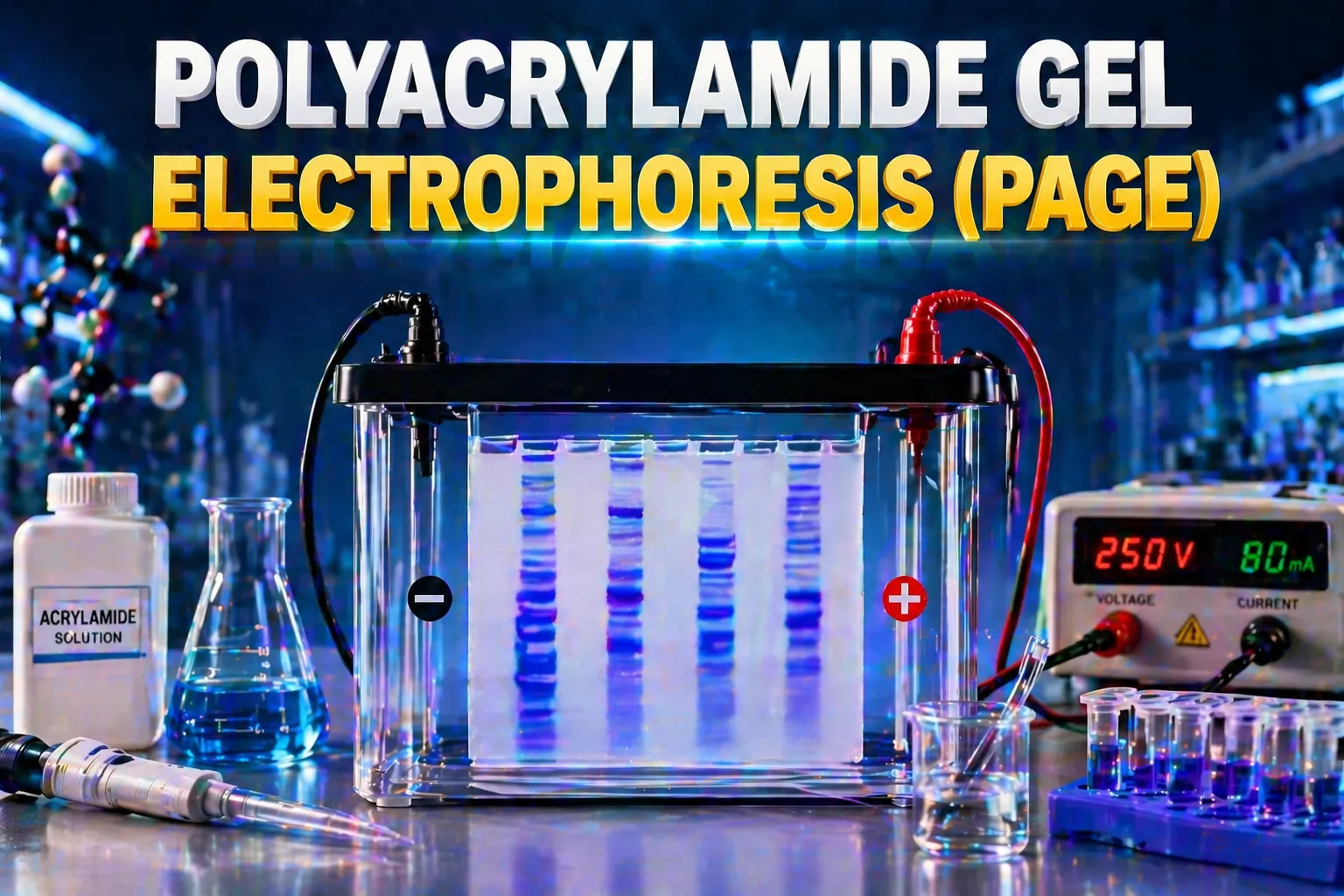
Polyacrylamide Gel Electrophoresis (PAGE) separates proteins by size and charge with high resolution in a polyacrylamide gel for analysis. Polyacrylamide Gel Electrophoresis (PAGE) PAGE is a widely used technique for separating biomolecules, especially proteins and small nucleic acid fragments, based on their molecular weight. Basic Principle Charged molecules migrate through a polyacrylamide gel matrix under … Read more

Gel Electrophoresis

Gel Electrophoresis

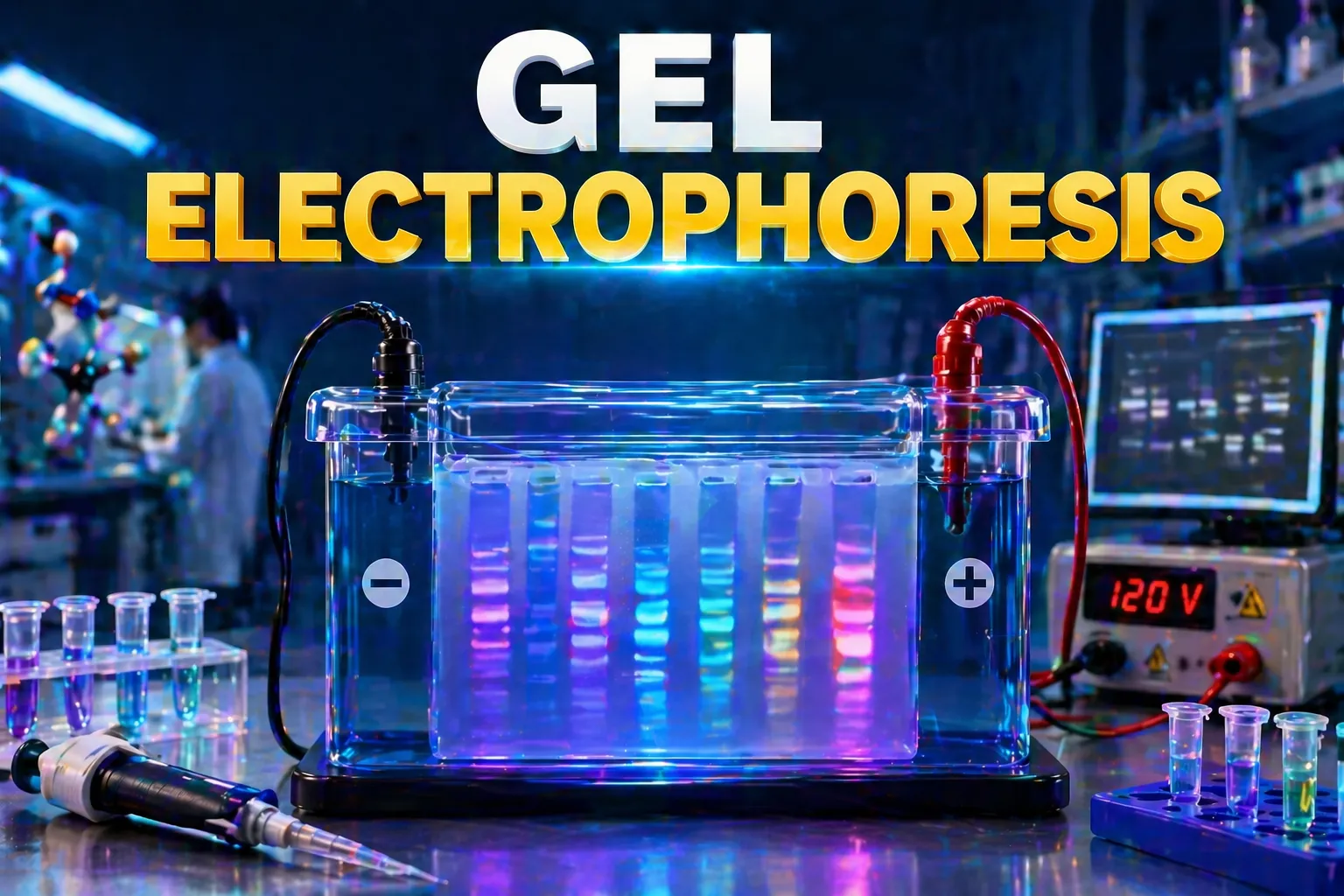
Introduction to Gel Electrophoresis Gel electrophoresis is a widely used technique that employs a gel matrix to facilitate the separation of macromolecules like DNA, RNA, and proteins. The gel acts as a sieve, enabling high-resolution separation based on size and charge. Principle of Gel Electrophoresis Molecules migrate through the porous gel matrix under an electric … Read more

Paper Electrophoresis

Paper Electrophoresis

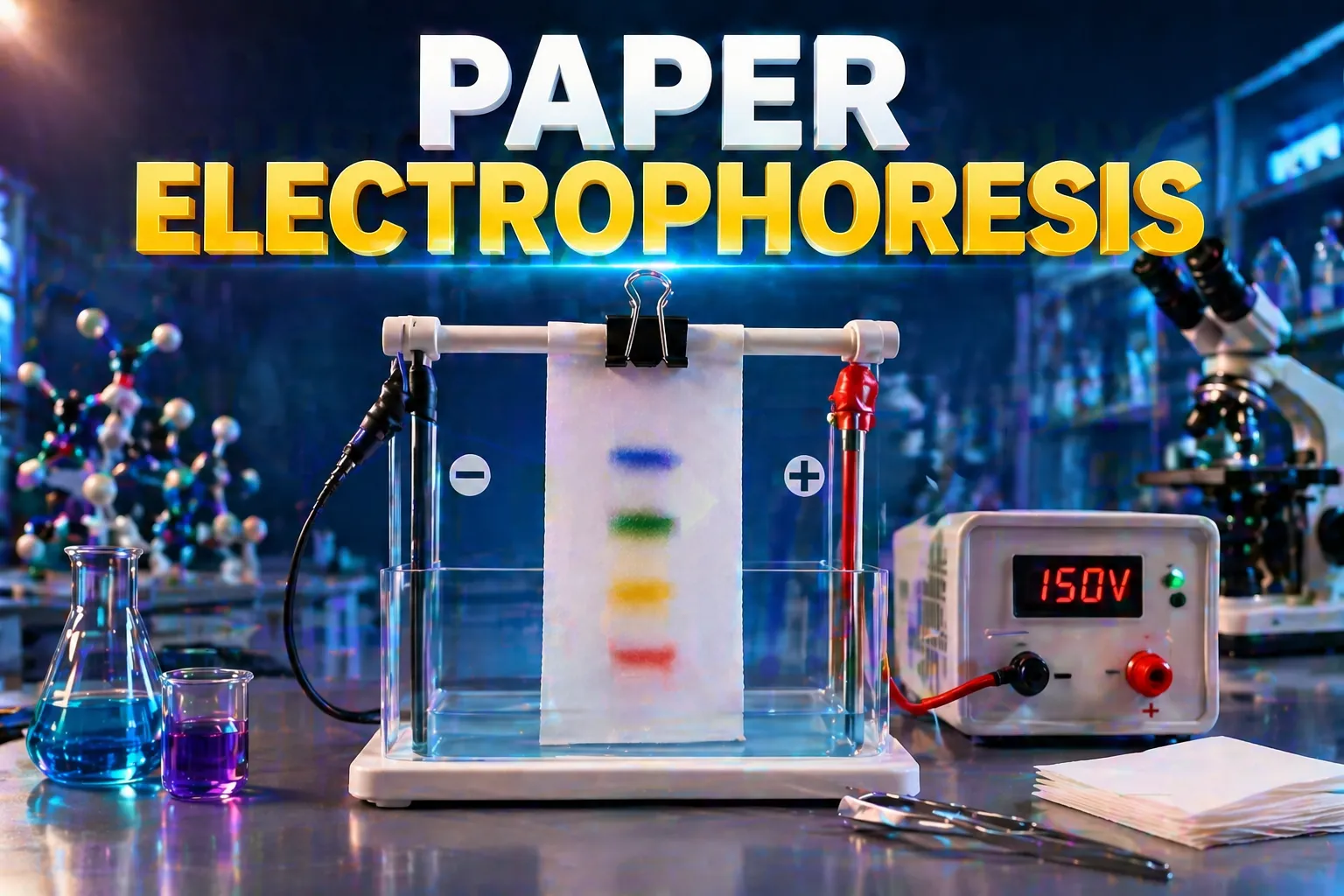
Introduction to Paper Electrophoresis Paper electrophoresis is one of the earliest forms of electrophoretic techniques. It employs cellulose paper as the medium through which molecules migrate under an electric field. Principle of Paper Electrophoresis Molecules dissolve in a buffer solution and migrate through the porous structure of the paper based on their charge and size … Read more

Paper Chromatography

Paper Chromatography

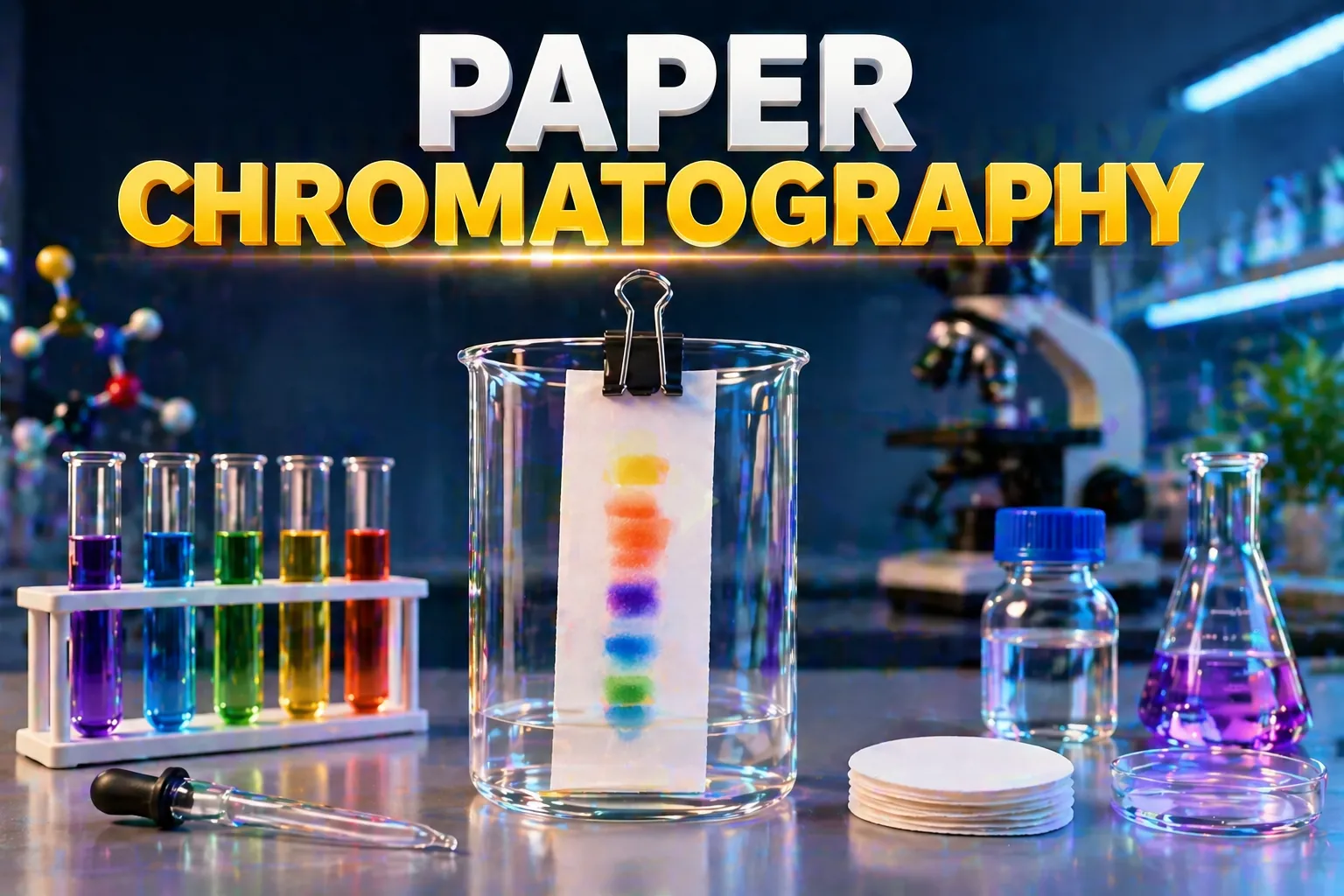
Introduction to Paper Chromatography Paper chromatography is an analytical technique used to separate and identify mixtures of soluble substances. It is one of the simplest forms of chromatography, utilizing paper as the stationary phase and a solvent as the mobile phase. Principle of Paper Chromatography The separation in paper chromatography is based on differential solubility … Read more

Thin Layer Chromatography (TLC)

Thin Layer Chromatography (TLC)

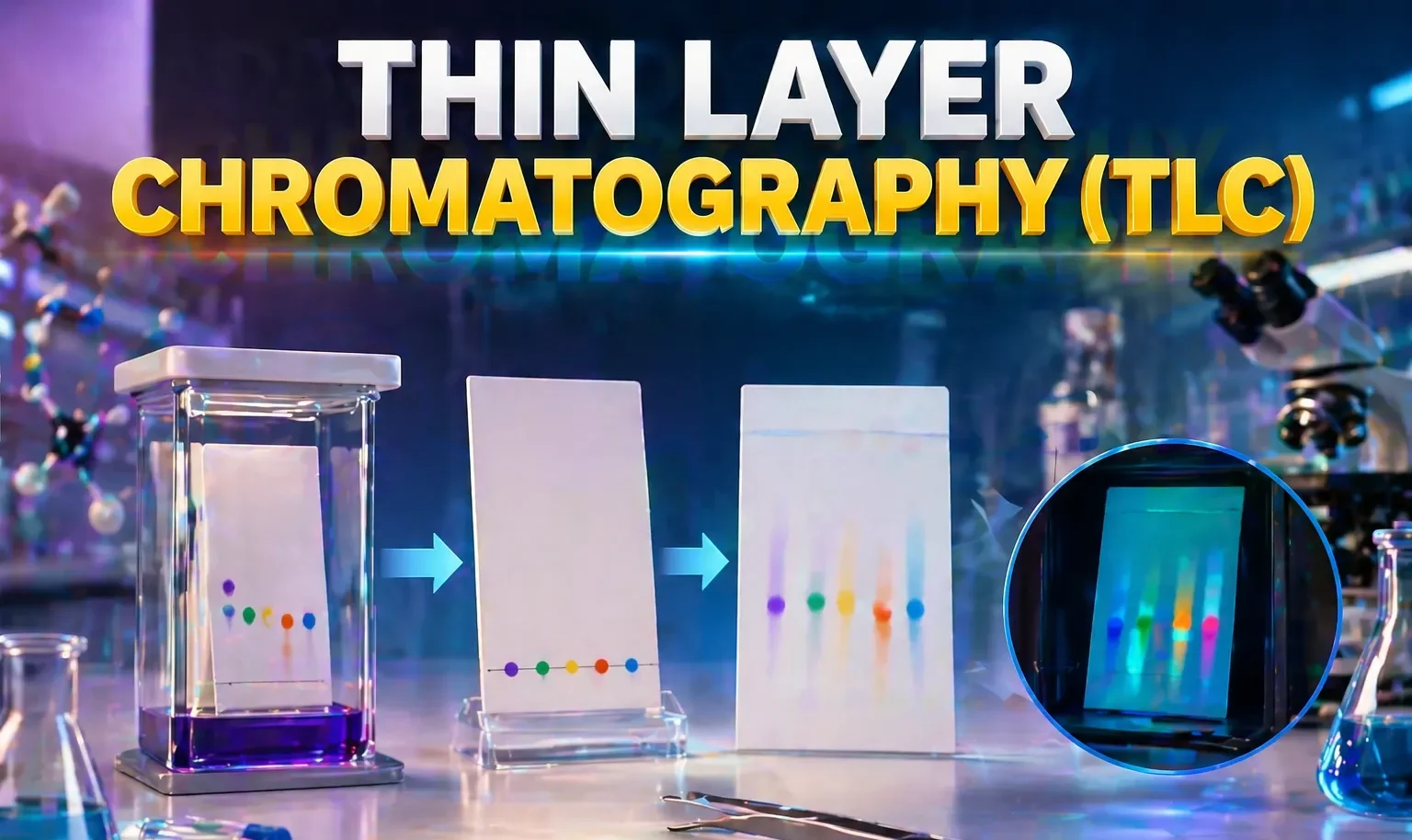
Introduction to Thin Layer Chromatography (TLC) Thin Layer Chromatography (TLC) is a simple, rapid, and versatile analytical technique used to separate and identify compounds within a mixture. It is widely used in laboratories for qualitative analysis and monitoring reactions. Principle of Thin Layer Chromatography (TLC) TLC operates on the principle of differential migration of components … Read more