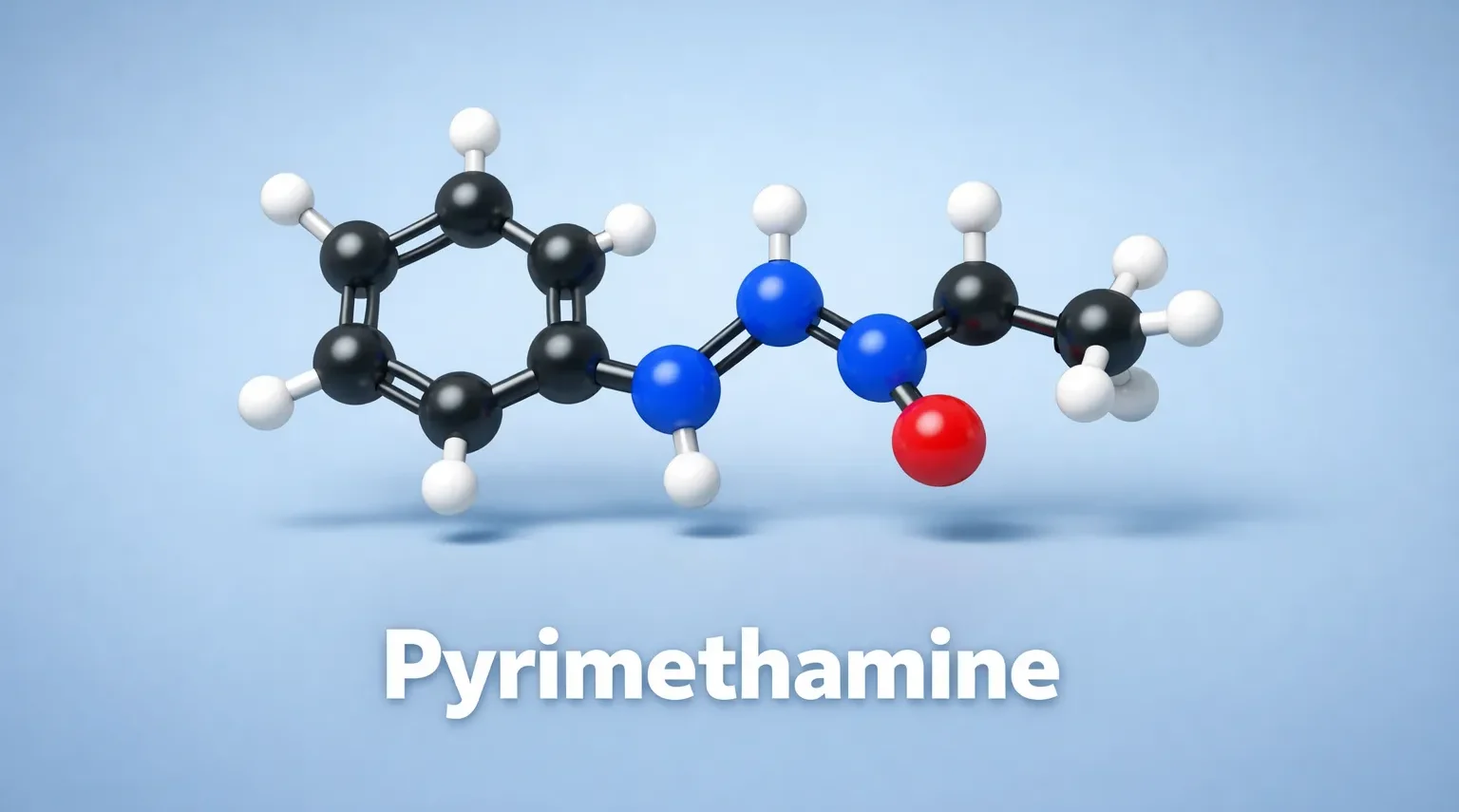
Pyrimethamine

Pyrimethamine

Chemical Structure / Formula of Pyrimethamine Formula: C₁₂H₁₃ClN₄ Structure: A 2,4-diaminopyrimidine Mechanism of Action Selective inhibition of dihydrofolate reductase (DHFR), preventing tetrahydrofolate synthesis and DNA replication. Uses of Pyrimethamine Treatment of malaria (in combination with sulfadoxine → Fansidar®). Toxoplasmosis treatment (in combination with sulfadiazine). Side Effects Megaloblastic anemia (due to folate depletion). Hypersensitivity reactions, hepatotoxicity.

Cycloguanil Pamoate

Cycloguanil Pamoate

Chemical Structure / Formula of Cycloguanil Pamoate Formula: C₁₇H₁₉N₅ Structure: A dihydrotriazine derivative, the active metabolite of proguanil. Mechanism of Action Inhibits dihydrofolate reductase (DHFR) in Plasmodium, preventing DNA synthesis and replication. Uses of Cycloguanil Pamoate Treatment and prophylaxis of malaria ( falciparum, P. vivax). Often used in combination with sulfonamides. Side Effects GI disturbances, … Read more

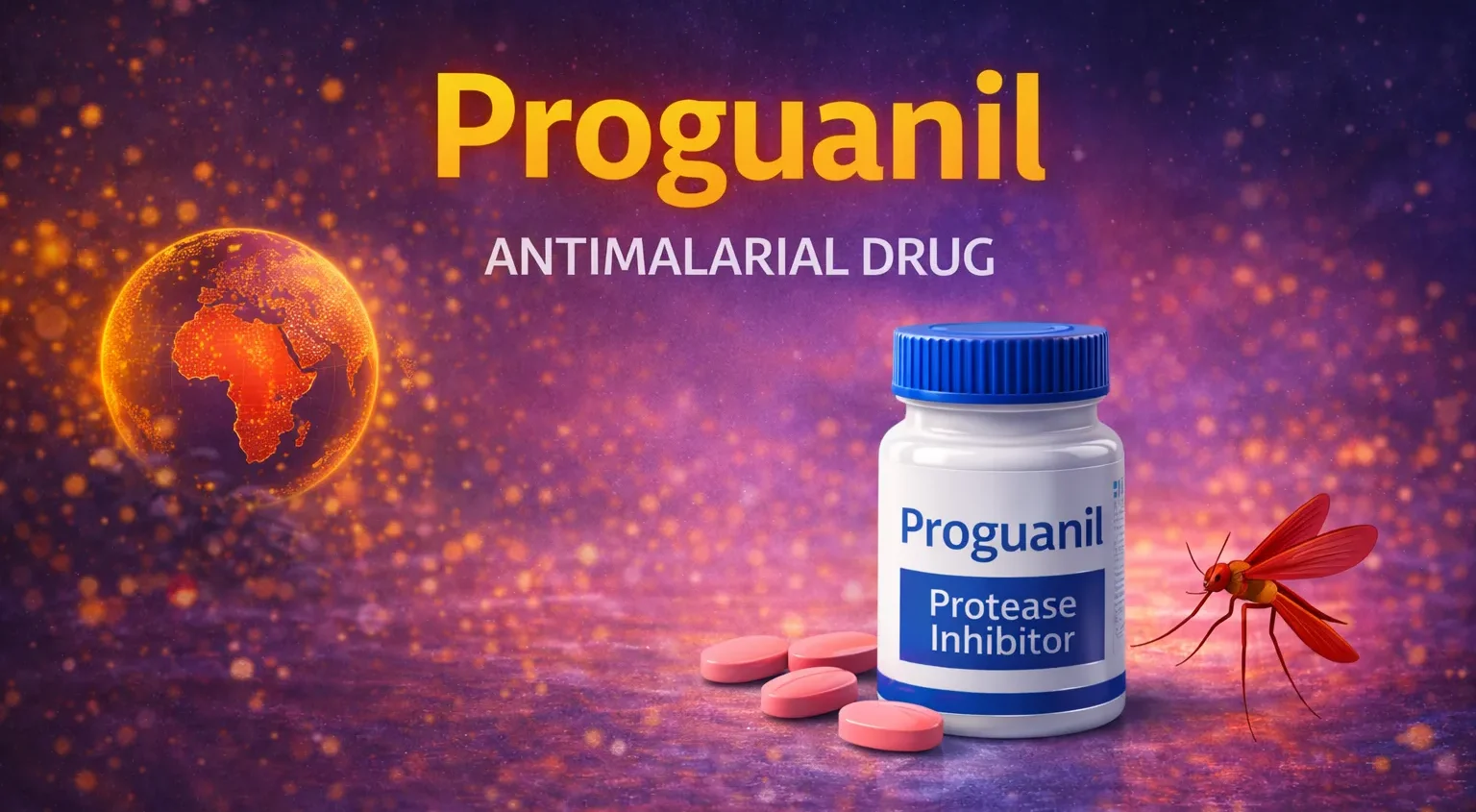
Proguanil

Proguanil

Chemical Structure / Formula of Proguanil Formula: C₁₁H₁₆ClN₅ Structure: A biguanide that is metabolized into Cycloguanil (active form). Mechanism of Action Inhibits dihydrofolate reductase (DHFR) in Plasmodium, blocking folate metabolism and DNA synthesis. Uses of Proguanil Malaria prophylaxis, especially in combination with Atovaquone (Malarone®). Side Effects GI upset, mild hepatotoxicity, mouth ulcers. Rarely causes pancytopenia … Read more

Mefloquine

Mefloquine

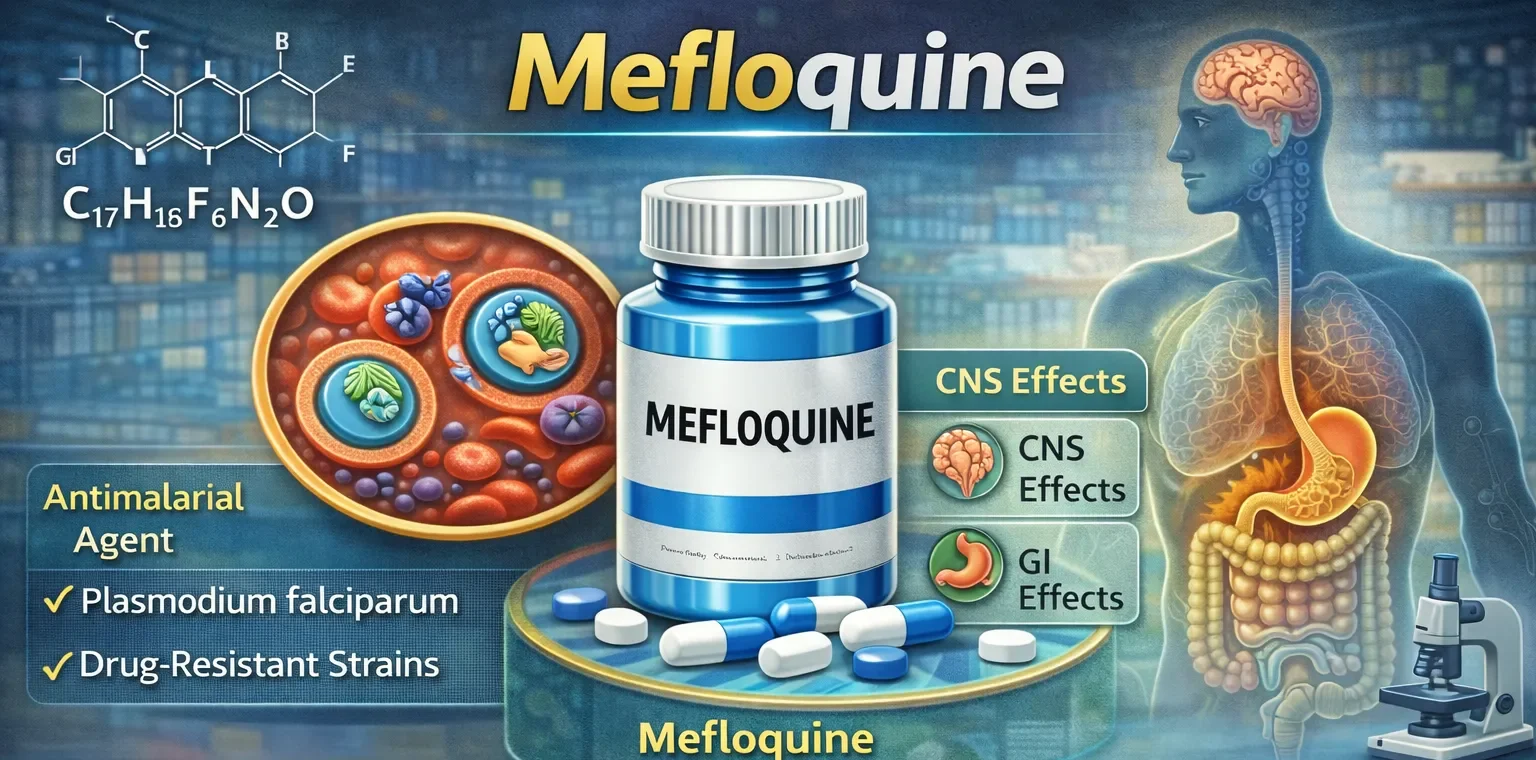
Chemical Structure / Formula of Mefloquine Formula: C₁₇H₁₆F₆N₂O Structure: A quinoline derivative with fluorinated groups. Mechanism of Action Disrupts heme metabolism and damages the parasite’s food vacuole. Uses of Mefloquine Prophylaxis and treatment of chloroquine-resistant malaria. Side Effects Neuropsychiatric symptoms (nightmares, anxiety, hallucinations). QT prolongation, GI distress.

Quinacrine Hydrochloride

Quinacrine Hydrochloride

Chemical Structure / Formula of Quinacrine Hydrochloride Formula: C₂₃H₃₀ClN₃O Structure: Acridine derivative with a chloroquinoline ring. Mechanism of Action Interferes with DNA replication in Plasmodium. Uses of Quinacrine Hydrochloride Malaria treatment (historical, no longer first-line). Lupus, giardiasis. Side Effects GI upset, neuropsychiatric symptoms (hallucinations, anxiety). Yellow discoloration of skin and sclera.

Pamaquine

Pamaquine

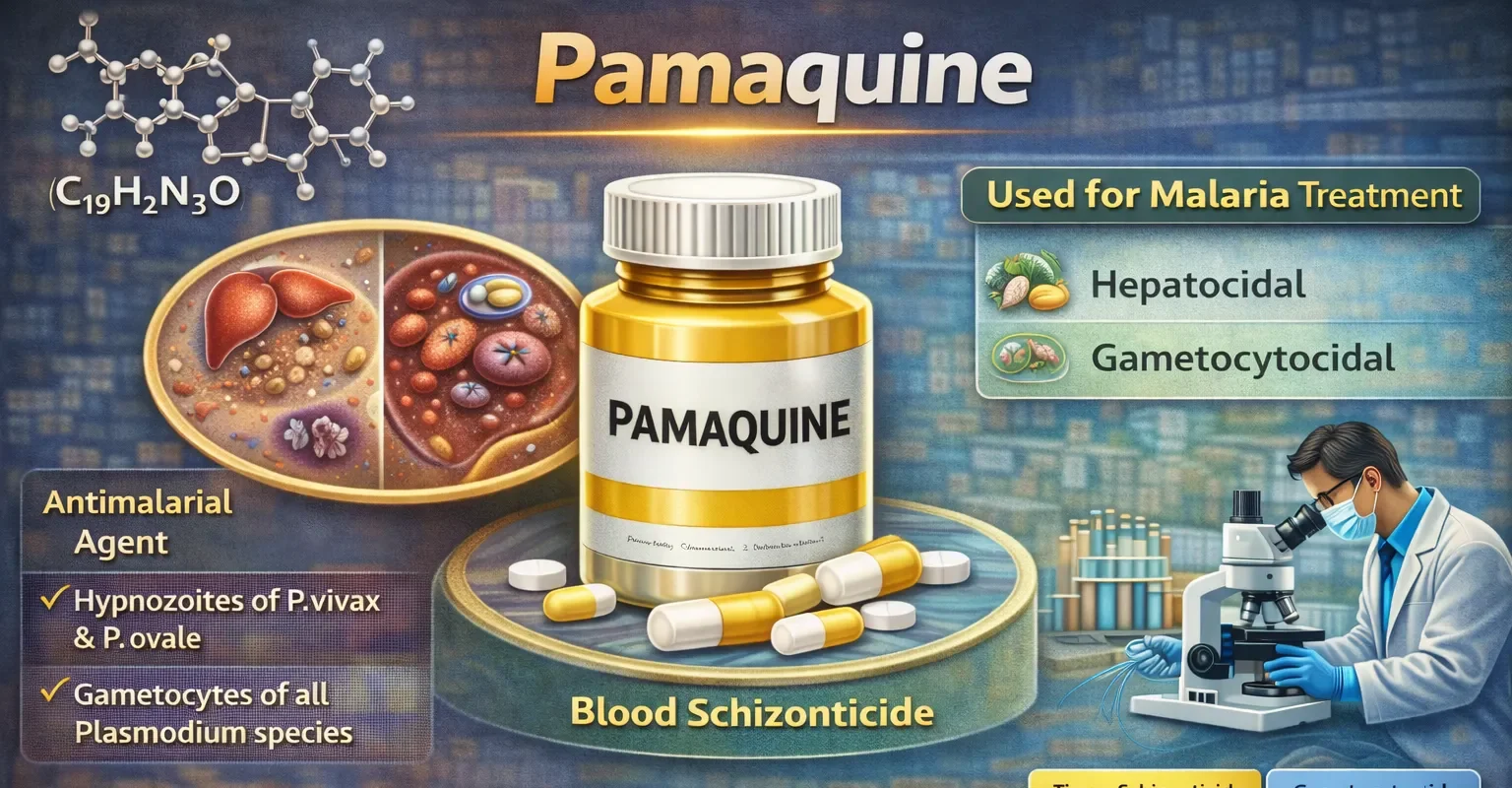
Chemical Structure / Formula of Pamaquine Formula: C₁₉H₂₉N₃O Structure: 8-Aminoquinoline similar to primaquine. Mechanism of Action Similar to primaquine: ROS generation, mitochondrial disruption. Uses of Pamaquine No longer used clinically due to toxicity. Side Effects Severe hemolysis in G6PD deficiency. GI irritation, cyanosis, methemoglobinemia. Structure-Activity Relationship (SAR) of Chloroquine Structural Feature Role in Activity 8-Aminoquinoline … Read more

Primaquine Phosphate

Primaquine Phosphate

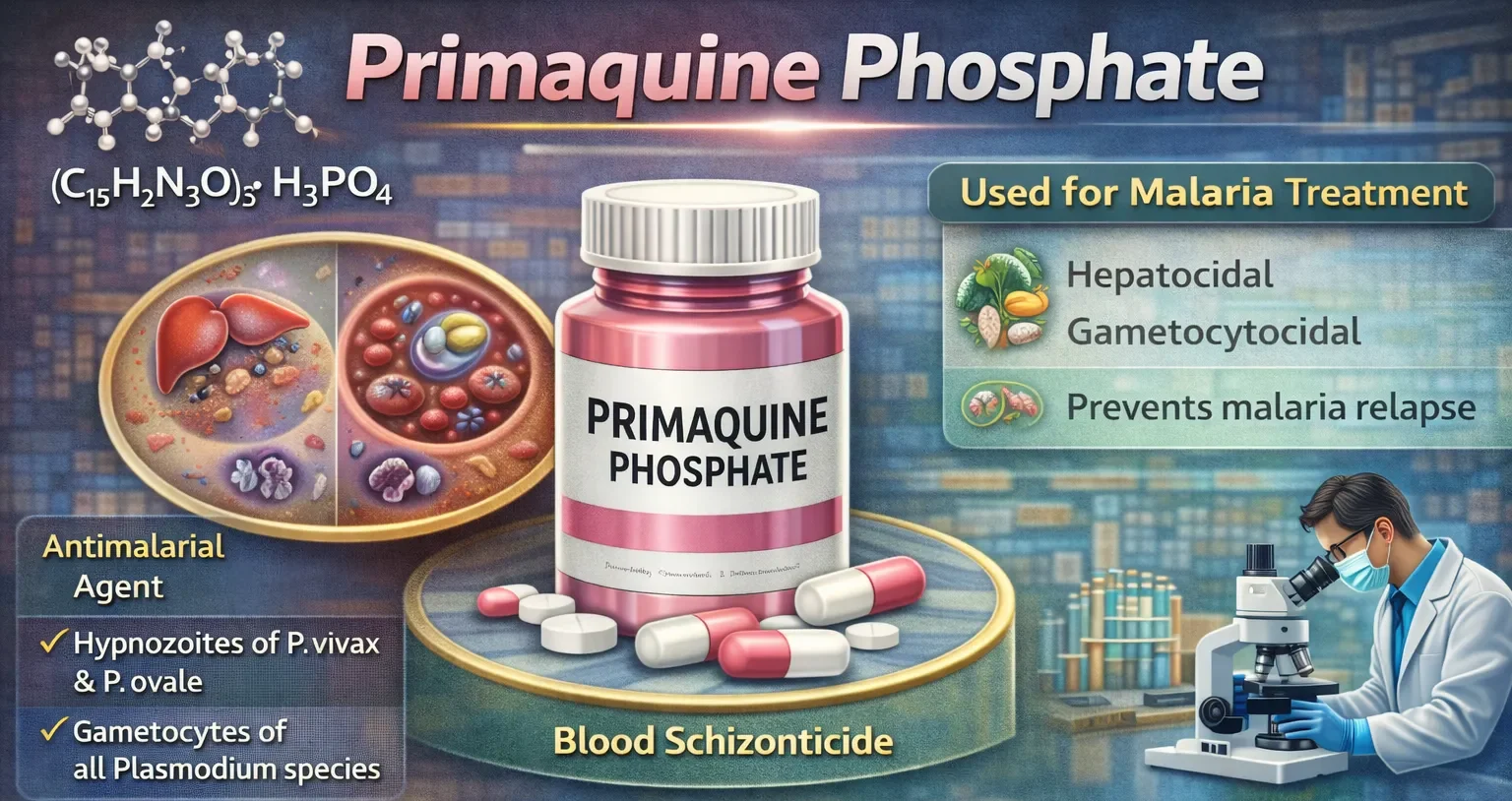
Chemical Structure / Formula of Primaquine Phosphate Formula: C₁₅H₂₁N₃O · H₃PO₄ Structure: 8-Aminoquinoline Mechanism of Action Disrupts mitochondrial electron transport and generates reactive oxygen species (ROS), killing liver-stage (hypnozoites) and gametocytes of Plasmodium. Uses of Primaquine Phosphate Radical cure of P. vivax and P. ovale malaria (eradicates hypnozoites). Prevents transmission (gametocidal effect). Side Effects Hemolysis … Read more

Amodiaquine

Amodiaquine

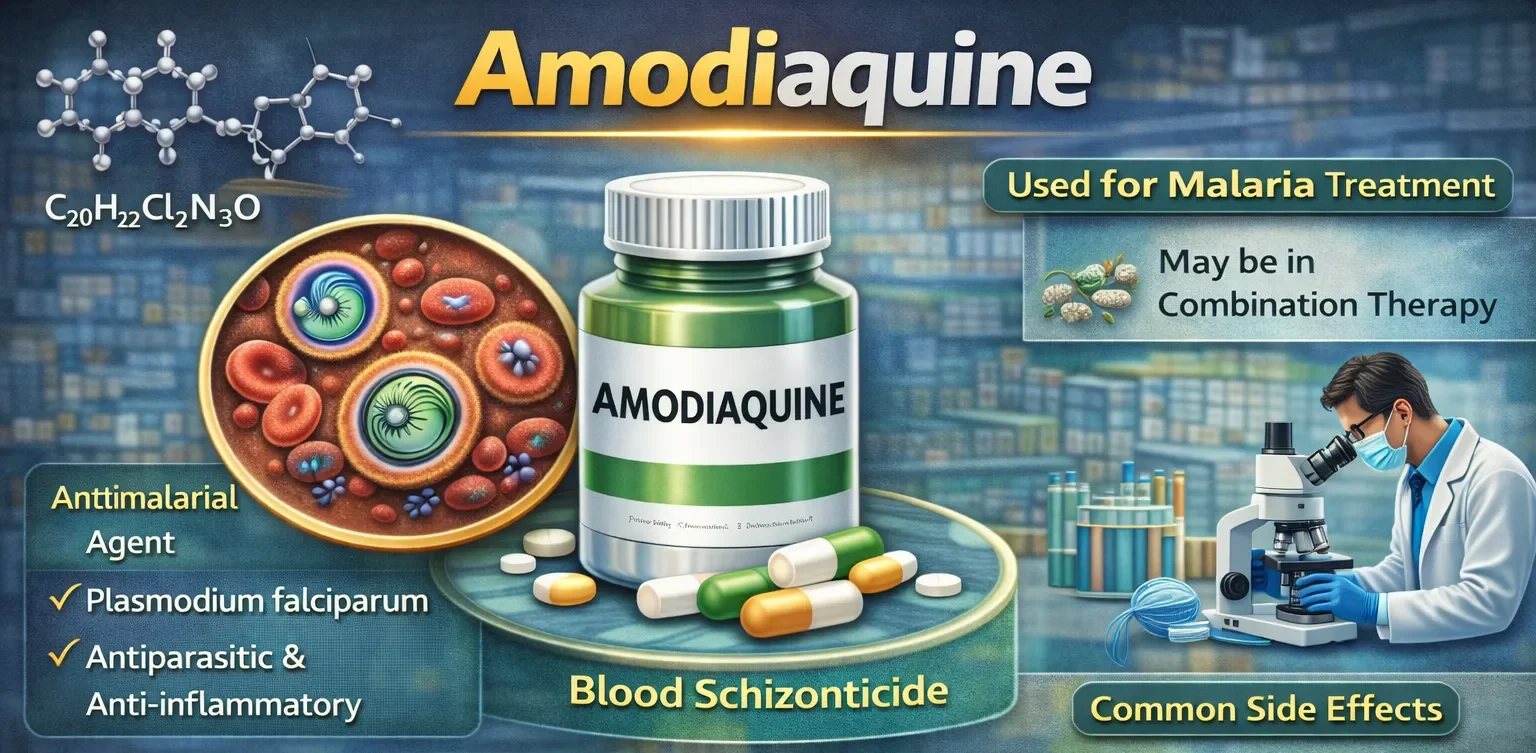
Chemical Structure / Formula of Amodiaquine Formula: C₂₀H₂₂ClN₃O Structure: A 4-aminoquinoline similar to chloroquine but with a hydroxy aniline Mechanism of Action Similar to chloroquine: heme polymerase inhibition and accumulation of toxic heme. Uses of Amodiaquine Treatment of chloroquine-resistant malaria ( falciparum). Combination therapy (e.g., Artesunate-Amodiaquine). Side Effects Agranulocytosis and hepatotoxicity (rare but severe). GI … Read more

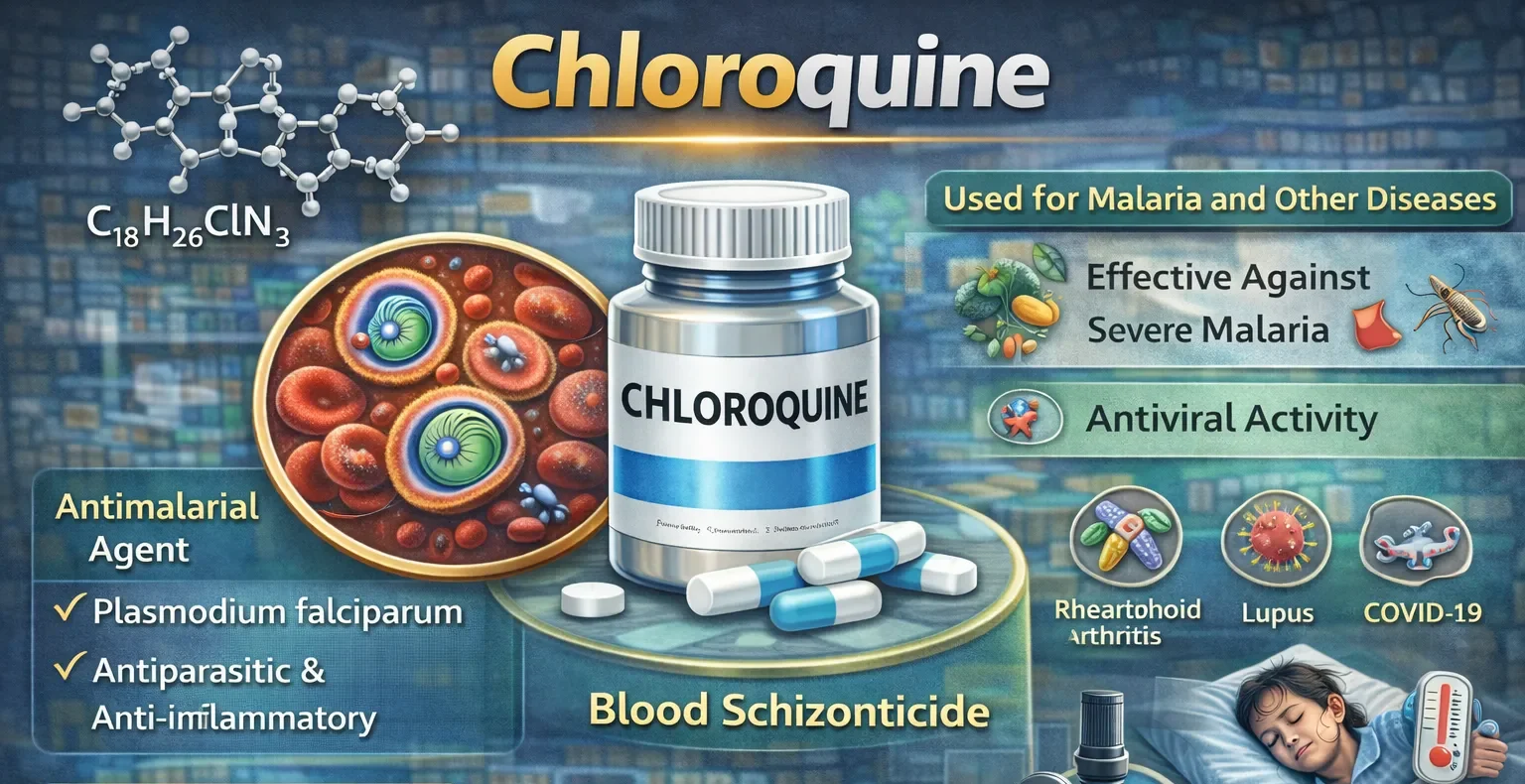
Chloroquine

Chloroquine

Chemical Structure / Formula of Chloroquine Formula: C₁₈H₂₆ClN₃ Structure: 4-Aminoquinoline with an ethyl-diethylamine side chain. Mechanism of Action Inhibits heme polymerase, preventing detoxification of toxic free heme, leading to Plasmodium death. Accumulates in the food vacuole of Plasmodium spp. Uses of Chloroquine First-line for non-resistant Plasmodium spp. ( vivax, P. ovale, P. malariae). Autoimmune diseases … Read more

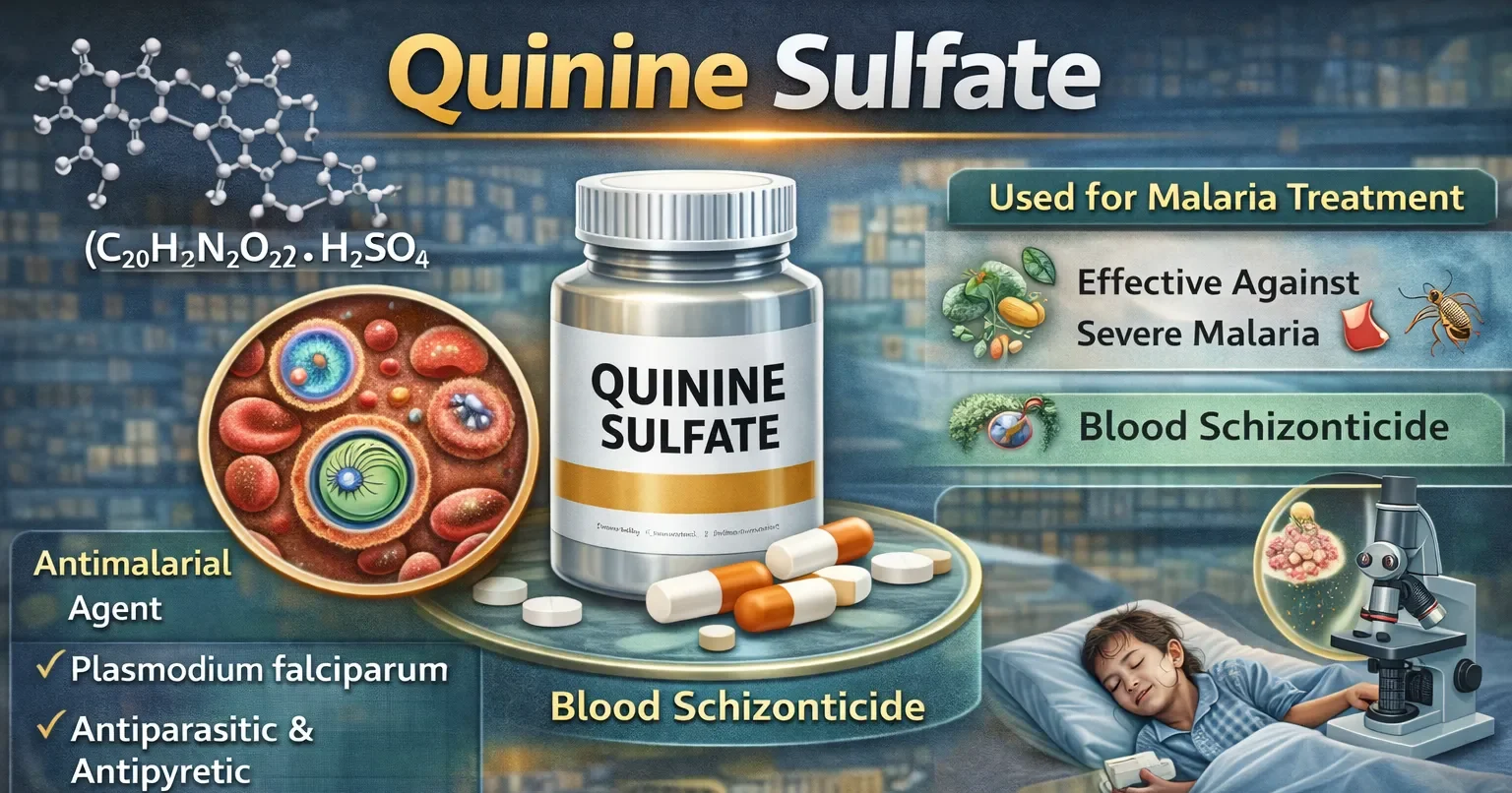
Quinine Sulfate

Quinine Sulfate

Chemical Structure / Formula of Quinine Sulfate Formula: C₂₀H₂₄N₂O₂ · H₂SO₄ Structure: A quinoline nucleus with an attached quinuclidine ring. Mechanism of Action Interferes with heme polymerization in the malaria parasite, leading to toxic heme accumulation and parasite death. Also interferes with DNA synthesis in Plasmodium spp. Uses of Quinine Sulfate Severe malaria (especially against … Read more