Ciprofloxacin

Ciprofloxacin

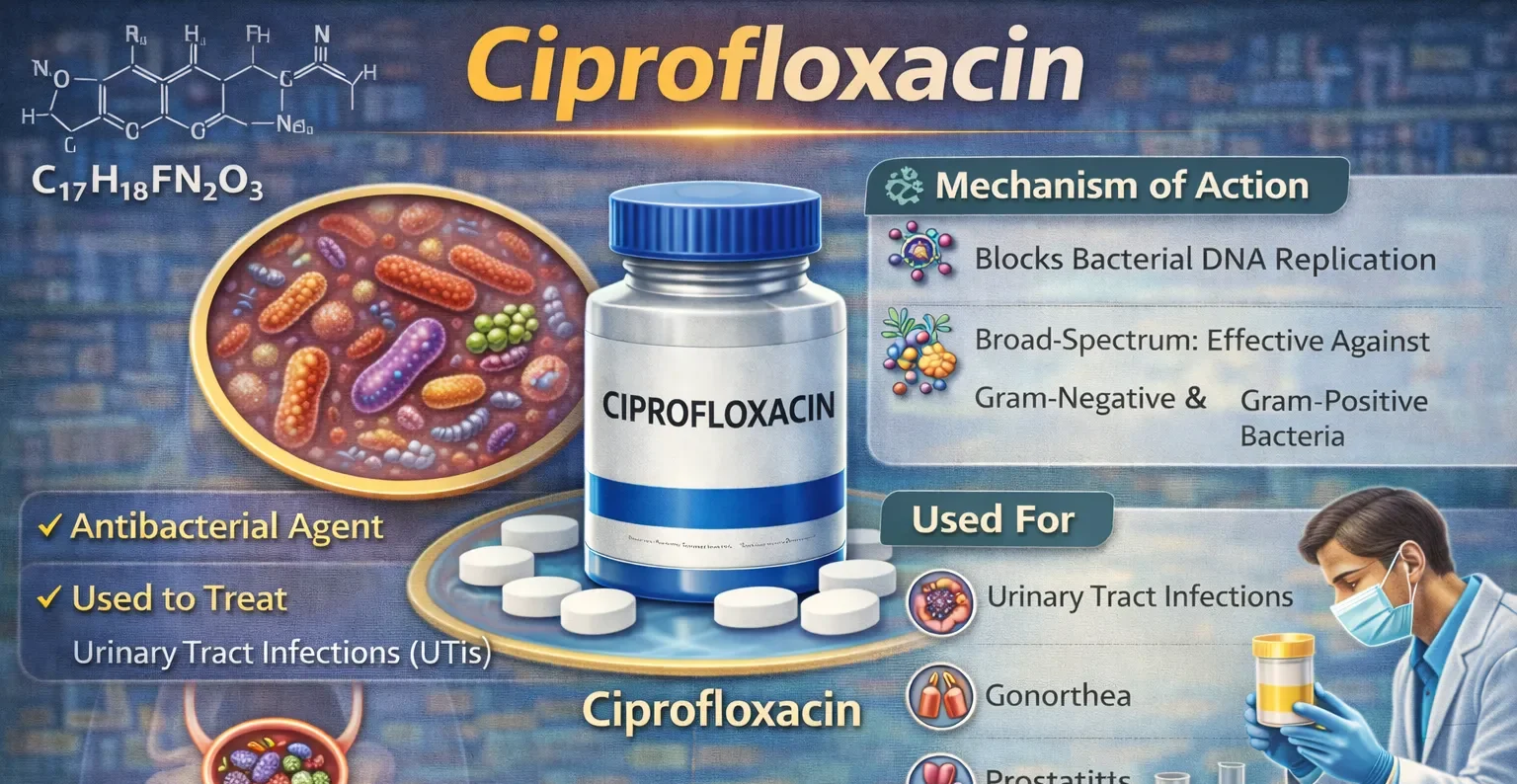
Chemical Structure / Formula Formula: C₁₇H₁₈FN₃O₃ Structure: Fluorinated quinolone with piperazine ring, increasing bioavailability and potency. Mechanism of Action Inhibits DNA gyrase (topoisomerase II) and topoisomerase IV, preventing bacterial DNA replication. Bactericidal – effective against both Gram-positive and Gram-negative bacteria. Uses UTIs, pyelonephritis, bacterial prostatitis. Respiratory infections (pseudomonas coverage in CF patients). Gastrointestinal infections (traveler’s … Read more
Enoxacin

Enoxacin

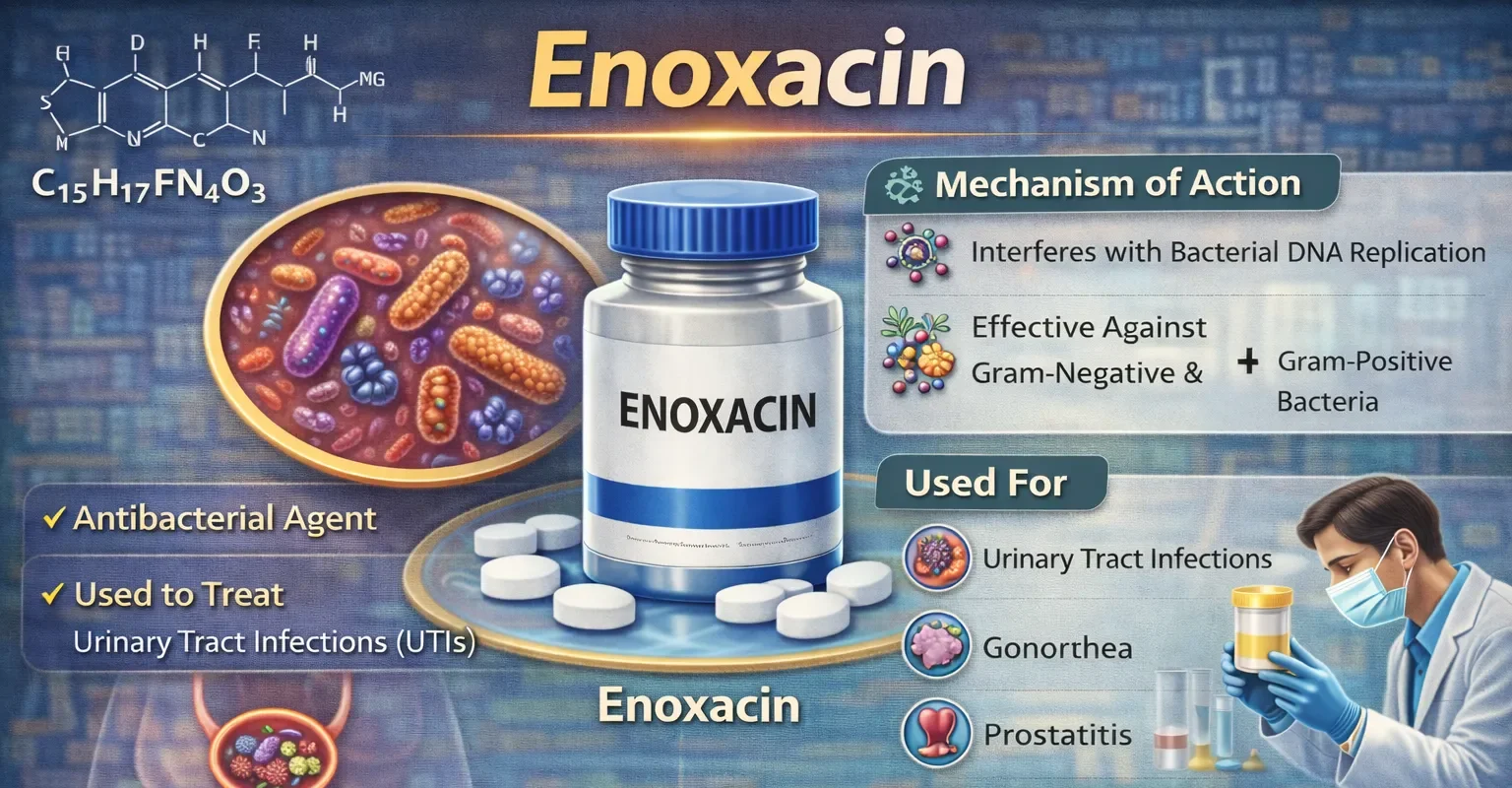
Chemical Structure / Formula of Enoxacin Formula: C₁₅H₁₇FN₄O₃ Structure: A fluorinated 4-quinolone with enhanced DNA gyrase inhibition. Mechanism of Action Inhibits bacterial DNA gyrase and topoisomerase IV, leading to double-strand DNA breaks. Uses of Enoxacin Treats UTIs, gonorrhea, prostatitis. Less commonly used due to the availability of newer fluoroquinolones. Side Effects GI upset, dizziness, skin … Read more

Norfloxacin

Norfloxacin

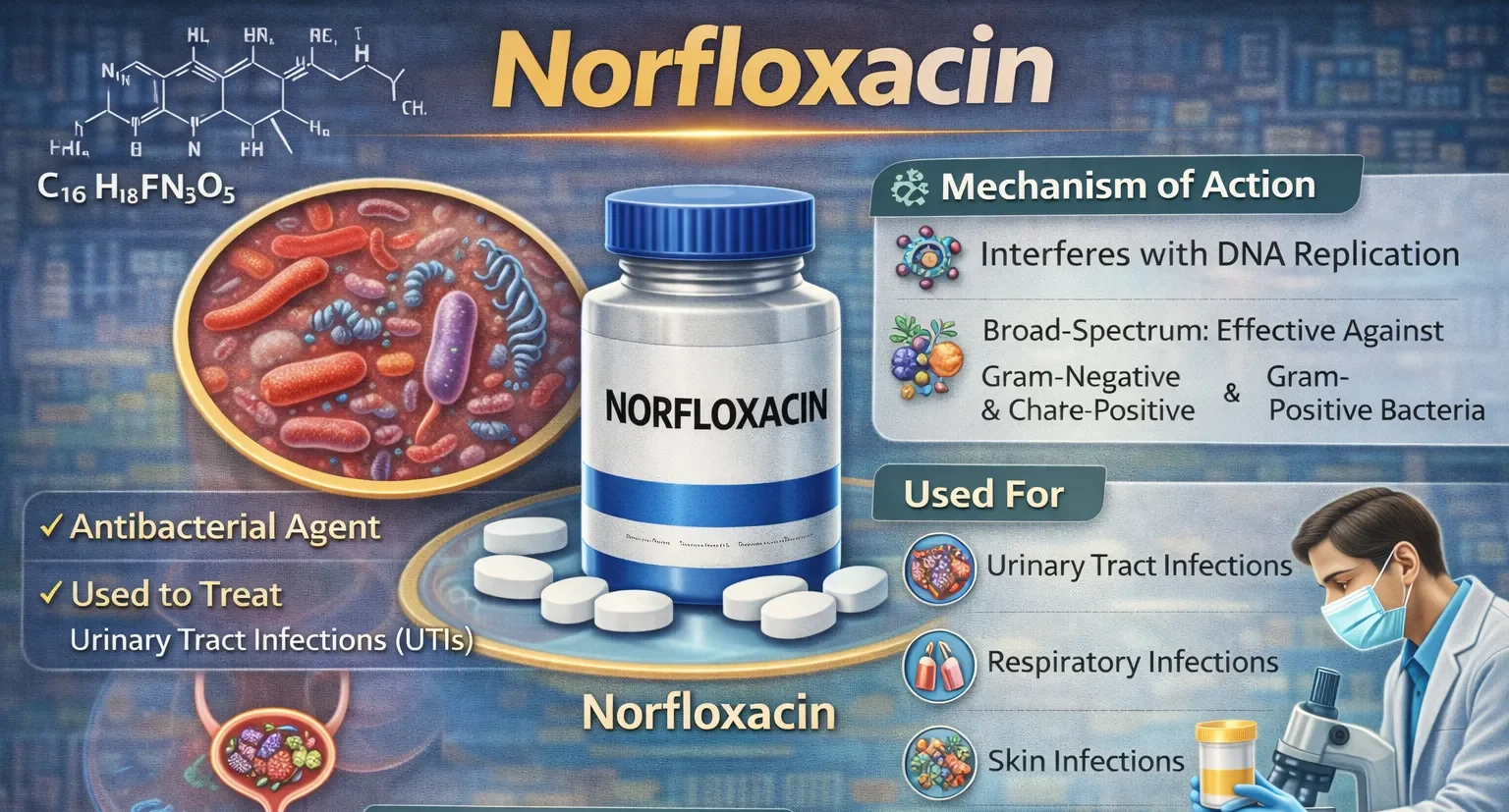
Chemical Structure / Formula of Norfloxacin Formula: C₁₆H₁₈FN₃O₃ Structure: A fluorinated quinolone (fluoroquinolone), improving potency and spectrum. Mechanism of Action Inhibits DNA gyrase and topoisomerase IV, leading to bacterial DNA fragmentation and death. Uses of Norfloxacin Used for UTIs, prostatitis, and some GI infections (traveler’s diarrhea). Limited systemic use due to poor tissue penetration. Side … Read more

Nalidixic Acid

Nalidixic Acid

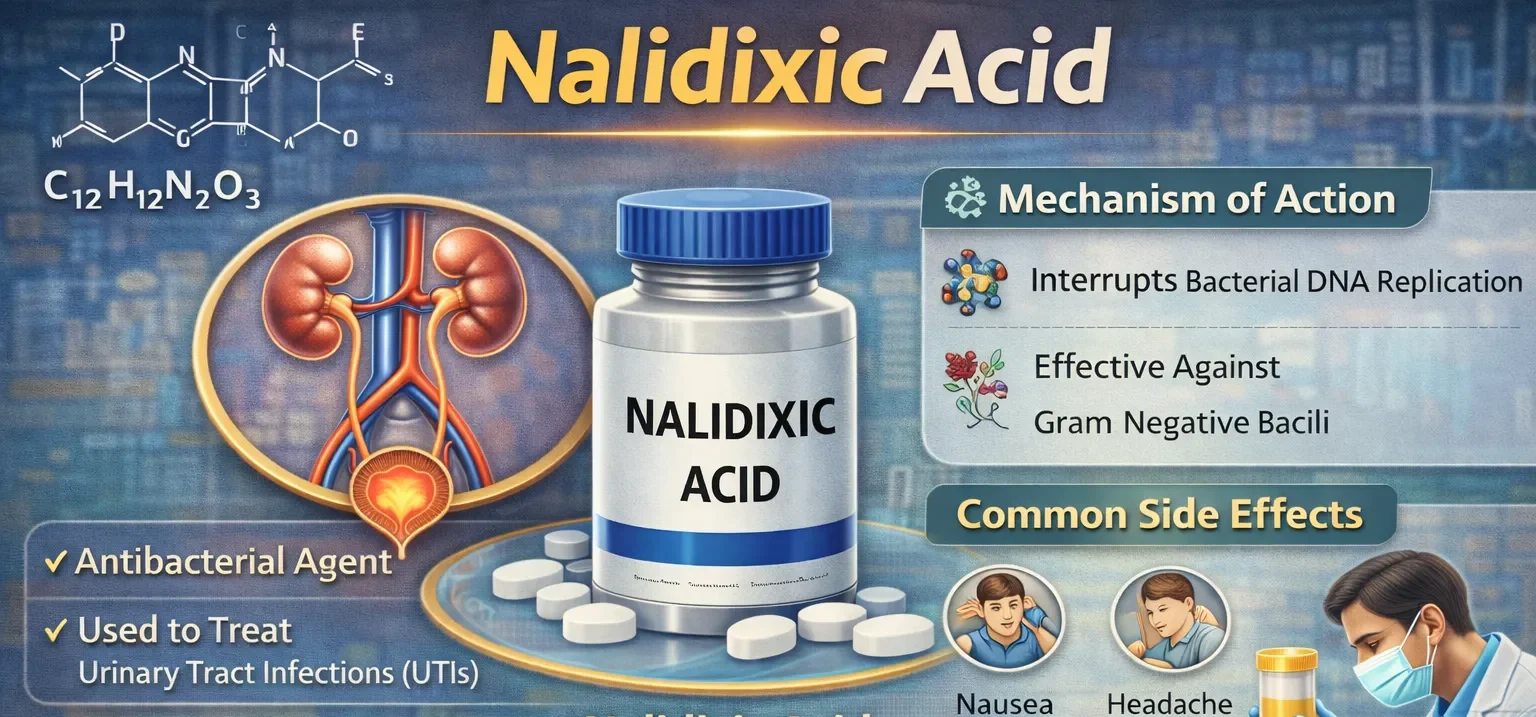
Chemical Structure / Formula of Nalidixic Acid Formula: C₁₂H₁₂N₂O₃ Structure: 1,8-naphthyridine core with a carboxyl (-COOH) and ketone (-C=O) functional group. Mechanism of Action Inhibits DNA gyrase (topoisomerase II) and topoisomerase IV, preventing bacterial DNA replication. Bactericidal effect due to DNA fragmentation and inhibition of supercoiling. Uses of Nalidixic Acid First-generation quinolone used primarily for … Read more

Urinary Tract Anti-Infective Agents

Urinary Tract Anti-Infective Agents

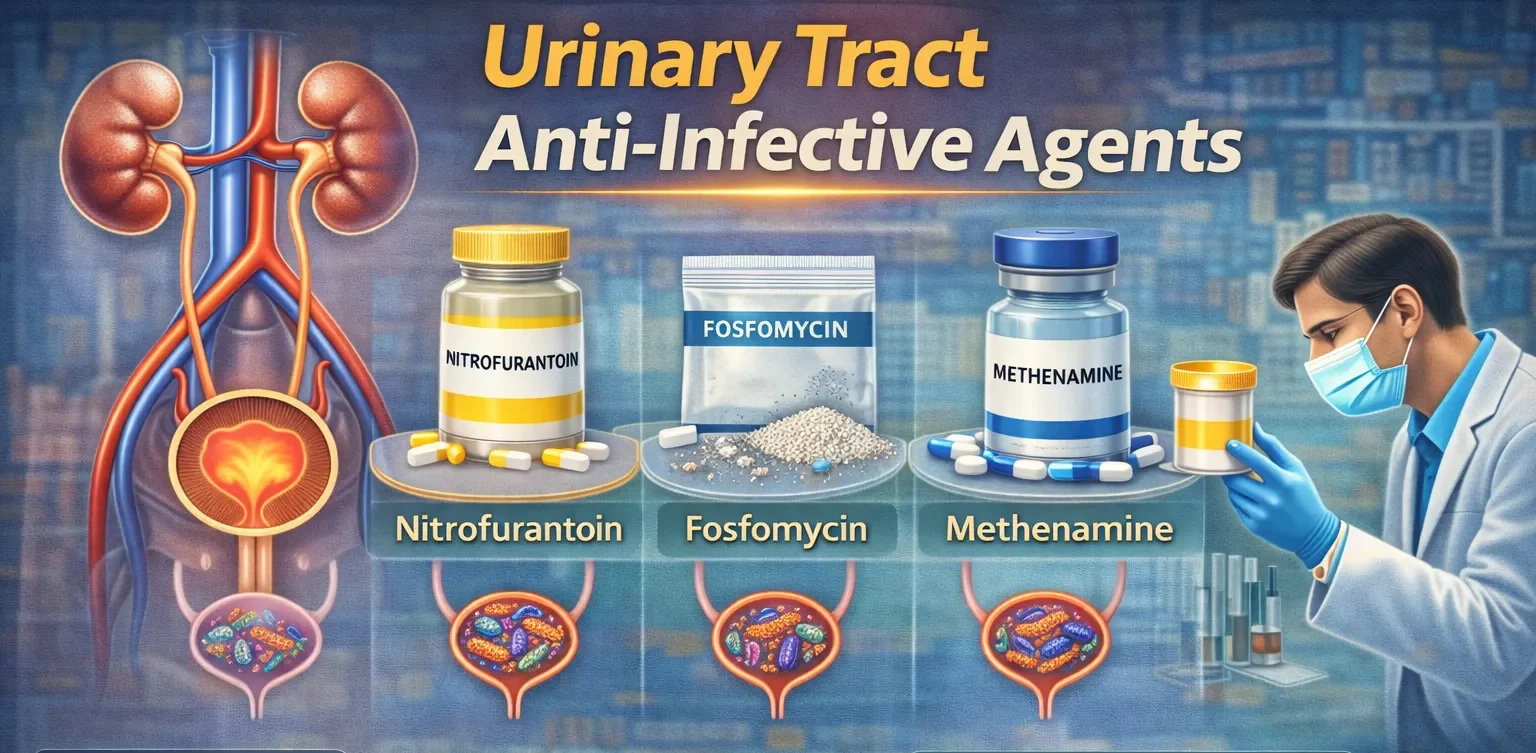
Urinary Tract Anti-Infective Agents Urinary tract anti-infective agents are used to treat bacterial infections of the urinary tract, such as cystitis, pyelonephritis, and urethritis. These agents are classified based on their mechanism of action and chemical structure. 1. Quinolones (Fluoroquinolones) These drugs act by inhibiting bacterial DNA gyrase and topoisomerase IV, leading to DNA damage … Read more

Capreomycin Sulfate

Capreomycin Sulfate

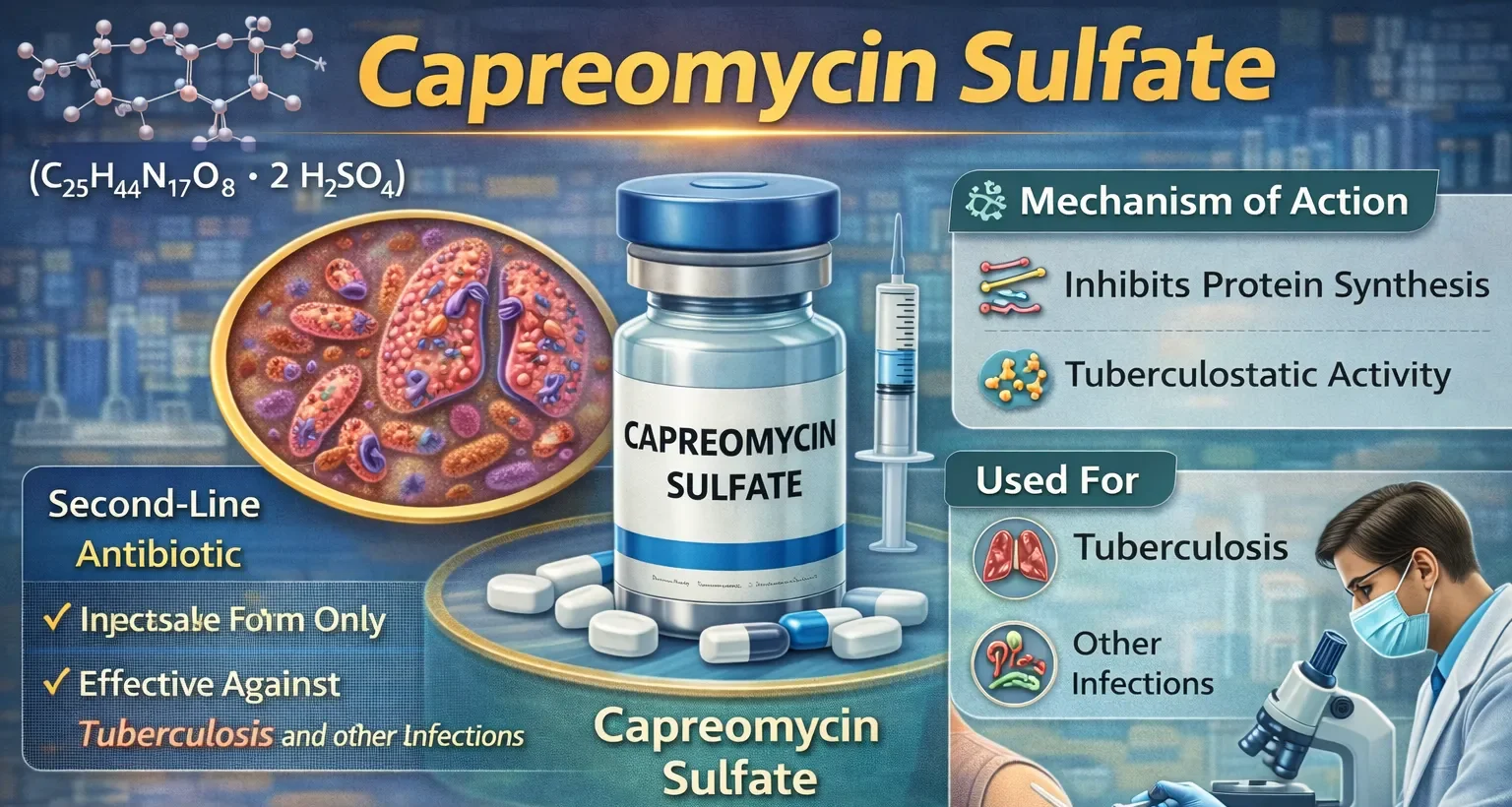
Chemical Structure / Formula of Capreomycin Sulfate Formula: C₂₅H₄₄N₁₄O₈ Structure: A cyclic polypeptide antibiotic. Mechanism of Action Inhibits ribosomal protein synthesis. Uses of Capreomycin Sulfate Second-line treatment for MDR-TB. Side Effects Ototoxicity, nephrotoxicity, hypokalemia.

Cycloserine

Cycloserine

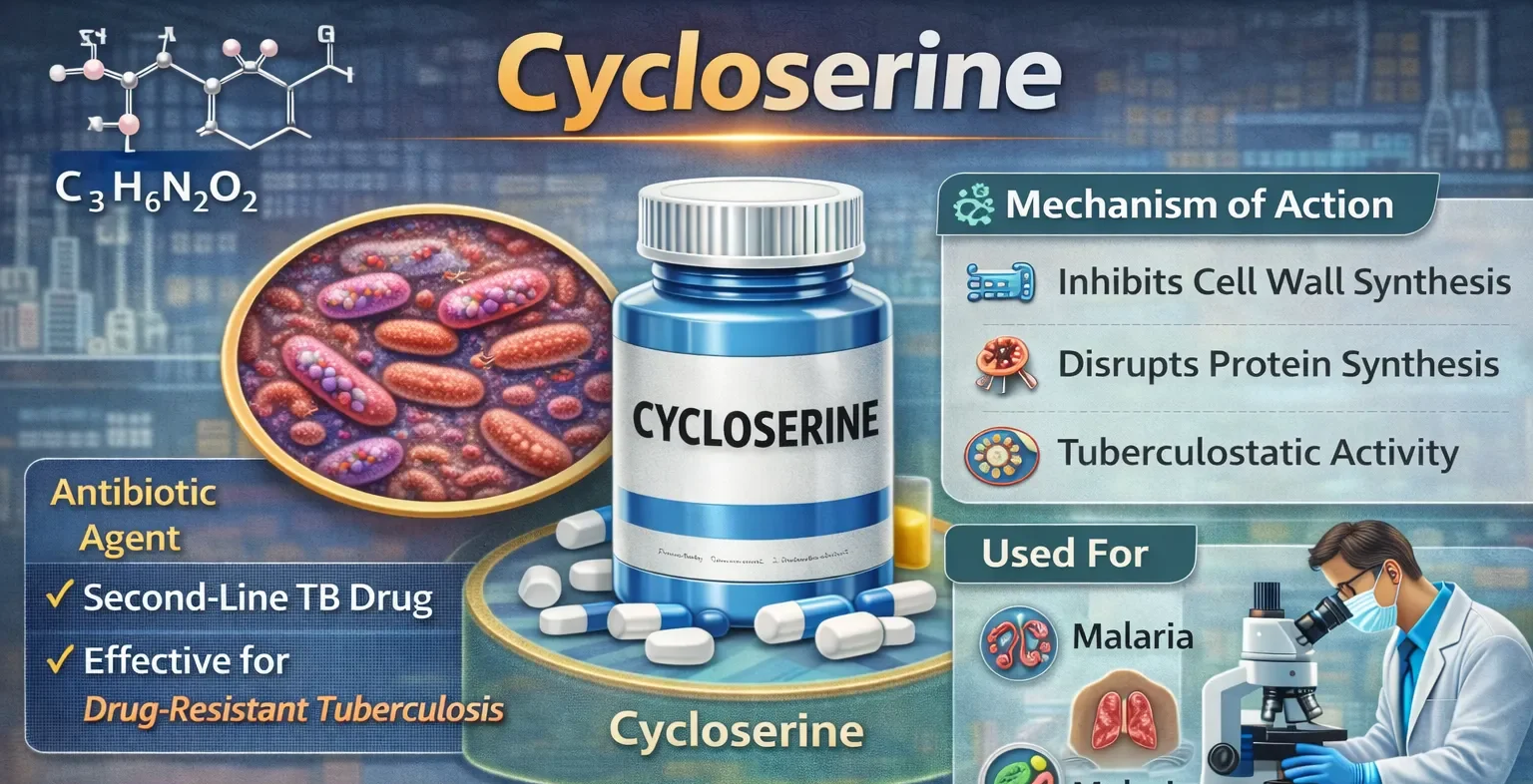
Chemical Structure / Formula of Cycloserine Formula: C₃H₆N₂O₂ Structure: A D-alanine analog. Mechanism of Action Inhibits D-alanine racemase and D-Ala-D-Ala ligase, disrupting peptidoglycan synthesis. Uses of Cycloserine Second-line for MDR-TB. Side Effects Neurotoxicity (psychosis, seizures, depression).

Rifabutin

Rifabutin

Chemical Structure / Formula of Rifabutin Formula: C₄₆H₆₂N₄O₁₁ Structure: Similar to rifampicin but with less CYP450 induction. Mechanism of Action Inhibits bacterial RNA polymerase, preventing mRNA synthesis. Uses of Rifabutin TB treatment in HIV patients (less interaction with antiretrovirals). Side Effects GI upset, myalgia, uveitis.

Rifampicin

Rifampicin

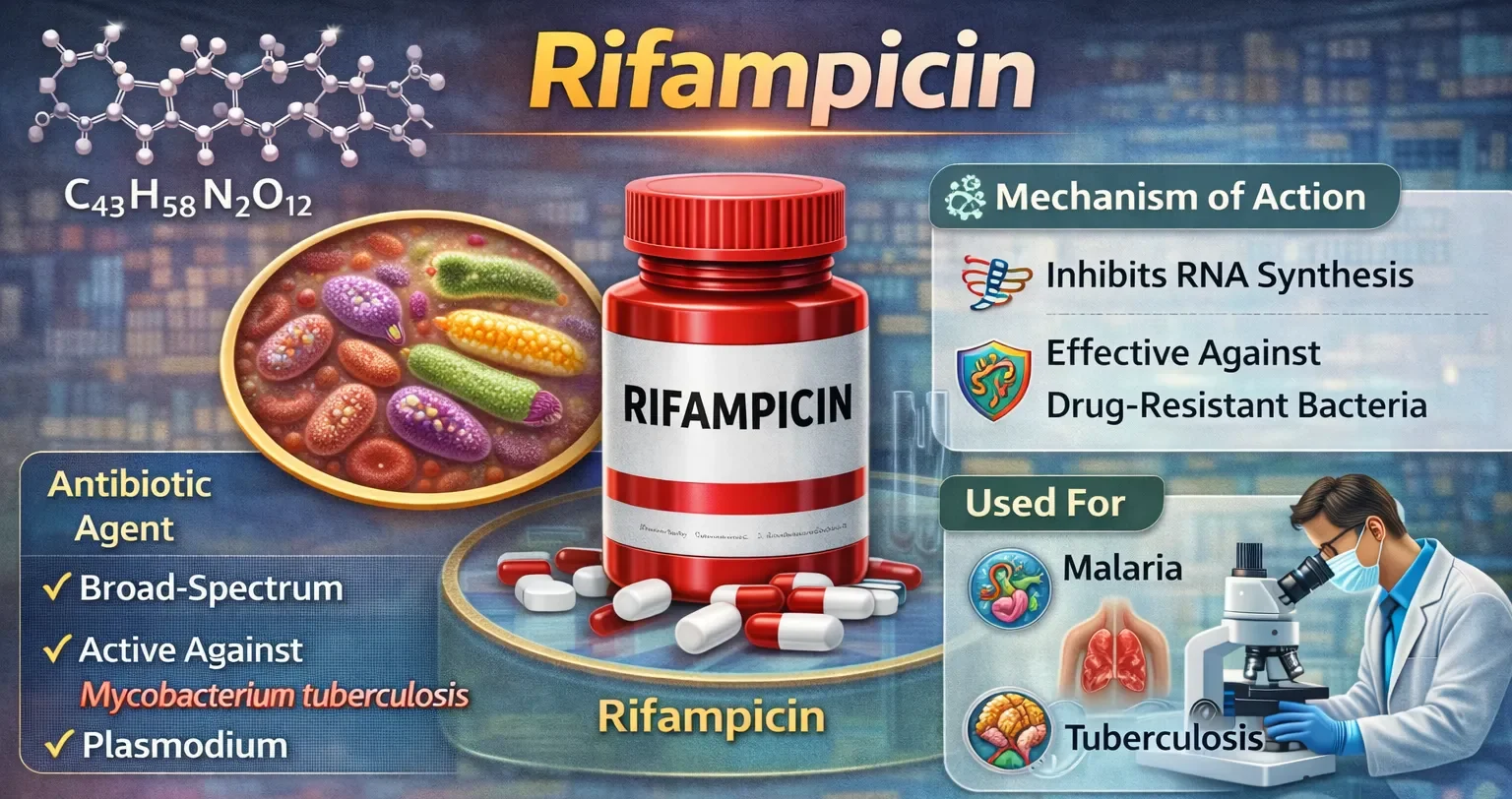
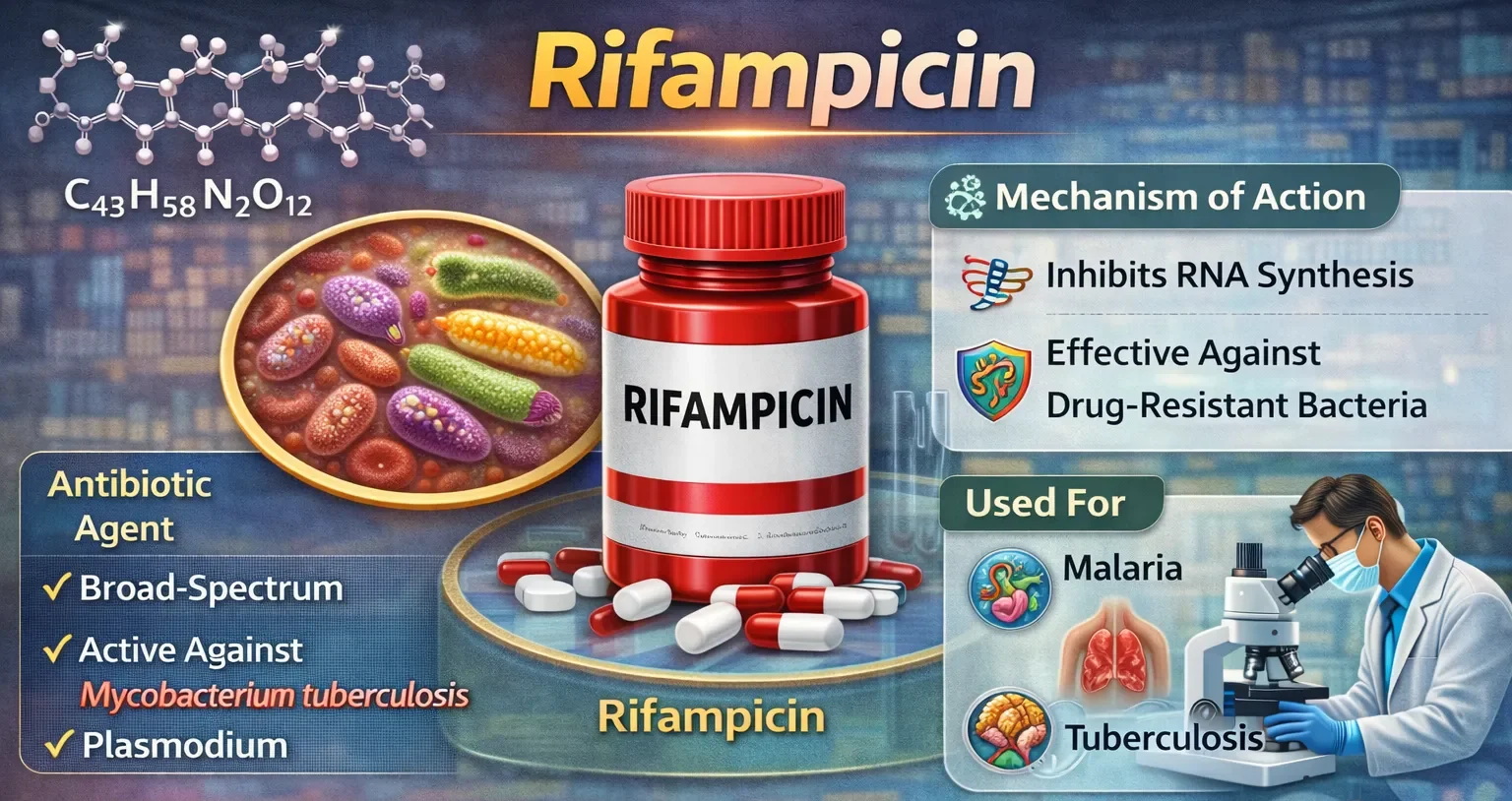
Chemical Structure / Formula of Rifampicin Formula: C₄₃H₅₈N₄O₁₂ Structure: A rifamycin derivative with an ansamycin ring. Mechanism of Action Binds to DNA-dependent RNA polymerase, preventing mRNA transcription. Uses of Rifampicin First-line TB treatment, also used for leprosy and MRSA infections. Side Effects Hepatotoxicity, red-orange body fluids, strong CYP450 inducer.

Classification of Anti-Tubercular Agents

Classification of Anti-Tubercular Agents

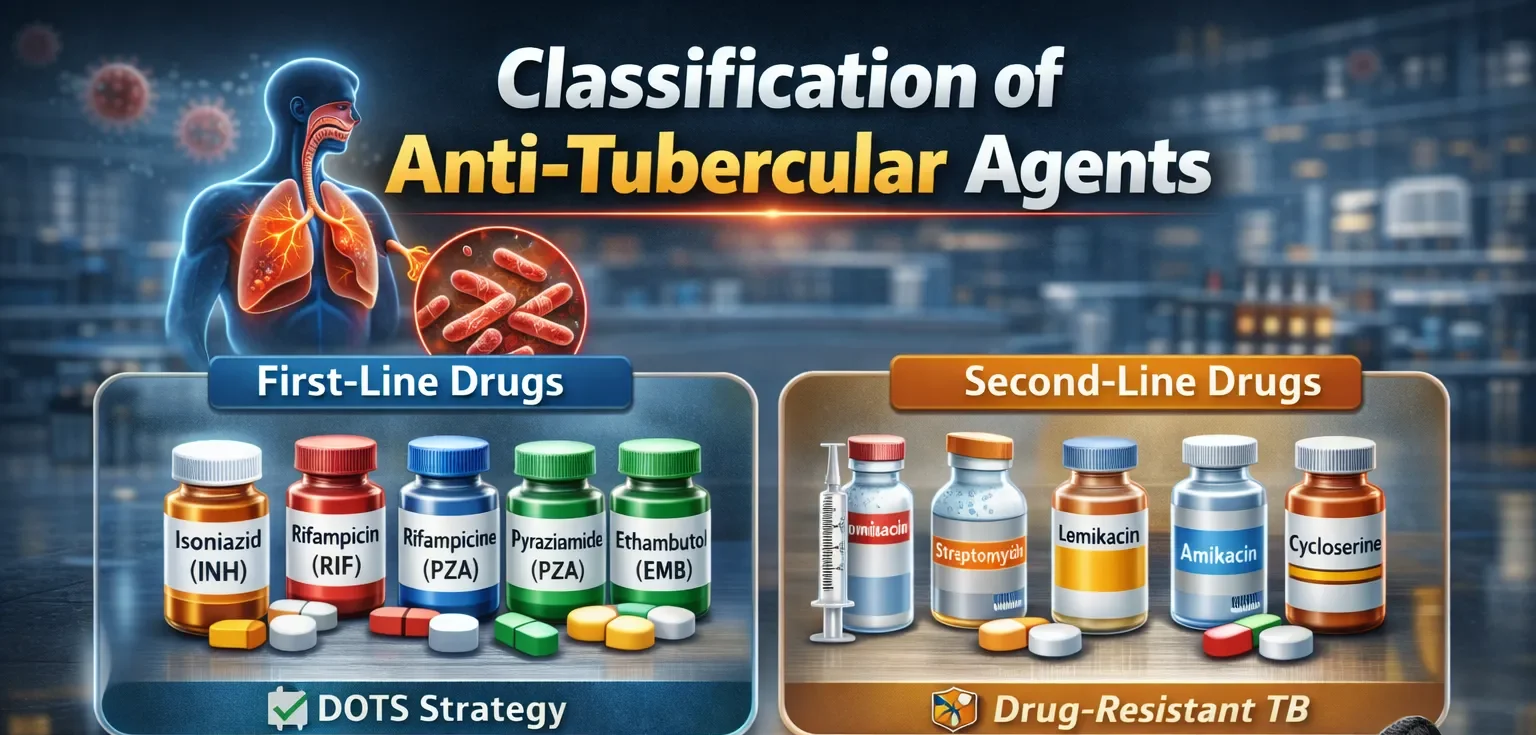
Classification of Anti-Tubercular Agents explains grouping of TB drugs into first-line and second-line agents based on efficacy and use. Classification of Anti-Tubercular Agents Anti-tubercular agents are used to treat infections caused by Mycobacterium tuberculosis and can be classified based on their mechanism of action and chemical structure. They are often categorized into first-line and second-line … Read more